Understanding patterns Adding 2-digit Numbers Worksheets for Ages 3-7
4 filtered results
-
From - To
Explore our "Understanding Patterns: Adding 2-Digit Numbers" worksheets, thoughtfully crafted for children ages 3-7. These engaging resources foster a solid foundation in math by helping young learners recognize and apply numerical patterns. Each worksheet encourages kids to solve addition problems through interactive exercises, promoting critical thinking and problem-solving skills. Vibrant graphics and relatable themes make learning enjoyable, keeping students motivated as they enhance their understanding of 2-digit addition. Perfect for parents and educators, these printable worksheets are designed to support early math mastery in a fun and effective way. Start your child’s learning journey today!
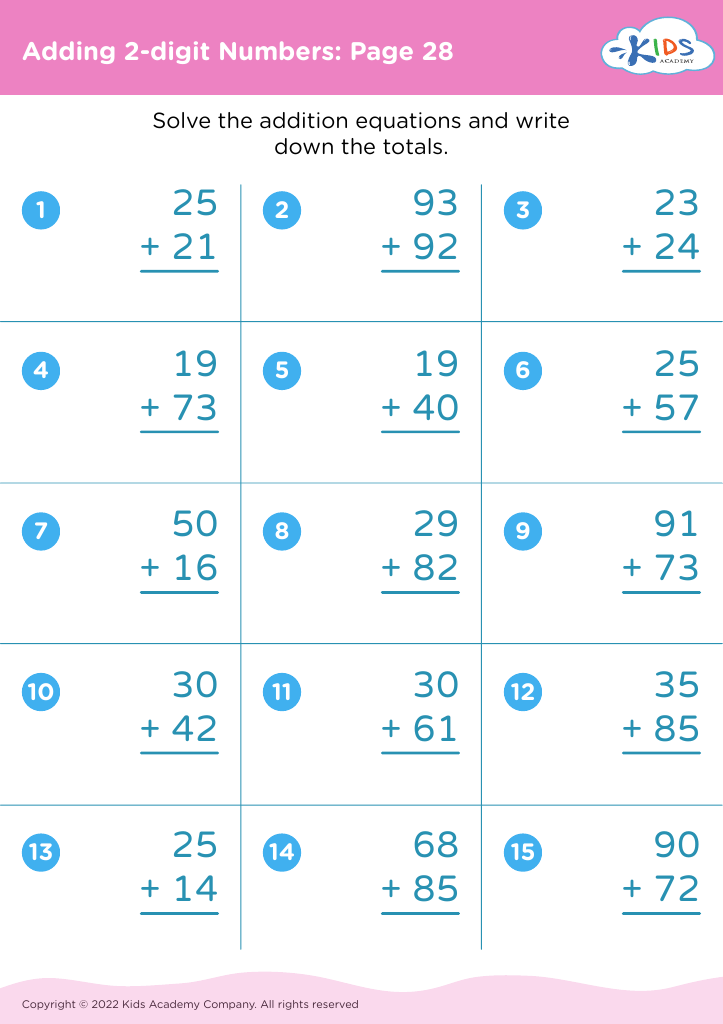
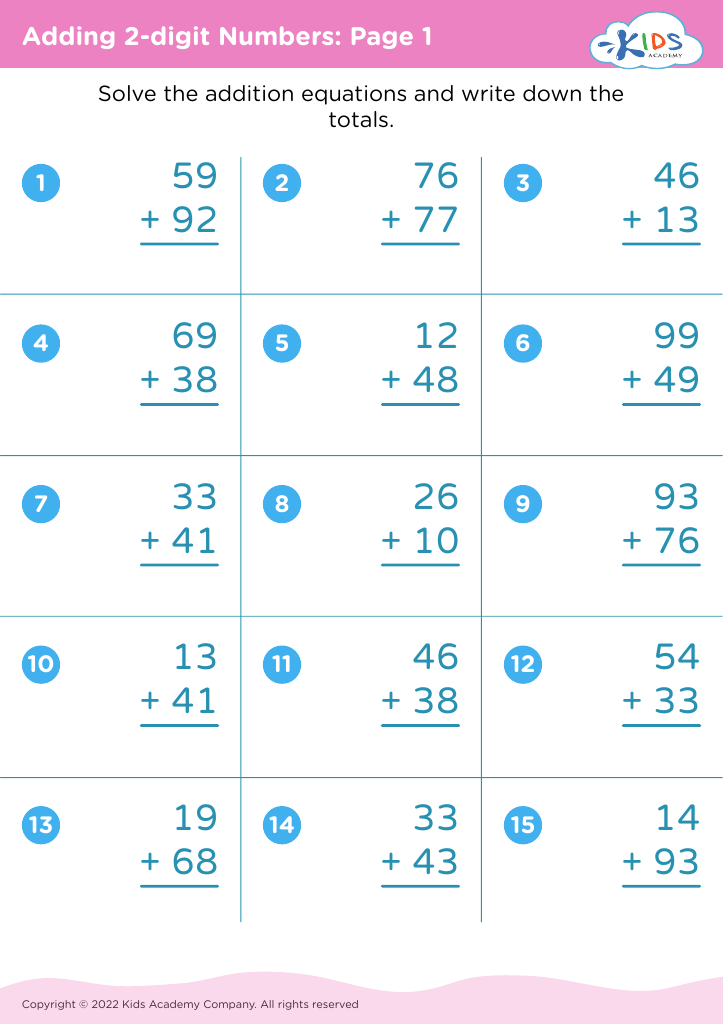
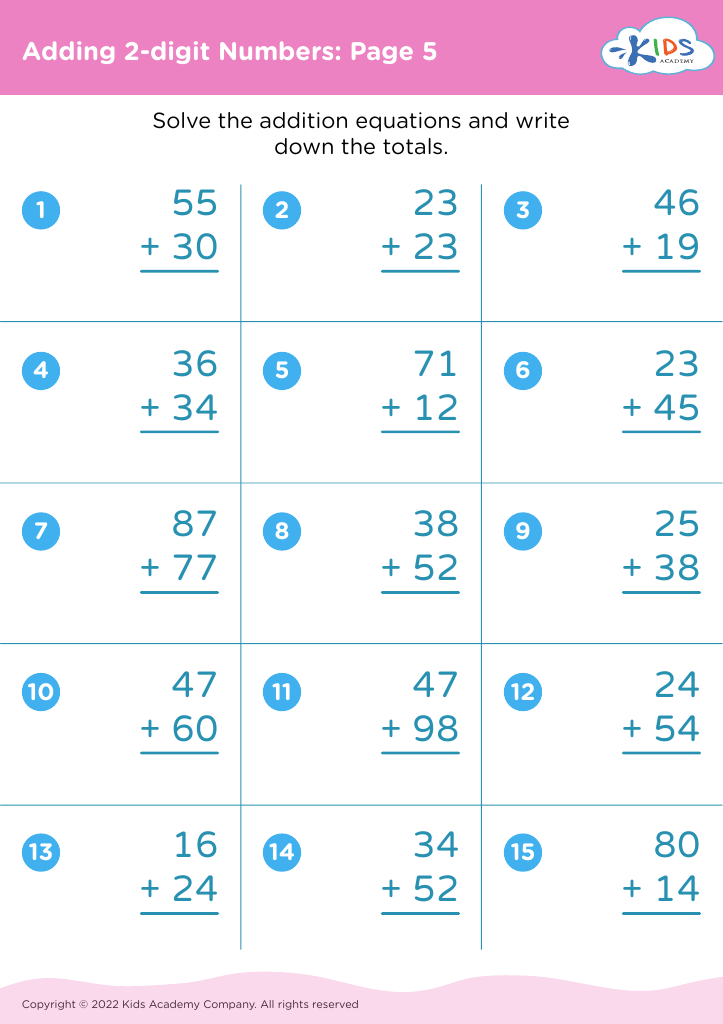
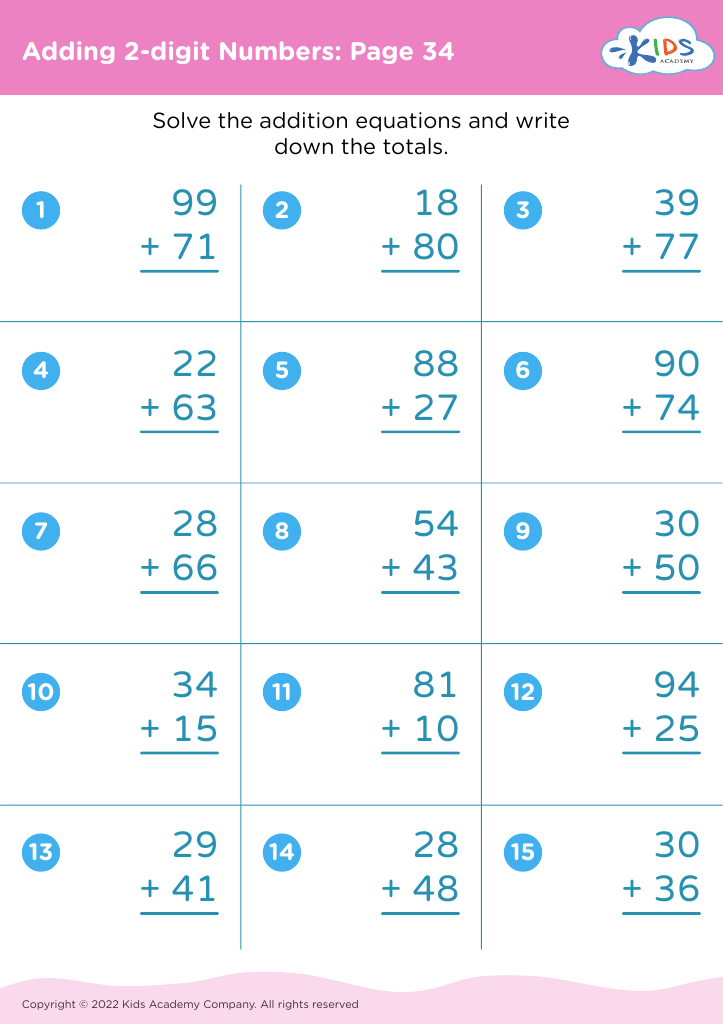








Understanding patterns and adding 2-digit numbers are crucial skills for children aged 3-7, laying the groundwork for their mathematical development. First, recognizing patterns helps children develop critical thinking skills, encouraging logical reasoning and problem-solving abilities. By identifying sequences and relationships, children enhance their cognitive skills, making it easier for them to grasp more complex concepts in mathematics and other subjects later on.
Secondly, learning to add 2-digit numbers builds foundational arithmetic skills essential for everyday life. Mathematics is not just an academic requirement; it is a vital tool used in daily decision-making, from budgeting allowances to understanding time and measurements. Mastering addition at an early age empowers children to approach math with confidence, reducing anxiety related to the subject in their later educational years.
Teachers and parents play a pivotal role in teaching these skills through engaging activities and practical applications. By implementing games, storytelling, and real-life scenarios, they can make learning enjoyable and relevant. Ultimately, the efforts invested in understanding patterns and mastering basic arithmetic during the formative years will yield long-term benefits, fostering a generation of confident and capable learners prepared to tackle future challenges.








