Addition Practice Adding at the Zoo Worksheets for Ages 3-7
8 filtered results
-
From - To
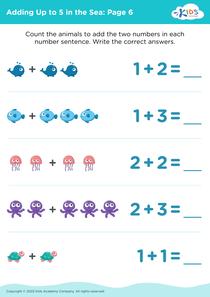
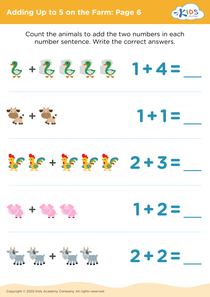
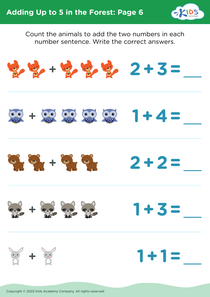
Welcome to our "Addition Practice: Adding at the Zoo" worksheets, designed specifically for children aged 3-7! These fun and engaging resources bring the excitement of the zoo to math learning. With colorful illustrations of animals, kids will happily practice their addition skills while counting friendly lions, playful monkeys, and active elephants. Our worksheets promote number recognition, counting proficiency, and simple addition strategies, making math a joyful experience. Perfect for preschool and kindergarten classrooms or at-home learning, these activities empower young learners to build a strong math foundation while fostering creativity and a love for learning. Download now and let the adventure begin!
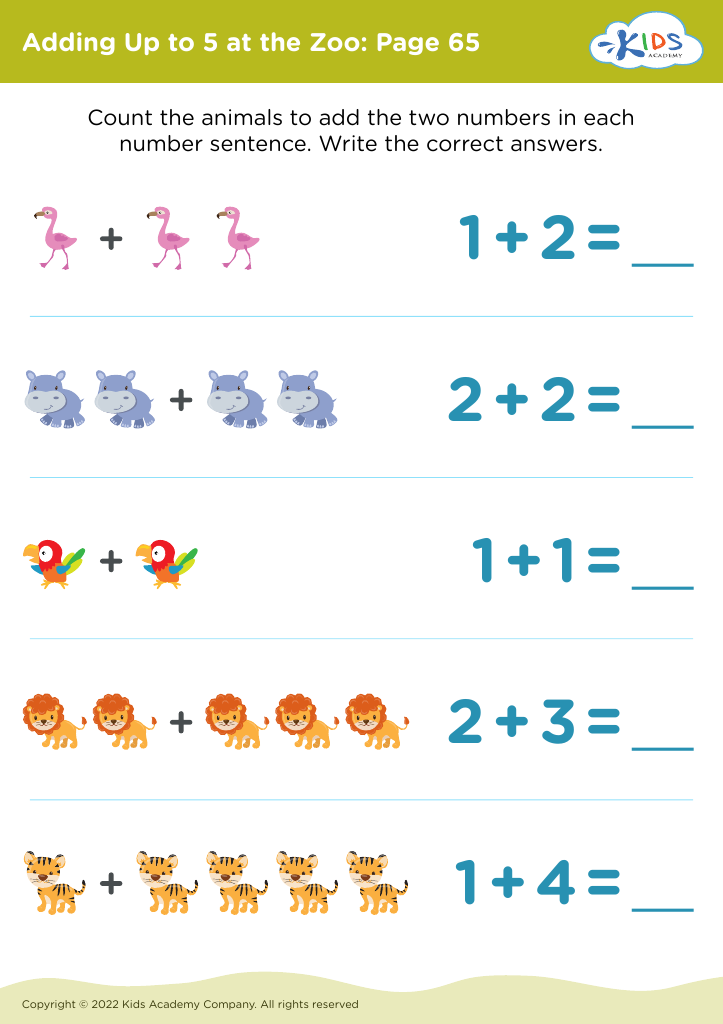
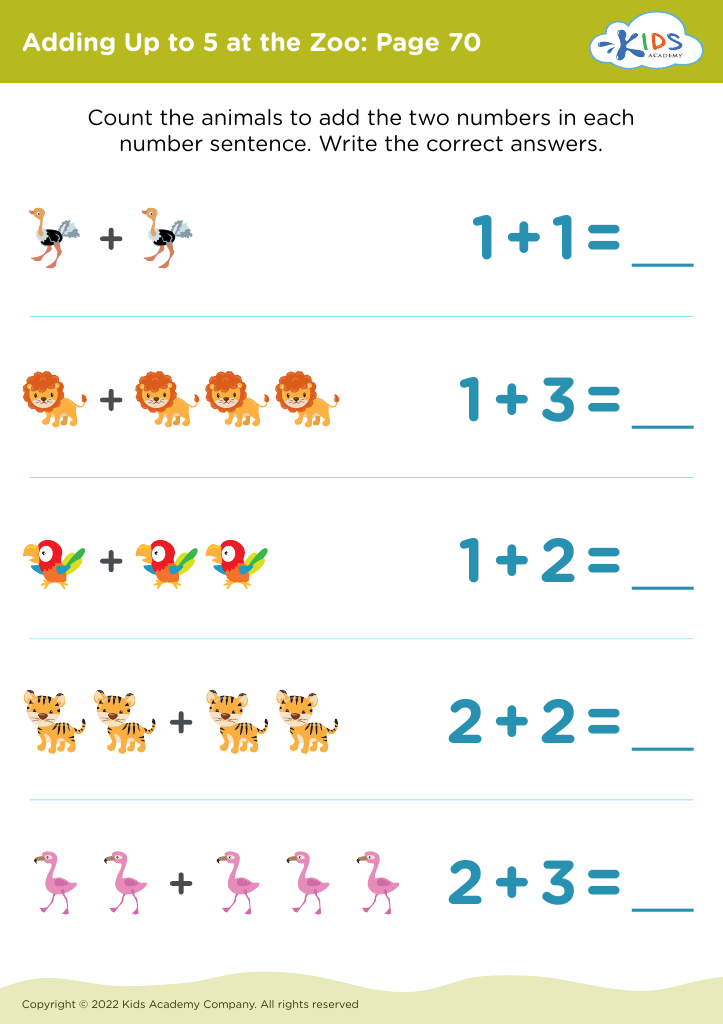
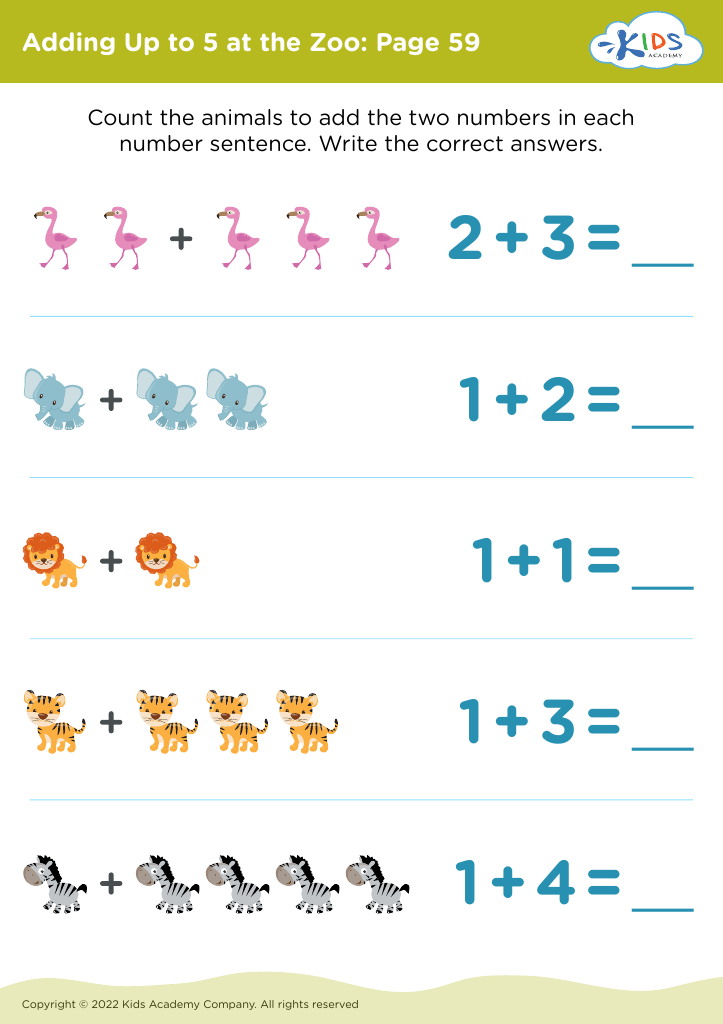
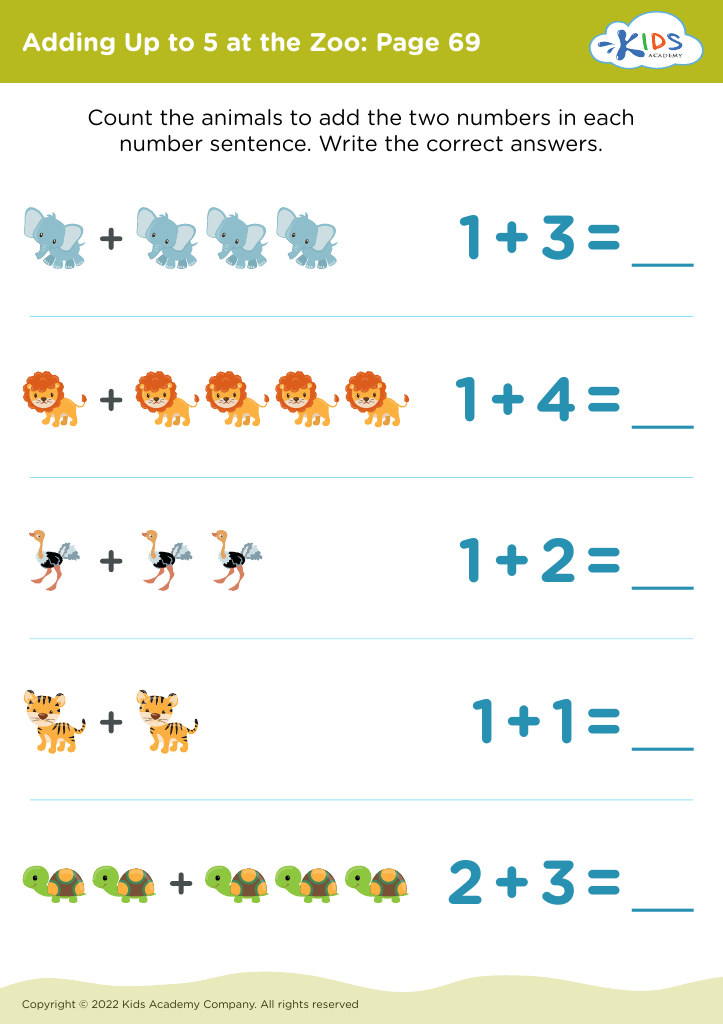
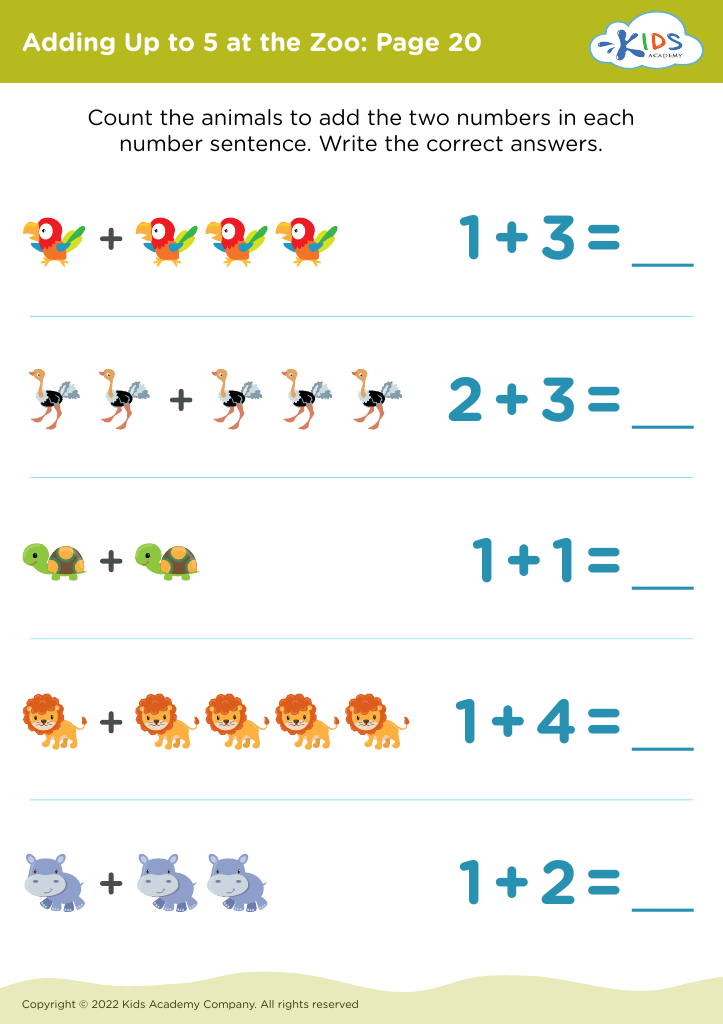
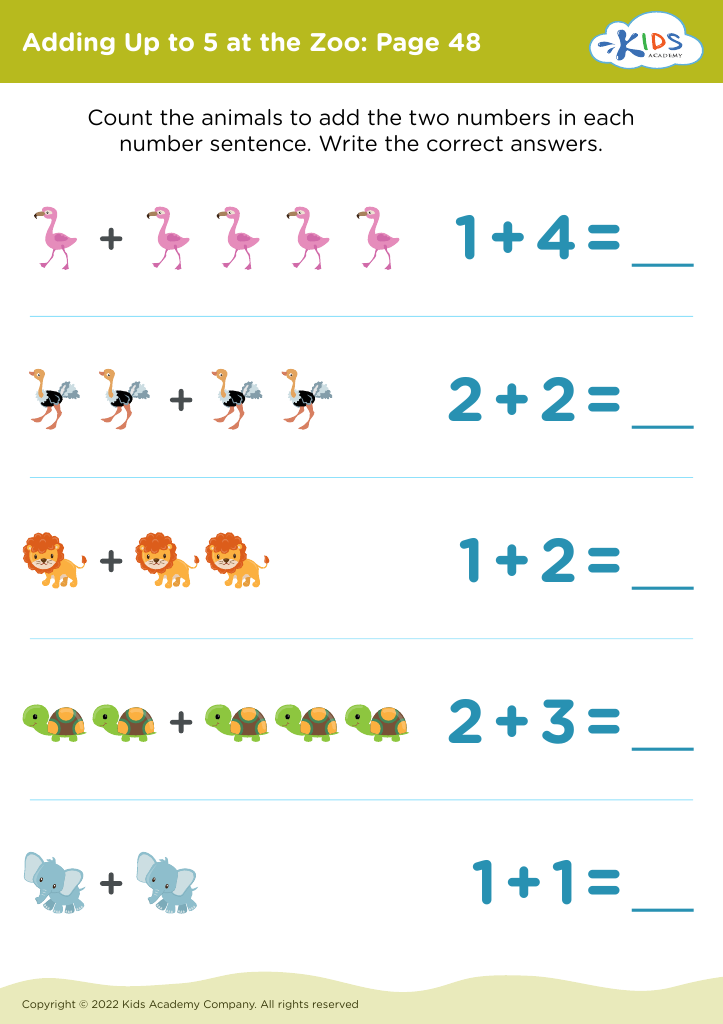
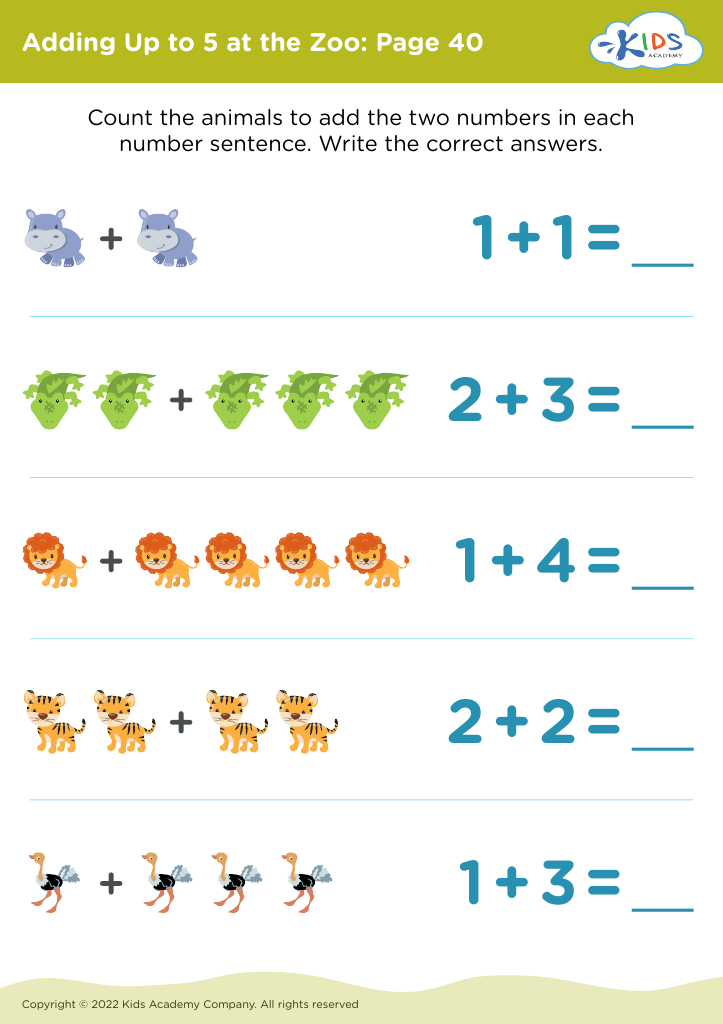
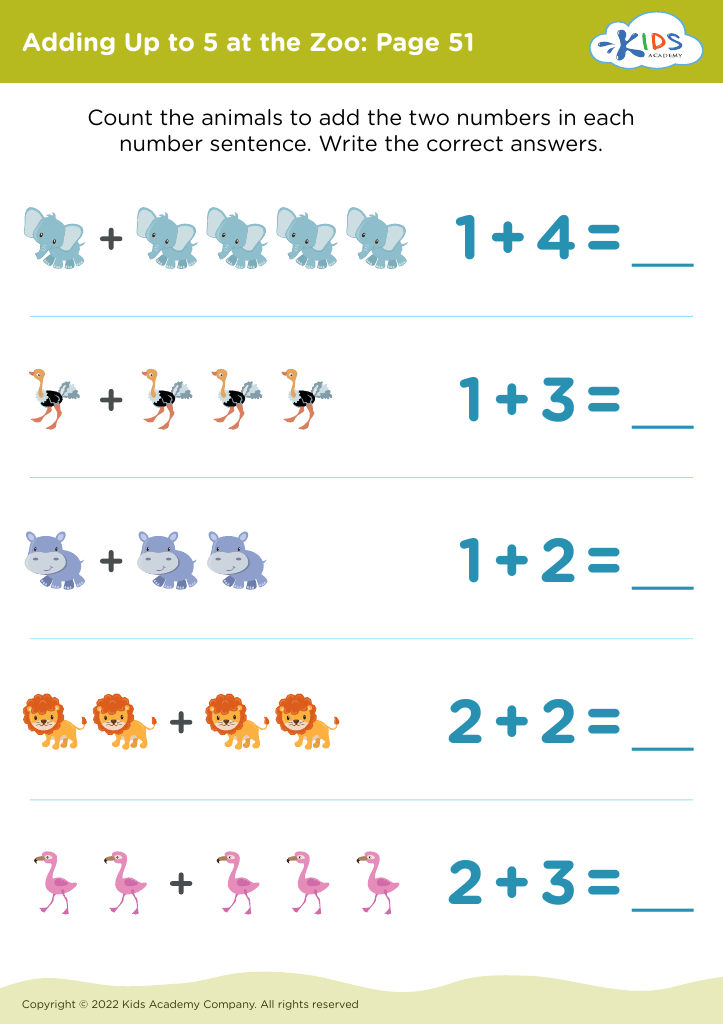



Addition Practice at the Zoo is an engaging educational tool for children aged 3-7 that combines learning with the wonder of animals. Parents and teachers should prioritize this activity for several reasons.
Firstly, it makes math fun and interactive. By incorporating familiar zoo animals into addition exercises, children can associate positive experiences with learning, fostering a love for math early on. This playful approach keeps children excited and motivated to engage with numbers.
Secondly, the activity supports cognitive development. Early childhood is a critical phase for brain development, and experiential learning enhances memory retention and problem-solving skills. Working with colorful visuals of zoo animals aids in the abstraction of mathematical concepts, making it easier for young learners to grasp basic addition.
Furthermore, these activities promote essential skills such as counting, number recognition, and early math fluency. The use of real-world contexts, like visiting a zoo, helps children understand the practical applications of math in everyday life.
In conclusion, Addition Practice at the Zoo provides a multifaceted educational experience that nurtures mathematical skills in a creative way. Both parents and teachers should embrace these opportunities to inspire young learners to appreciate mathematics as both enjoyable and essential.