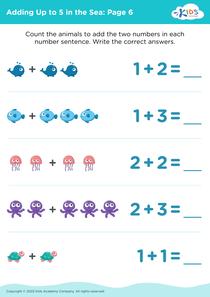
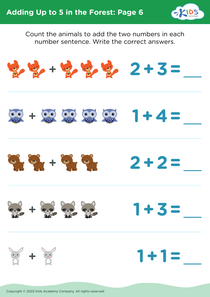
Animal identification Adding at the Zoo Worksheets for Ages 3-7
8 filtered results
-
From - To
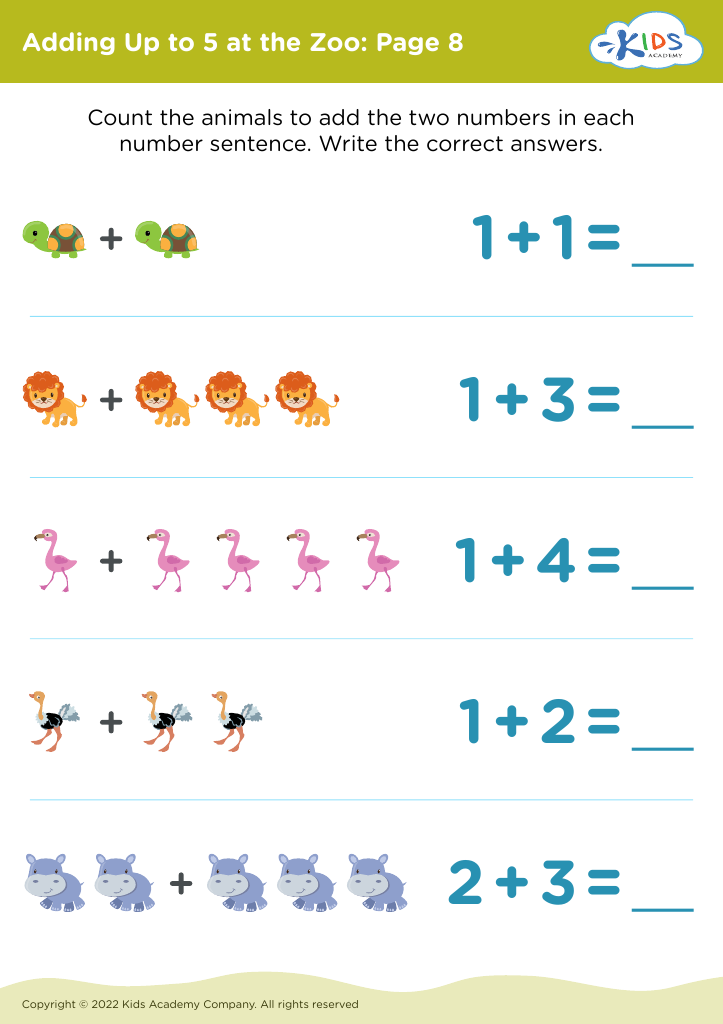
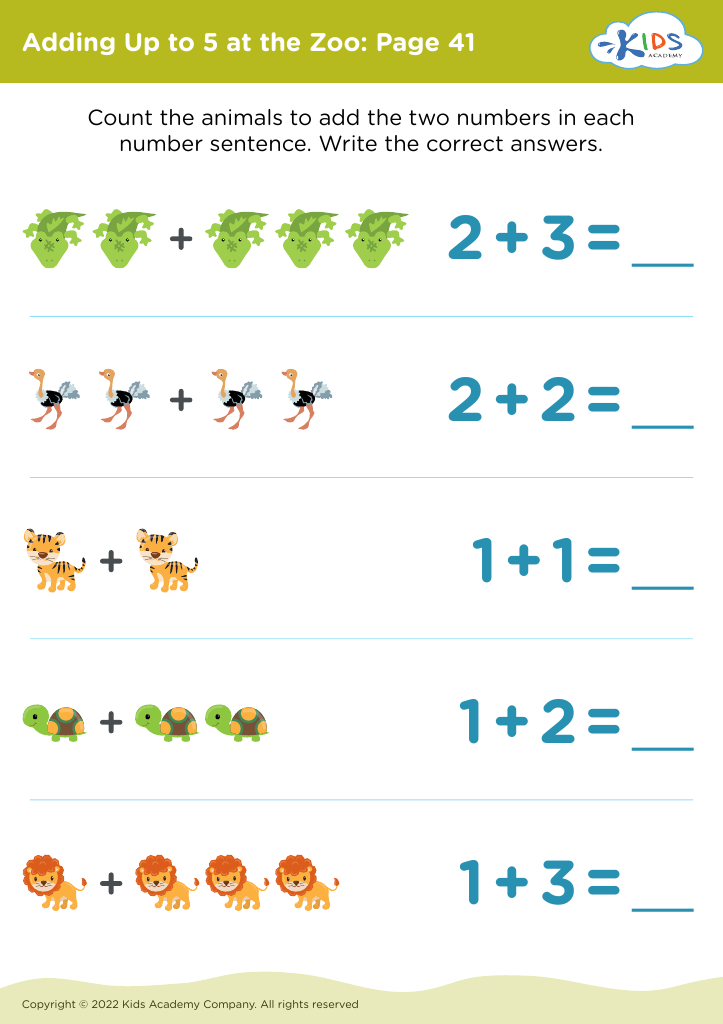
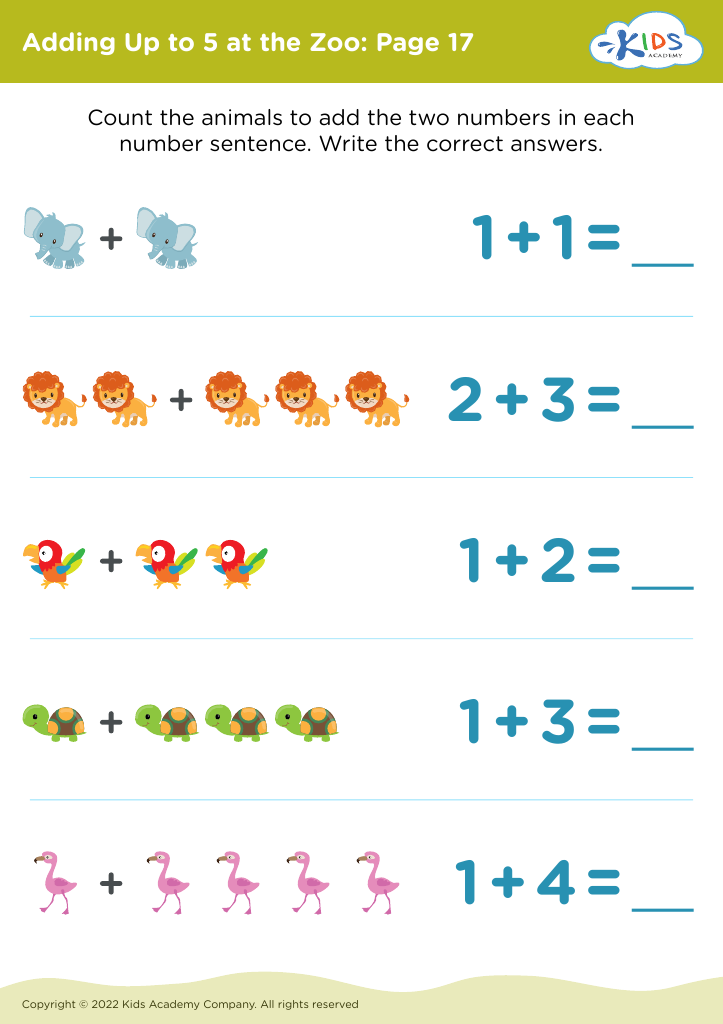
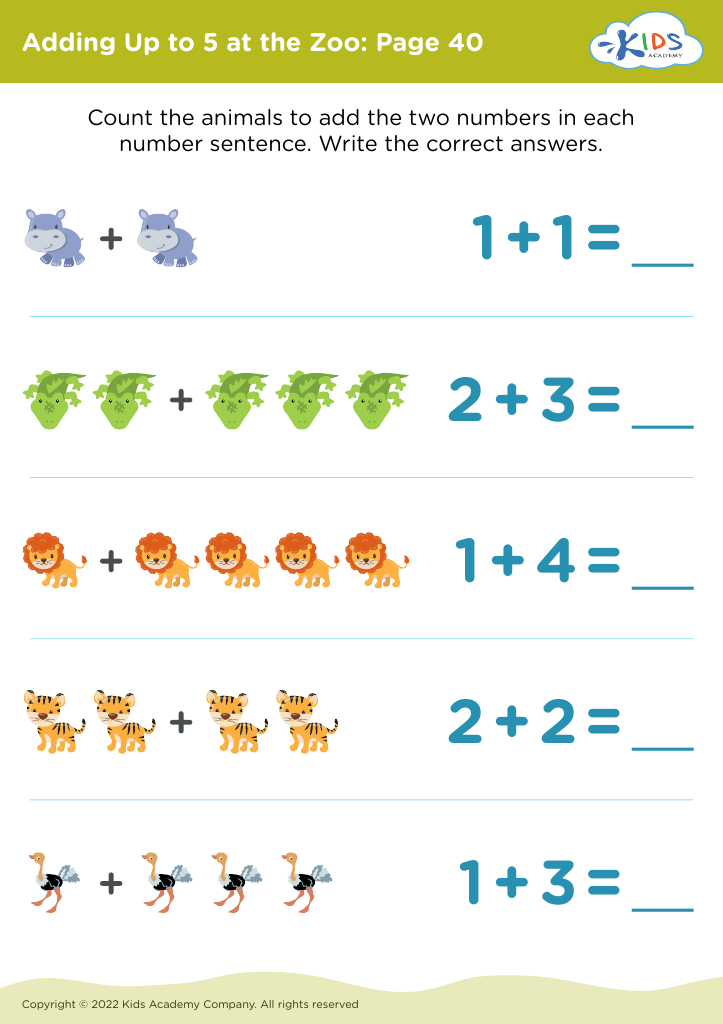
Introduce your little learners to the wonders of the animal kingdom while enhancing their math skills with our "Animal Identification Adding at the Zoo Worksheets for Ages 3-7." These engaging, age-appropriate worksheets combine counting and basic addition with vivid illustrations of zoo animals, making learning fun and interactive. Kids will develop essential arithmetic skills while identifying and naming various animals. Perfect for preschoolers and early elementary students, these worksheets offer an entertaining approach to boost mathematical confidence and nurture a love for wildlife. Visit Kids Academy to download and start your educational adventure today!
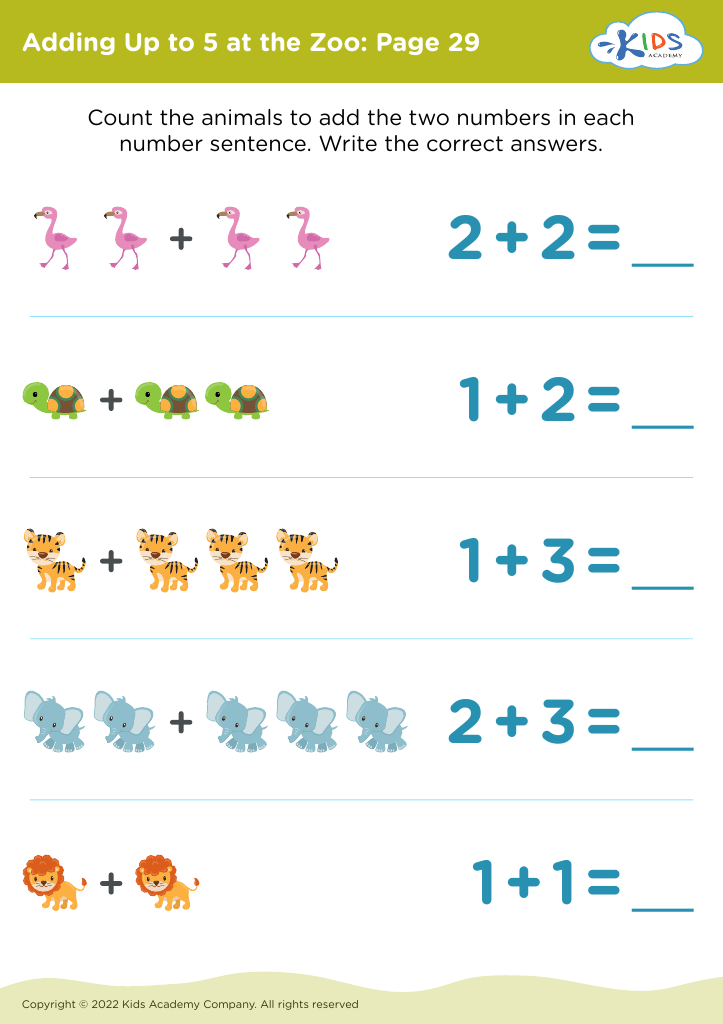
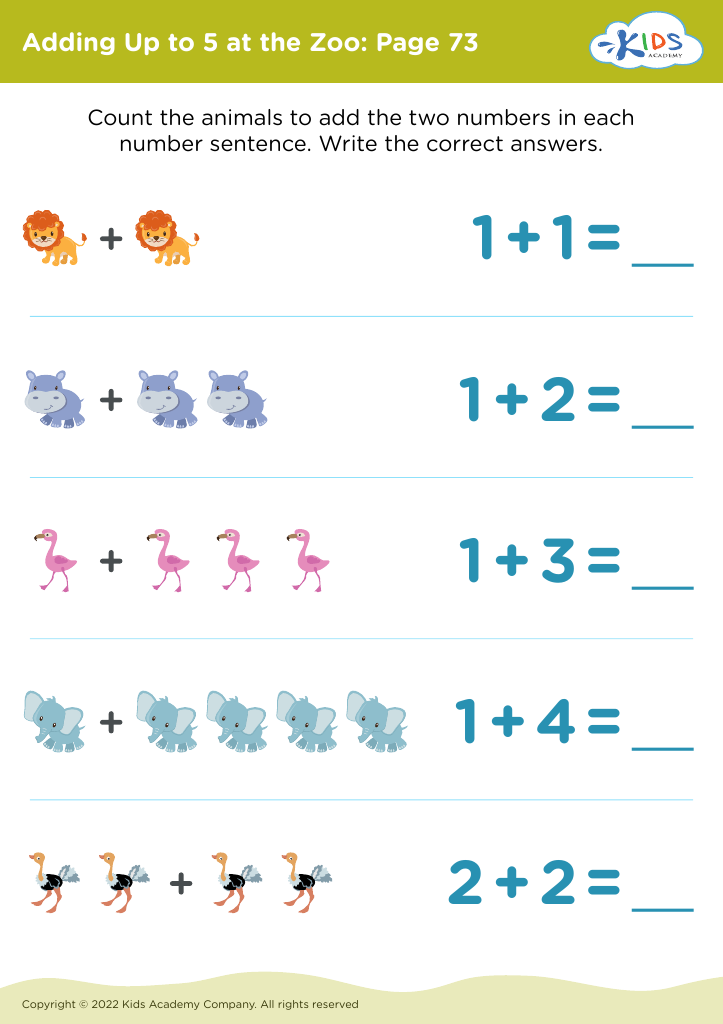
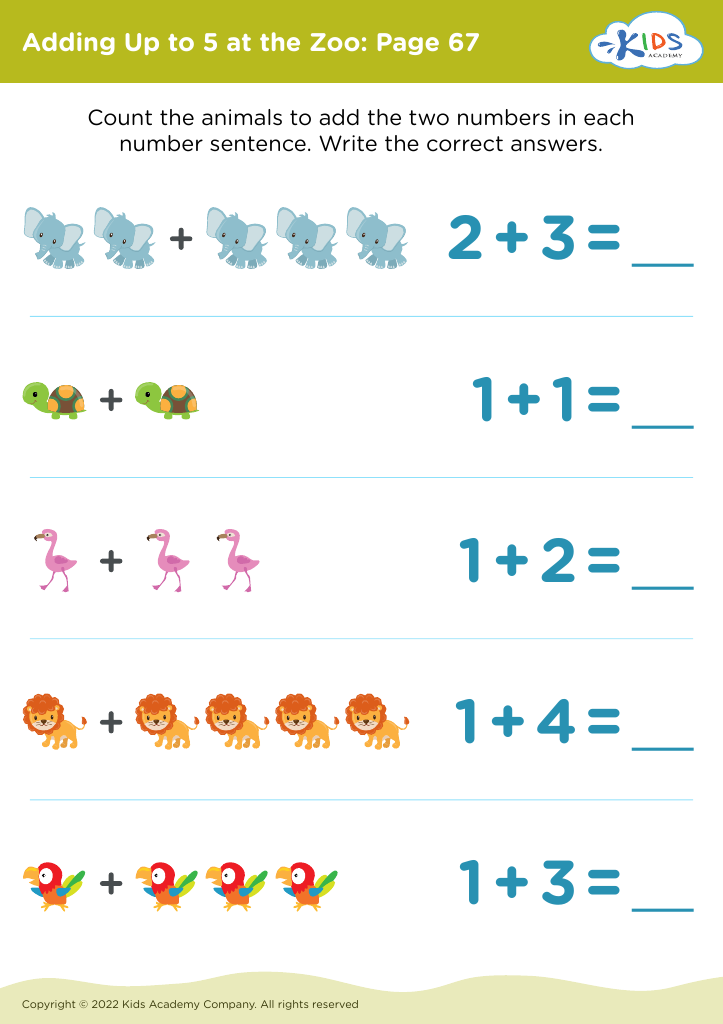
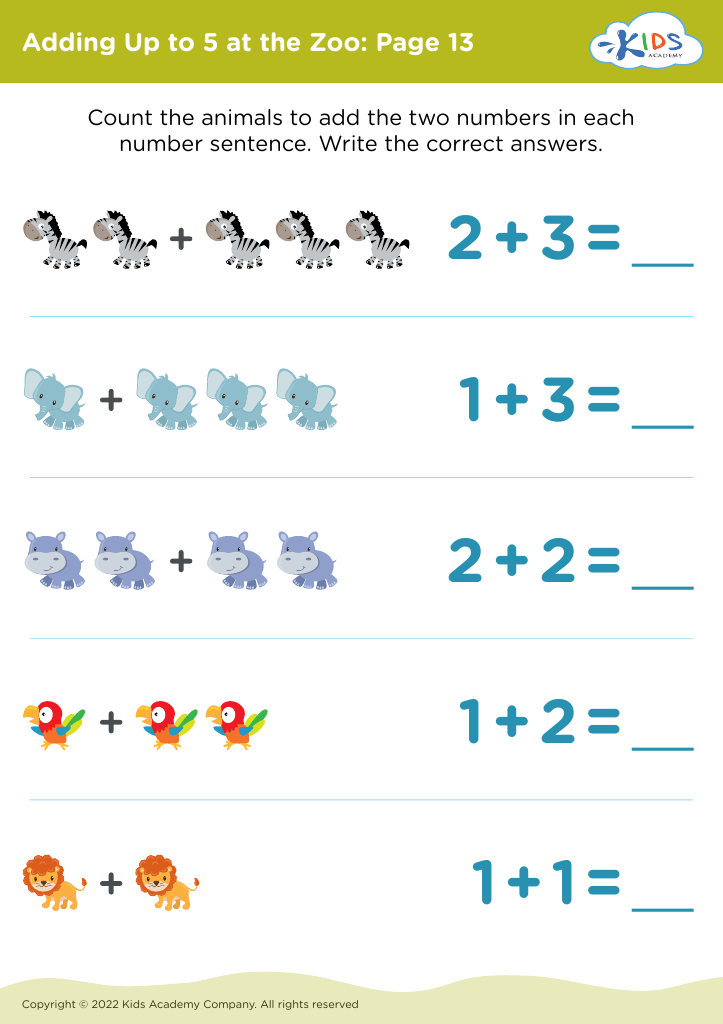



Animal identification activities at the zoo for children aged 3-7 are incredibly beneficial for early childhood development. This critical period is when kids are most receptive to learning foundational skills and forming their understanding of the world. By engaging in animal identification, youngsters improve cognitive abilities, such as memory and pattern recognition. Knowing different animals enhances vocabulary, teaching them new words like "giraffe," "monkey," and "zebra," and nurturing language development.
Moreover, these activities bolster emotional and social skills. When children and their parents or teachers visit the zoo together, they share quality bonding time, discuss their observations, and express emotions like excitement or fascination, fostering communication and empathy. Additionally, kids develop environmental awareness. Learning about animals and their habitats instills a sense of responsibility toward wildlife and nature conservation from a young age.
Furthermore, zoos often incorporate interactive and sensory elements conducive to hands-on learning. Touching textures, hearing animal sounds, and observing animal behaviors captivate young minds, making learning an enjoyable adventure. To engage children in animal identification isn't merely about knowing different species; it's about nurturing curiosity, creating memorable experiences, and laying the groundwork for a lifelong love of nature and learning.