Filters

18 filtered results

Clear all filters
Favorites
With answer key
Interactive

18 filtered results

Difficulty Level

Grade


Subject

Introduce your little explorers to the world of math with our "Cognitive Development Adding at the Zoo Worksheets" designed for children ages 3-7! These fun, engaging worksheets blend the excitement of a zoo adventure with foundational math skills, focusing on addition. Through vibrant illustrations of animals and interactive exercises, your child will enhance their cognitive abilities while learning to count and add. Each worksheet is tailored to promote critical thinking and problem-solving skills in young learners. Perfect for homeschooling or classroom settings, our resources ensure that learning math is an enjoyable and enriching experience. Dive into learning today!
Check out this FREE Trial Lesson on Adding at the Zoo for age 3-7!

A

Favorites
With answer key
Interactive
  • 3-7
  • Cognitive Development
  • Adding at the Zoo
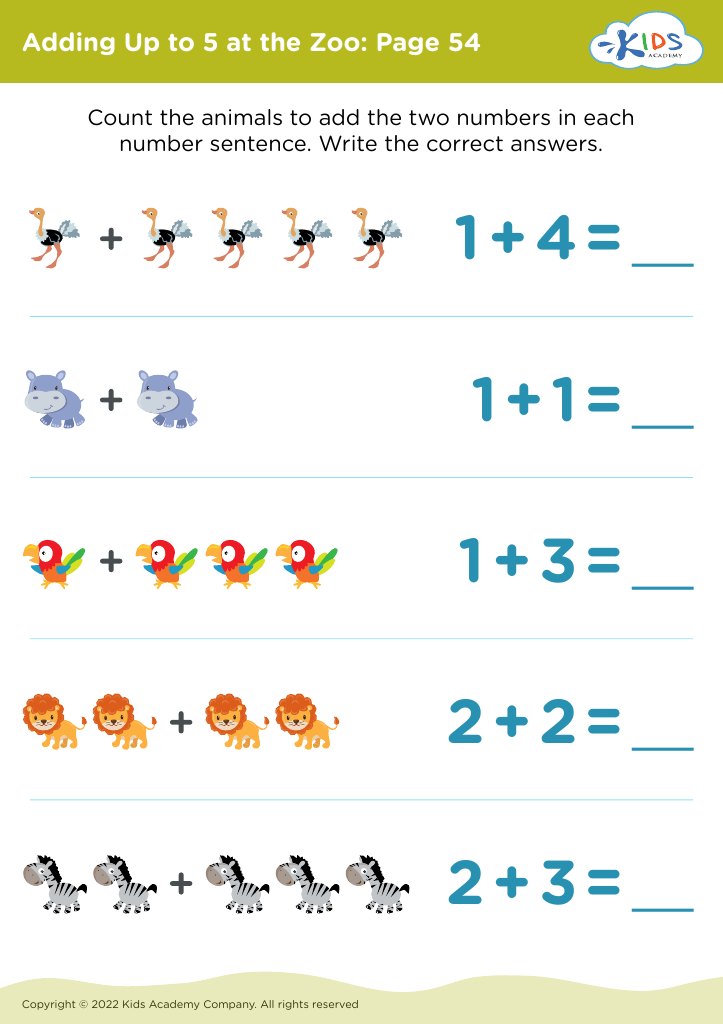
Adding Up to 5 at the Zoo: Page 54
Worksheet
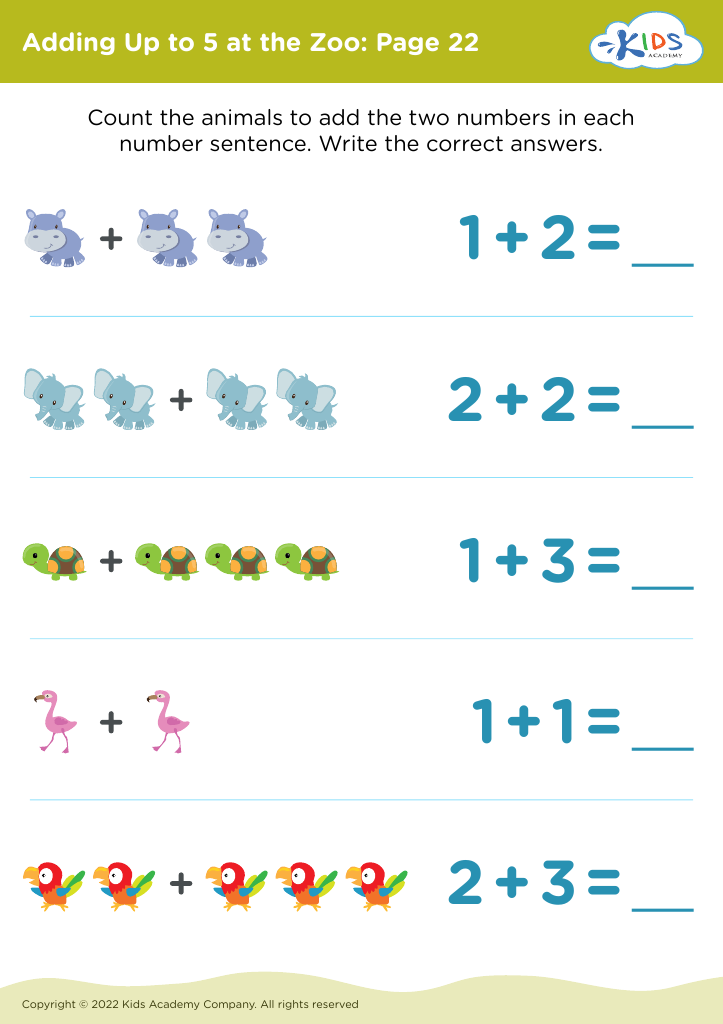
Adding Up to 5 at the Zoo: Page 22
Worksheet
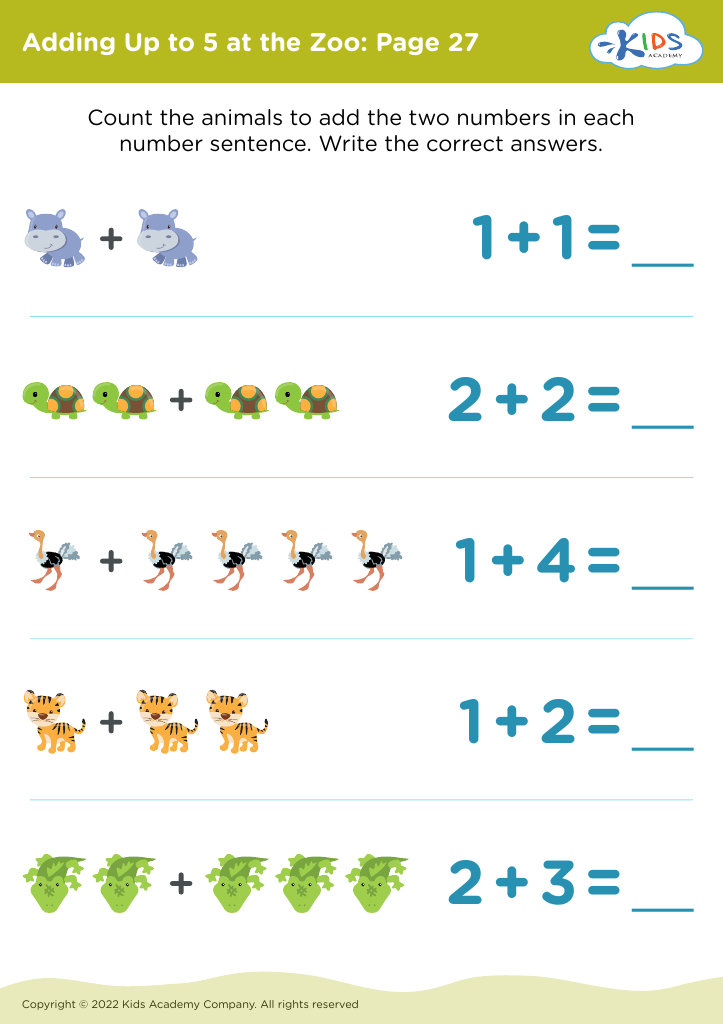
Adding Up to 5 at the Zoo: Page 27
Worksheet
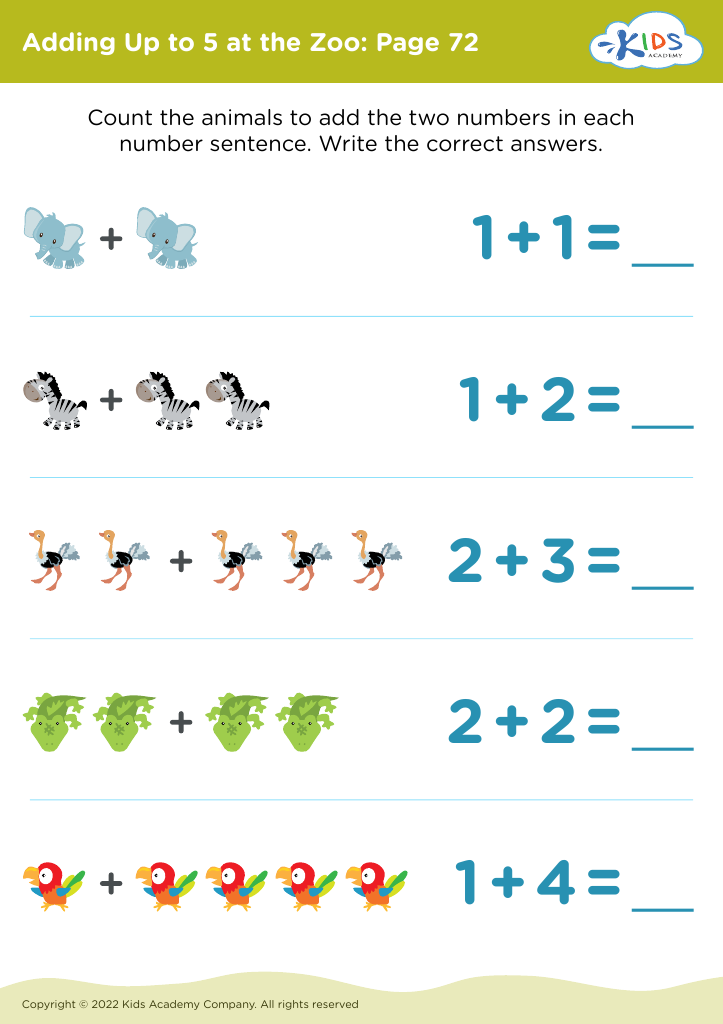
Adding Up to 5 at the Zoo: Page 72
Worksheet
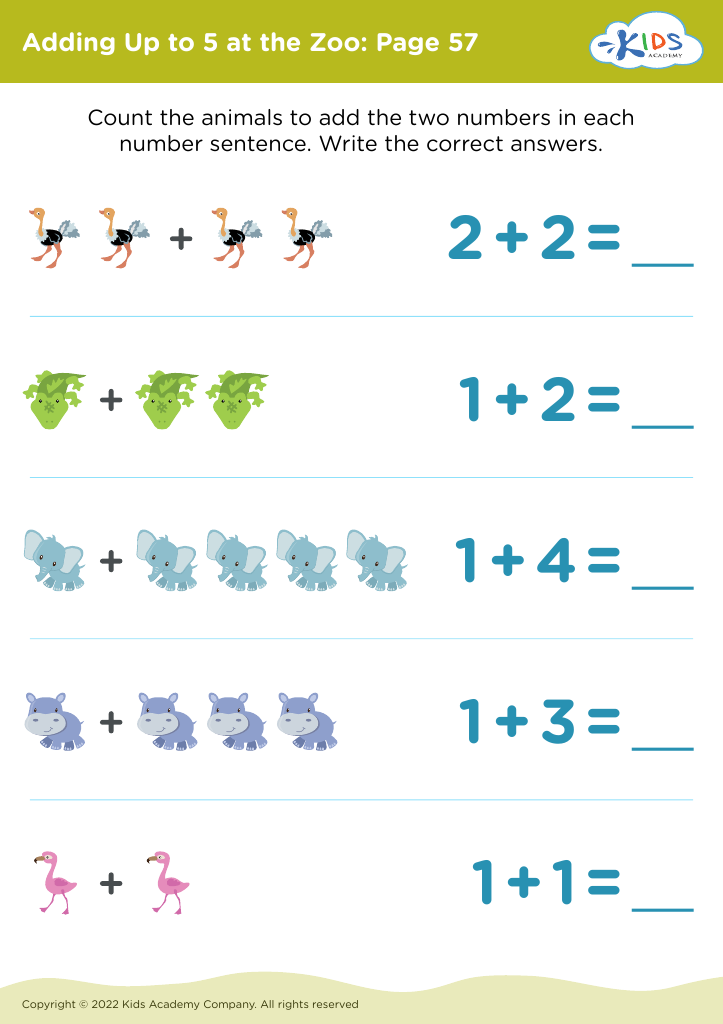
Adding Up to 5 at the Zoo: Page 57
Worksheet
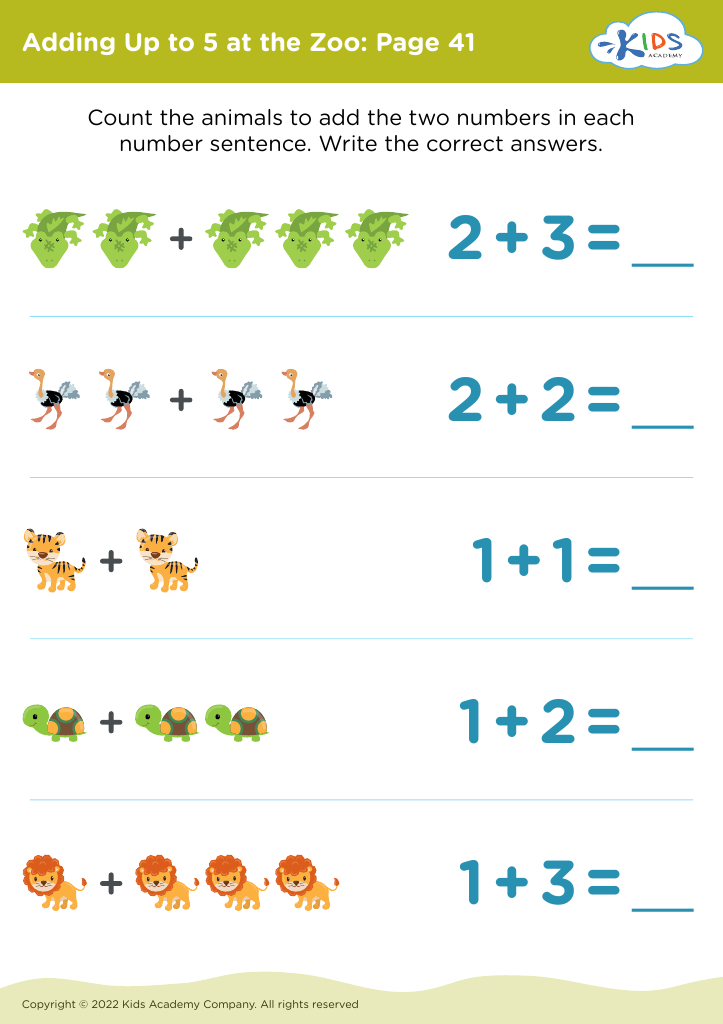
Adding Up to 5 at the Zoo: Page 41
Worksheet
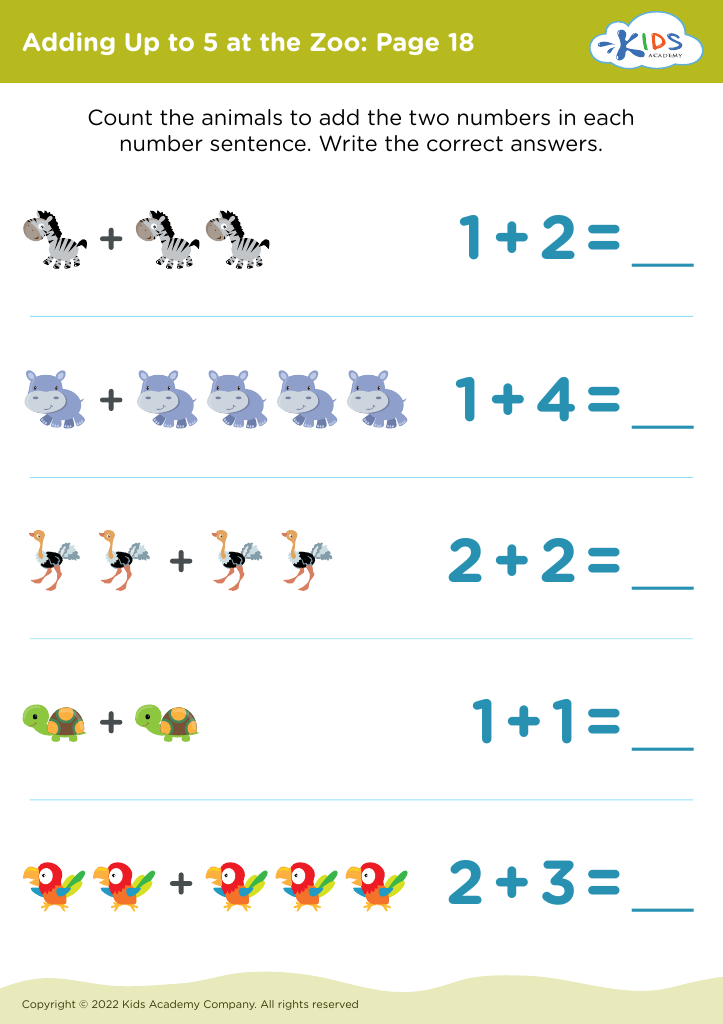
Adding Up to 5 at the Zoo: Page 18
Worksheet
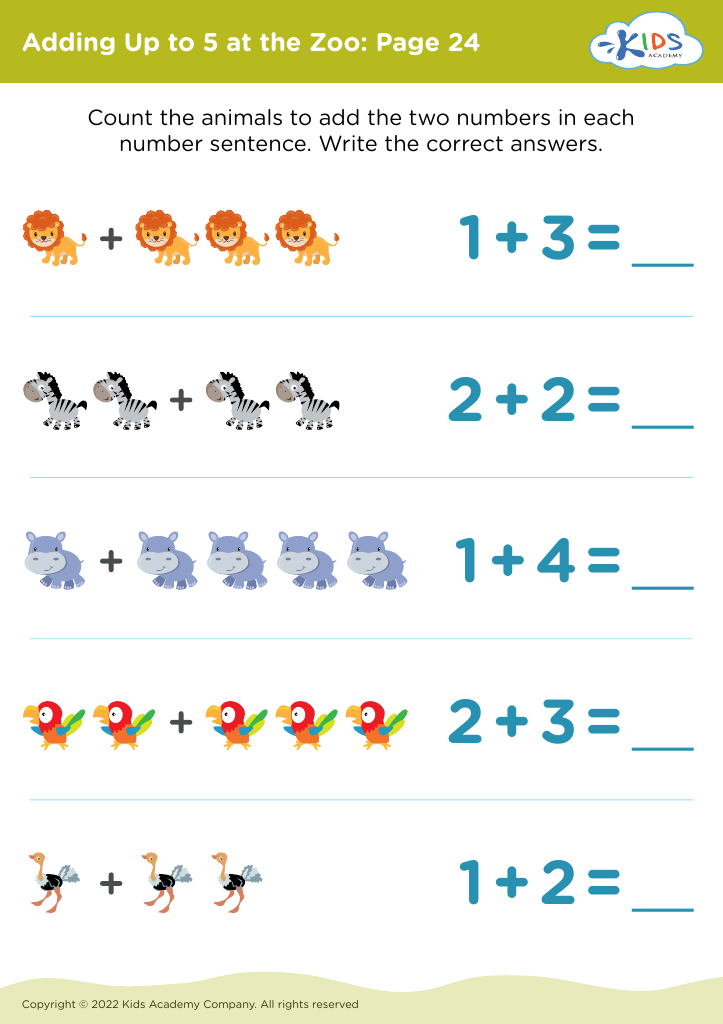
Adding Up to 5 at the Zoo: Page 24
Worksheet
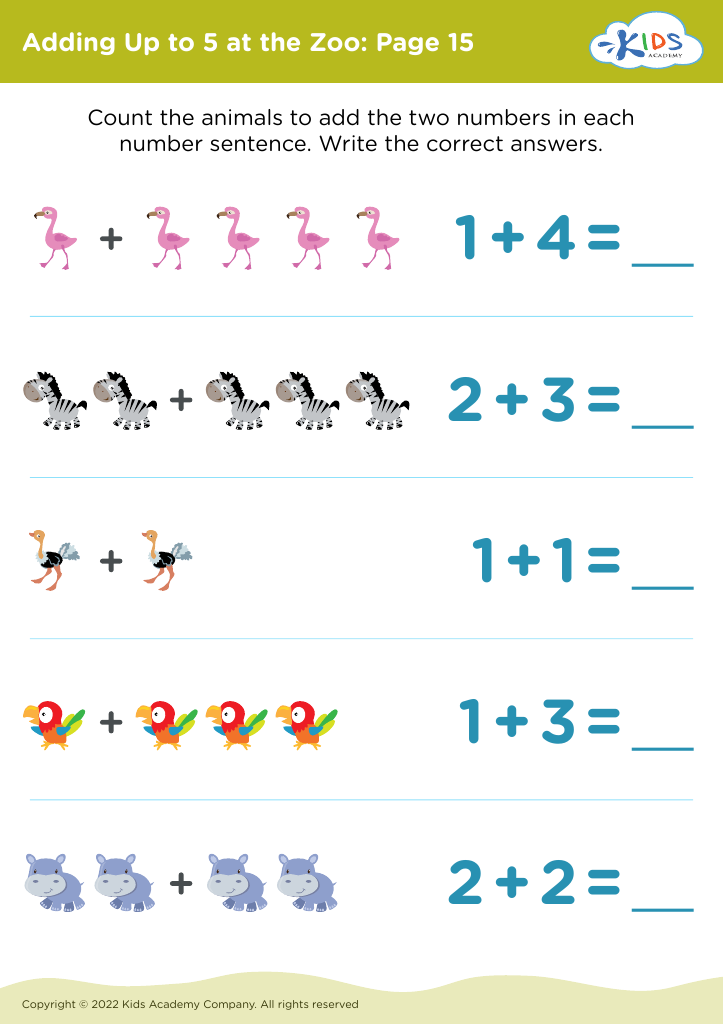
Adding Up to 5 at the Zoo: Page 15
Worksheet
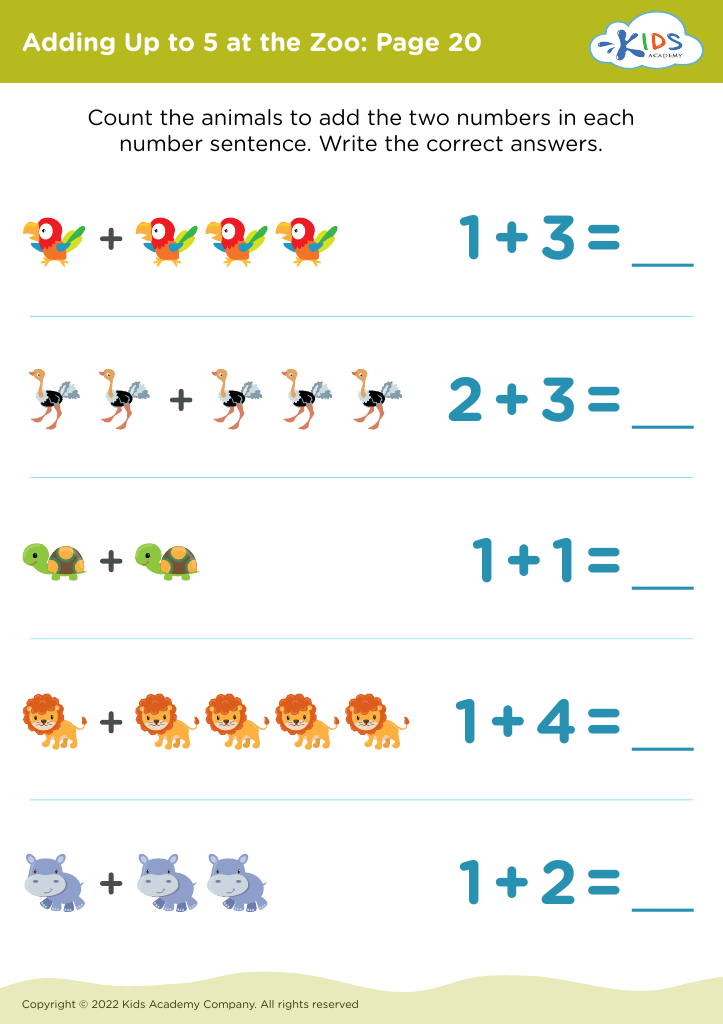
Adding Up to 5 at the Zoo: Page 20
Worksheet
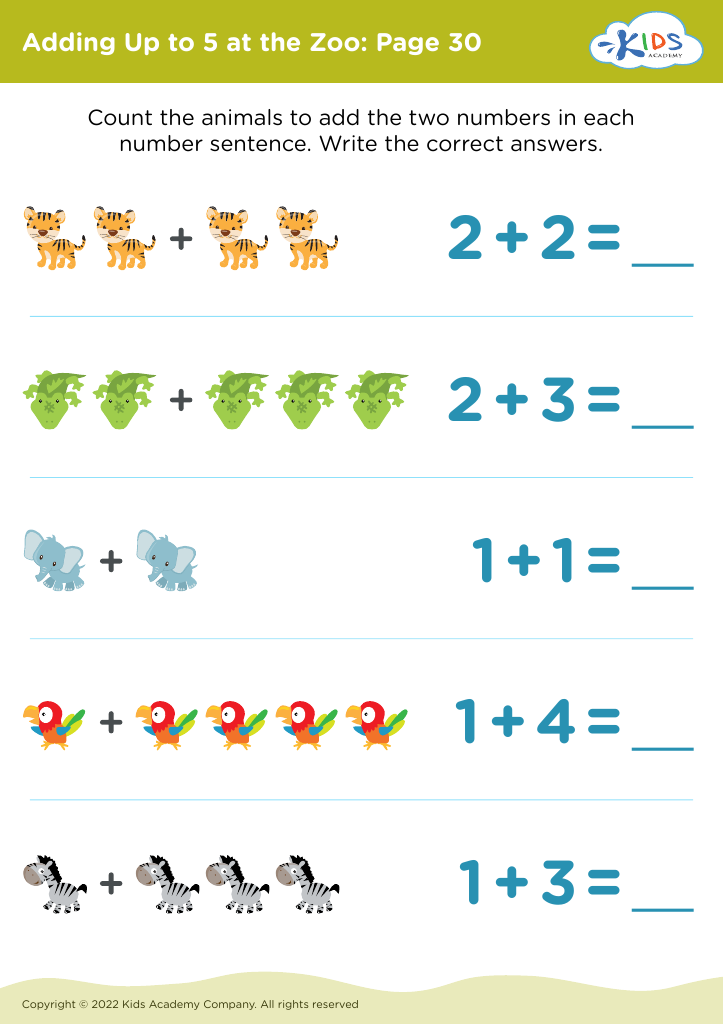
Adding Up to 5 at the Zoo: Page 30
Worksheet
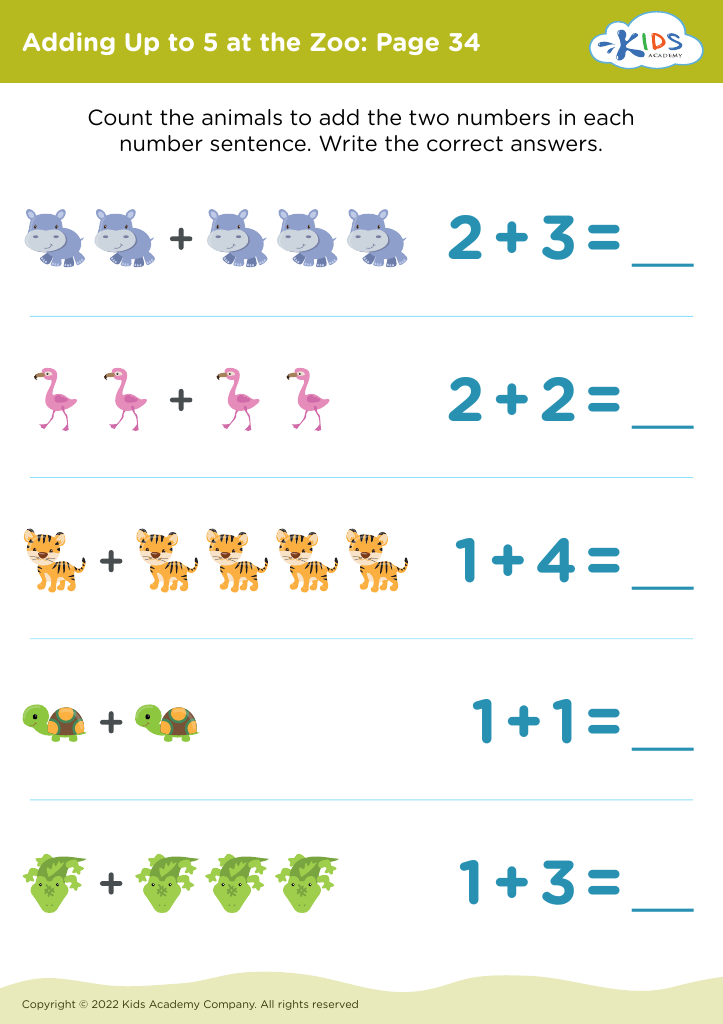
Adding Up to 5 at the Zoo: Page 34
Worksheet
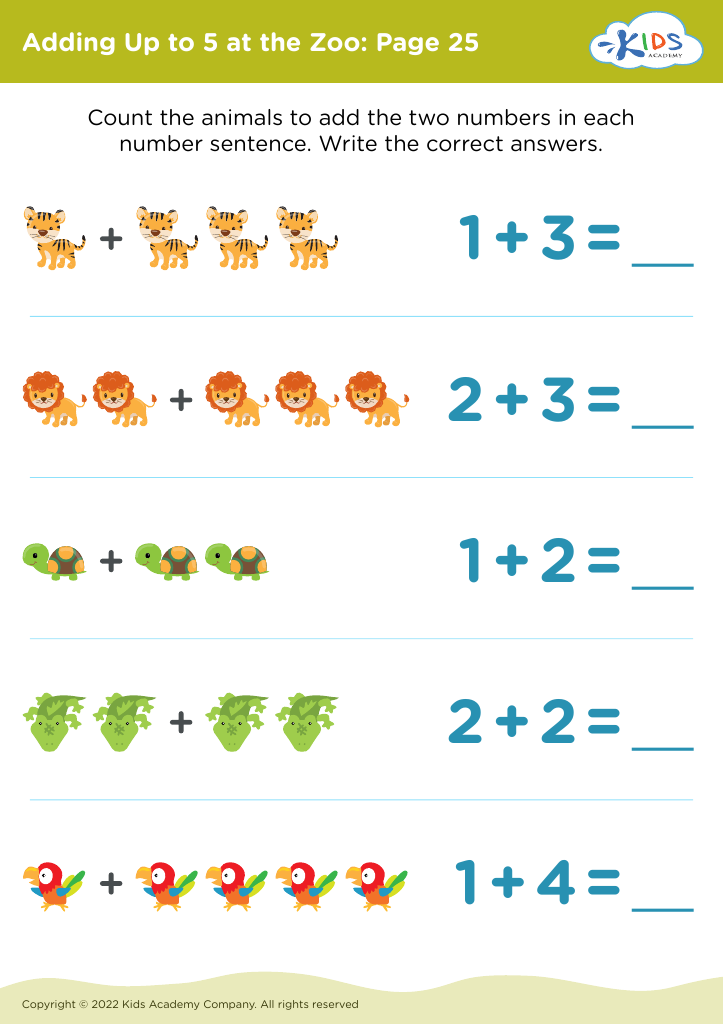
Adding Up to 5 at the Zoo: Page 25
Worksheet
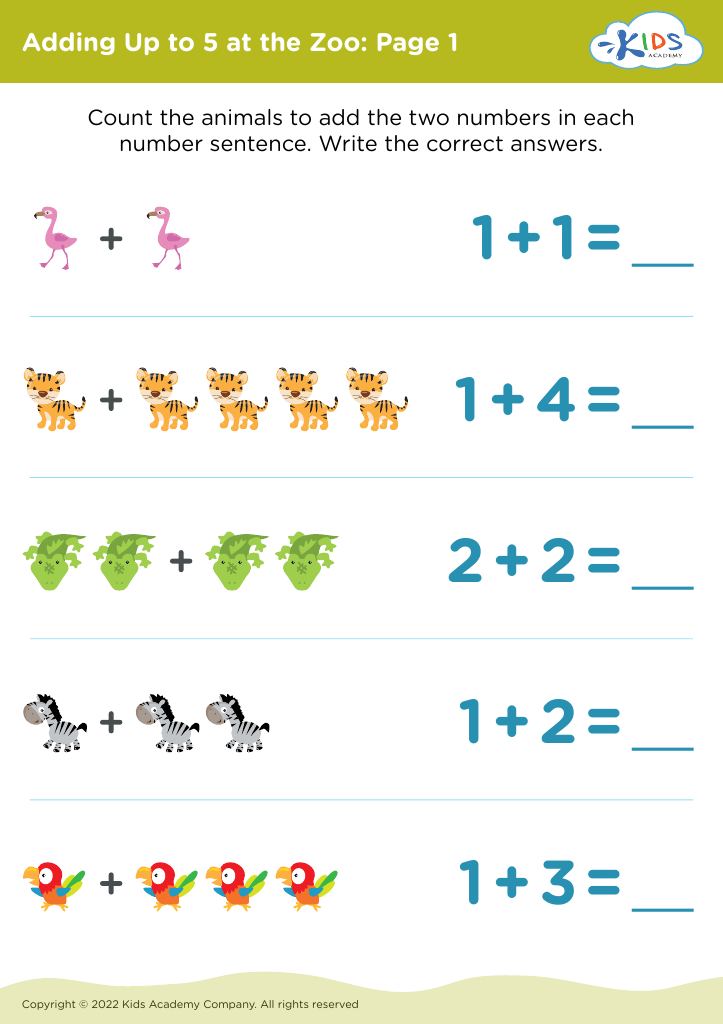
Adding Up to 5 at the Zoo: Page 1

Adding Up to 5 at the Zoo: Page 1

Adding Up to 5 at the Zoo: Page 1
Worksheet
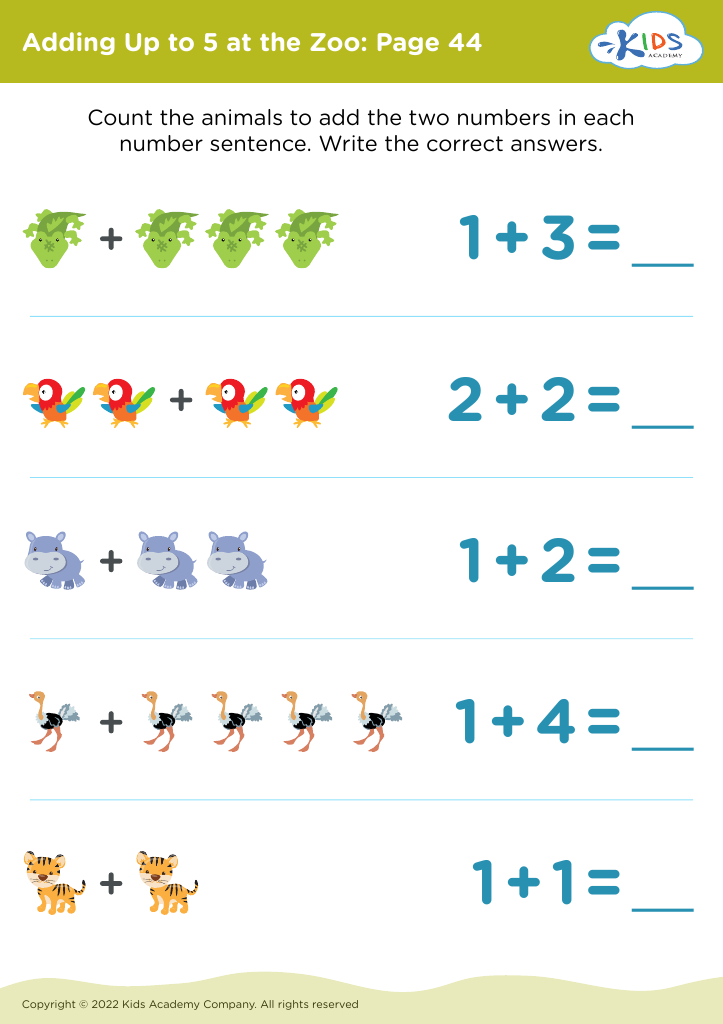
Adding Up to 5 at the Zoo: Page 44
Worksheet
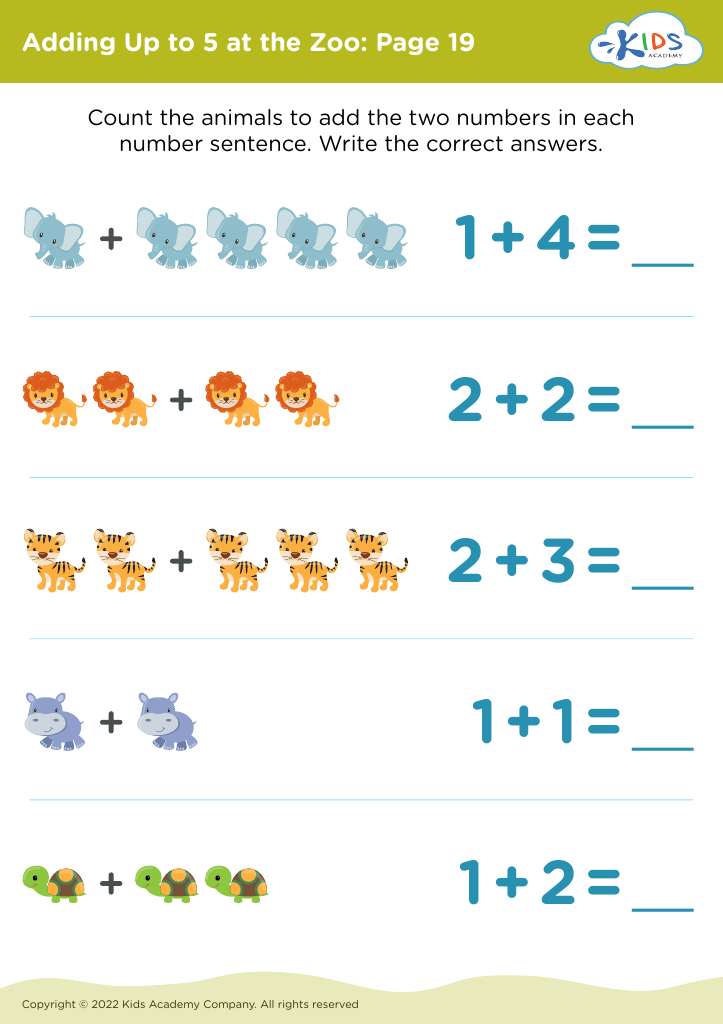
Adding Up to 5 at the Zoo: Page 19
Worksheet
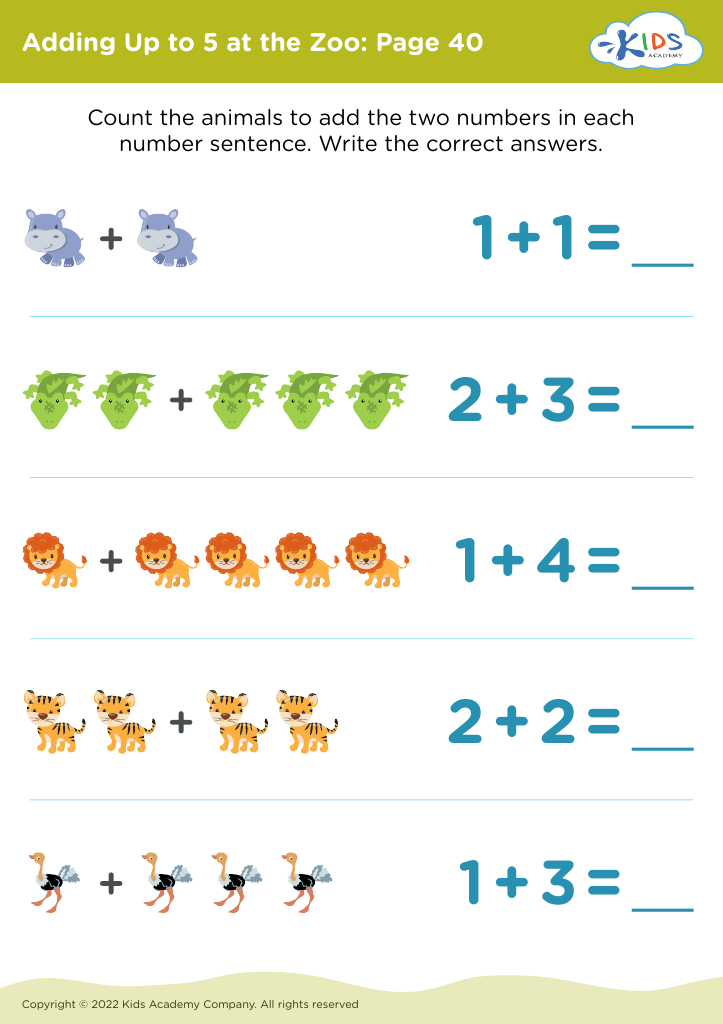
Adding Up to 5 at the Zoo: Page 40
Worksheet
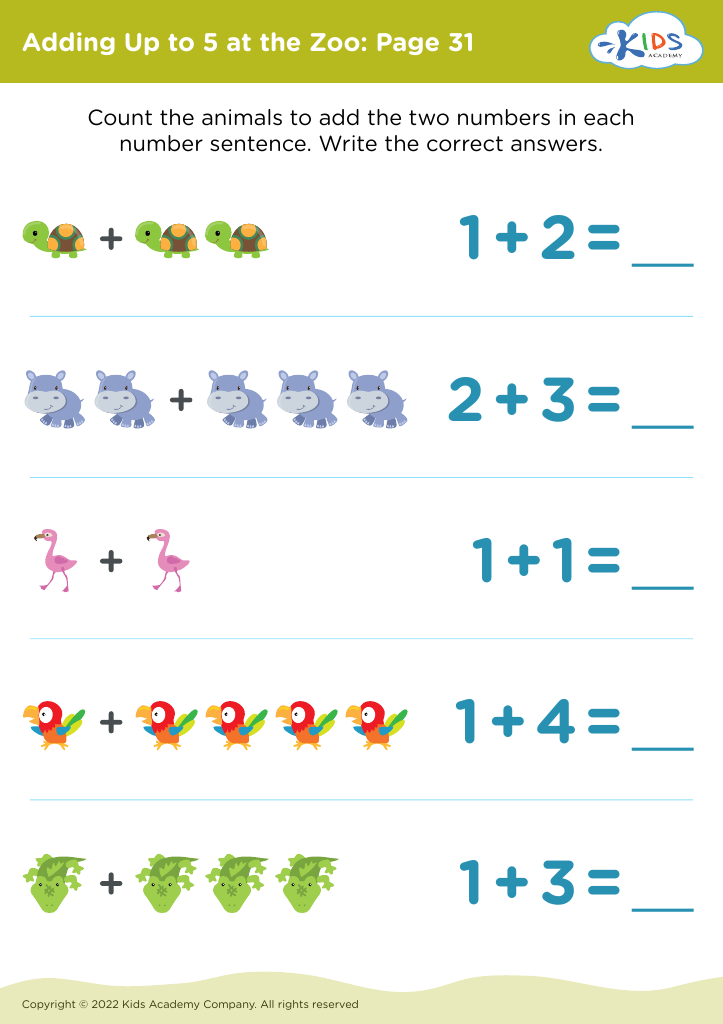
Adding Up to 5 at the Zoo: Page 31
Worksheet


Parents and teachers should care about cognitive development, especially when it comes to activities like "Adding at the Zoo" for children ages 3-7, because early childhood is a crucial period for establishing foundational skills. Cognitive development refers to the ways in which children think, explore, and understand the world around them. Engaging in activities that promote counting, simple addition, and observation of animals supports mathematical skills while making learning enjoyable.

"Adding at the Zoo" can be a playful and interactive way to teach children about numbers and basic arithmetic. This approach fosters not just mathematical understanding, but also encourages critical thinking and problem-solving as children ask questions about the animals, their characteristics, and their habitats. Furthermore, integrating fun settings, like a zoo, helps strengthen memory and recognition through real-life contexts, making abstract concepts more relatable.

Parents and teachers who focus on cognitive development through such playful methods are nurturing curiosity and lifelong learning. These early experiences pave the way for more complex thinking skills in later years, setting children up for academic success and overall emotional development. Thus, incorporating creative learning experiences like "Adding at the Zoo" is essential for shaping well-rounded, enthusiastic learners.