Fine Motor Skills Adding at the Zoo Worksheets for Ages 3-7
4 filtered results
-
From - To
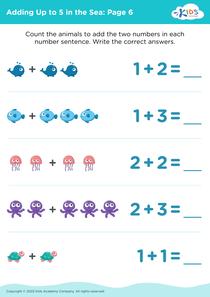
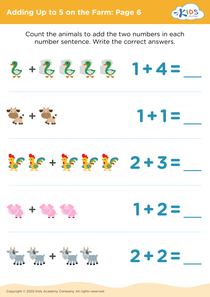
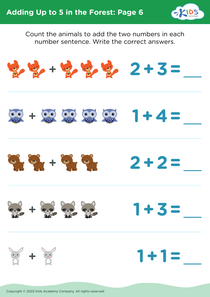
Explore our "Fine Motor Skills Adding at the Zoo Worksheets" tailored for children aged 3-7! These engaging worksheets combine playful zoo themes with essential fine motor skills practice. Kids will enhance their finger coordination by tracing numbers, counting animals, and solving adorable addition problems. Perfect for young learners, our activities are designed to improve both mathematical thinking and fine motor control, making learning fun and effective. Ideal for parents and teachers, these printable worksheets will keep kids entertained while they develop crucial skills for their academic journey. Visit now to enhance your child’s learning experience!
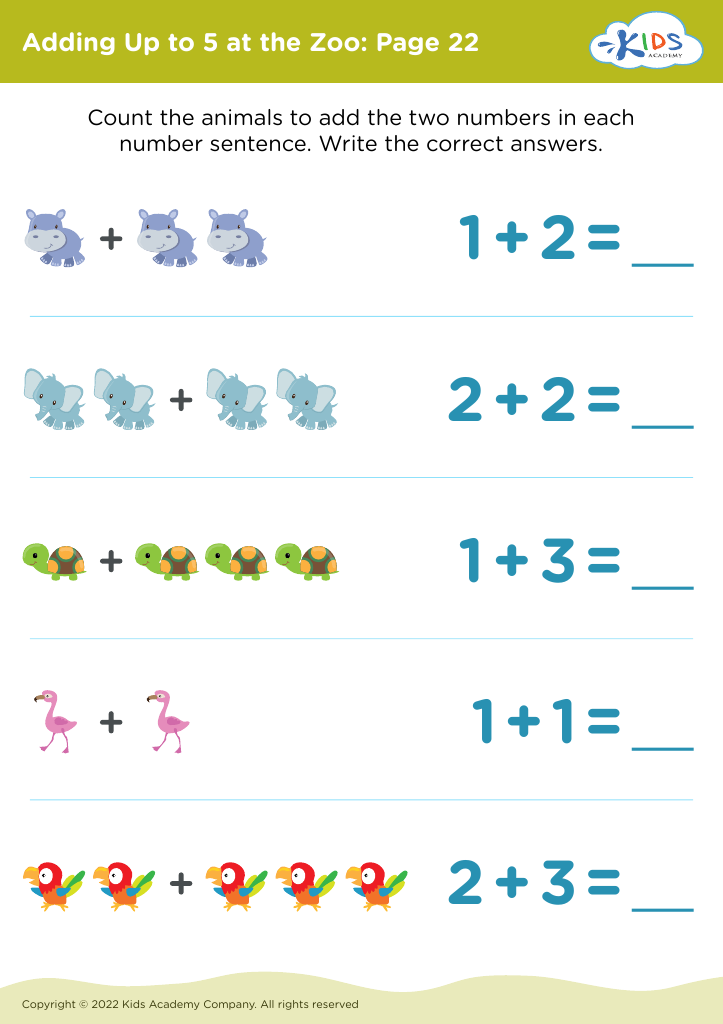
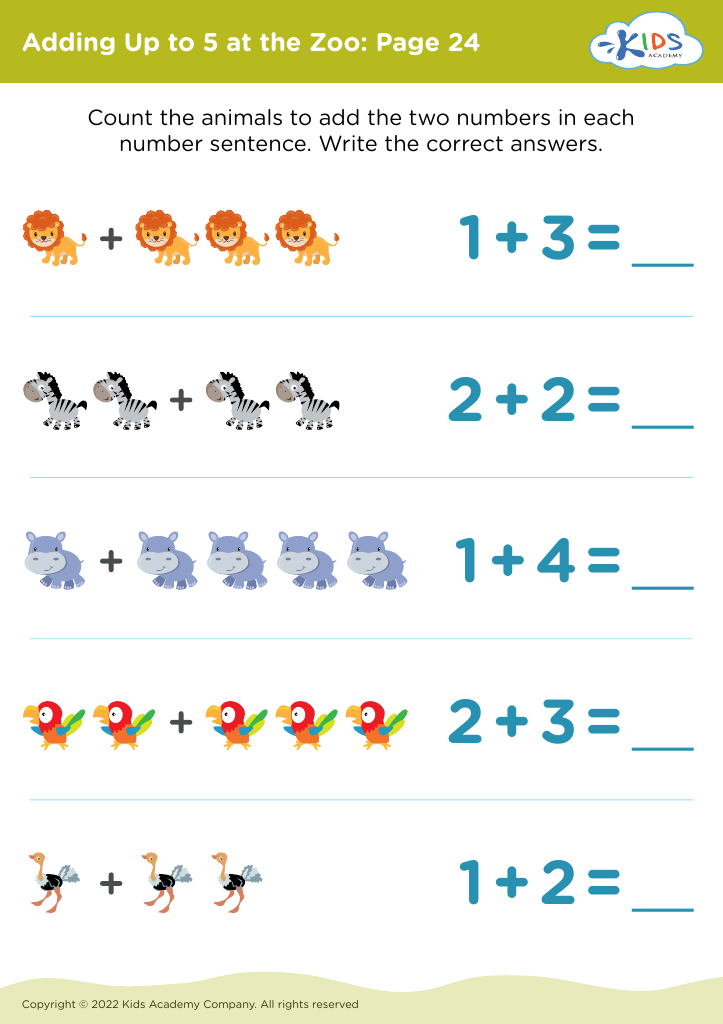
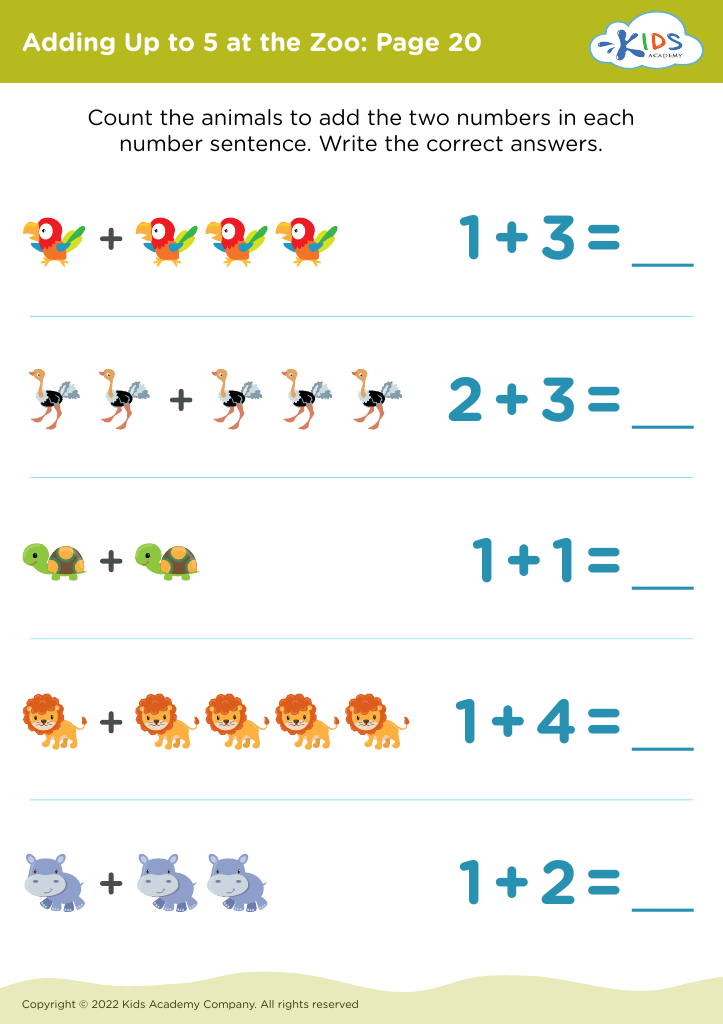
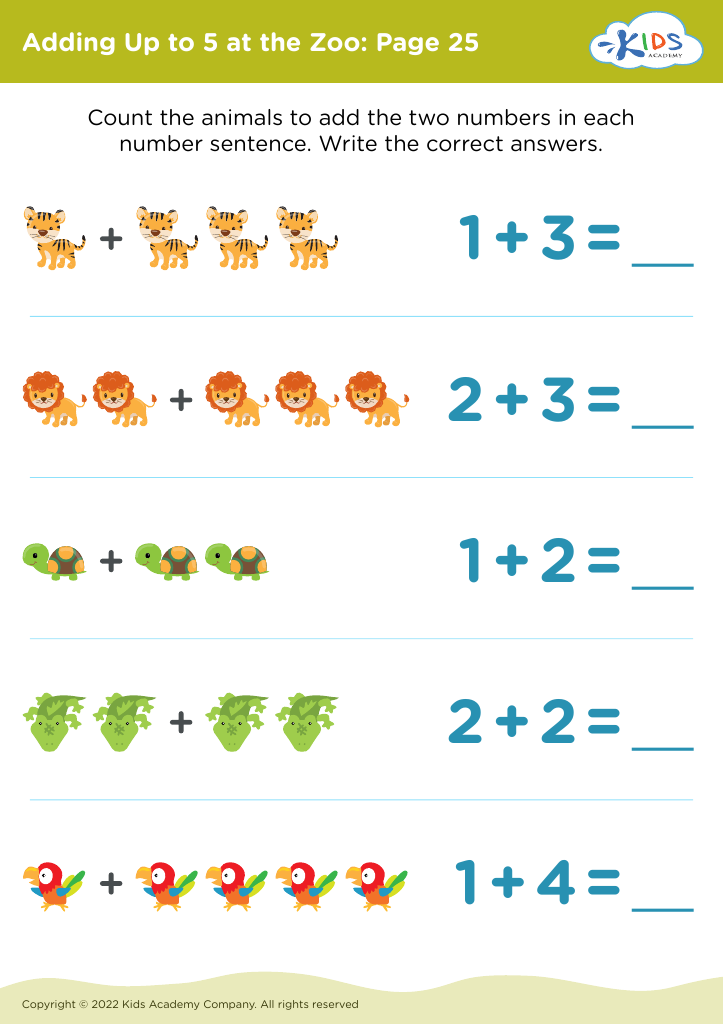



Fine motor skills refer to the coordination of small muscles, particularly in the hands and fingers, with the eyes. For children ages 3-7, the development of these skills is fundamental to their overall growth, impacting their ability to perform tasks like writing, buttoning clothes, and cutting with scissors. Incorporating activities such as "Fine Motor Skills Adding at the Zoo" offers a dual advantage: it provides engaging and educational experiences that enhance fine motor skills and foundational math concepts within a stimulating environment.
Parents and teachers should care about these activities because the early years are critical for motor skill development. Engaging children in activities that require them to count, add, and manipulate small objects, such as zoo animals or tokens, can significantly bolster their dexterity and cognitive skills. Moreover, the zoo theme can captivate their interest and attention, making learning feel less like a chore and more like an adventure.
Children who develop strong fine motor skills are better prepared for school, where tasks such as holding a pencil correctly, cutting along lines, and crafting projects require these abilities. Activities that merge learning and play foster an enthusiasm for education while simultaneously unleashing a child’s potential, nurturing not just their motor skills but their confidence in mastering new skills.