Hand-eye Coordination Adding at the Zoo Worksheets for Ages 3-7
3 filtered results
-
From - To
Enhance your child's learning experience with our "Hand-eye Coordination Adding at the Zoo" worksheets, specifically designed for ages 3-7! These engaging activities merge fun with education, encouraging children to practice their addition skills while exploring adorable zoo animals. Each worksheet promotes hand-eye coordination as young learners complete colorful counting tasks and number recognition exercises. By fostering both mathematical skills and fine motor abilities, these worksheets provide a playful way for kids to develop essential skills needed for their academic journey. Perfect for homeschooling or classroom environments, our resources make learning math an enjoyable adventure! Start your child's learning journey today!
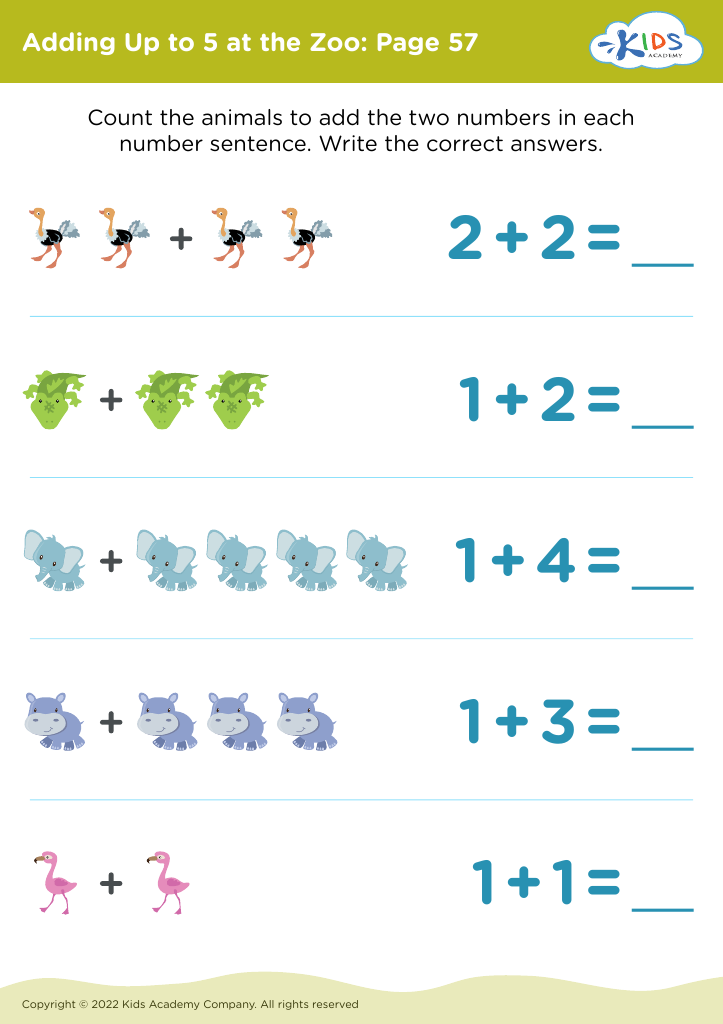
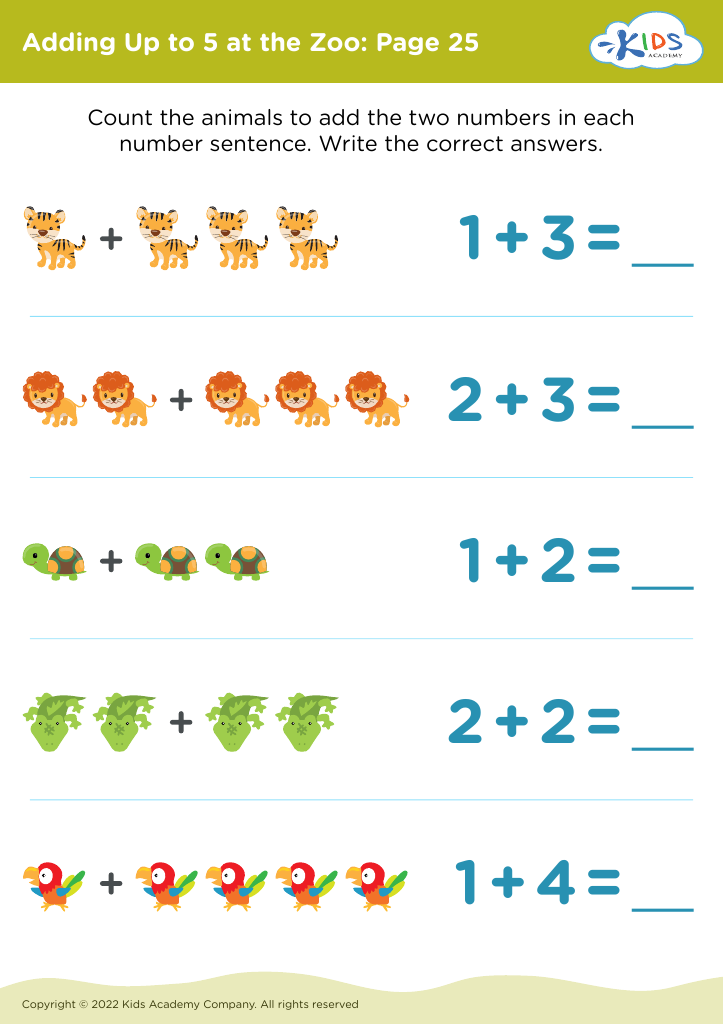
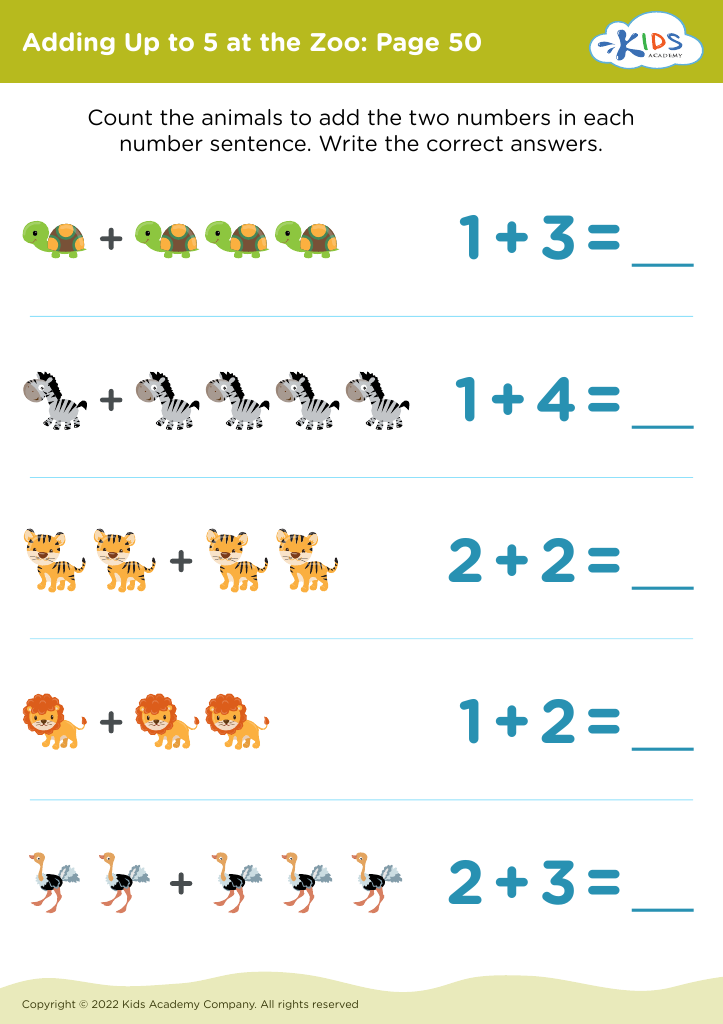



Hand-eye coordination is a crucial skill in early childhood development, especially for ages 3-7, as it lays the foundation for future learning and motor skills. Activities such as "Hand-eye Coordination Adding at the Zoo" provide engaging and interactive ways for children to practice this skill. By incorporating playful elements, like animals and vibrant zoo settings, children are more likely to stay focused and motivated while learning.
When kids participate in activities that improve their hand-eye coordination, they enhance their ability to perform tasks that require visual and physical alignment. This skill is essential for everyday actions, such as writing, drawing, pouring, and tying shoelaces. Moreover, it contributes significantly to cognitive development, as it promotes problem-solving and critical thinking strategies.
For parents and teachers, facilitating such learning experiences is vital in helping children build confidence in their abilities. These activities also foster social skills through cooperative play, as children can work together to count animals or complete challenges. By focusing on hand-eye coordination activities that are enjoyable and educational, parents and teachers create an enriching environment that supports healthy growth, development, and a love for learning in young children.