Filters

17 filtered results

Clear all filters
Favorites
With answer key
Interactive

17 filtered results

Difficulty Level

Grade


Subject

Discover our "Cognitive Development Adding in the Forest Worksheets" designed for children ages 3-7! These engaging worksheets promote foundational math skills through a fun, nature-inspired theme. As kids embark on a leafy adventure, they'll practice addition while enhancing their cognitive abilities—boosting problem-solving, number recognition, and logical thinking. Each worksheet is tailored to foster learning in a playful environment, making math exciting and accessible. Perfect for educators and parents alike, these resources support early learners in developing essential skills that will pave the way for future academic success. Explore our collection today and let children thrive in their cognitive journey!
Check out this FREE Trial Lesson on Adding in the Forest for age 3-7!

D

Favorites
With answer key
Interactive
  • 3-7
  • Cognitive Development
  • Adding in the Forest
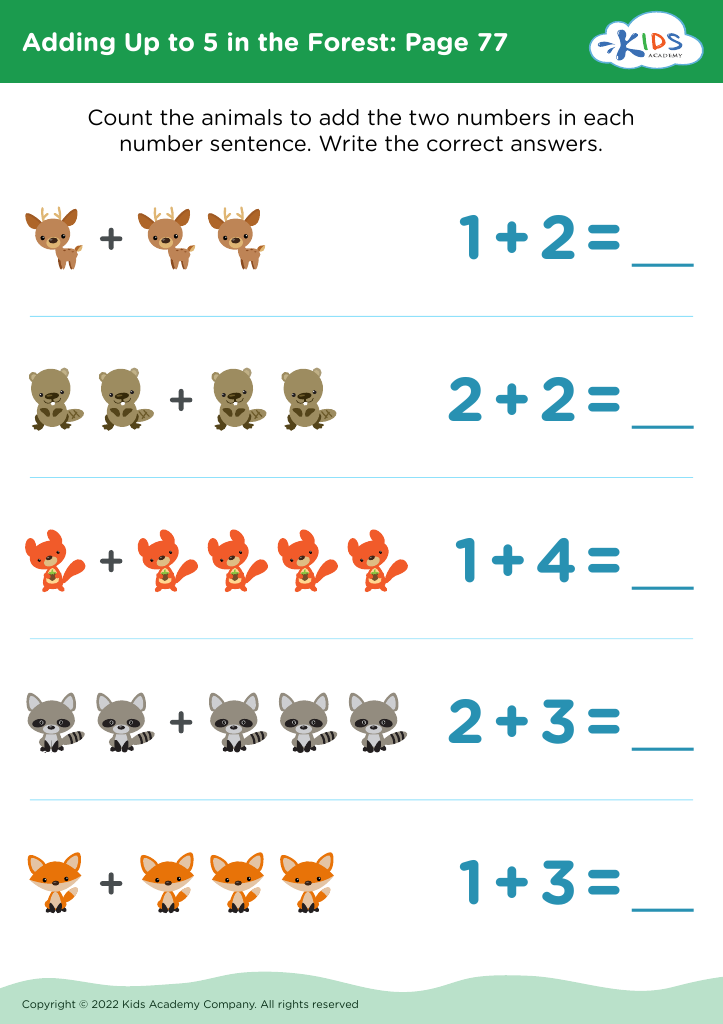
Adding Up to 5 in the Forest: Page 77
Worksheet
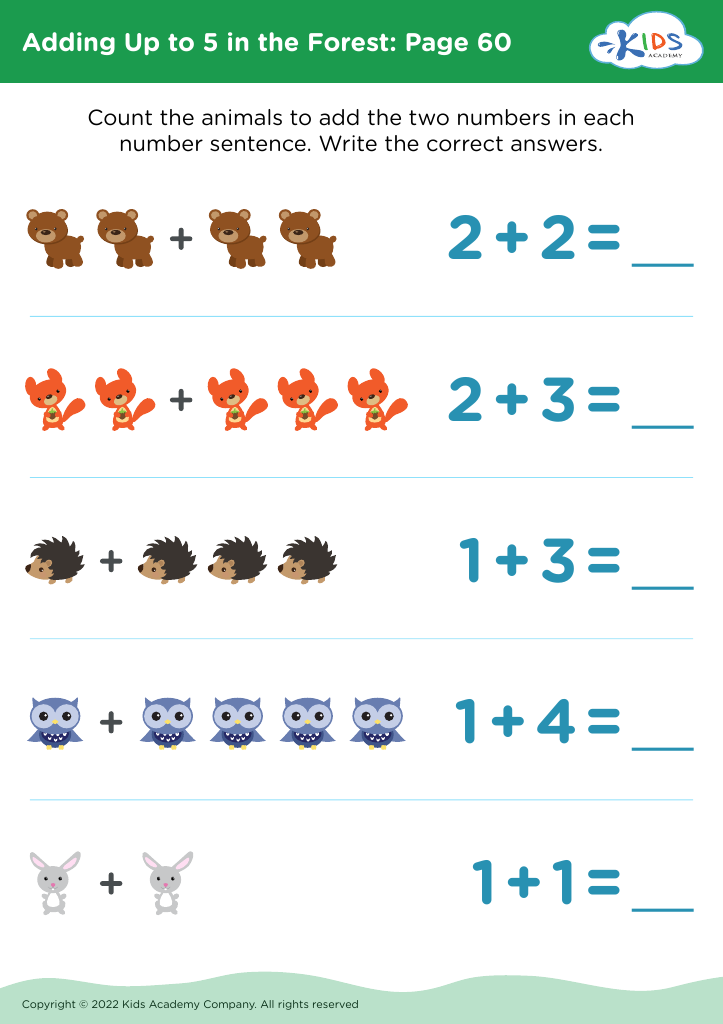
Adding Up to 5 in the Forest: Page 60
Worksheet
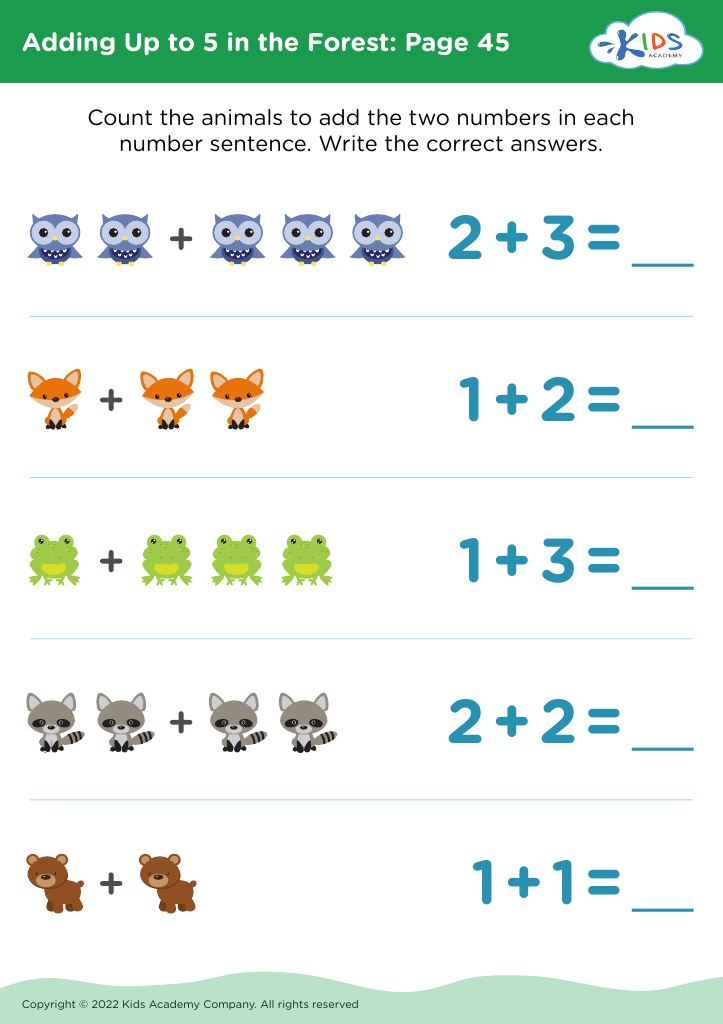
Adding Up to 5 in the Forest: Page 45
Worksheet
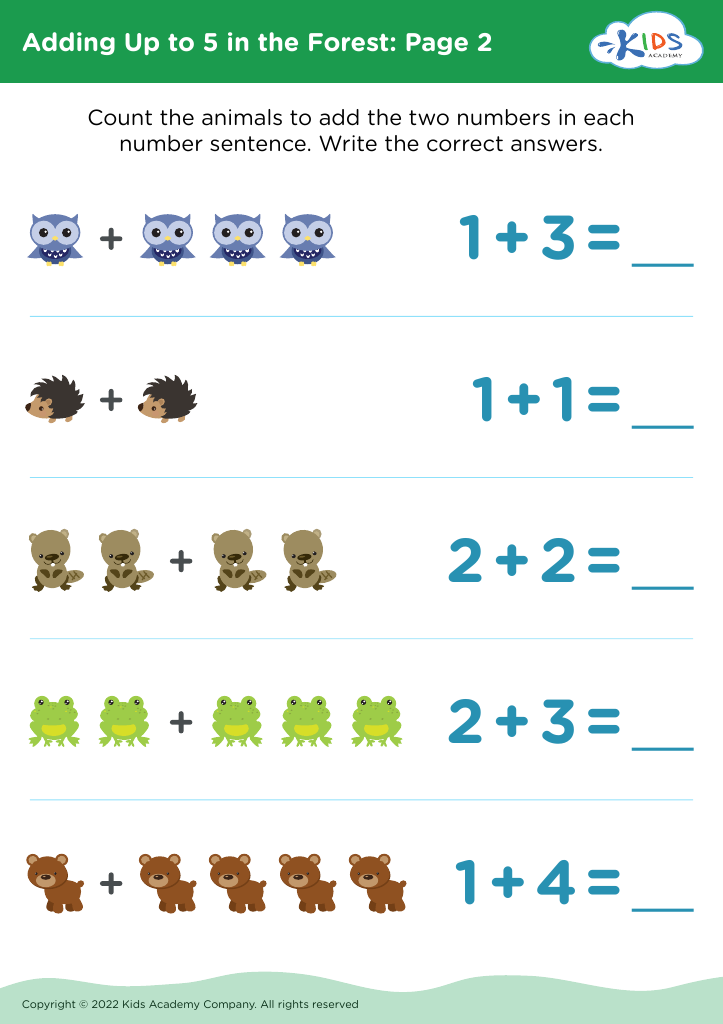
Adding Up to 5 in the Forest: Page 2
Worksheet
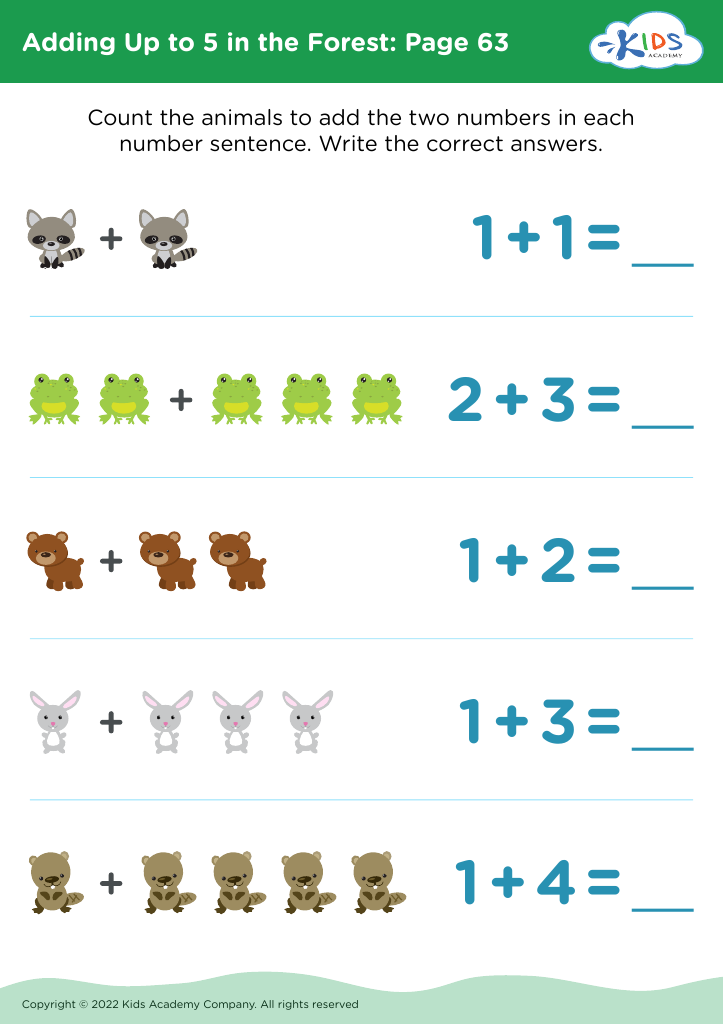
Adding Up to 5 in the Forest: Page 63
Worksheet
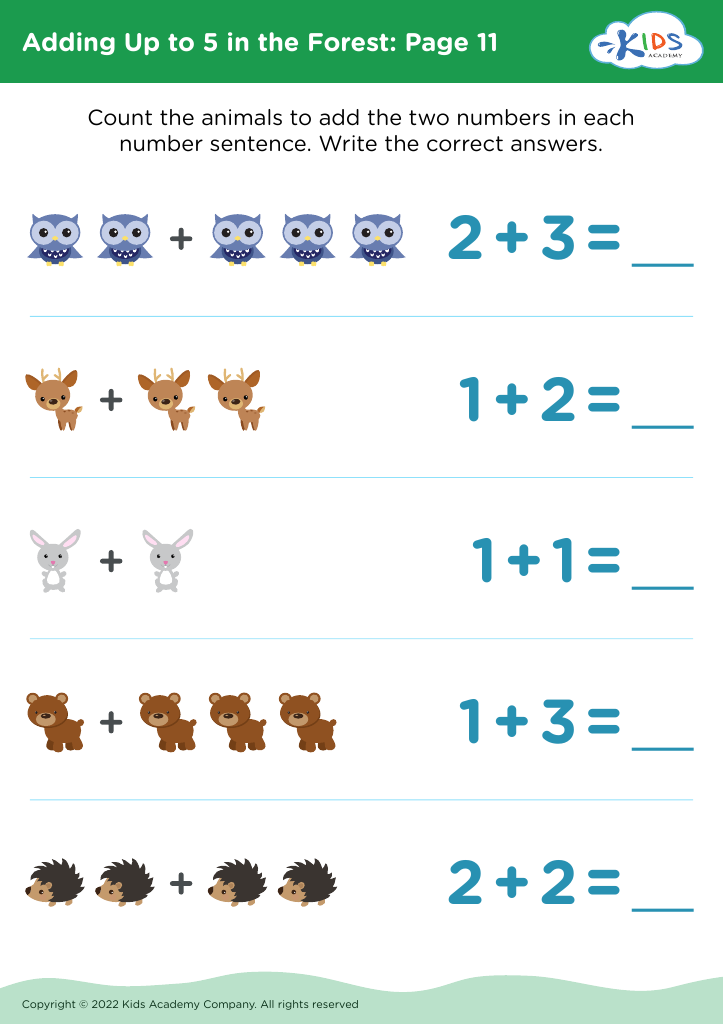
Adding Up to 5 in the Forest: Page 11
Worksheet
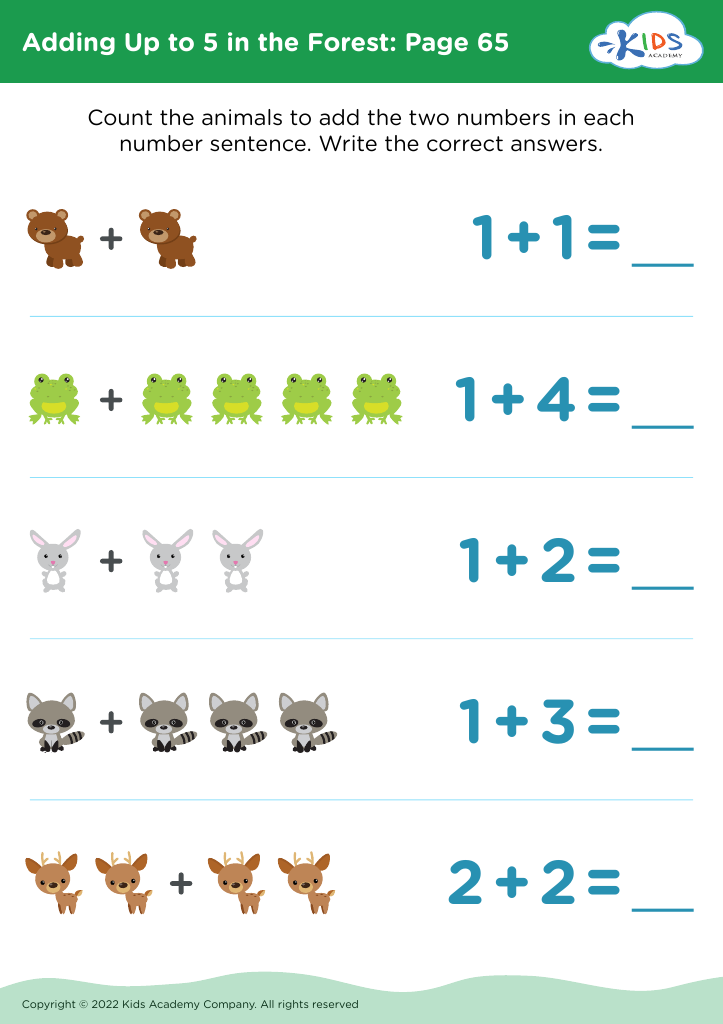
Adding Up to 5 in the Forest: Page 65
Worksheet
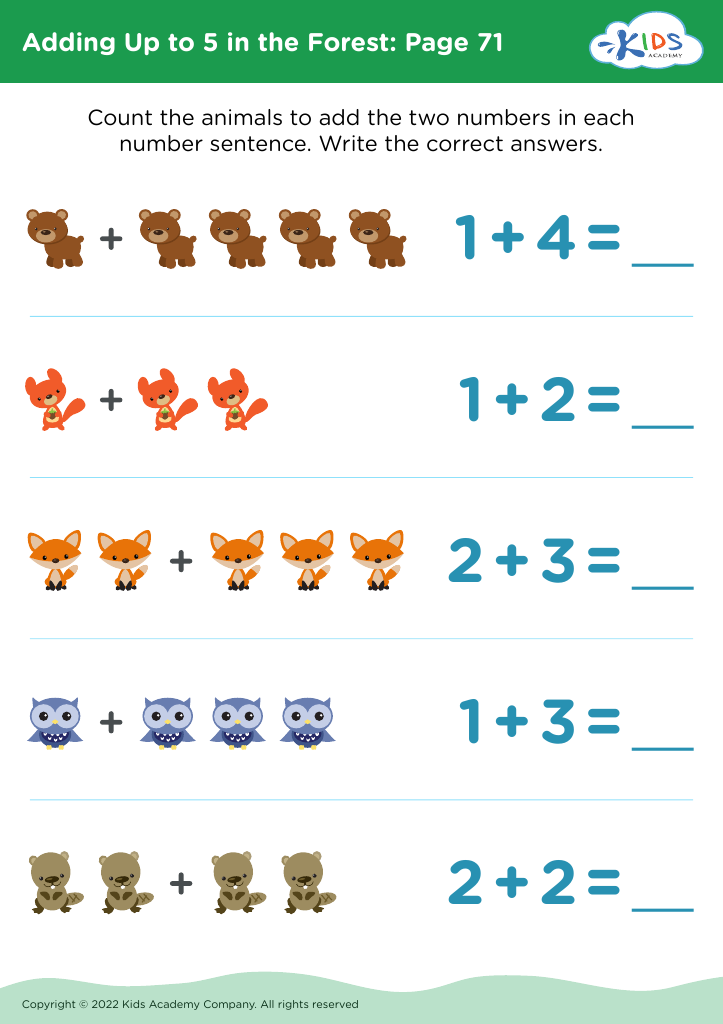
Adding Up to 5 in the Forest: Page 71
Worksheet
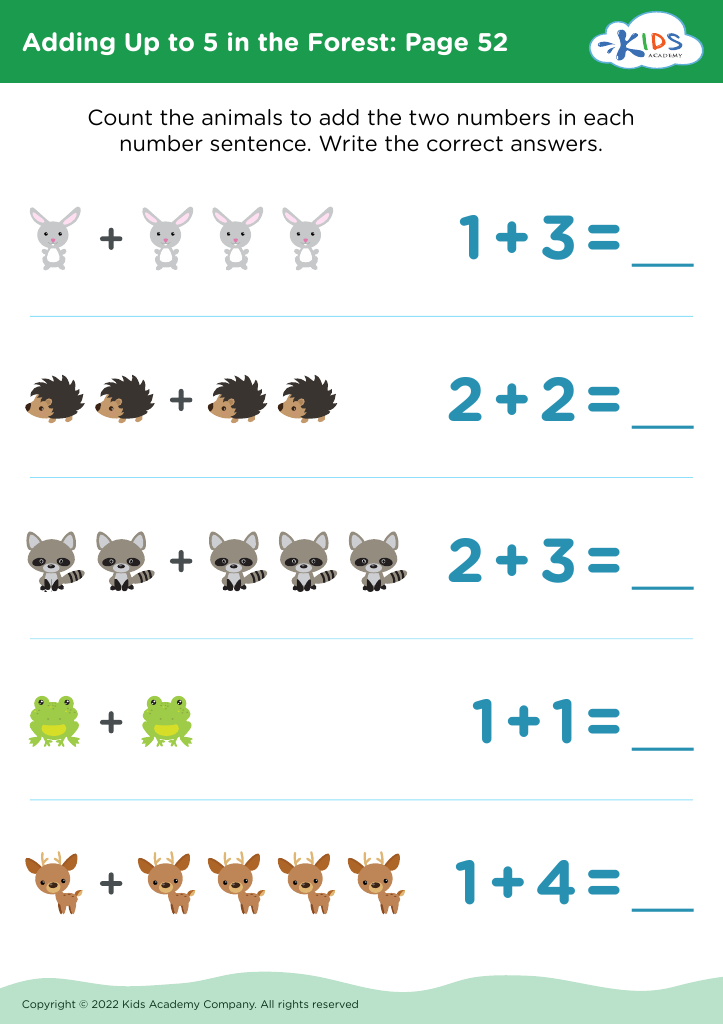
Adding Up to 5 in the Forest: Page 52
Worksheet
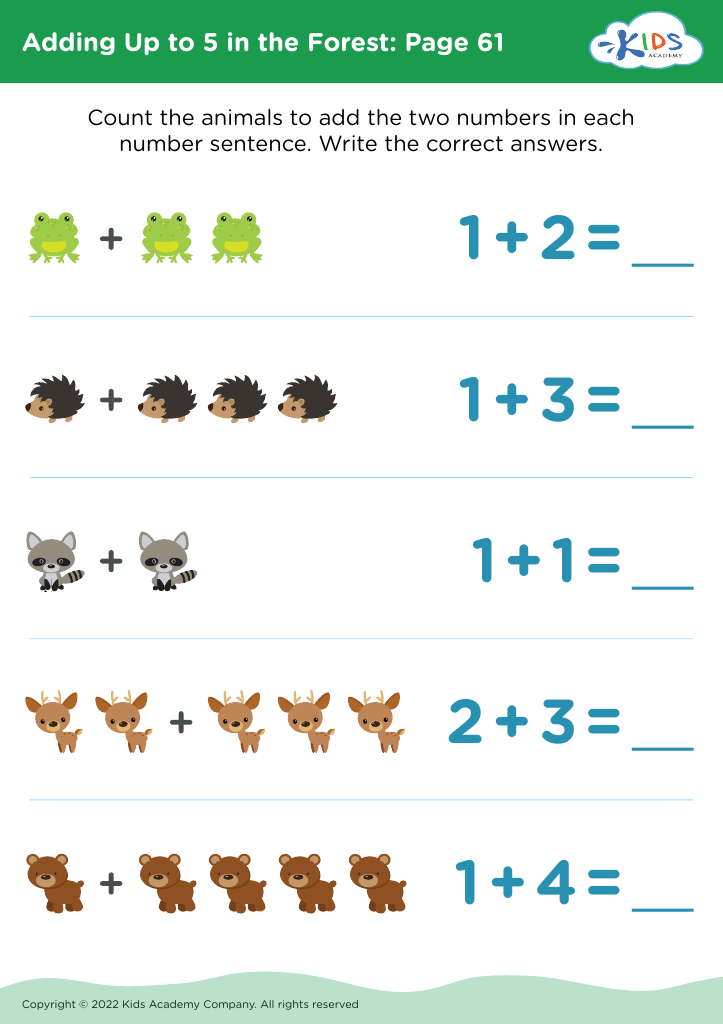
Adding Up to 5 in the Forest: Page 61
Worksheet
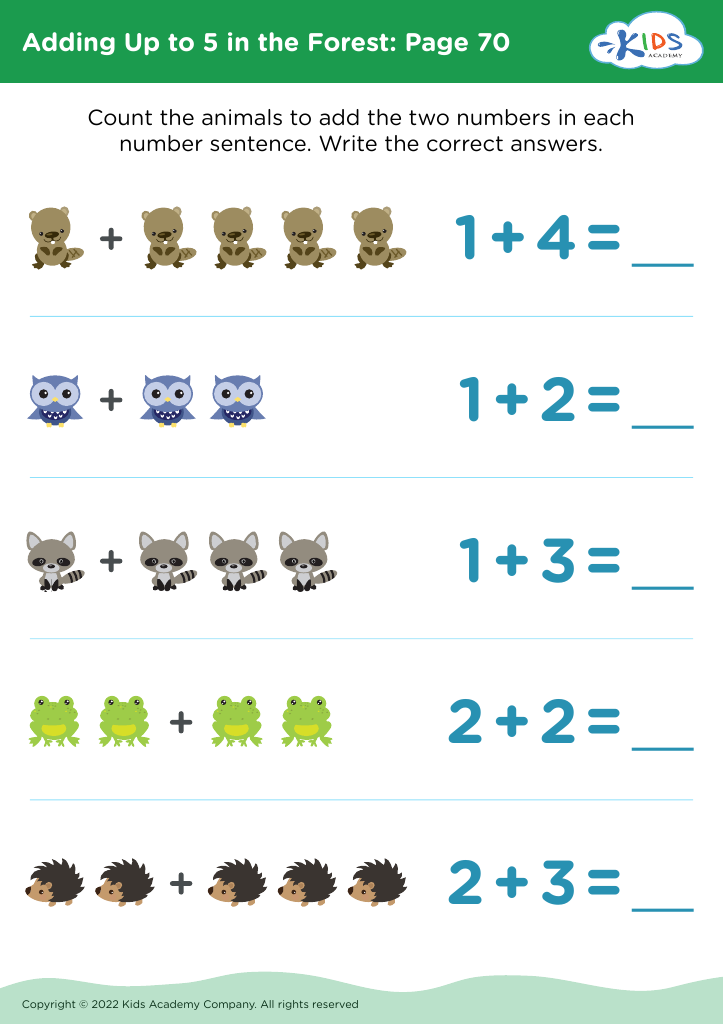
Adding Up to 5 in the Forest: Page 70
Worksheet
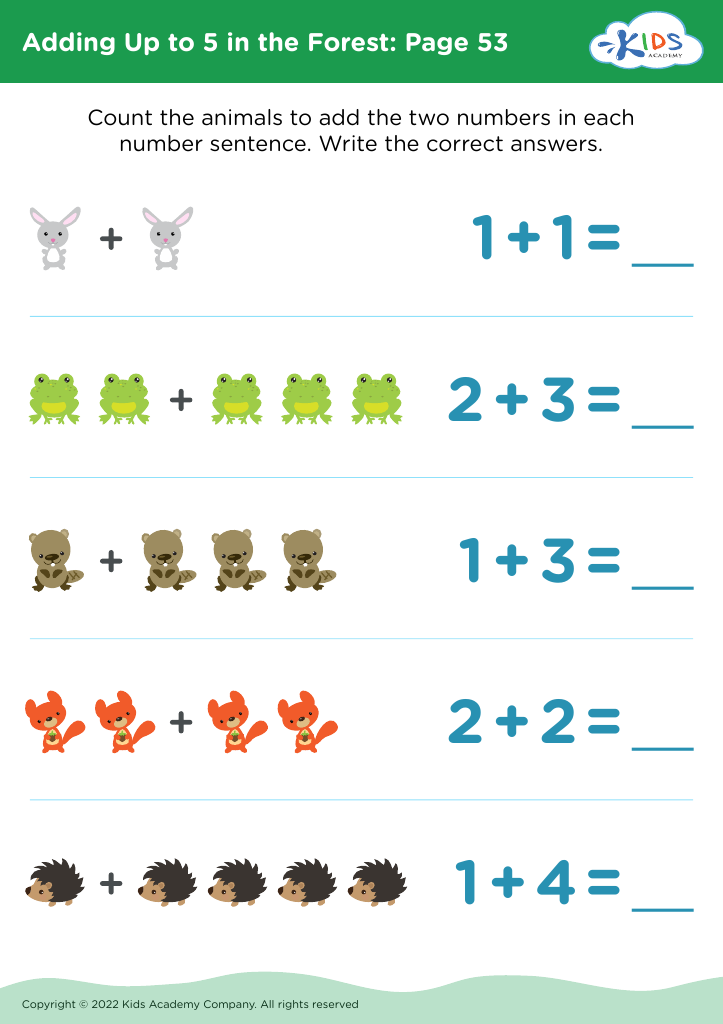
Adding Up to 5 in the Forest: Page 53
Worksheet
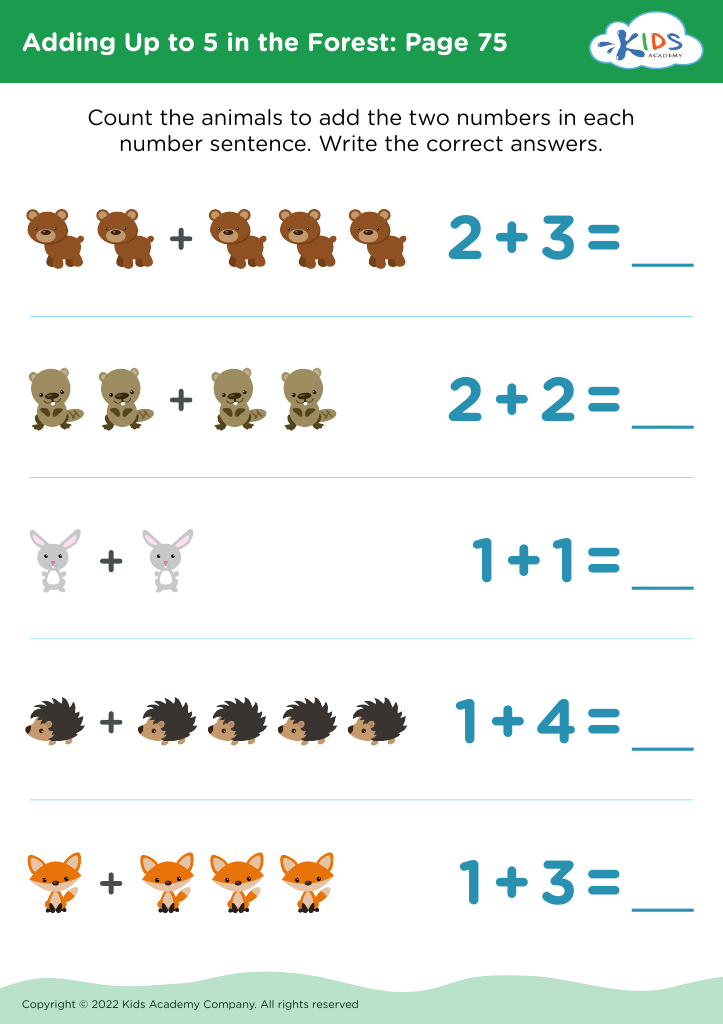
Adding Up to 5 in the Forest: Page 75
Worksheet
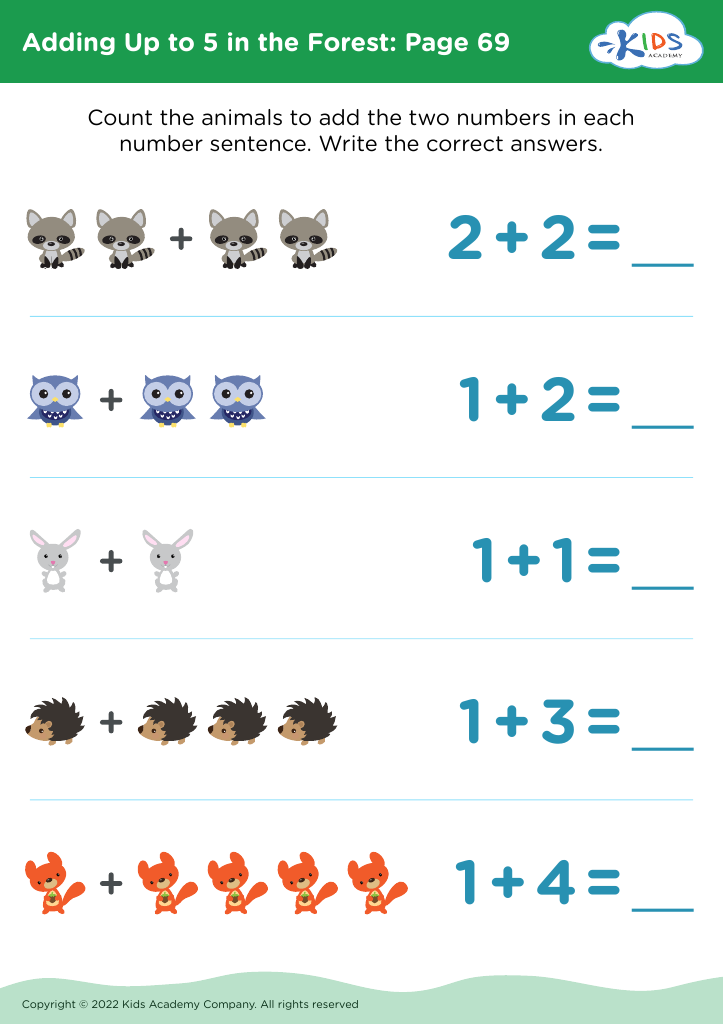
Adding Up to 5 in the Forest: Page 69
Worksheet
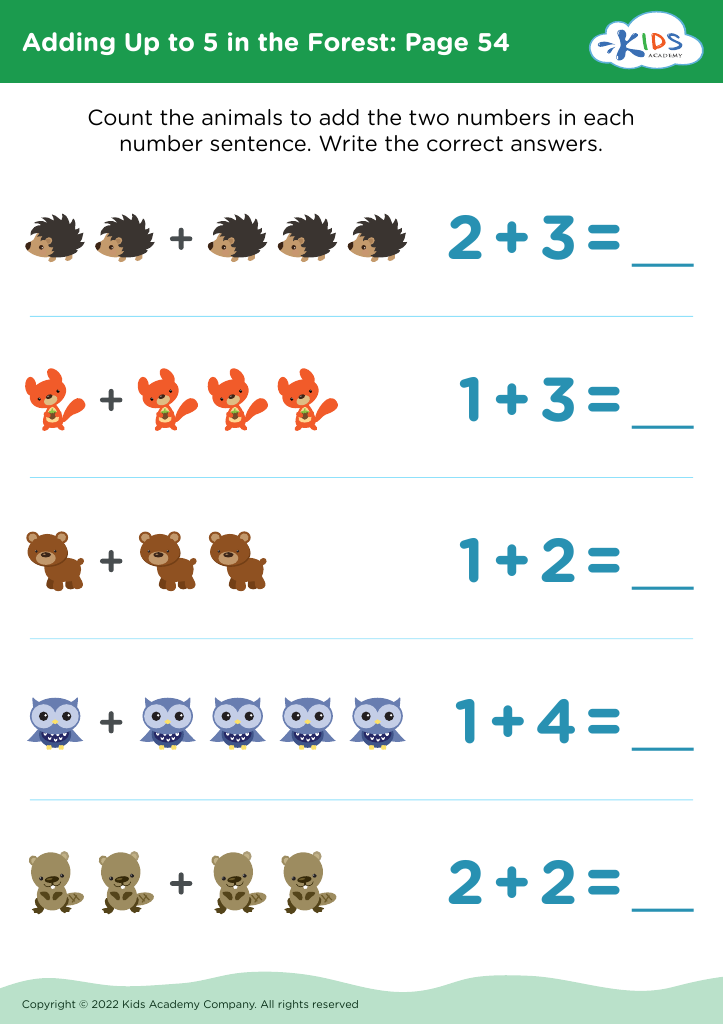
Adding Up to 5 in the Forest: Page 54
Worksheet
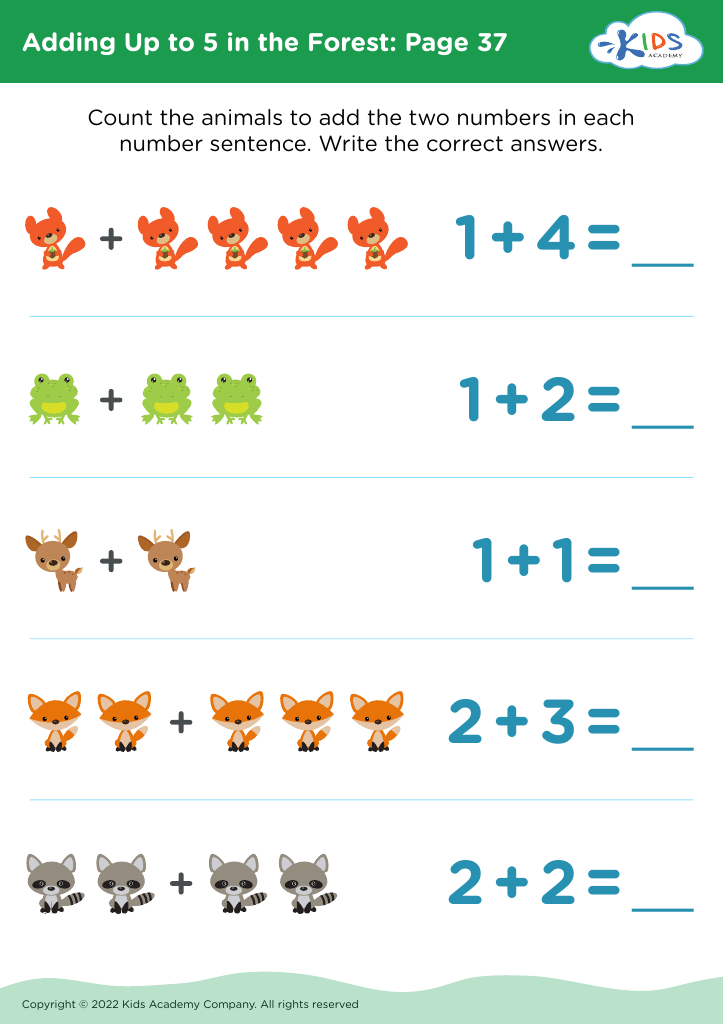
Adding Up to 5 in the Forest: Page 37
Worksheet
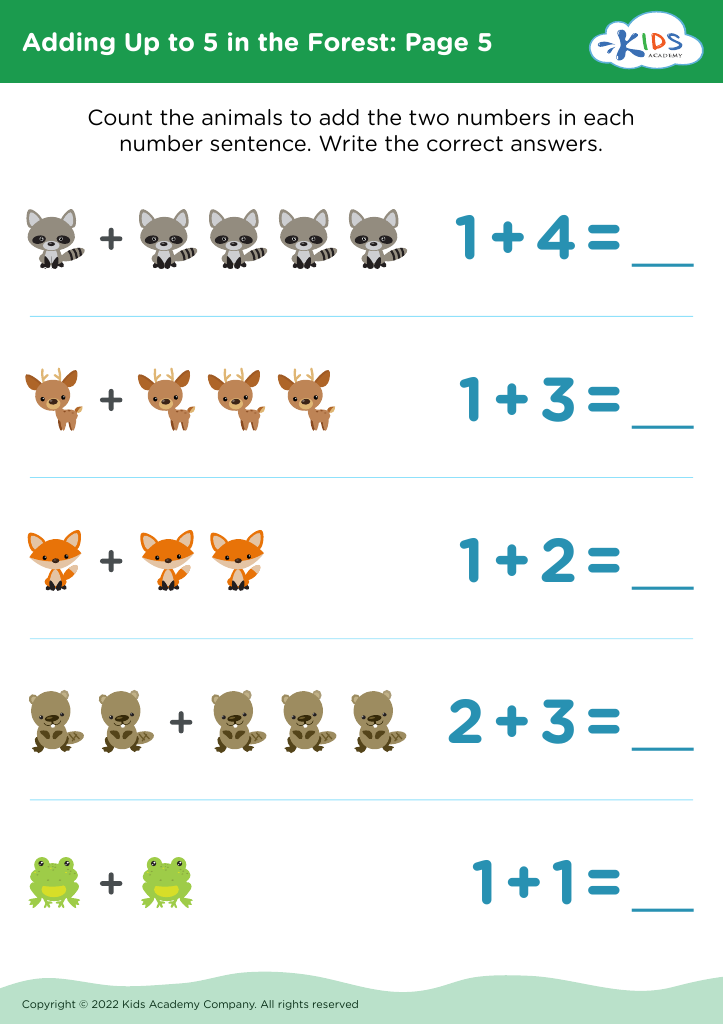
Adding Up to 5 in the Forest: Page 5
Worksheet


Cognitive development is crucial in early childhood as it lays the foundation for future learning, problem-solving, and emotional understanding. For children ages 3-7, this stage is characterized by rapid growth in areas such as reasoning, memory, and language skills. Parents and teachers should care about cognitive development because it directly impacts a child's academic success and overall well-being.

Incorporating nature, like forest-based learning, enhances cognitive development significantly. Outdoor environments stimulate curiosity and exploration, nurturing a child’s innate desire to learn. Nature offers sensory experiences that are vital for cognitive growth; children engage their senses, enhance their attention span, and improve their ability to focus.

Moreover, forest settings encourage collaborative play, fostering social skills and teamwork. This social interaction is key as children learn to navigate relationships and develop empathy. Additionally, the unpredictable nature of outdoor play prompts problem-solving and critical thinking as children confront and negotiate challenges in their environment.

Ultimately, recognizing the importance of cognitive development and utilizing the richness of forest environments can create engaging, stimulating experiences that support a child's holistic growth, making it essential for parents and teachers to prioritize.