Filters

70 filtered results

Clear all filters
Favorites
With answer key
Interactive

70 filtered results

Difficulty Level

Grade


Check out this FREE Trial Lesson on Adding in the Forest for age 3-7!

Sorting Objects into 3 Categories

Favorites
With answer key
Interactive
  • 3-7
  • Number Recognition
  • Adding in the Forest
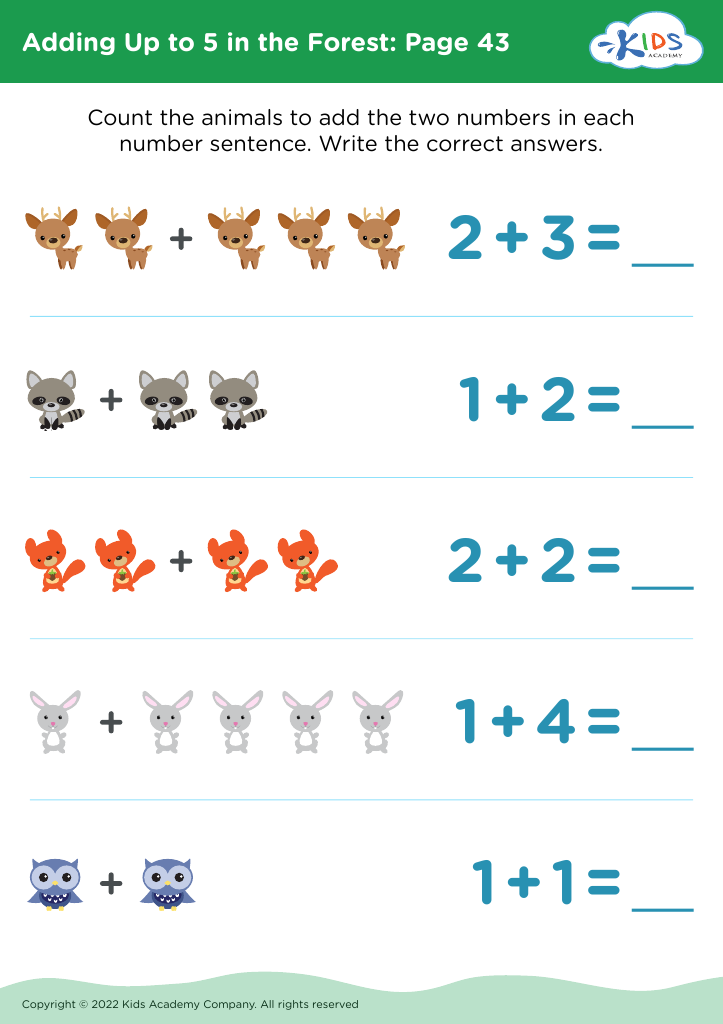
Adding Up to 5 in the Forest: Page 43
Worksheet
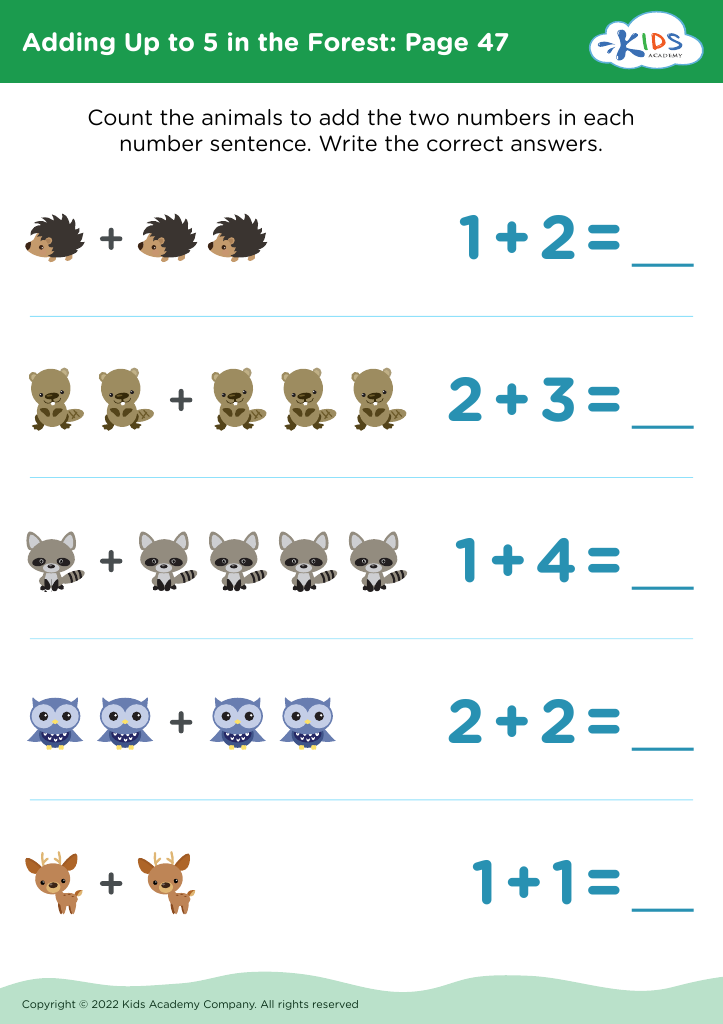
Adding Up to 5 in the Forest: Page 47
Worksheet
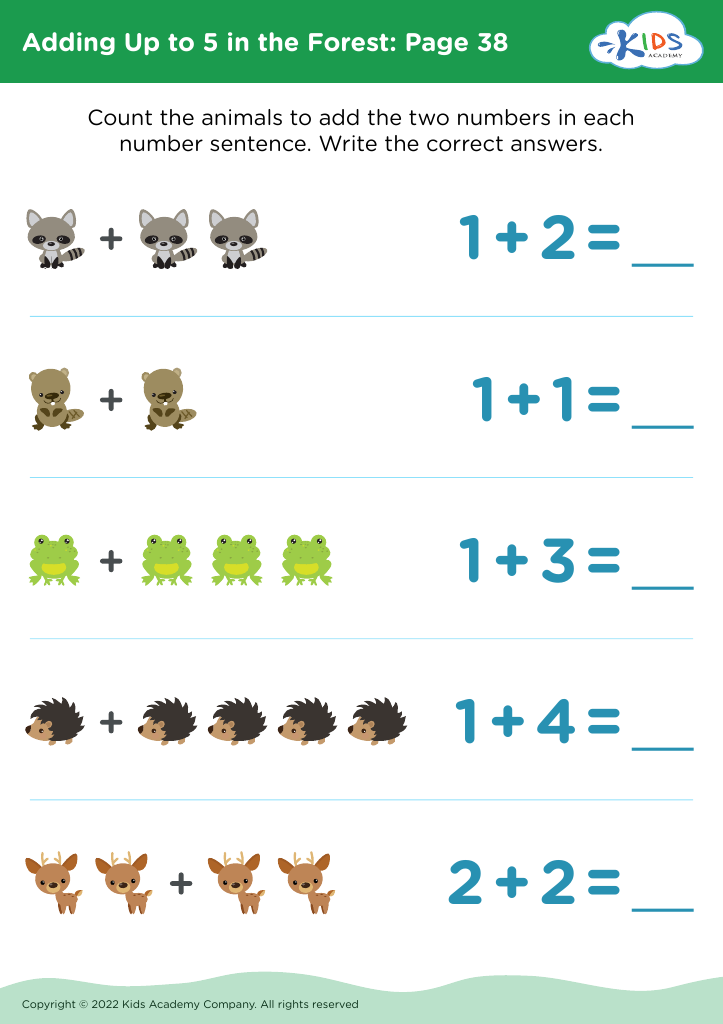
Adding Up to 5 in the Forest: Page 38
Worksheet
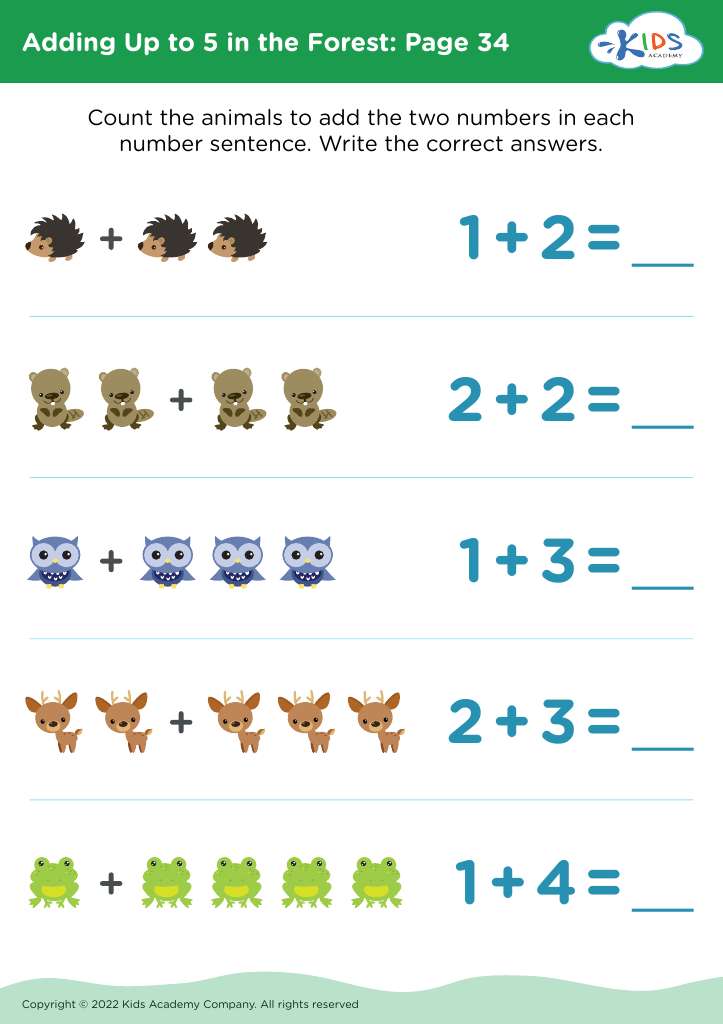
Adding Up to 5 in the Forest: Page 34
Worksheet
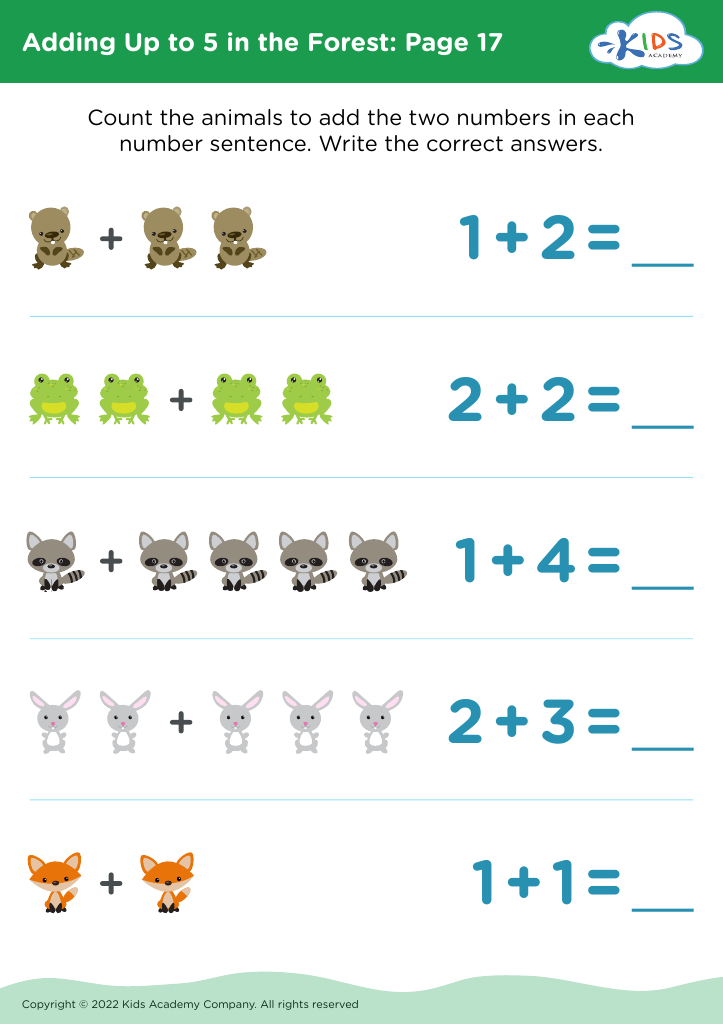
Adding Up to 5 in the Forest: Page 17
Worksheet
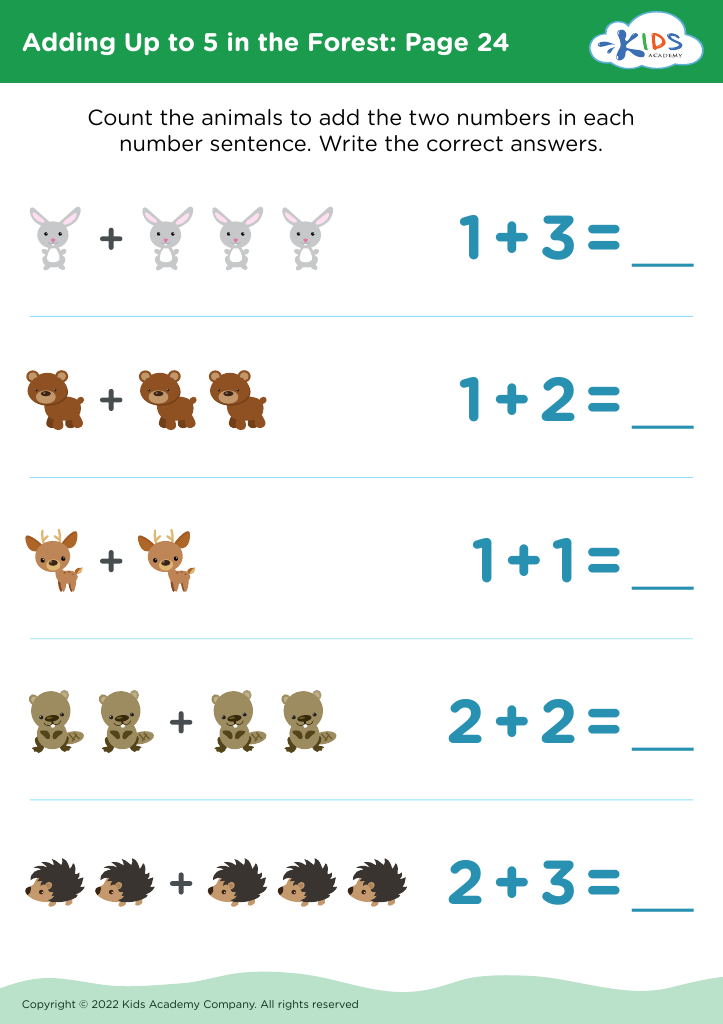
Adding Up to 5 in the Forest: Page 24
Worksheet
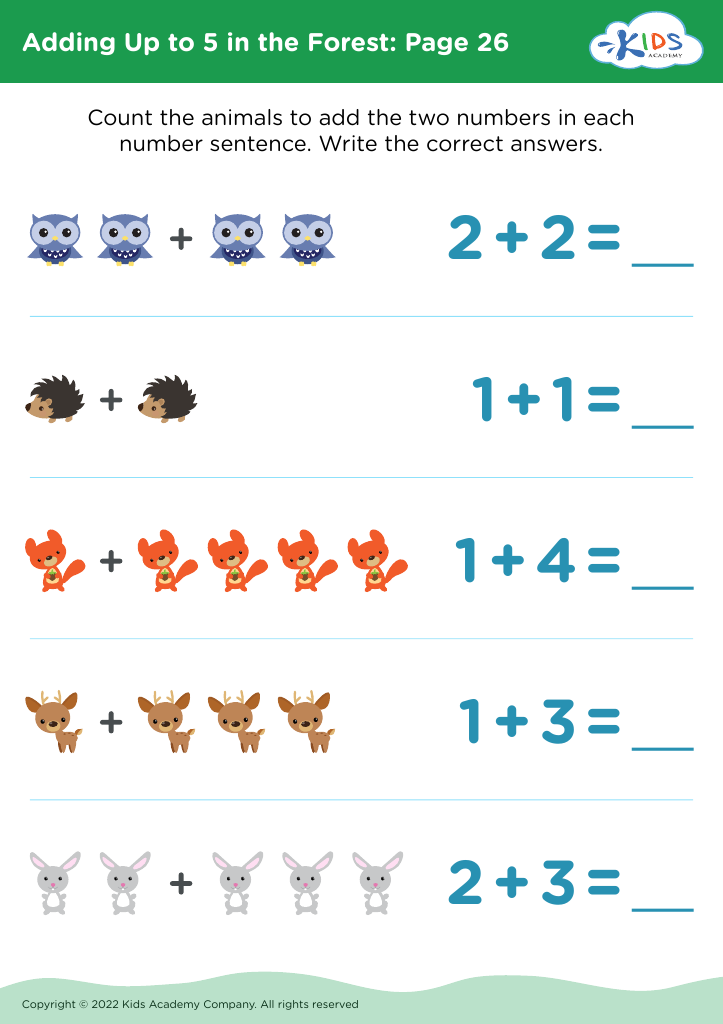
Adding Up to 5 in the Forest: Page 26
Worksheet
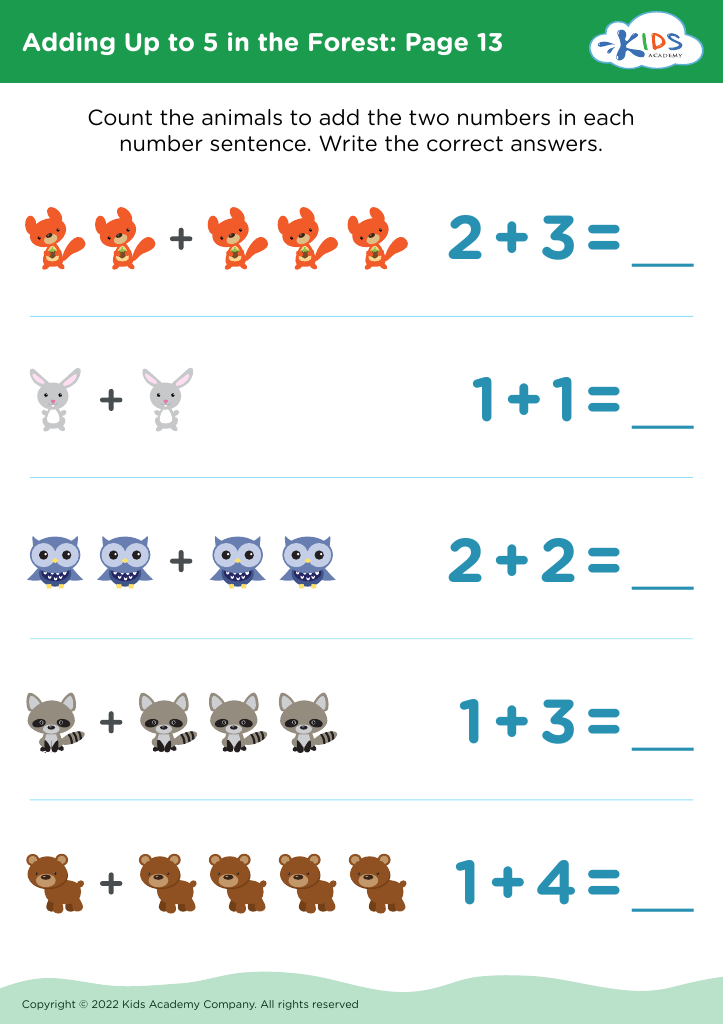
Adding Up to 5 in the Forest: Page 13
Worksheet
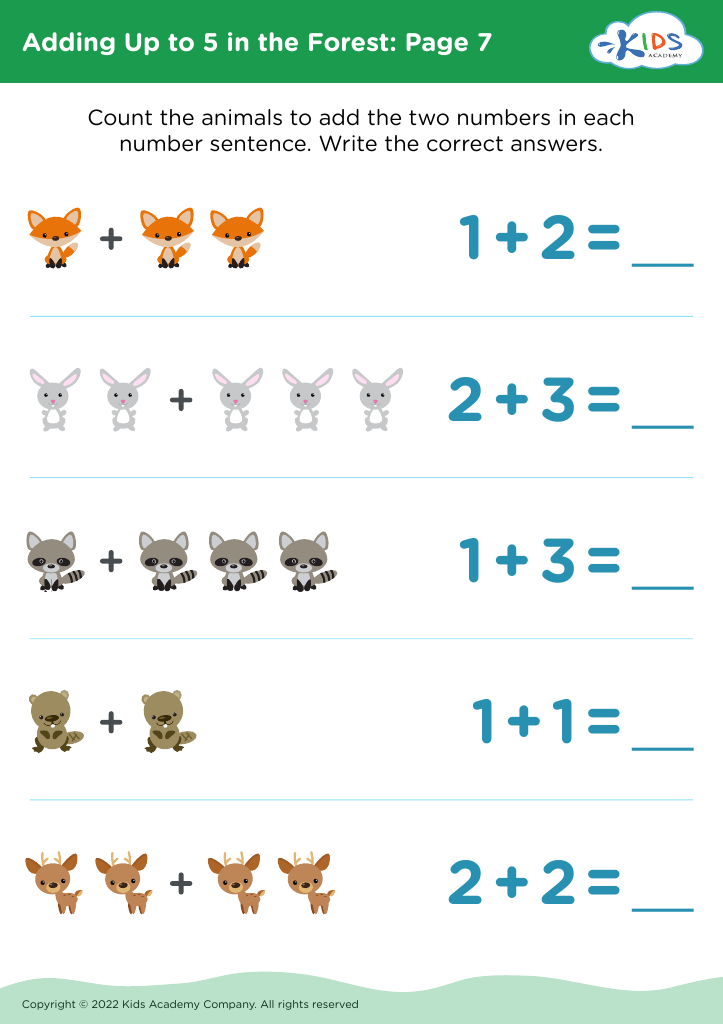
Adding Up to 5 in the Forest: Page 7
Worksheet
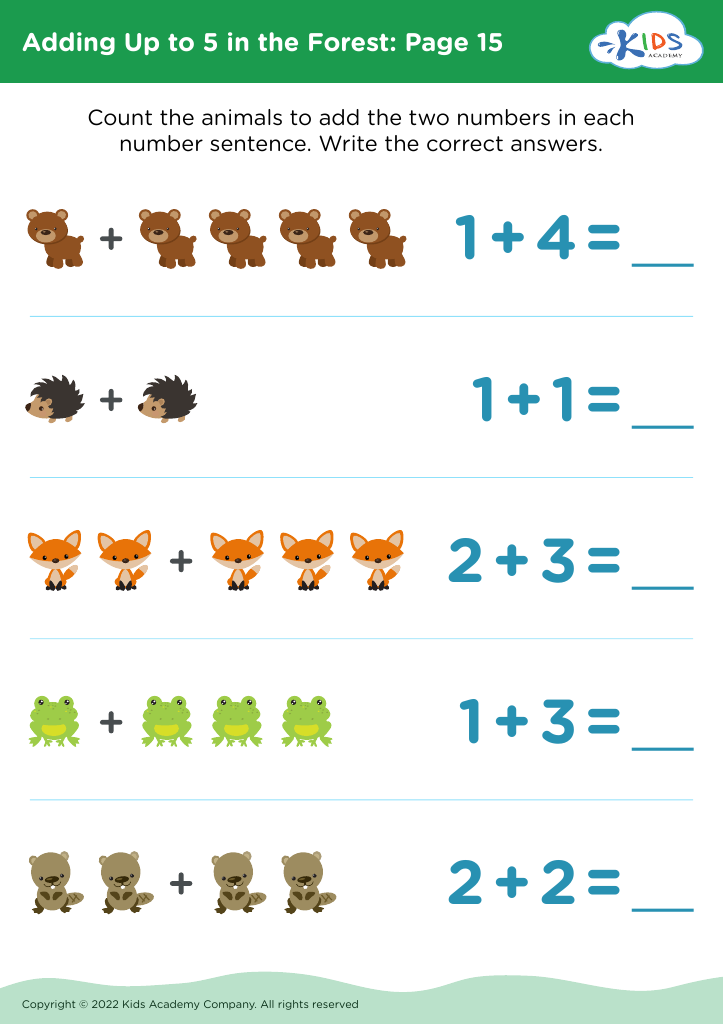
Adding Up to 5 in the Forest: Page 15
Worksheet
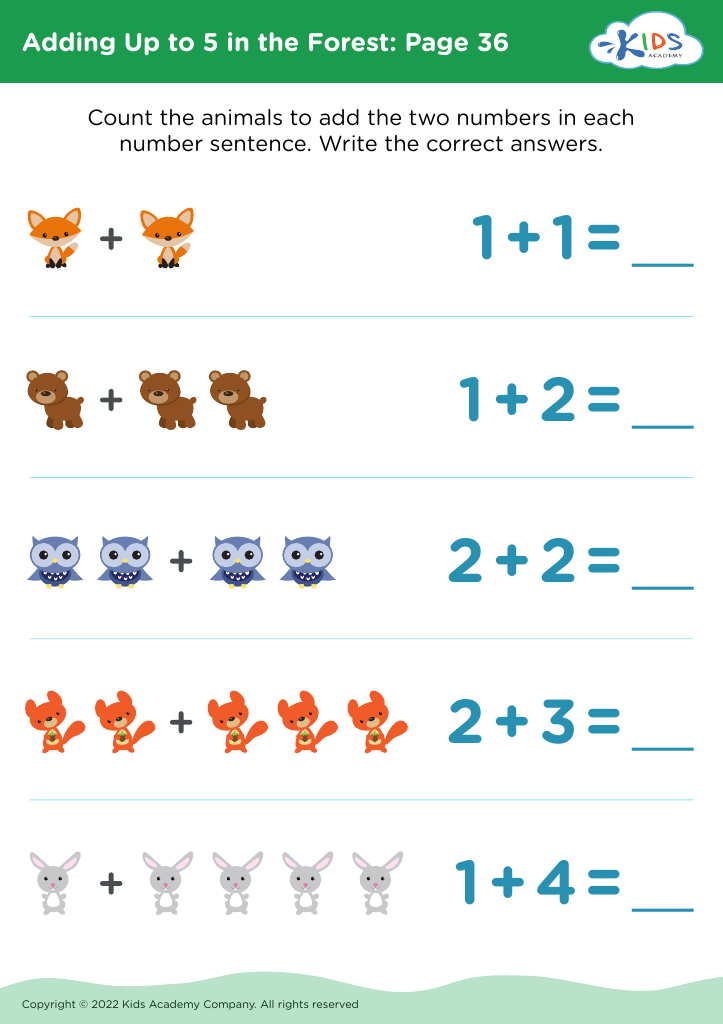
Adding Up to 5 in the Forest: Page 36
Worksheet
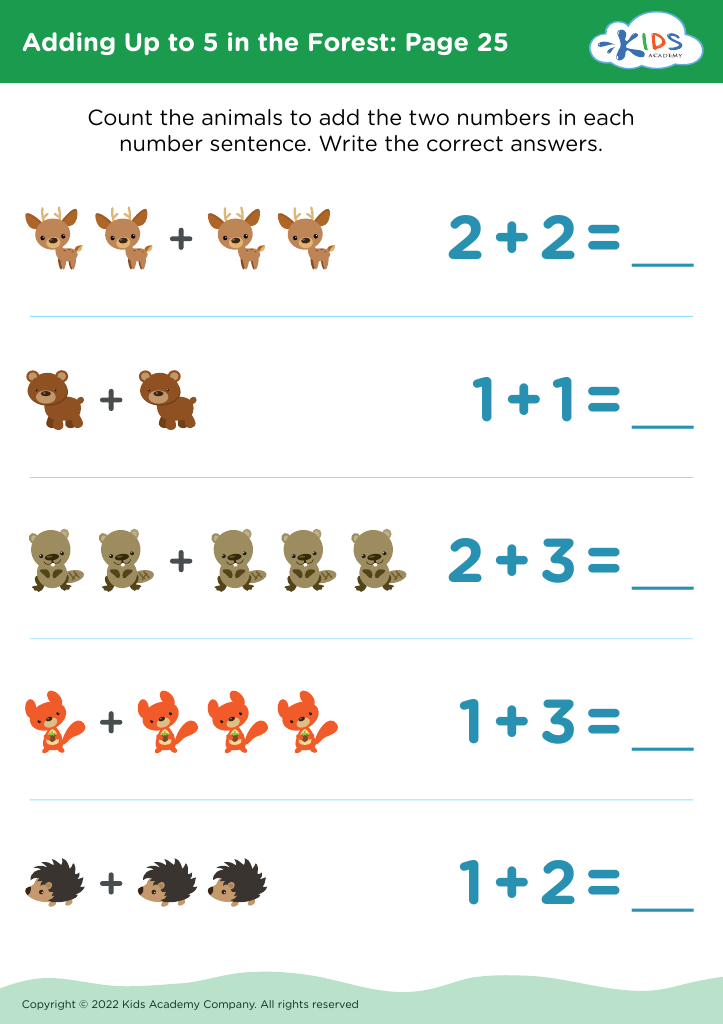
Adding Up to 5 in the Forest: Page 25
Worksheet
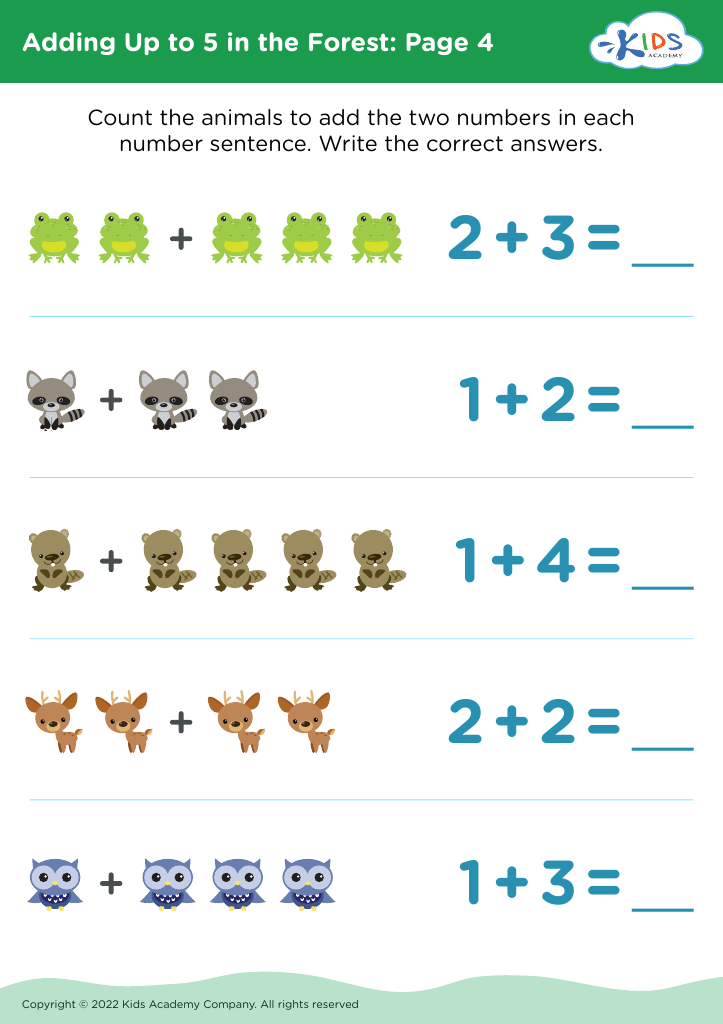
Adding Up to 5 in the Forest: Page 4
Worksheet
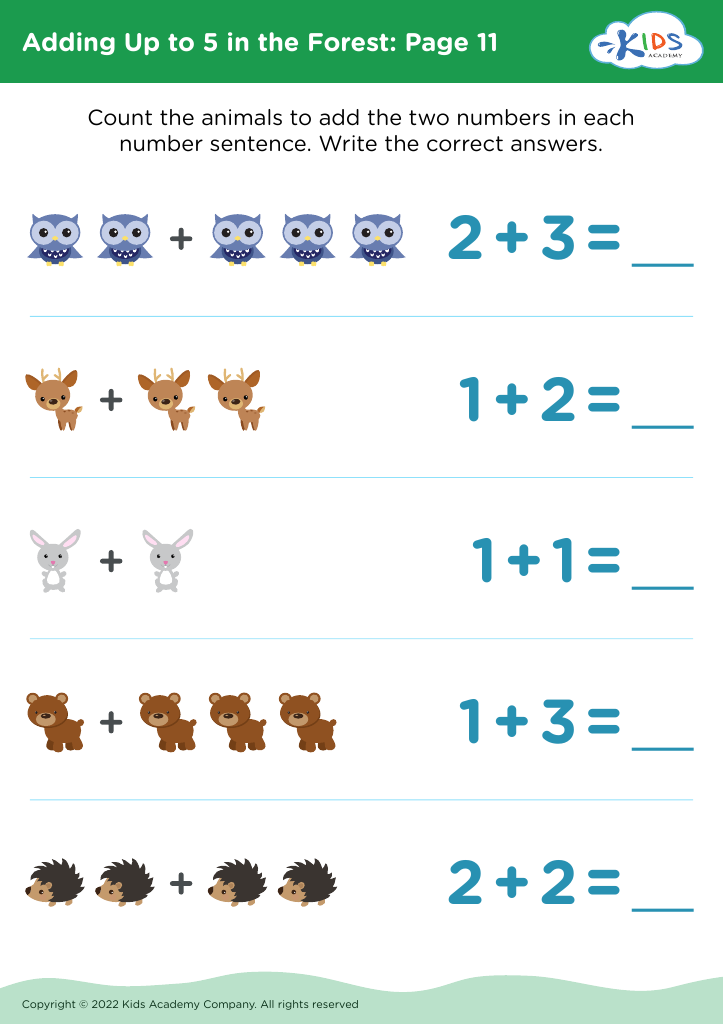
Adding Up to 5 in the Forest: Page 11
Worksheet
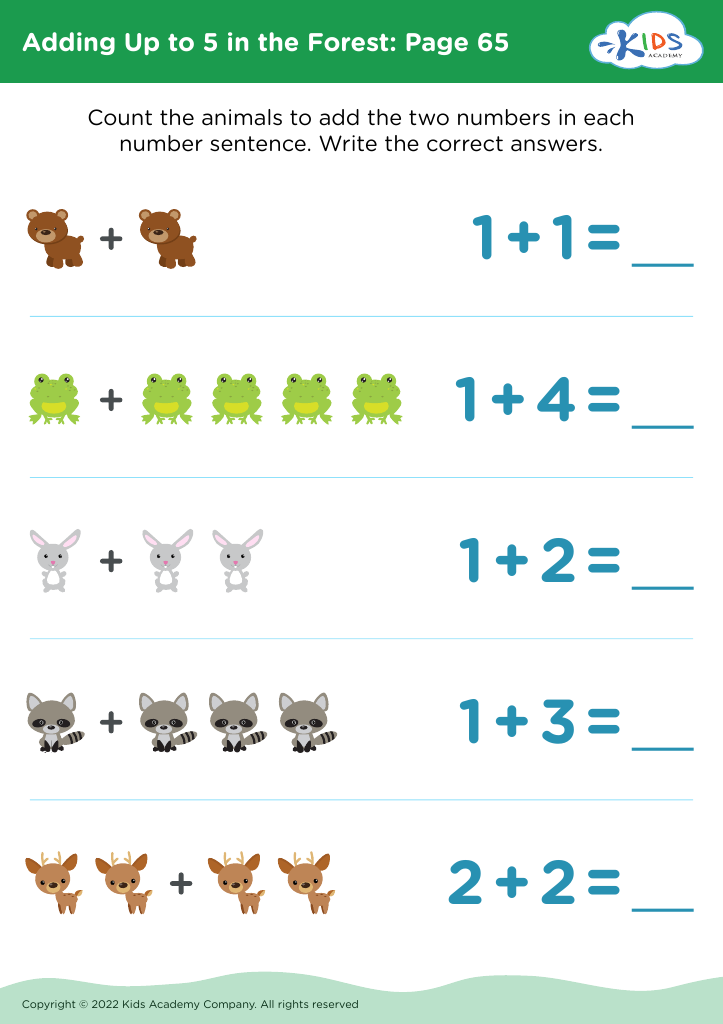
Adding Up to 5 in the Forest: Page 65
Worksheet
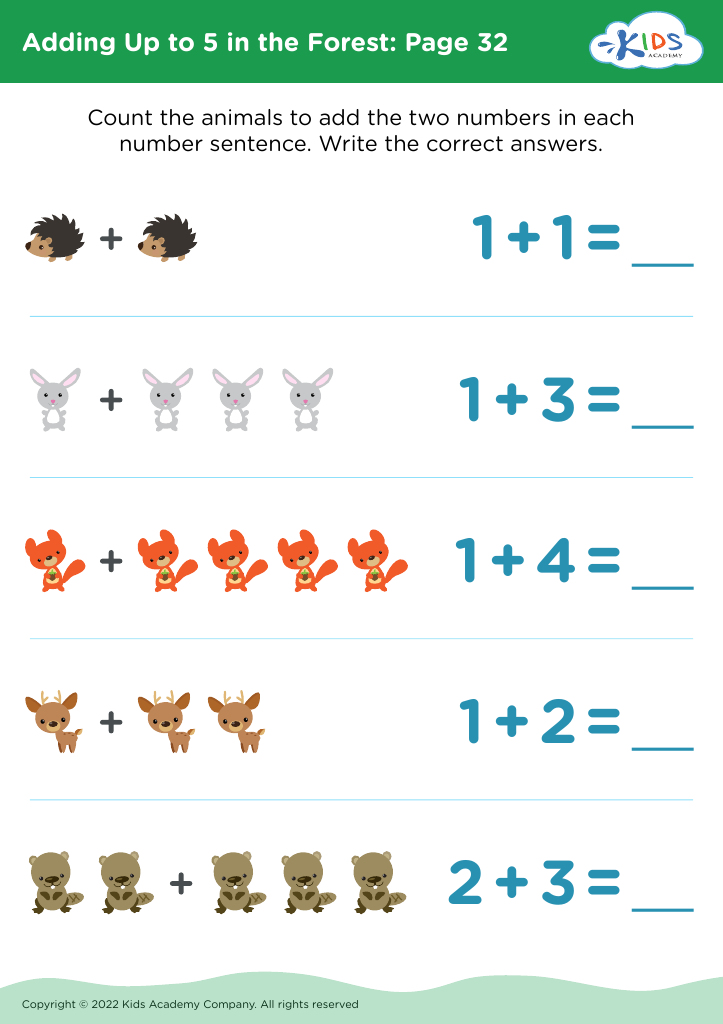
Adding Up to 5 in the Forest: Page 32
Worksheet
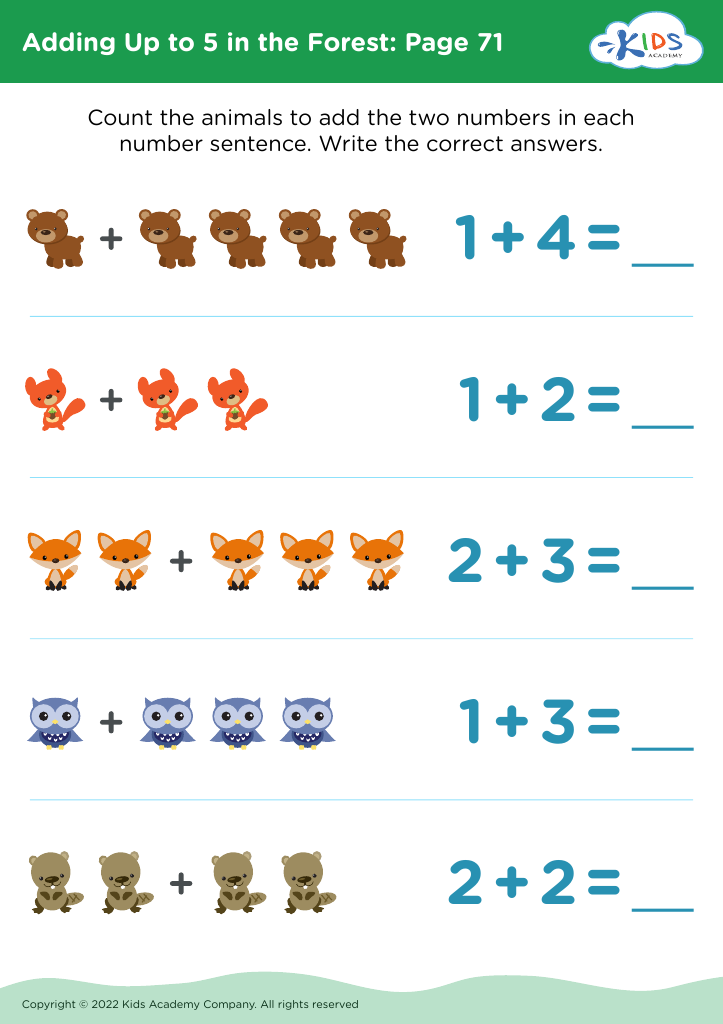
Adding Up to 5 in the Forest: Page 71
Worksheet
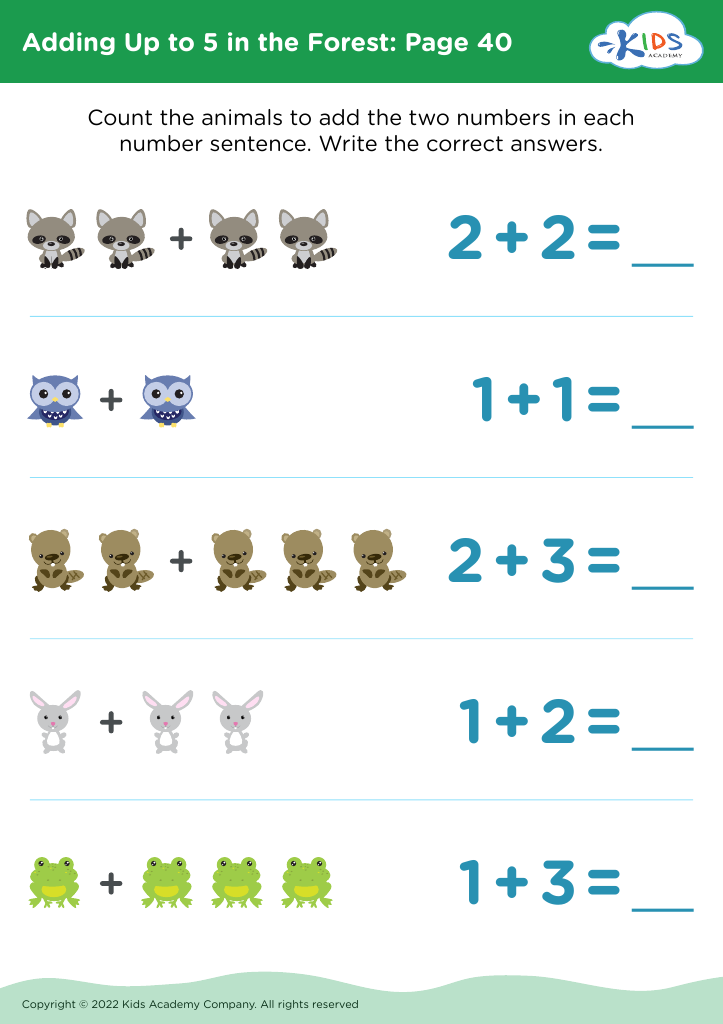
Adding Up to 5 in the Forest: Page 40
Worksheet
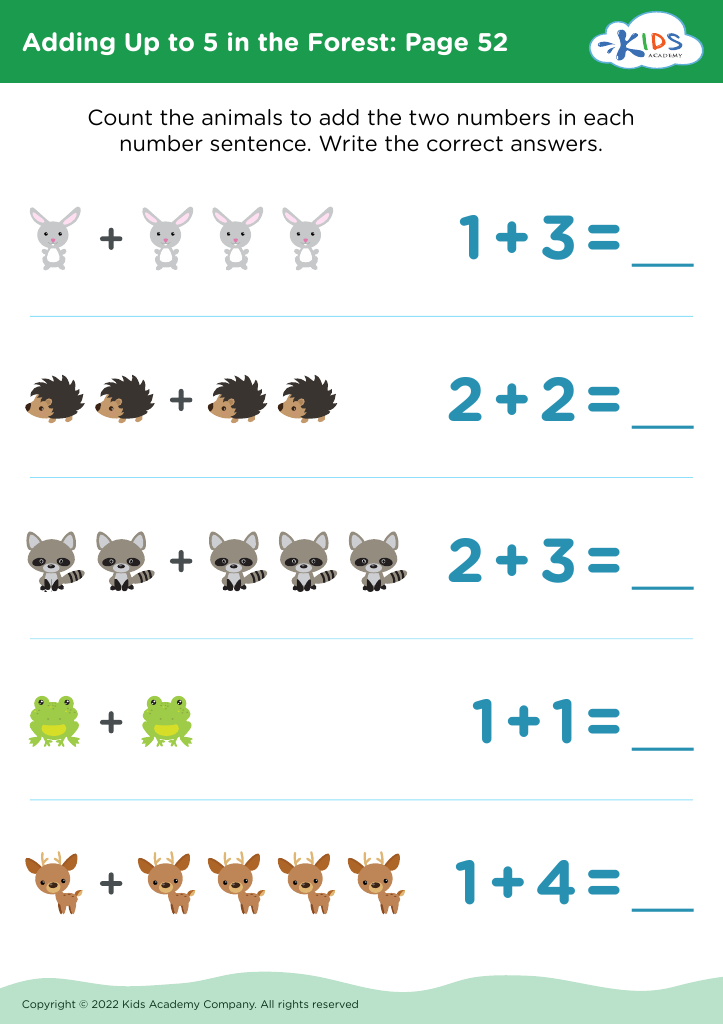
Adding Up to 5 in the Forest: Page 52
Worksheet
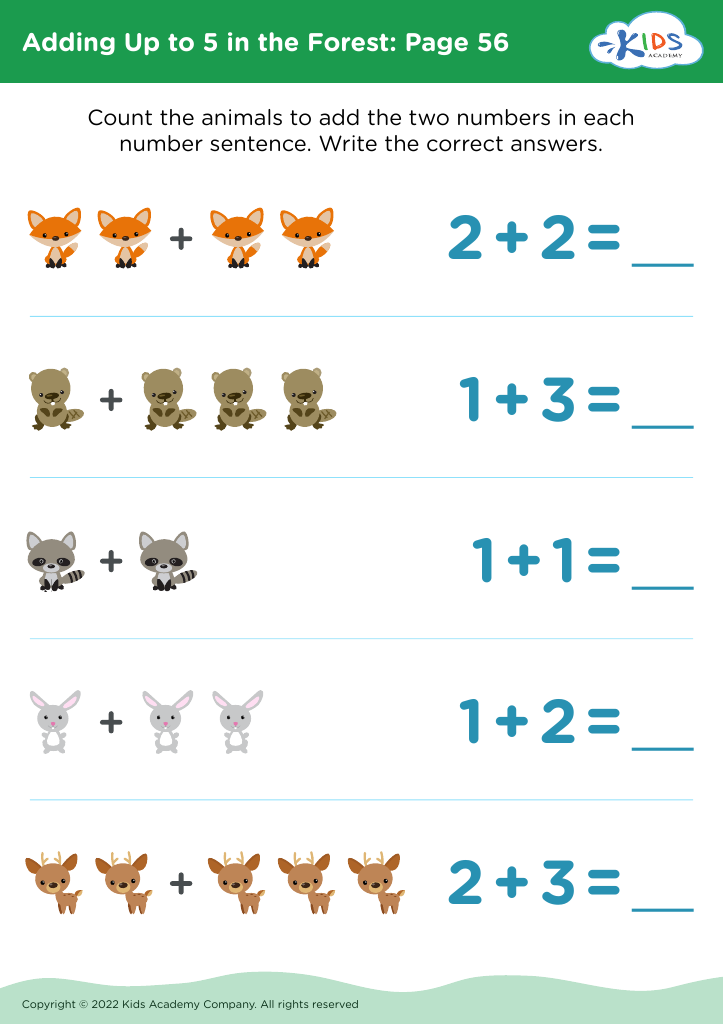
Adding Up to 5 in the Forest: Page 56
Worksheet
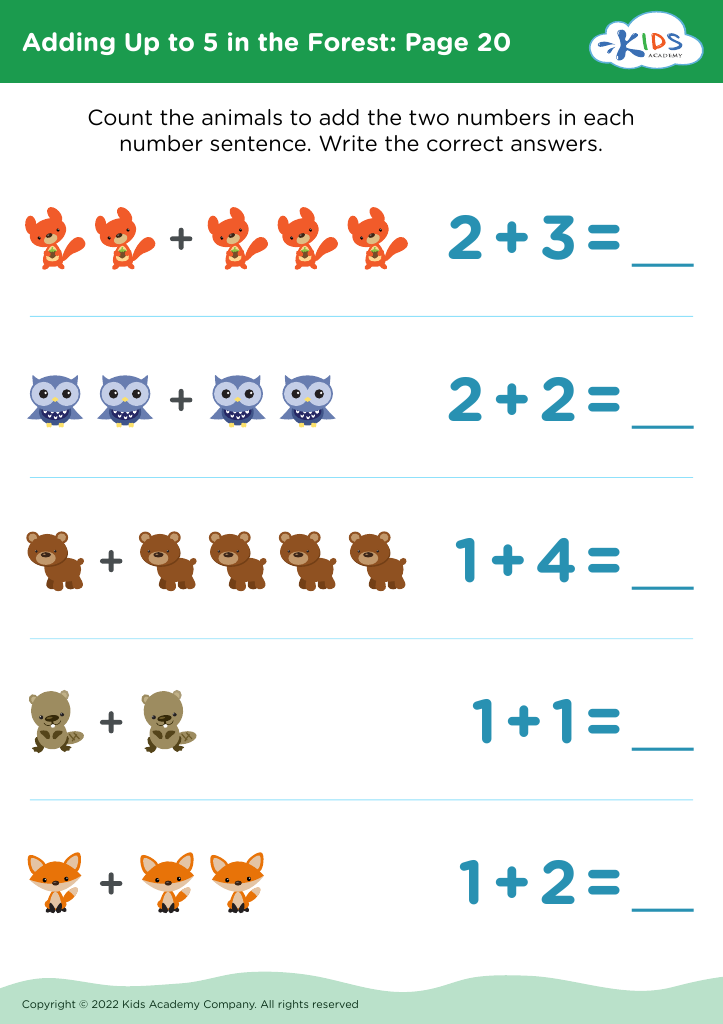
Adding Up to 5 in the Forest: Page 20
Worksheet
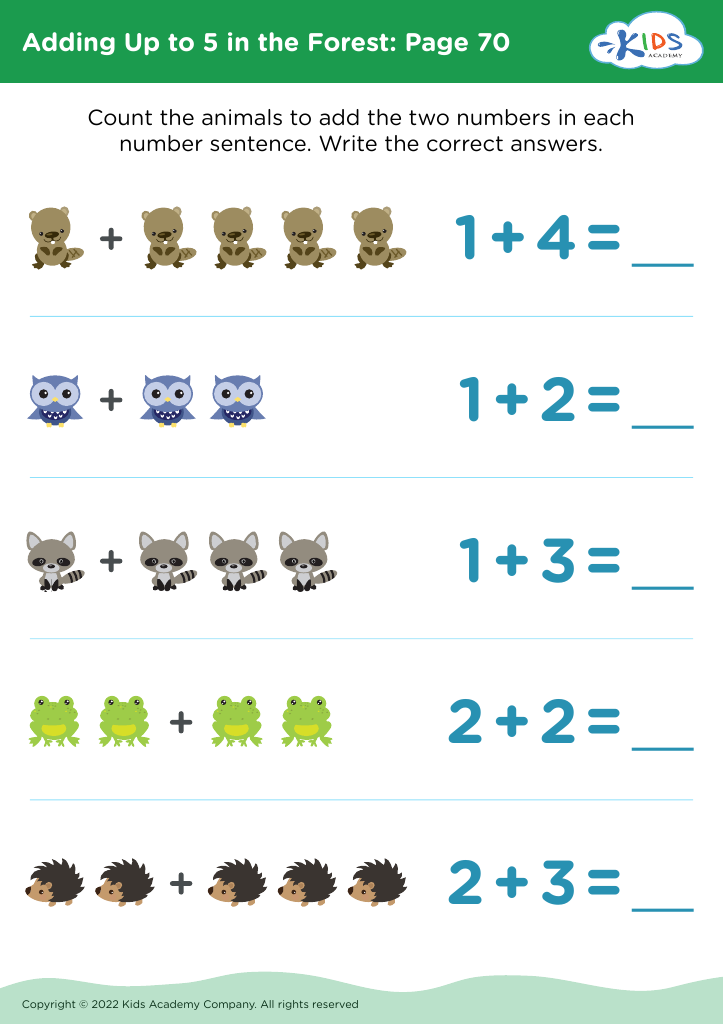
Adding Up to 5 in the Forest: Page 70
Worksheet
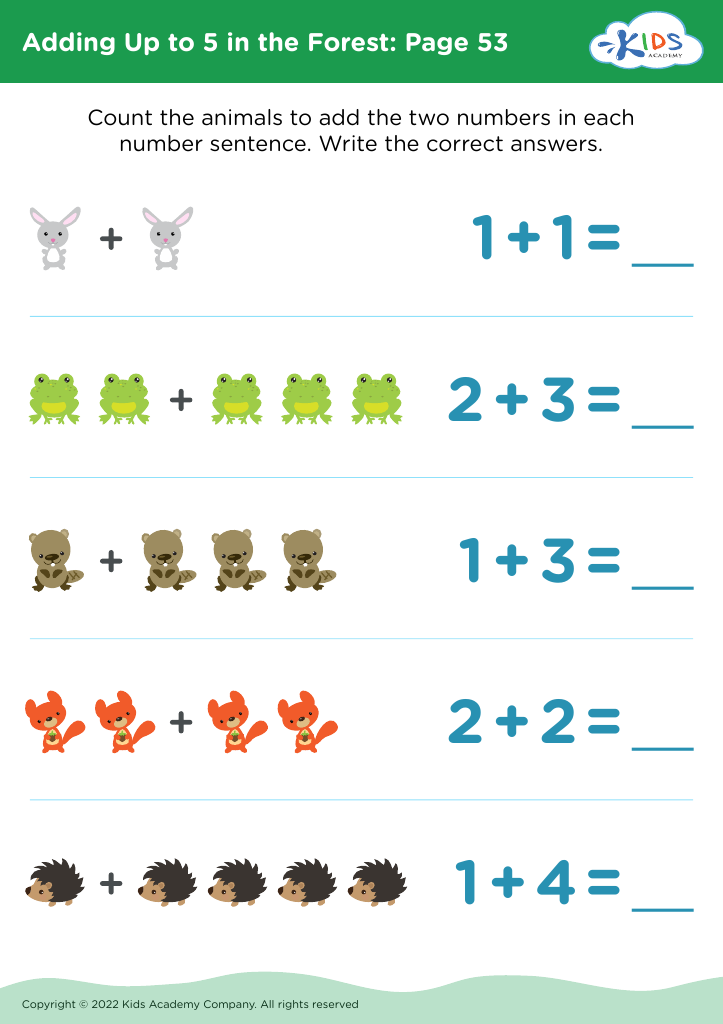
Adding Up to 5 in the Forest: Page 53
Worksheet
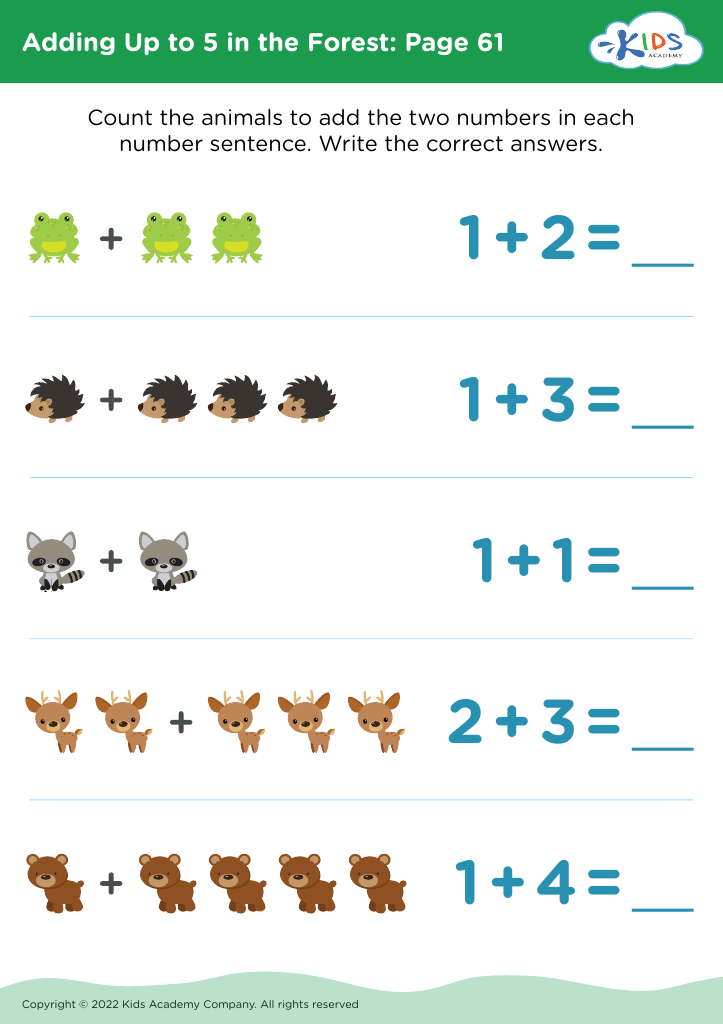
Adding Up to 5 in the Forest: Page 61
Worksheet


Number Recognition Adding in the Forest is an engaging way to teach young children fundamental math skills while connecting them with nature. For parents and teachers, this approach is essential as it lays the groundwork for early numeracy, facilitating cognitive and social development.

Firstly, number recognition is a vital skill that helps children understand quantities, patterns, and relationships in their environment. By incorporating a playful, thematic approach like "Adding in the Forest," lessons become memorable and fun, sparking a child's curiosity and enthusiasm for learning. This play-based method cultivates a love for math, making it less intimidating for future study.

Moreover, outdoor learning promotes physical activity and emotional well-being, aligning with holistic educational approaches. Children explore their surroundings, collaborating with peers through interactive activities, fostering critical thinking and teamwork. This dual emphasis on both number recognition and social growth prepares children for more complex mathematical concepts as they progress in their education.

Furthermore, engaging with natural settings encourages observational skills, enriching their understanding of numbers through real-world contexts, thus making mathematics more relatable. For these reasons, parents and teachers should prioritize this holistic, experiential form of teaching number recognition to foster well-rounded development in children aged 3-7.