Improving concentration Adding in the Sea Worksheets for Ages 3-7
4 filtered results
-
From - To
Enhance your child's concentration with our "Adding in the Sea" worksheets designed for ages 3-7! These engaging, printable resources focus on developing essential math skills while capturing your child's imagination through a vibrant ocean theme. Our worksheets incorporate fun sea creatures and relatable scenarios to make addition enjoyable and interactive. As children work through each problem, they'll boost their focus and critical thinking skills. Perfect for classroom activities or at-home learning, these math worksheets provide playful learning experiences that promote concentration and cognitive development. Dive into the world of numbers and watch as your child's confidence and concentration soar!
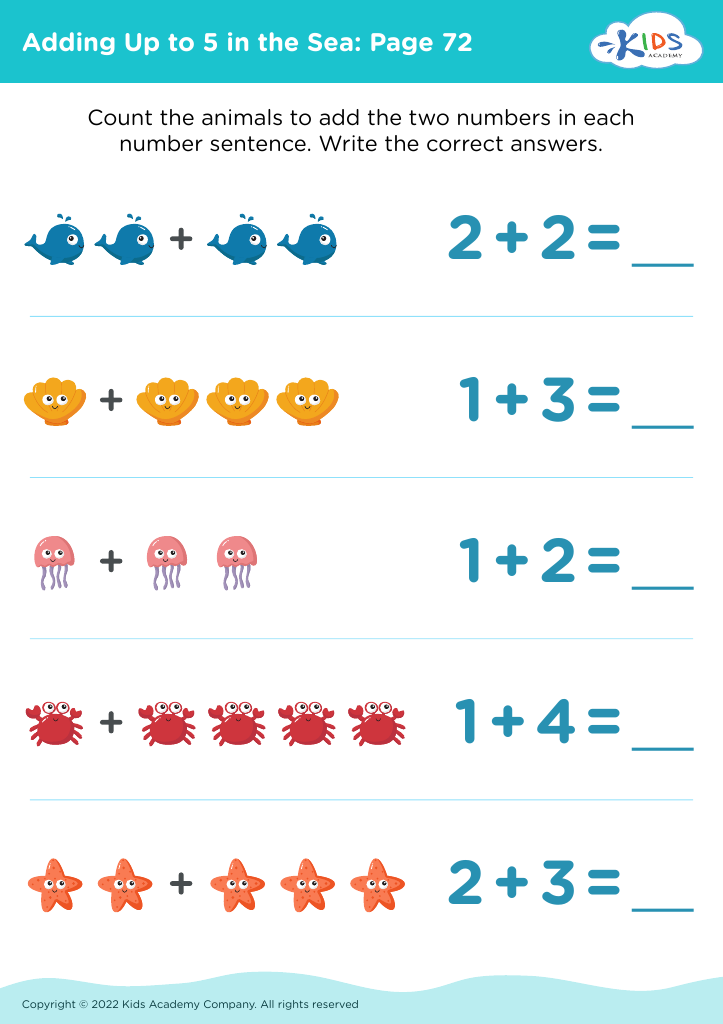
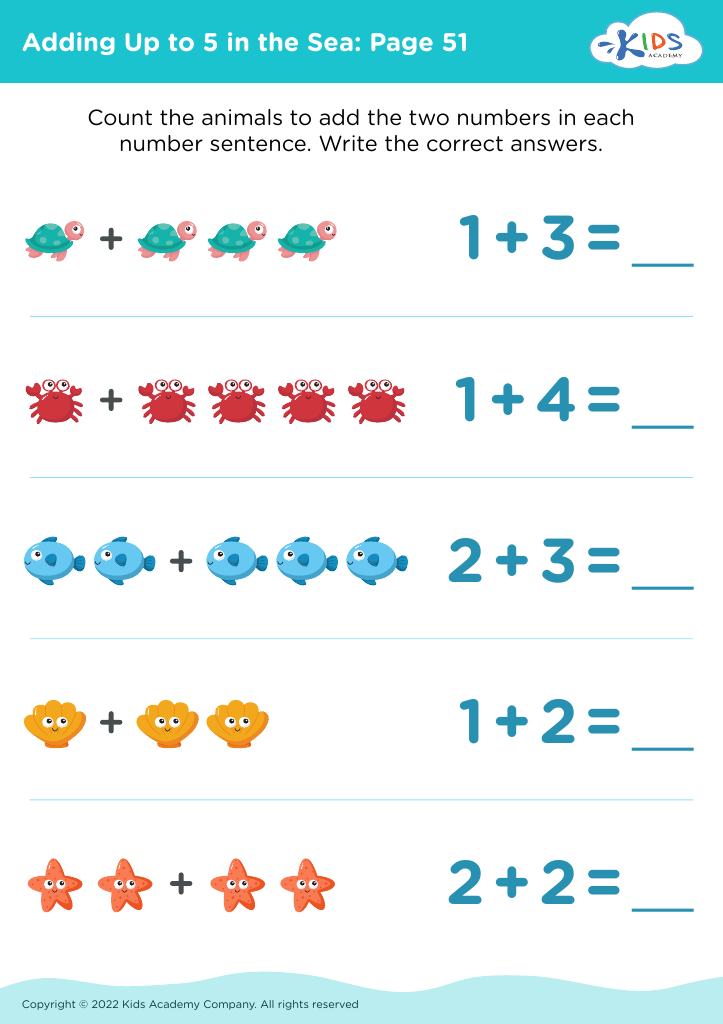
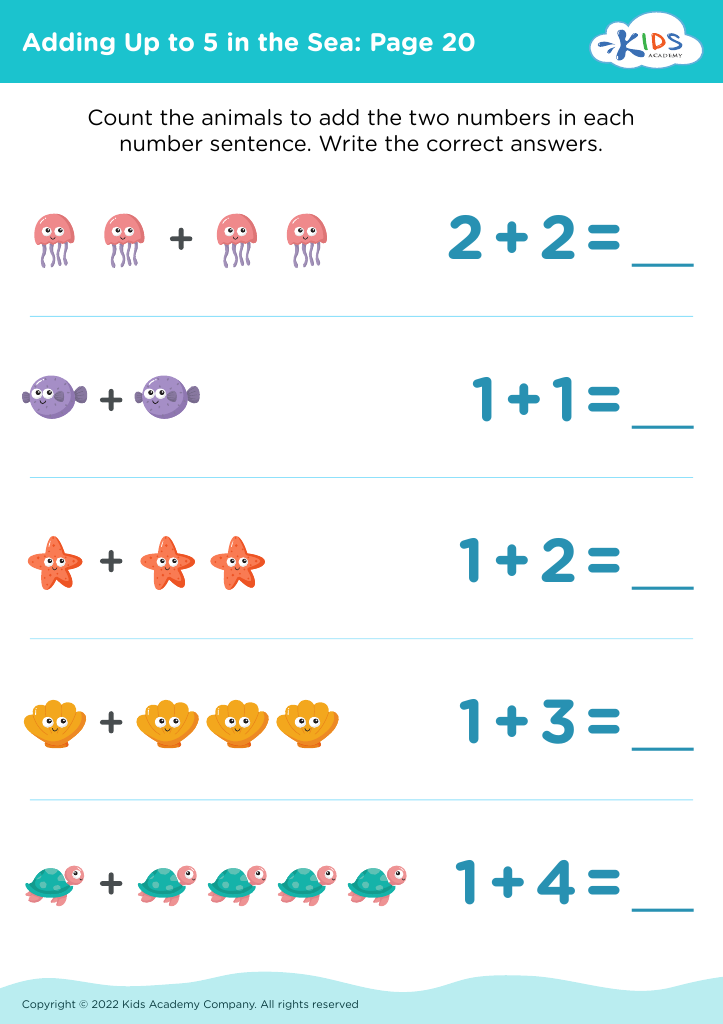
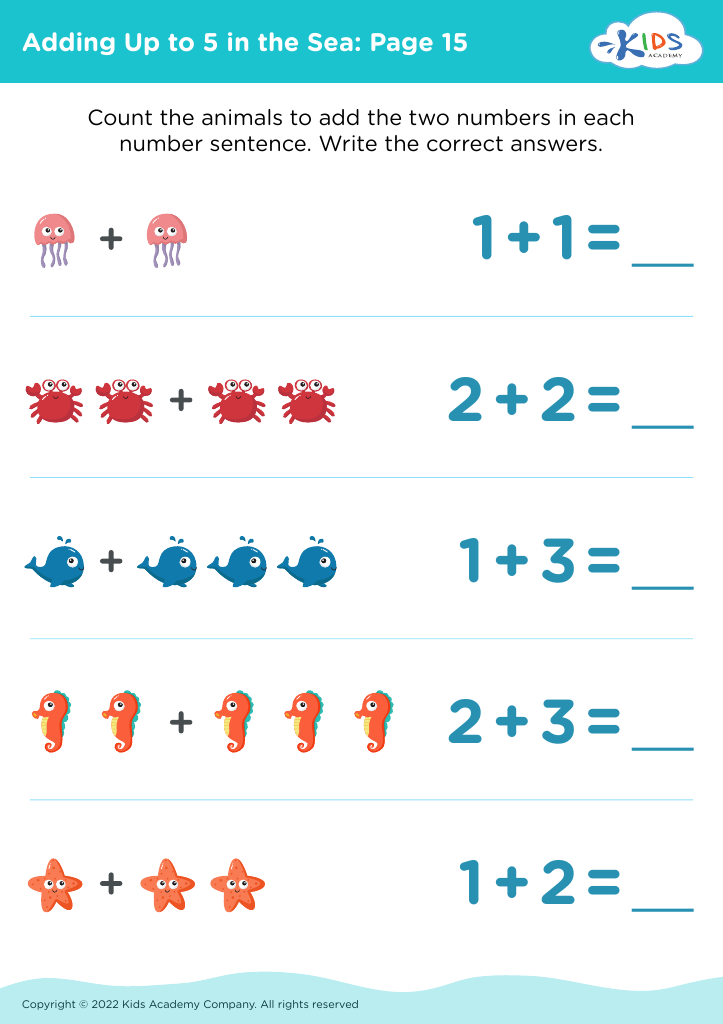



Improving concentration in young children, particularly ages 3-7, is crucial for their overall development. This period is foundational for cognitive, social, and emotional skills. Enhancing concentration helps children focus on tasks, improving their ability to learn and process new information. Methods like “Adding in the Sea” can make this process engaging and fun.
Using interactive and themed activities, like counting sea creatures, encourages children to concentrate while fostering a love for learning. Such activities not only capture their attention but also promote critical thinking and problem-solving skills as they engage with the content. Furthermore, improving concentration can lead to better classroom behavior, aiding teachers in creating a conducive learning environment.
Moreover, concentration exercises enhance listening skills, an important component in developing effective communication and social skills essential for interacting with peers and adults. Parents and educators should care about improving concentration because it lays the groundwork for academic success and real-world interactions, equipping children with skills vital for their futures. When focus is strengthened at a young age, children become active learners, paving the way for lifelong academic engagement and emotional resilience.