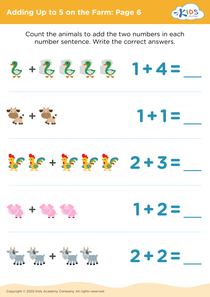
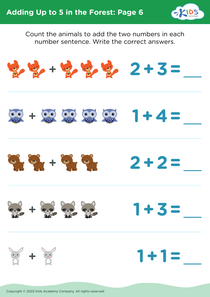
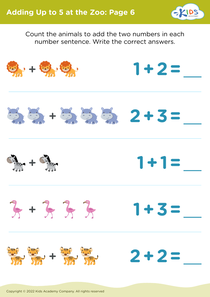
Underwater animal identification Adding in the Sea Worksheets for Ages 3-7
3 filtered results
-
From - To
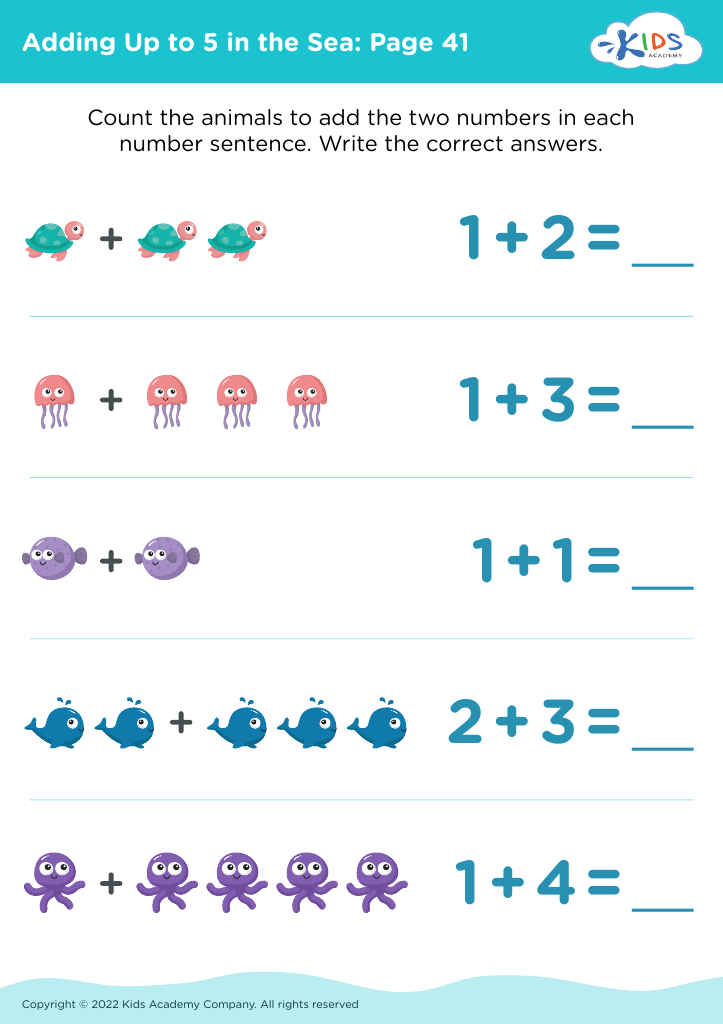
Discover the exciting world of "Underwater Animal Identification Adding in the Sea Worksheets" designed for young learners aged 3-7! These engaging worksheets combine math skills with ocean exploration, helping children recognize various underwater animals while practicing addition. Each worksheet is filled with colorful illustrations featuring sea creatures, making learning fun and interactive. Ideal for early grade educators and parents, these resources promote both math fluency and animal awareness. Children will enjoy identifying creatures like fish, dolphins, and starfish, while enhancing their counting and addition skills. Dive into these worksheets and unleash your child's inner marine biologist today!
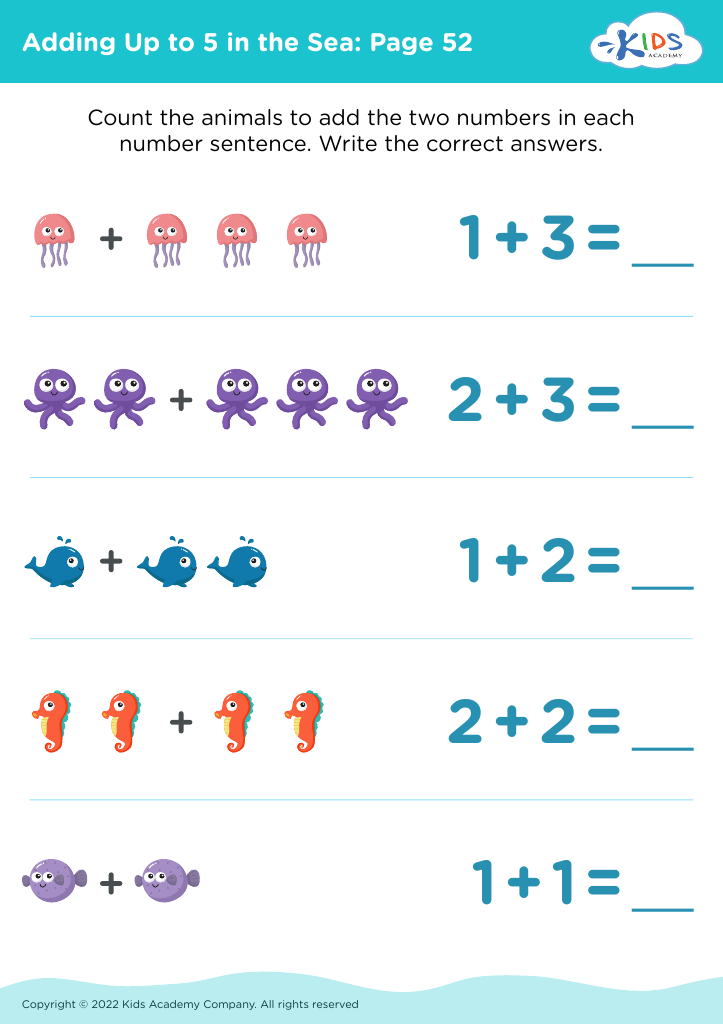
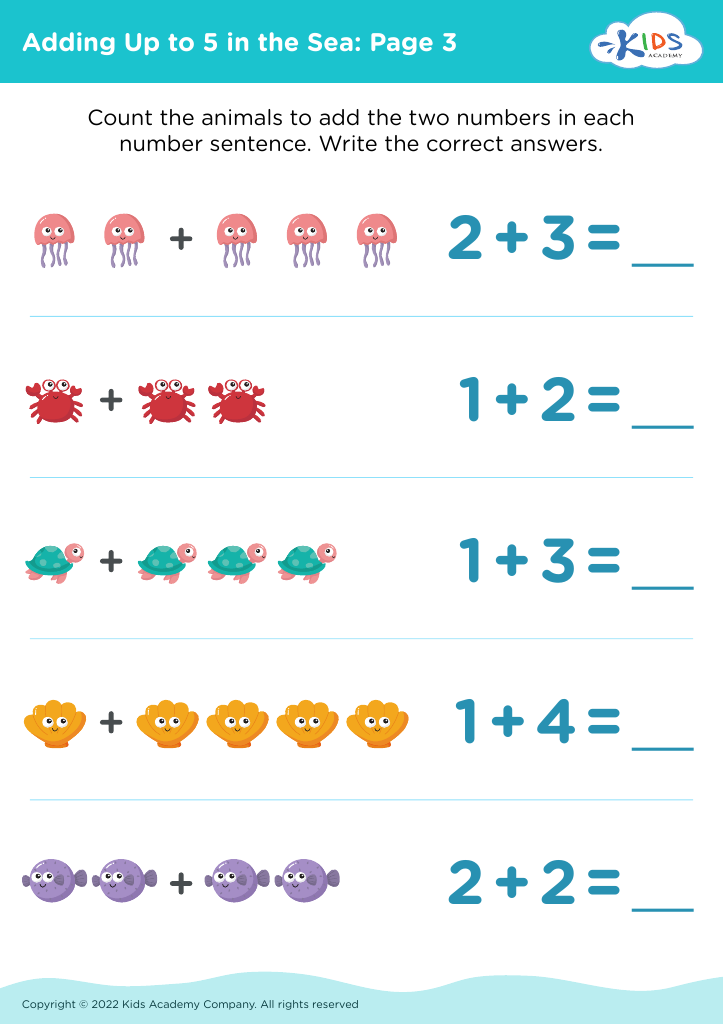



Underwater animal identification is crucial for children aged 3-7 as it fosters curiosity about the natural world, enhances learning, and cultivates empathy for marine ecosystems. When parents and teachers introduce young learners to the diverse creatures in the sea, they encourage observation and exploration skills. This early exposure can ignite a lifelong passion for marine biology, science, and environmental conservation.
Identifying underwater animals also aligns with early childhood education goals, as it promotes vocabulary development as children learn names and characteristics of various marine species. Activities focused on underwater animals can enhance fine motor skills through art projects, sorting games, and interactive discussions. These activities not only stimulate cognitive development but also encourage teamwork and communication skills as kids share their discoveries.
Moreover, understanding marine life is vital for fostering a sense of responsibility towards protecting our oceans. Teaching children about the impact of pollution, climate change, and habitat destruction can inspire them to become advocates for the environment. When parents and educators prioritize underwater animal identification, they help build a generation that values and strives to protect the beauty and diversity of our planet’s oceans.