Visual perception Adding in the Sea Worksheets for Ages 3-7
3 filtered results
-
From - To
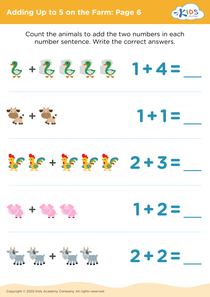
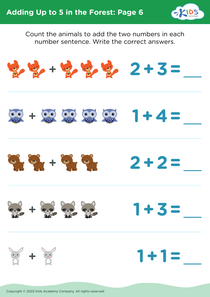
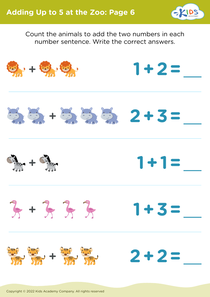
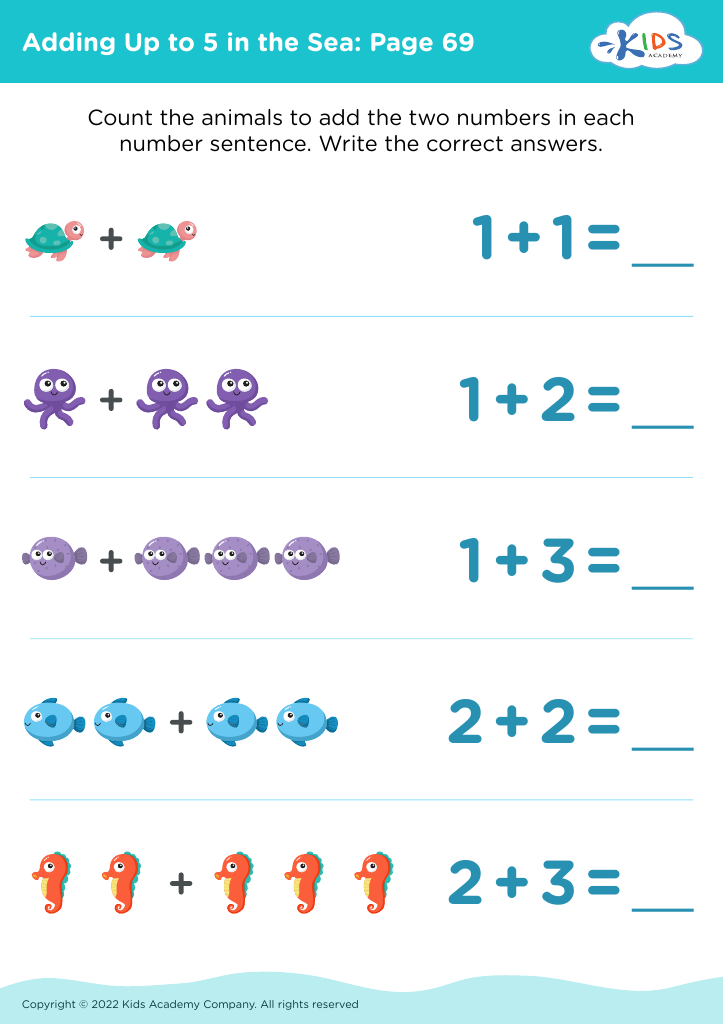
Dive into fun learning with our "Visual Perception Adding in the Sea Worksheets" designed specifically for ages 3-7. These engaging worksheets combine the excitement of underwater exploration with essential math skills, focusing on visual perception while introducing basic addition concepts. Children will enhance their ability to identify numbers and quantities amidst colorful marine illustrations, fostering creativity and confidence in their math abilities. Each worksheet encourages critical thinking through engaging activities that promote counting, number recognition, and problem-solving. Perfect for at-home learning or classroom activities, our resources make math enjoyable and accessible, helping young learners build a solid foundation for future success.
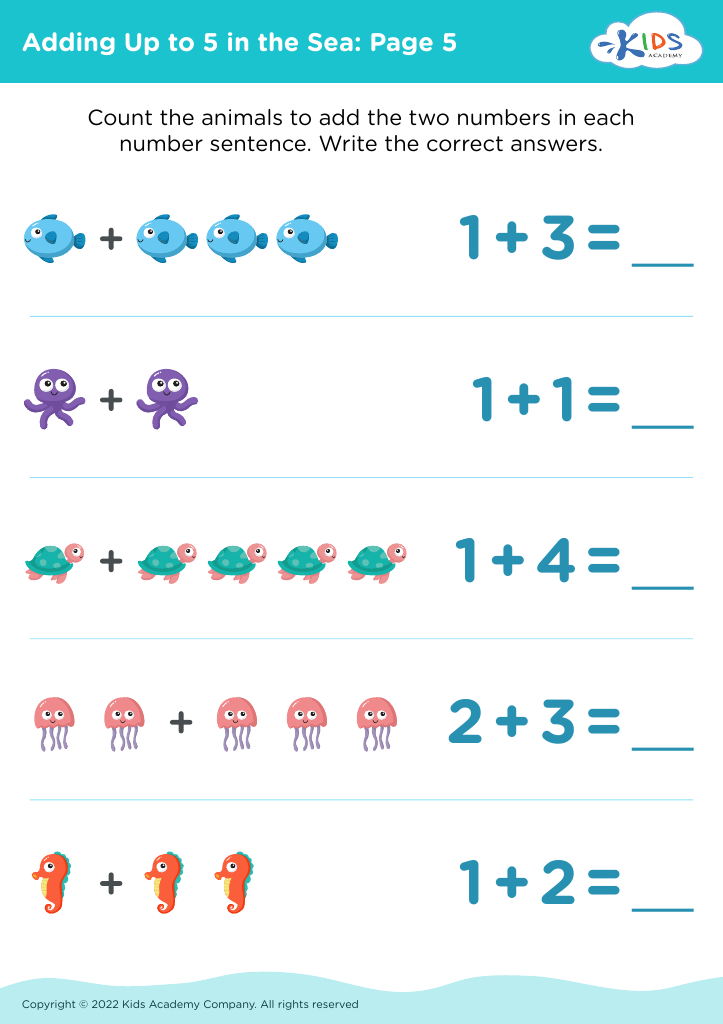
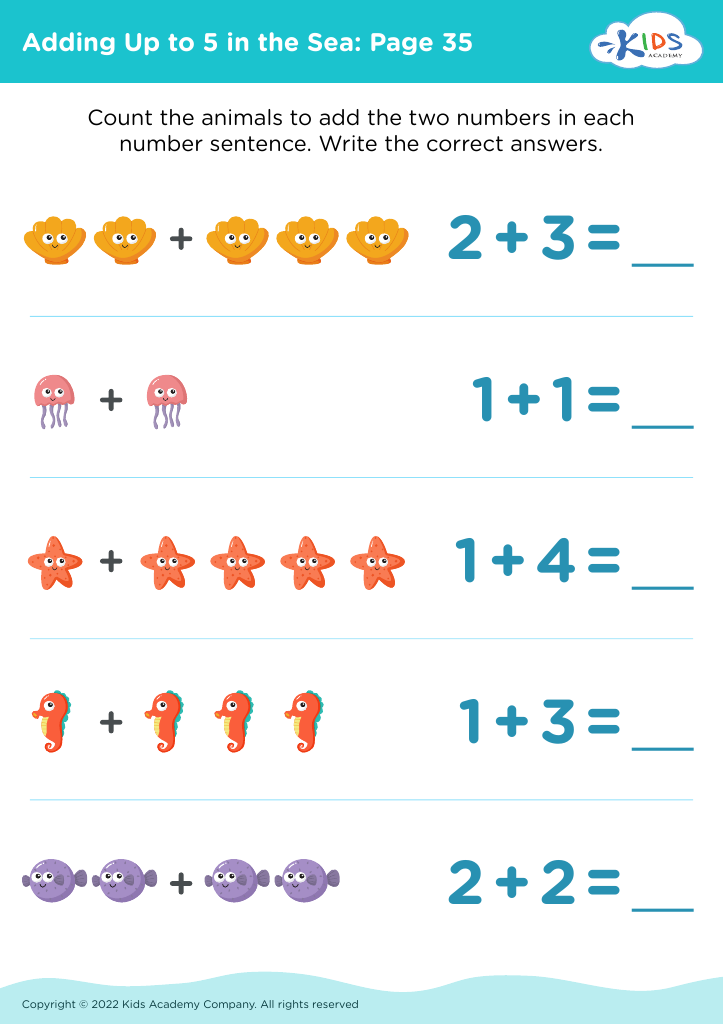



Visual perception is crucial for early childhood development, especially for children ages 3 to 7. This skill involves the ability to interpret and make sense of visual information, which is essential for early learning in various subjects, such as reading, math, and science. Parents and teachers should prioritize visual perception to help children improve their recognition of shapes, colors, patterns, and spatial relationships.
Incorporating visual perception activities, such as "Adding in the Sea," captivates children’s imagination while reinforcing these vital skills. By engaging in ocean-themed activities that require sorting, counting, and grouping various sea creatures, children not only enjoy a fun learning experience but also develop critical observation and categorization skills.
Moreover, strong visual perception enhances children's ability to follow instructions, recognize letters and numbers, and develop fine motor skills. As children explore and play, they boost their cognitive functions and self-confidence in learning environments. Therefore, parents and teachers should embrace visual perception-focused activities, like "Adding in the Sea," to lay a solid foundation for academic success and foster a lifelong love for learning in young children.