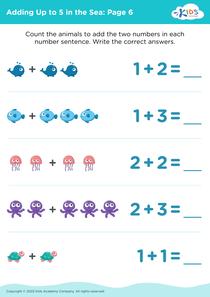
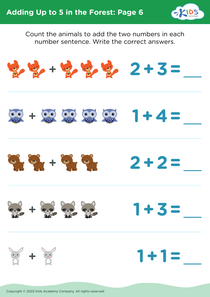
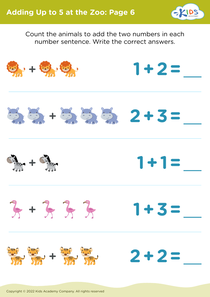
Counting objects Adding on the Farm Worksheets for Ages 3-7
8 filtered results
-
From - To
Explore our delightful "Counting Objects Adding on the Farm Worksheets" designed for children ages 3-7 at Kids Academy! These engaging, farm-themed activities help young learners develop essential math skills. Your child will practice counting objects and basic addition while having fun with adorable farm animals. Perfect for preschool and early elementary students, these worksheets offer a playful learning experience that builds a strong foundation in math. Ideal for parents and teachers seeking educational resources, our worksheets make learning to count and add enjoyable and interactive. Discover the joy of math with our farm addition worksheets today!
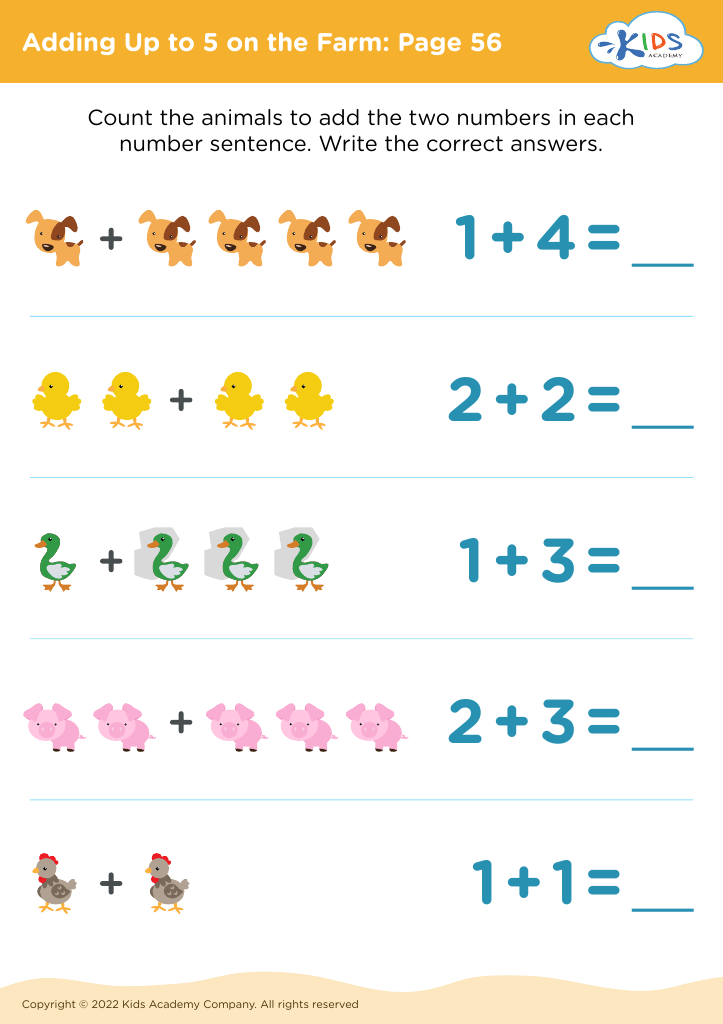
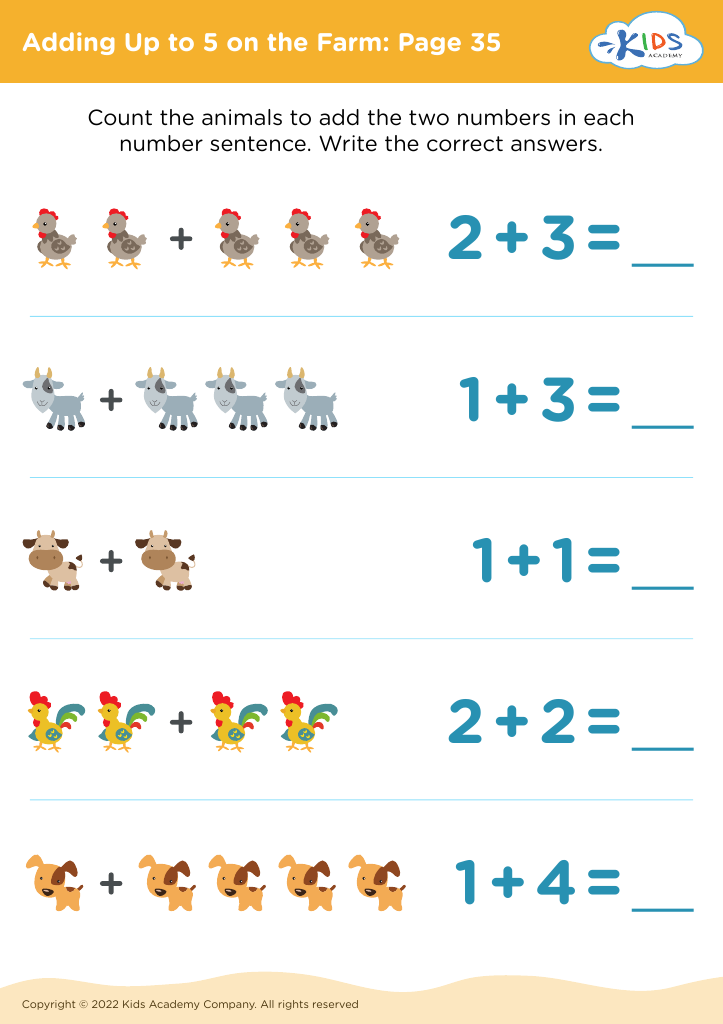
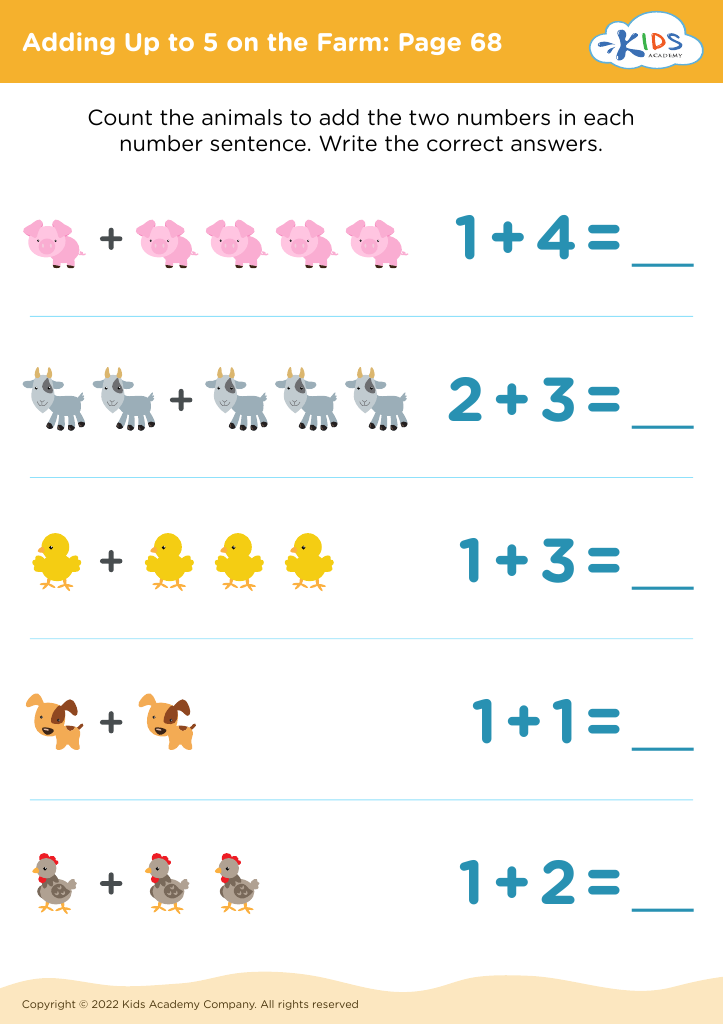
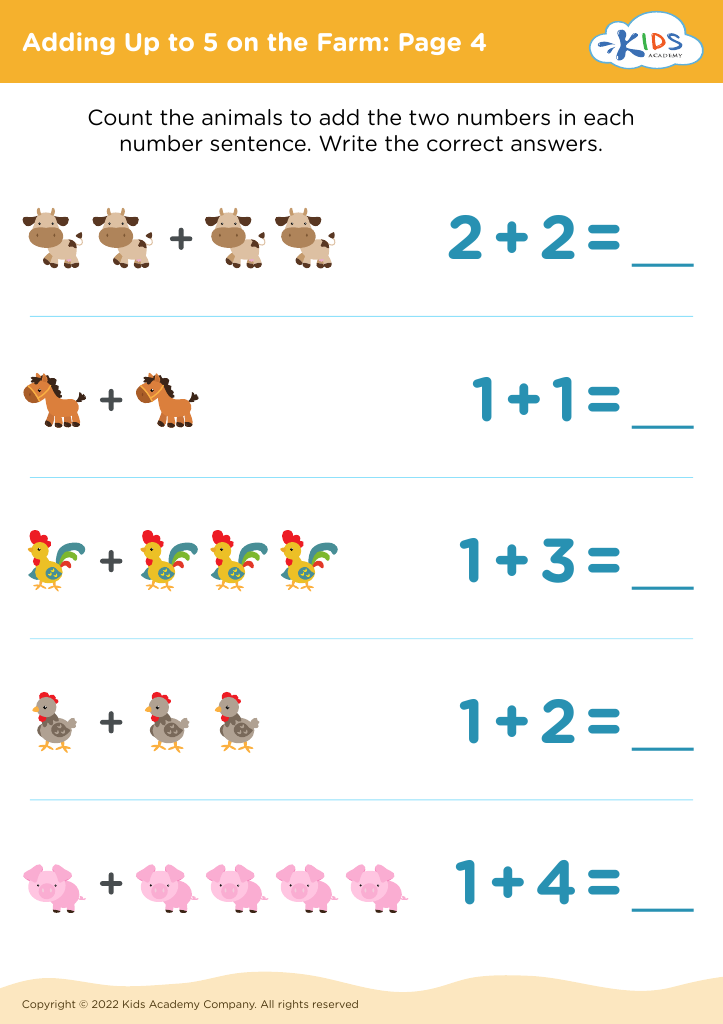
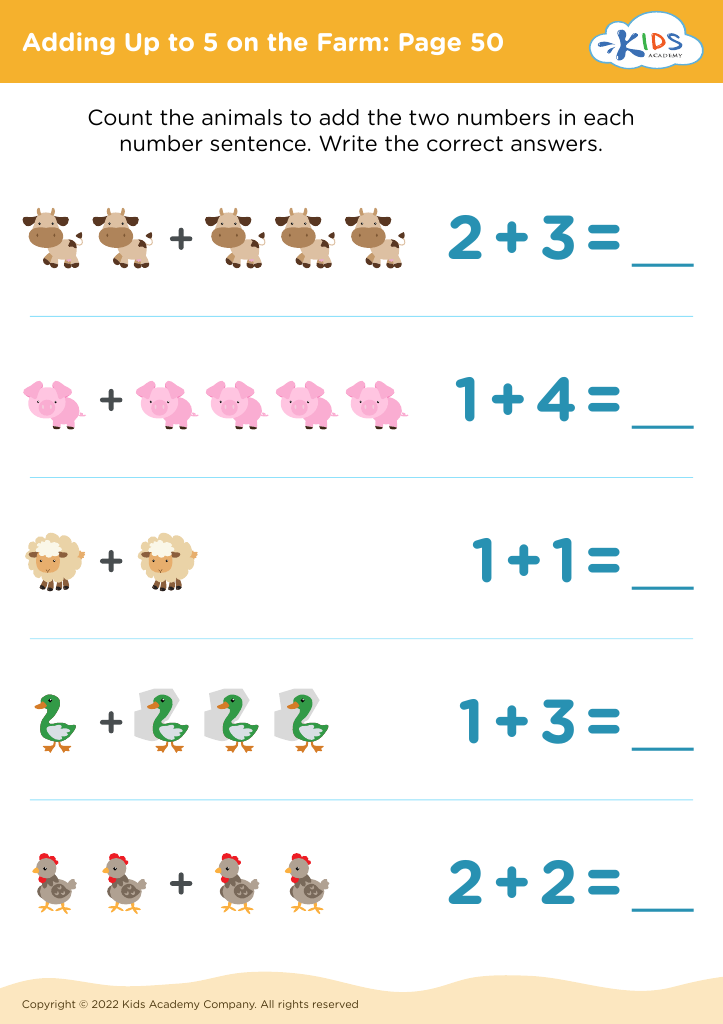
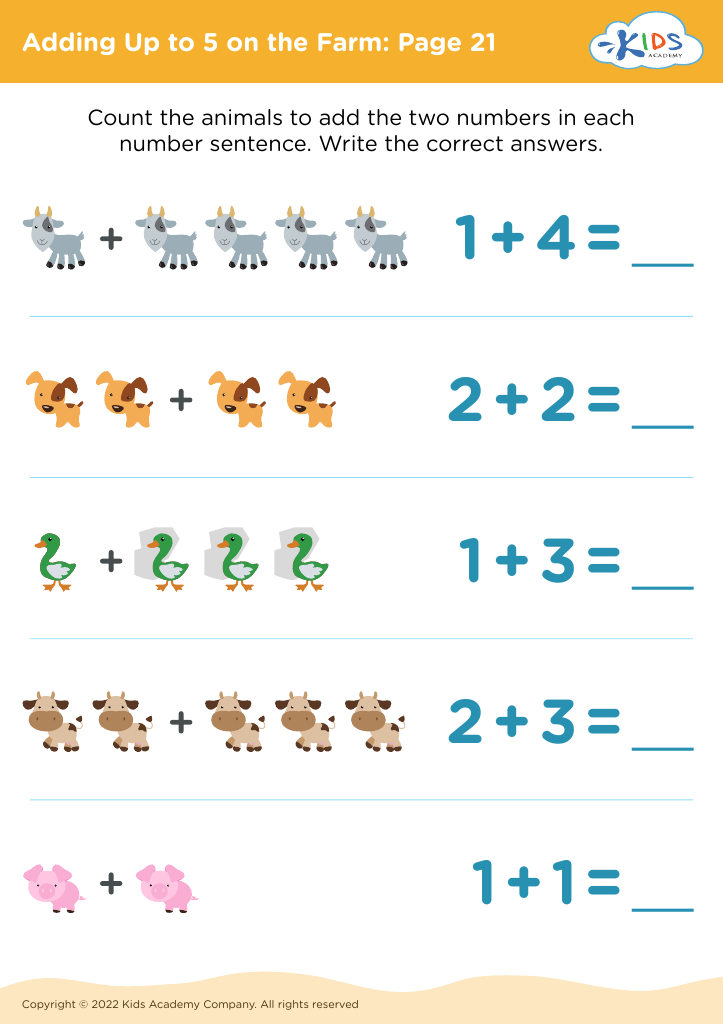
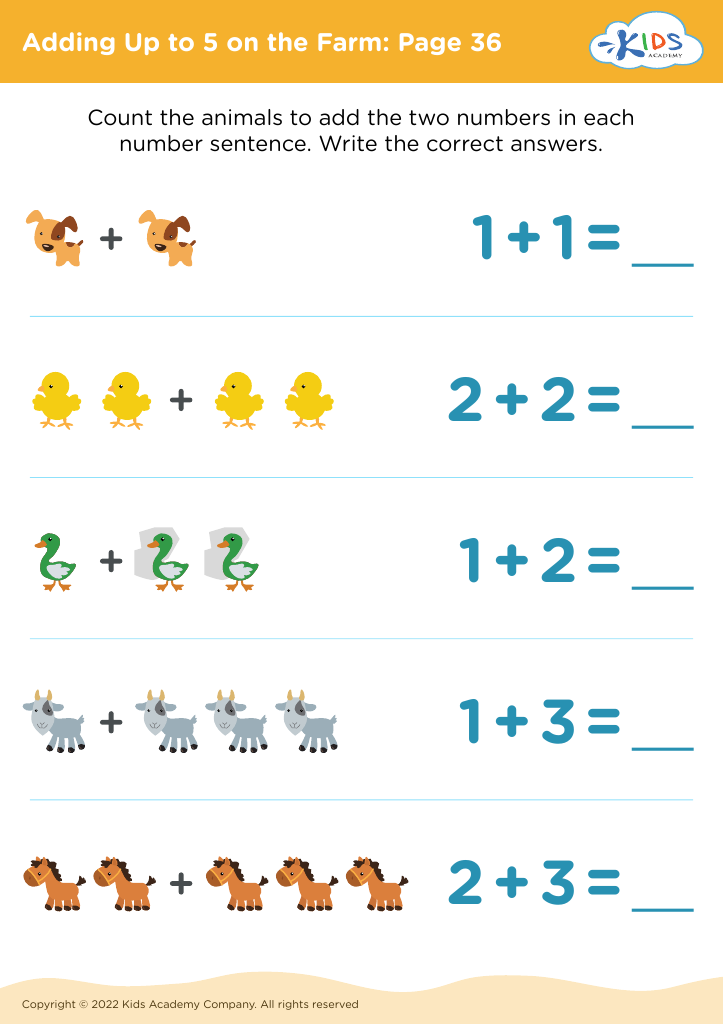
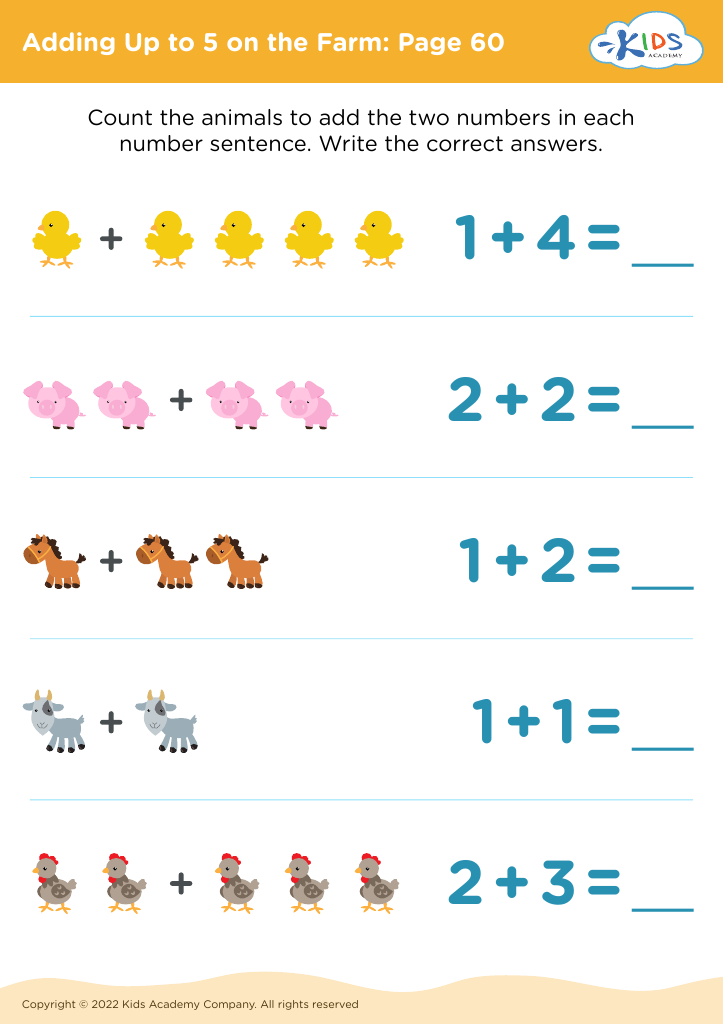



At ages 3-7, children are in a critical developmental stage for cognitive skills, particularly early math abilities. Materials like "Counting objects Adding on the Farm" are highly beneficial tools for educators and parents, because they tap into both numeracy and imaginative play, which are essential for young learners.
Early exposure to counting through engaging themes, such as a farm setting, promotes the development of basic arithmetic skills in a context that is both familiar and captivating. These activities help children understand number concepts, establish a foundation for addition and subtraction, and grasp the idea of numerals representing quantities. This kind of contextual learning supports memory retention and makes abstract ideas more concrete and relatable.
The farm theme itself is appealing and stimulating for young children. It provides a rich background for storytelling, imagination, and role-playing, encouraging children to be active participants rather than passive learners. By counting animals or combining groups of fruits, children not only develop mathematical skills but also enhance their language, fine motor skills, and ability to follow instructions.
Furthermore, early success in math fosters a positive attitude towards the subject, setting the stage for future academic achievements. Therefore, integrating "Counting objects Adding on the Farm" into early learning encourages a well-rounded approach to education, nurturing both intellectual growth and a love for learning.