Develop fine motor skills Adding up to 100 Misc Worksheets for Ages 3-7
4 filtered results
-
From - To
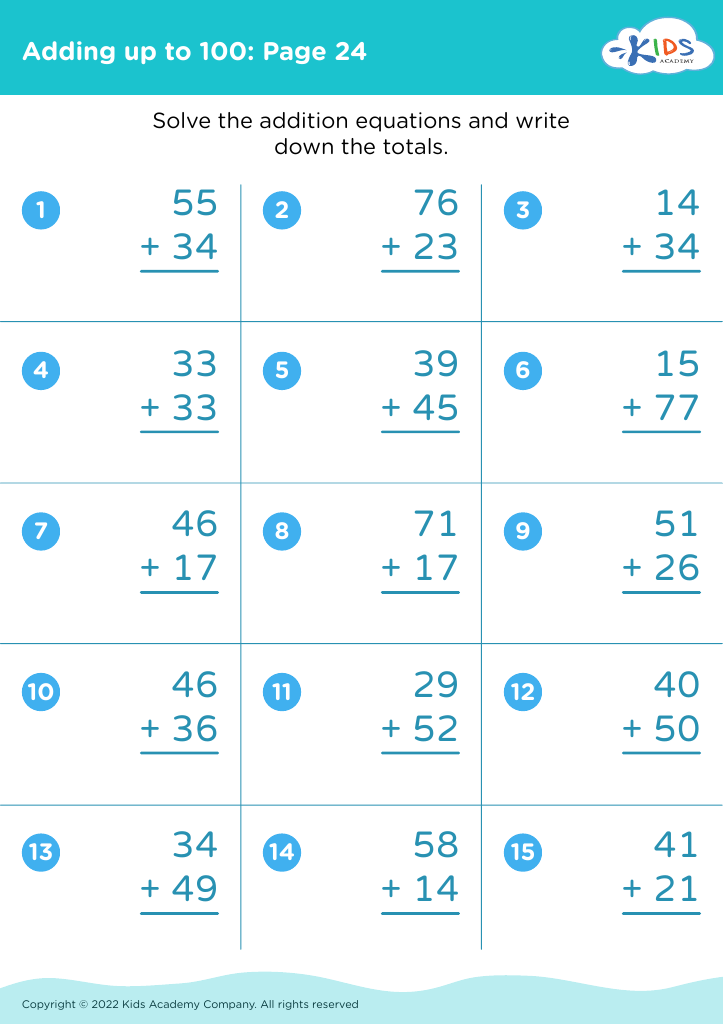
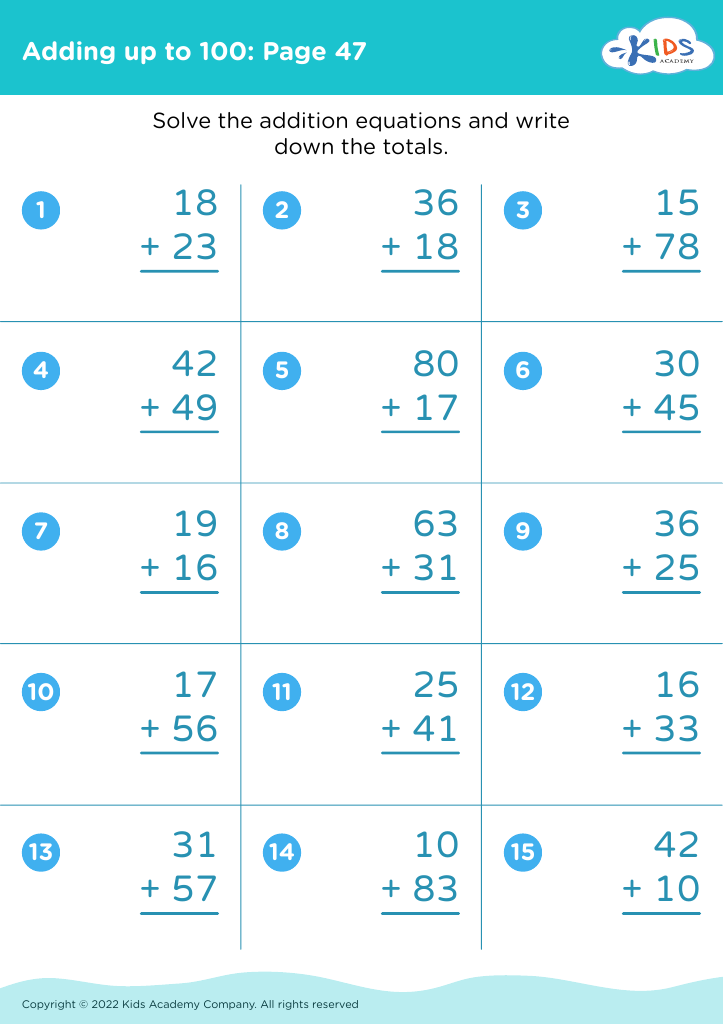
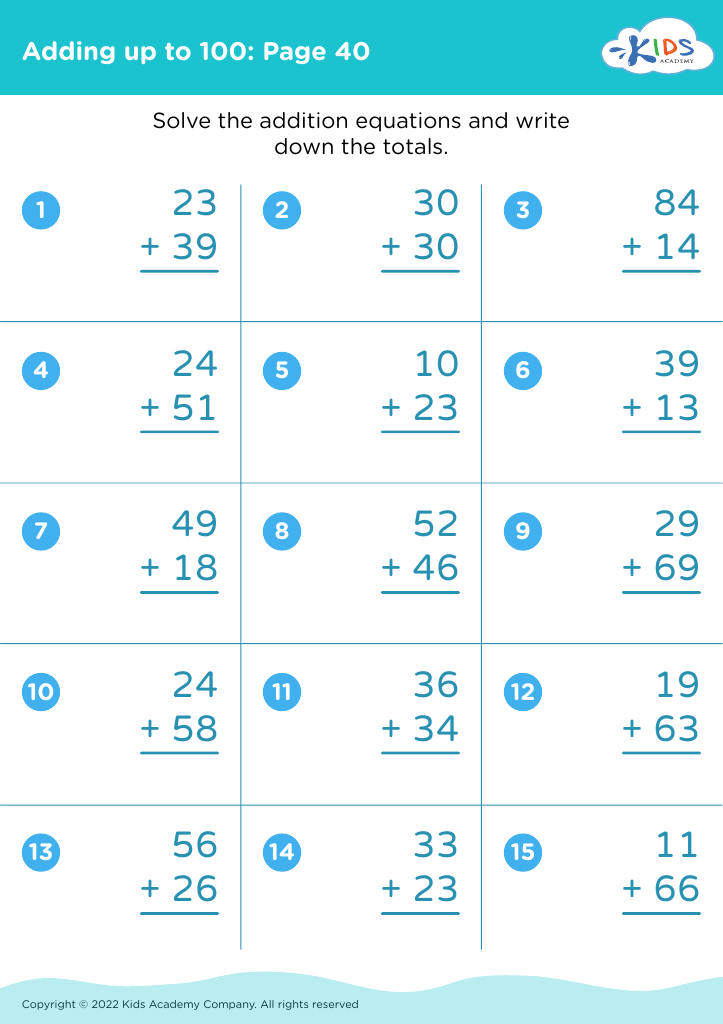
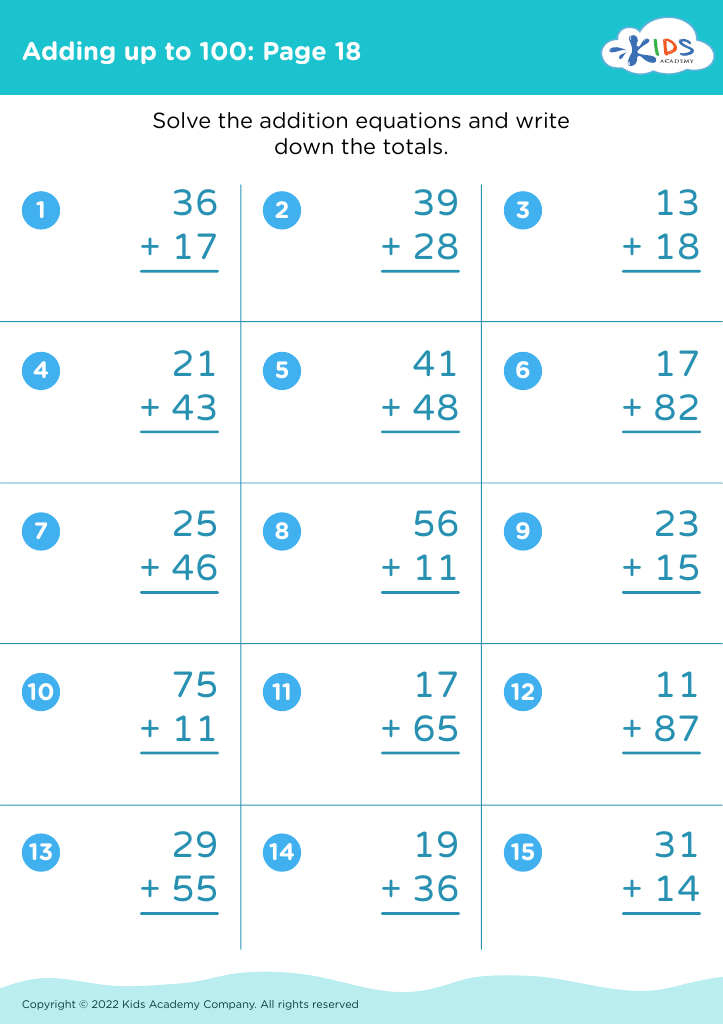
Unlock your child's potential with our comprehensive collection of 100 worksheets designed to enhance fine motor skills for ages 3-7. Focusing on the theme of addition up to 100, these engaging activities combine math practice with fun, hands-on tasks that promote dexterity and hand-eye coordination. From tracing numbers and shapes to solving playful math puzzles, each worksheet encourages children to sharpen their fine motor skills while building essential numeracy. Spark creativity and confidence in young learners as they develop proficiency in both math and motor skills through these enjoyable educational resources. Perfect for at-home learning or the classroom!


Developing fine motor skills in children aged 3-7 is crucial for their overall growth and future learning success. Fine motor skills involve the use of small muscles in the hands and fingers, enabling children to perform tasks such as writing, drawing, and manipulating small objects. Strong fine motor abilities are closely linked to cognitive development, as these skills facilitate hand-eye coordination, problem-solving, and concentration.
For parents and teachers, fostering these skills is important because they lay the groundwork for academic skills like writing and crafting. Children with strong fine motor skills are often more confident in their abilities to interact with their environment and can better execute everyday tasks like buttoning shirts or tying shoelaces, promoting independence.
Moreover, incorporating activities that enhance fine motor skills—such as playing with building blocks, drawing with various tools, or using scissors—can make learning fun and engaging. Such activities not only lead to skill acquisition but also encourage creativity and self-expression. By investing in fine motor skill development, parents and teachers play a pivotal role in providing children with a solid foundation for both academic success and life skills.