Improve number recognition Adding up to 100 Misc Worksheets for Ages 3-7
3 filtered results
-
From - To
Unlock your child's numerical potential with our "Improve Number Recognition: Adding Up to 100" worksheets designed for ages 3-7! These engaging materials enhance early math skills while making learning fun. Through a variety of activities, young learners will master number recognition, counting, and addition strategies up to 100. Our colorful, interactive worksheets spark curiosity and promote a love for math, ensuring kids grasp important concepts in a playful way. Perfect for home or classroom use, these worksheets provide valuable resources to support your child's educational journey. Dive into the world of numbers and watch them flourish with confidence and competence!
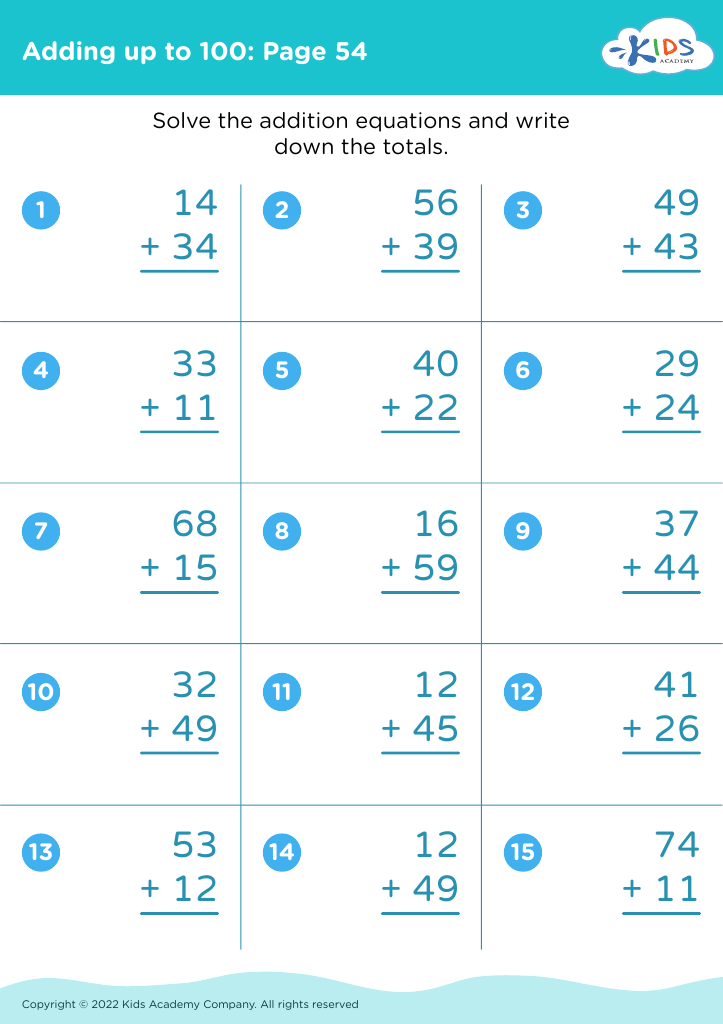
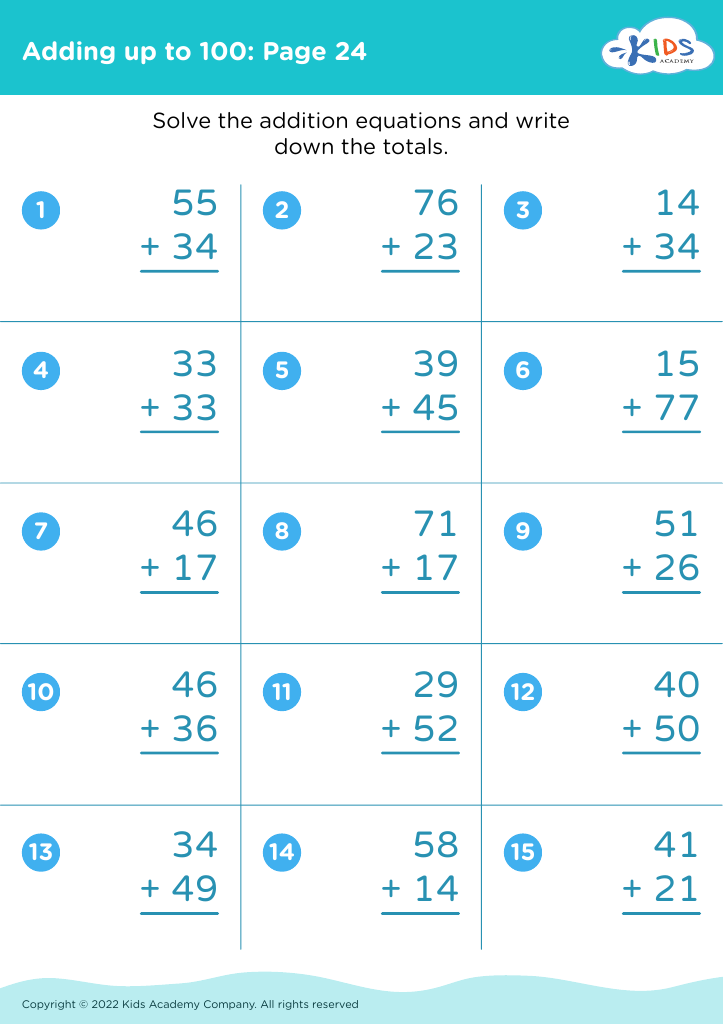
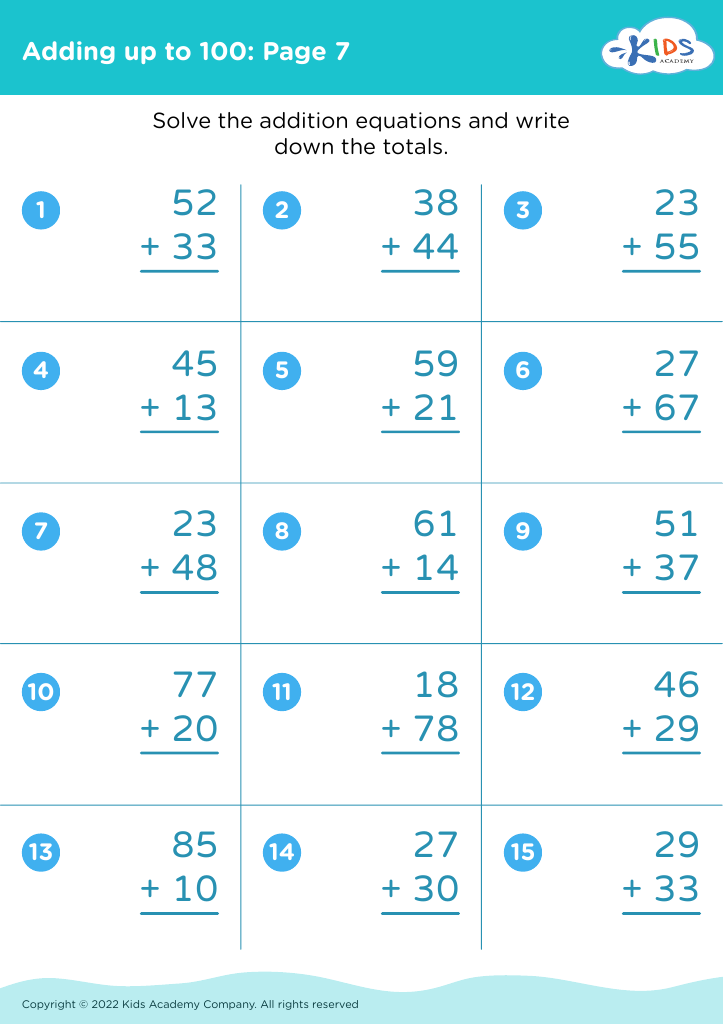


Improving number recognition and basic arithmetic skills is crucial for children aged 3-7, as it lays the foundation for future math learning. During these formative years, children develop essential cognitive, social, and emotional skills, and number recognition enables them to make sense of the world around them. Recognizing numbers helps children identify quantities in their environment, fostering an understanding of counting, ordering, and the relationships between numbers.
Focusing on adding up to 100 equips children with key skills in basic addition and promotes early numeracy. Mastery of these skills not only boosts self-confidence but also helps kids develop problem-solving abilities. Moreover, you progress at this stage facilitates smoother transitions into more complex math concepts as children advance in their education.
Parents and teachers play a vital role in nurturing these skills through engaging activities and supportive environments. By incorporating games, hands-on activities, and visual aids, they can stimulate interest in math and make learning enjoyable. When educators and parents invest in developing these foundational skills, they contribute to a child's overall academic success and set the stage for lifelong learning attitudes. Thus, supporting number recognition and basic arithmetic in early childhood is essential for fostering a strong mathematical foundation.