Addition Practice Adding up to 100 with Regrouping Worksheets for Ages 3-7
4 filtered results
-
From - To
Enhance your child's math skills with our "Addition Practice Adding up to 100 with Regrouping Worksheets." Designed for ages 3-7, these engaging activities help young learners master the basics of addition while introducing them to the concept of regrouping. Through fun, colorful exercises, children can build confidence and accuracy in adding two- and three-digit numbers. These worksheets make learning delightful and effective, providing an excellent resource for both classroom and home use. Make arithmetic enjoyable and straightforward for your budding mathematician! Download now from Kids Academy and watch your child excel in addition.
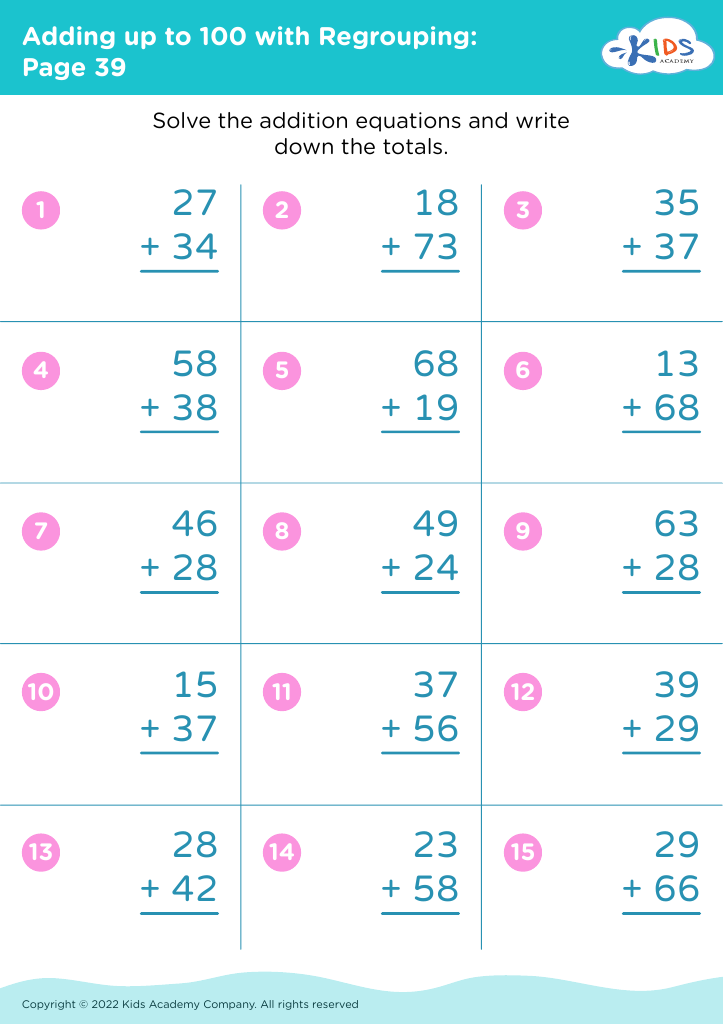
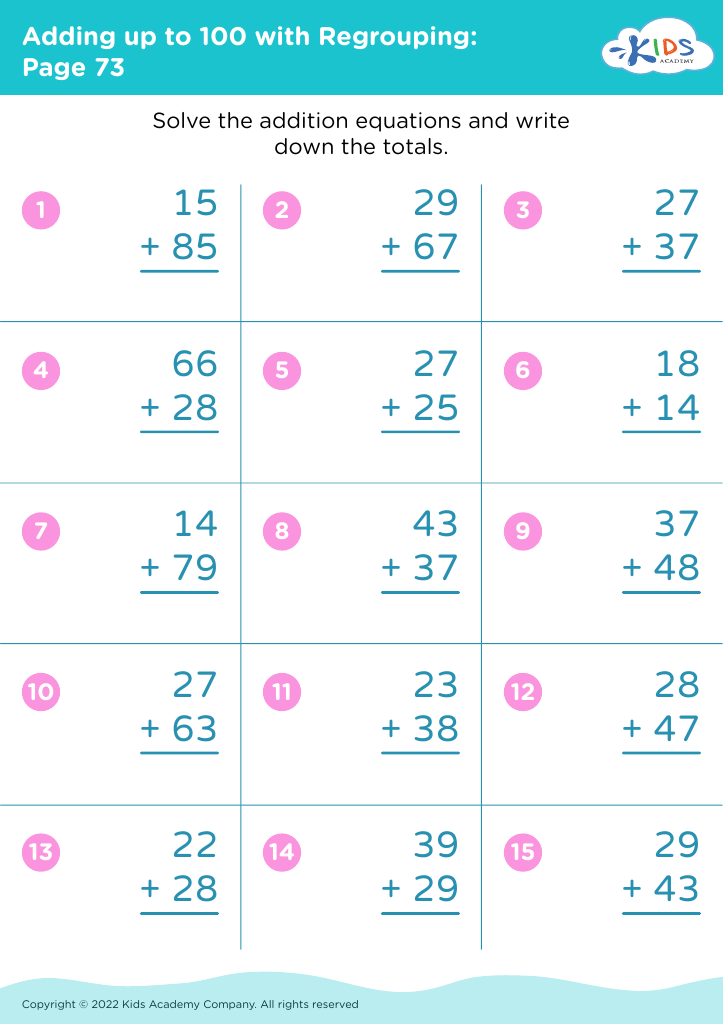
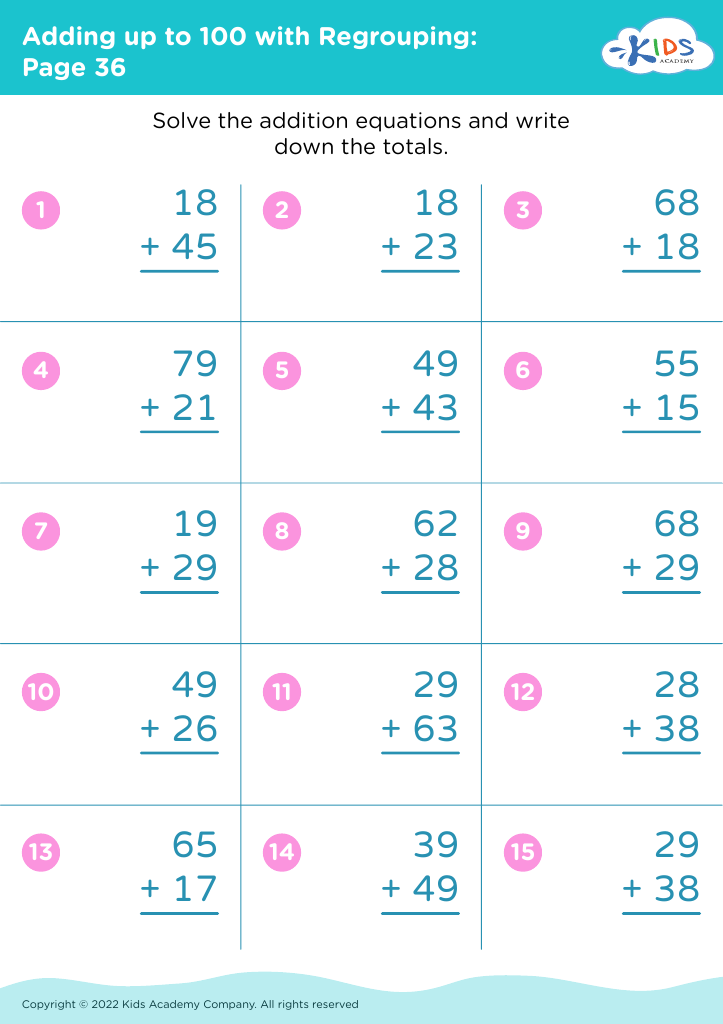
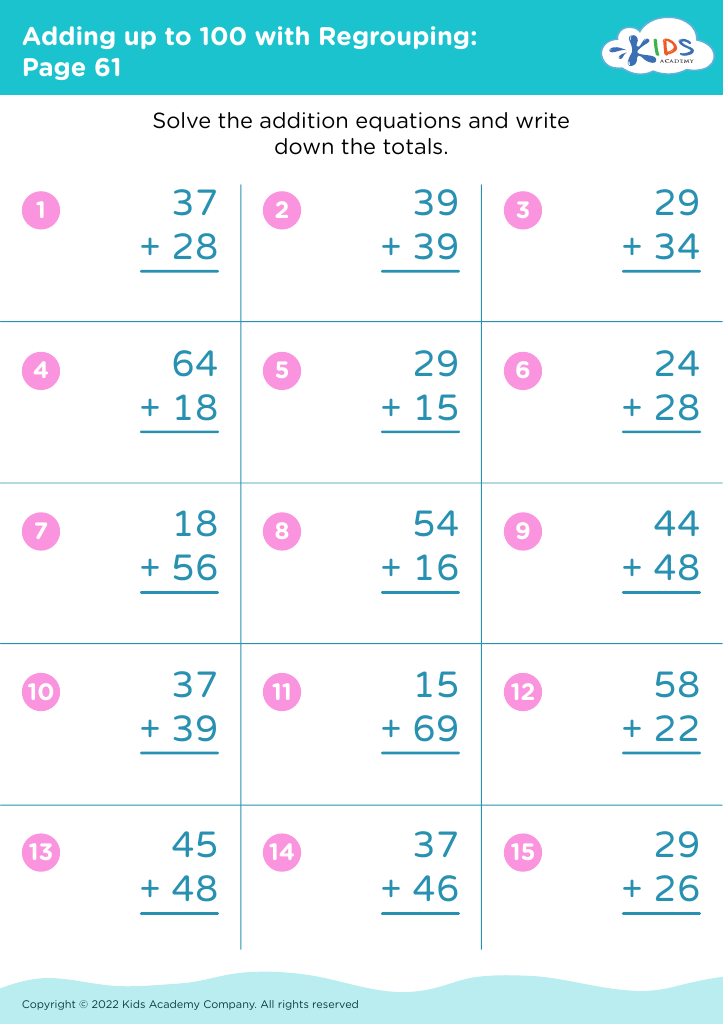




Parents and teachers should prioritize addition practice up to 100 with regrouping for children aged 3-7 because it lays a critical foundation for their mathematical skills and overall cognitive development. At this formative age, mastering fundamental arithmetic concepts is essential for future success in more complex math problems. Regrouping, or carrying over, helps children understand the hierarchical structure of the decimal system and develop number sense, which is crucial for their ability to perform basic math operations accurately.
Moreover, addition practice with regrouping enhances problem-solving abilities and critical thinking. Children learn to break down more complex tasks into smaller, manageable steps, fostering patience and perseverance. This not only aids in mathematical reasoning but also applies to other academic subjects and everyday life tasks. It promotes a sense of achievement and can boost confidence in their academic abilities.
Additionally, consistent practice with addition and regrouping supports the development of fine motor skills and hand-eye coordination, as children often write down calculations. This practice contributes to their overall neurological and cognitive growth, crucial during early childhood.
By focusing on addition with regrouping at this stage, parents and teachers set children on a path toward academic success, nurturing a positive attitude towards math that can last a lifetime.