Improve math skills Adding up to 100 with Regrouping Worksheets for Ages 3-7
3 filtered results
-
From - To
Boost your child's math skills with our "Adding Up to 100 with Regrouping Worksheets" designed for ages 3-7! This engaging collection simplifies the regrouping process, making it easier for young learners to grasp fundamental addition concepts. Each worksheet features age-appropriate exercises that encourage critical thinking, problem-solving, and number recognition. With interactive and colorful activities, kids can practice adding numbers and honing their abilities in a fun, low-stress environment. Perfect for classroom use or at-home learning, these worksheets are tailored to build confidence and empower early mathematicians. Start your child's math journey today and watch them excel!
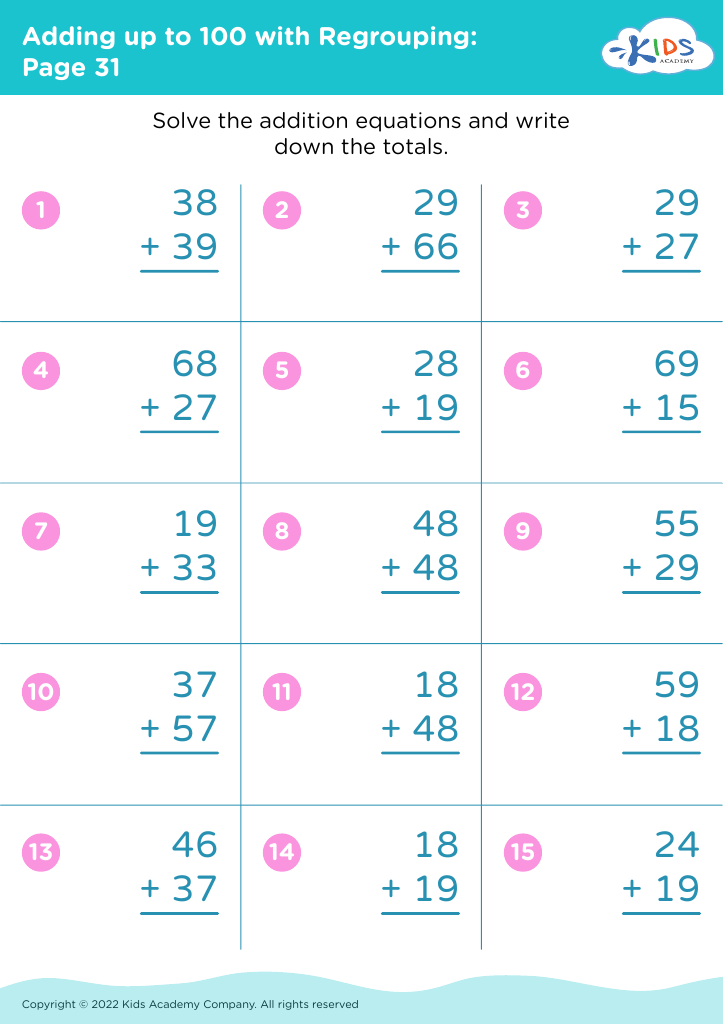
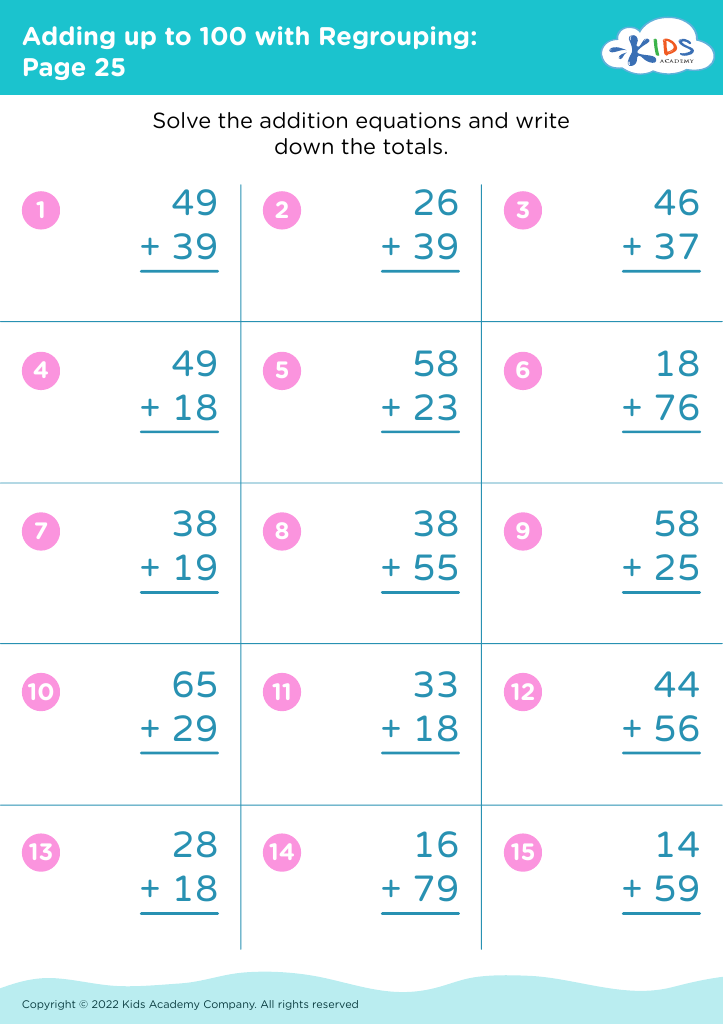
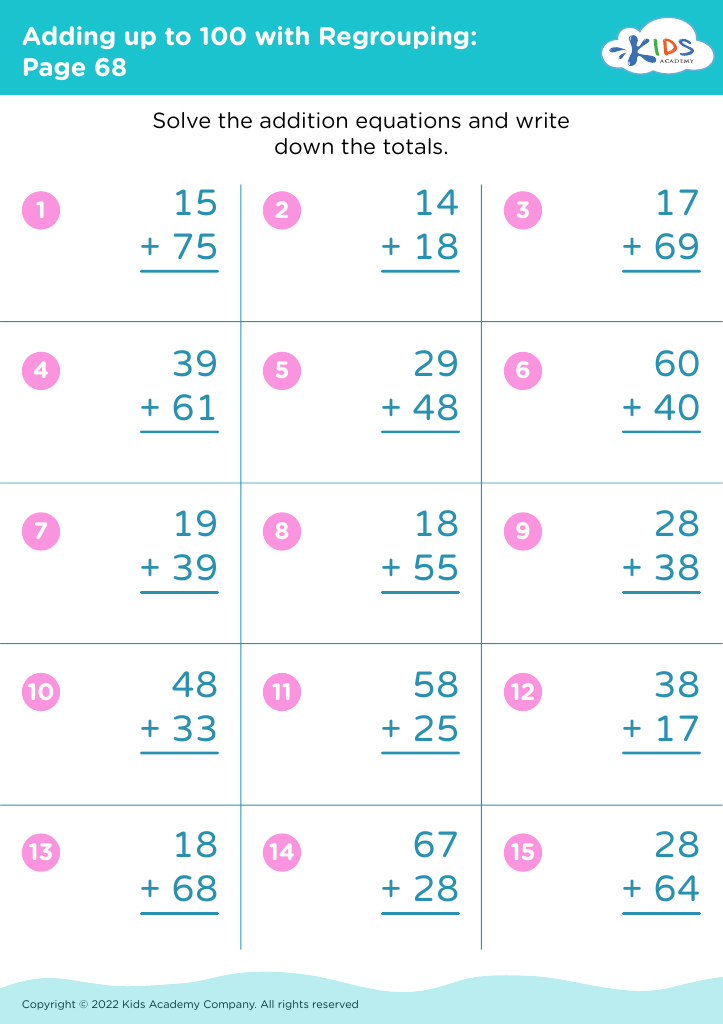




Parents and teachers should prioritize improving math skills, especially adding up to 100 with regrouping, for children aged 3-7 due to its foundational importance in mathematics. Mastery of these skills builds a strong base for future learning. Early math competence has been linked to greater academic achievement later in life, making it a critical component of a child’s educational journey.
As children learn regrouping, they develop critical thinking and problem-solving skills. This process enhances their ability to perform mental math and makes more complex calculations manageable. Moreover, these skills promote resilience; as children practice regrouping, they learn to approach challenges methodically and foster a growth mindset.
Additionally, math is present in everyday life, from managing allowances to making decisions in games and cooking. Helping children understand and apply these skills in practical scenarios aids in their overall cognitive development. Engaging lessons and supportive environments can instill confidence and a lasting love for mathematics.
Ultimately, nurturing math skills early empowers children to grasp essential concepts, equips them for academic success, and prepares them to navigate an increasingly data-driven world. Thus, investing time in teaching adding up to 100 with regrouping pays off significantly in a child's overall development.