Practice problem-solving Adding up to 100 with Regrouping Worksheets for Ages 3-7
3 filtered results
-
From - To
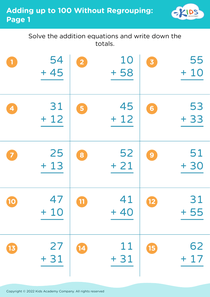
Practice problem-solving skills with our Adding up to 100 with Regrouping Worksheets for Ages 3-7! These expertly designed worksheets help young learners master addition with regrouping, building a strong mathematical foundation. Engaging exercises encourage logical thinking, developing your child's confidence and proficiency in problem-solving. Featuring colorful visuals and relatable scenarios, each worksheet transforms math practice into an enjoyable activity. Perfect for classroom use or additional home practice, our worksheets support development in a crucial skill set, setting children up for future success in mathematics. Unlock your child's potential with our hands-on, interactive approach to early math education.
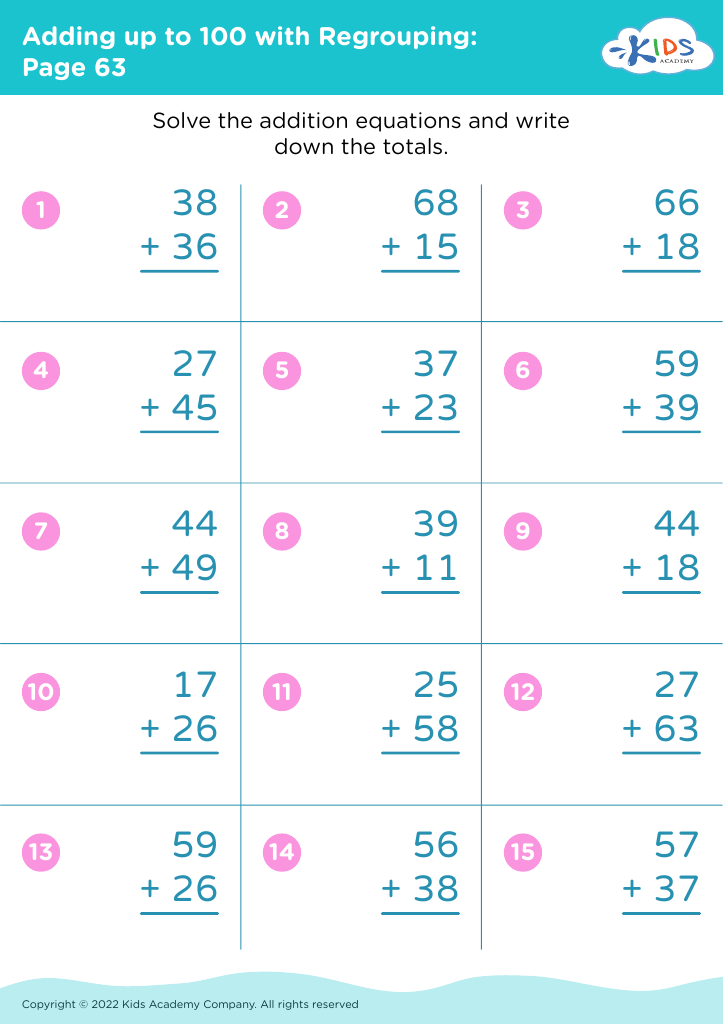
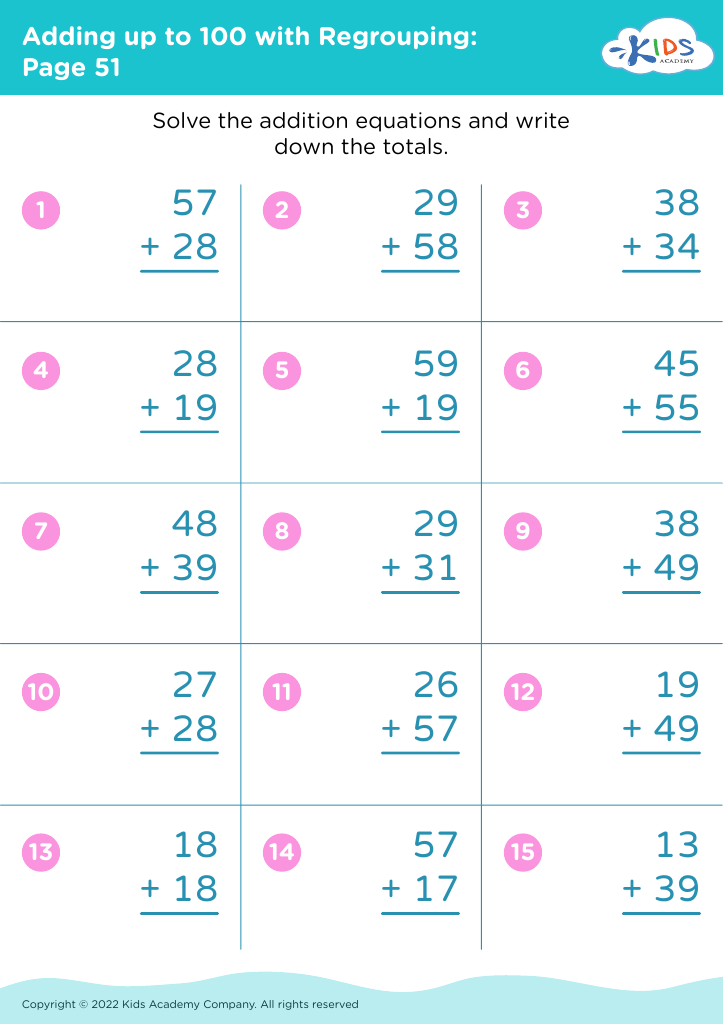
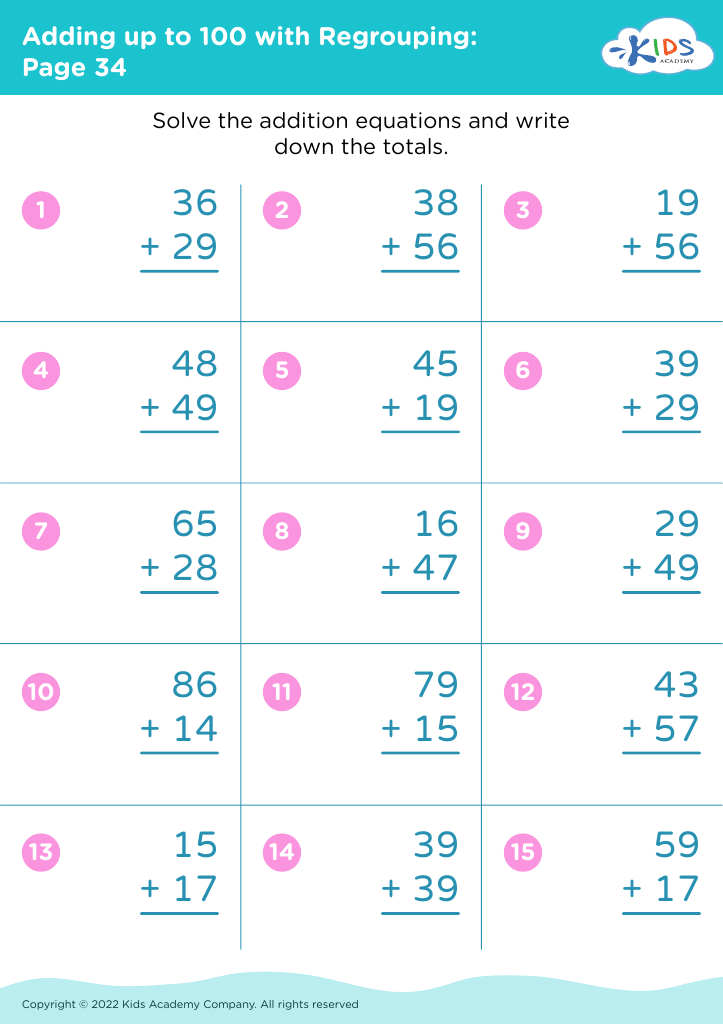




Engaging children ages 3-7 in practice problem-solving activities that involve adding up to 100 with regrouping (also known as carrying) offers significant benefits for their cognitive and academic development. At this formative stage, children are honing their foundational math skills that will support them throughout their educational journey. Proficiency in addition with regrouping is critical because it lays the groundwork for more advanced arithmetic and problem-solving abilities, such as multiplication and division, which will be introduced in later grades.
Understanding regrouping helps children grasp the concept of place value, a cornerstone of our number system. Mastery in this area enables children to break down problems into more manageable parts, fostering logical thinking and boosting their confidence in math. Actively working on these problems also reinforces critical thinking and analytical skills, as children learn to approach a challenge from multiple angles and choose the most efficient solving strategies.
Moreover, routine practice in a supportive environment allows children to make mistakes and learn from them, cultivating resilience and a positive mindset towards mistakes as learning opportunities. For both parents and teachers, focusing on these skills can help identify any learning gaps early on, allowing for timely intervention. Consequently, this foundational practice empowers children to navigate more complex mathematical concepts with ease as they progress academically and in daily life, rendering it an essential aspect of early childhood education.