Shape Recognition Adding up to 100 with Regrouping Worksheets for Ages 3-7
5 filtered results
-
From - To
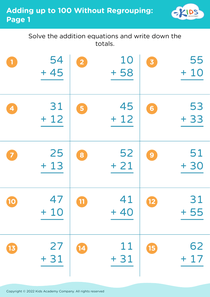
Introduce your young learners to the fascinating world of math with our "Shape Recognition Adding Up to 100 with Regrouping Worksheets" designed specifically for ages 3-7. These interactive worksheets blend fundamental shape recognition skills with critical addition practices, offering a dynamic learning experience. Children will enjoy recognizing and naming shapes while tackling addition problems that require regrouping. With colorful visuals and engaging activities, our worksheets help build a strong mathematical foundation, promoting both cognitive development and confidence in problem-solving. Perfect for both classroom and home use, these resources make learning math fun and effective for young minds.

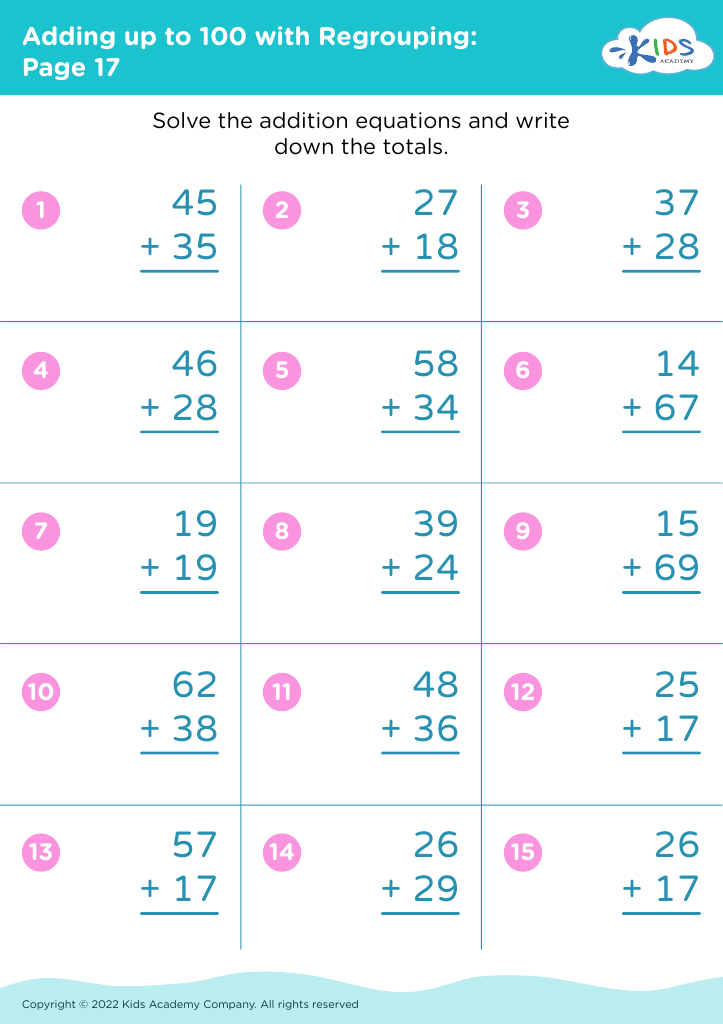
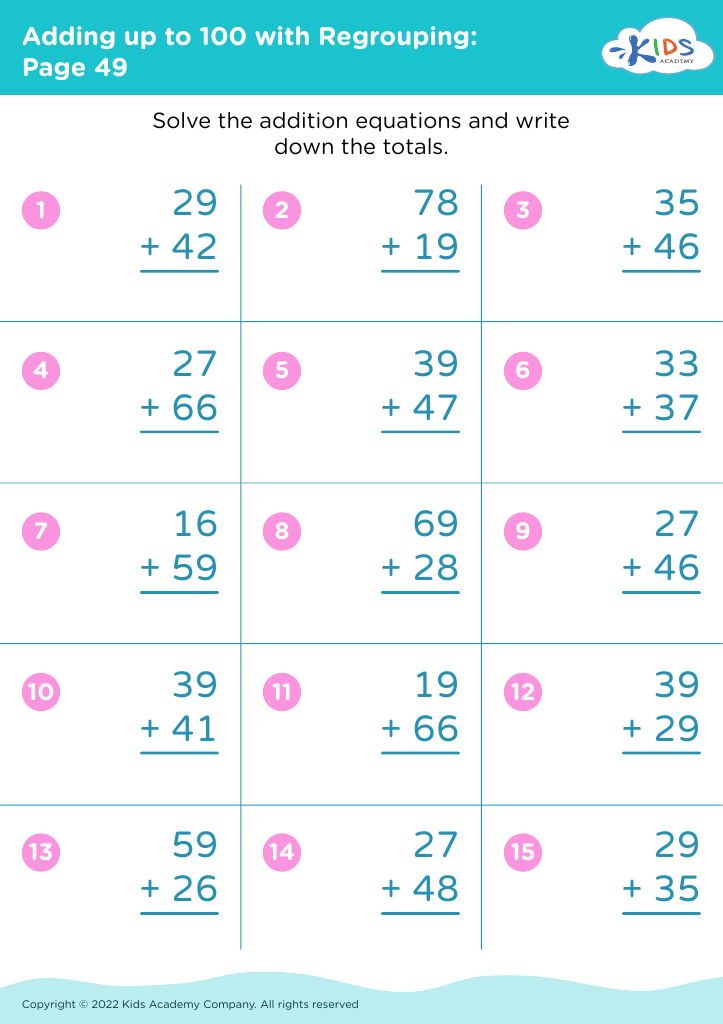

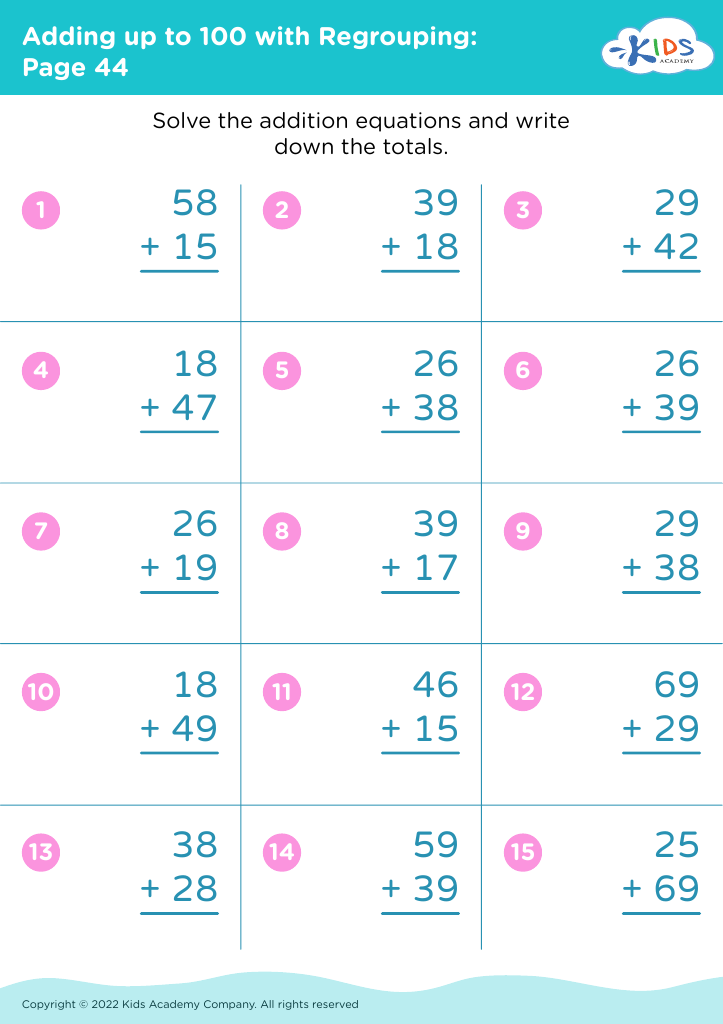




Shape recognition and addition up to 100 with regrouping are fundamental skills that offer multiple benefits for children aged 3-7, shaping their future academic success and cognitive development.
Firstly, shape recognition enhances spatial awareness. Identifying and understanding different shapes helps children in interpreting the world around them, aiding in the development of visual-spatial reasoning. This skill is critical for subjects like mathematics, science, and even daily activities such as navigating spaces and understanding diagrams.
Secondly, learning to add up to 100 with regrouping (or carrying) at an early age fortifies foundational arithmetic skills. This complex skill involves understanding place value and the concept of tens and ones. Mastering regrouping helps children perform more complex calculations, fostering confidence in mathematical abilities and preparing them for higher-level math like multiplication and division.
Integrating shape recognition with arithmetic exercises can make learning interactive and engaging. It creates a multi-sensory experience, catering to different learning styles whether visual, auditory, or kinesthetic.
Parents and teachers focusing on these skills are investing in critical cognitive development areas, encouraging analytical thinking, problem-solving, and logical reasoning. Prioritizing these skills will not only enhance academic potential but also instill a love for learning, setting a robust foundation for lifelong educational journeys.