Filters

16 filtered results

Clear all filters
Favorites
With answer key
Interactive

16 filtered results

Difficulty Level

Grade


Explore our engaging "Understanding Fractions: Adding Up to 100 with Regrouping" worksheets designed for children ages 3-7. These interactive resources provide a fun way to teach early learners about fractions and addition through the concept of regrouping. Each worksheet encourages kids to develop important math skills while boosting their confidence and understanding of numerical relationships. With vibrant visuals and age-appropriate exercises, children will grasp the relationship between whole numbers and fractions. Ideal for classroom or home use, these worksheets will make learning fractions an enjoyable journey for young minds. Start nurturing a strong mathematical foundation today!
Check out this FREE Trial Lesson on Adding up to 100 with Regrouping for age 3-7!

L

Favorites
With answer key
Interactive
  • 3-7
  • Understanding fractions
  • Adding up to 100 with Regrouping
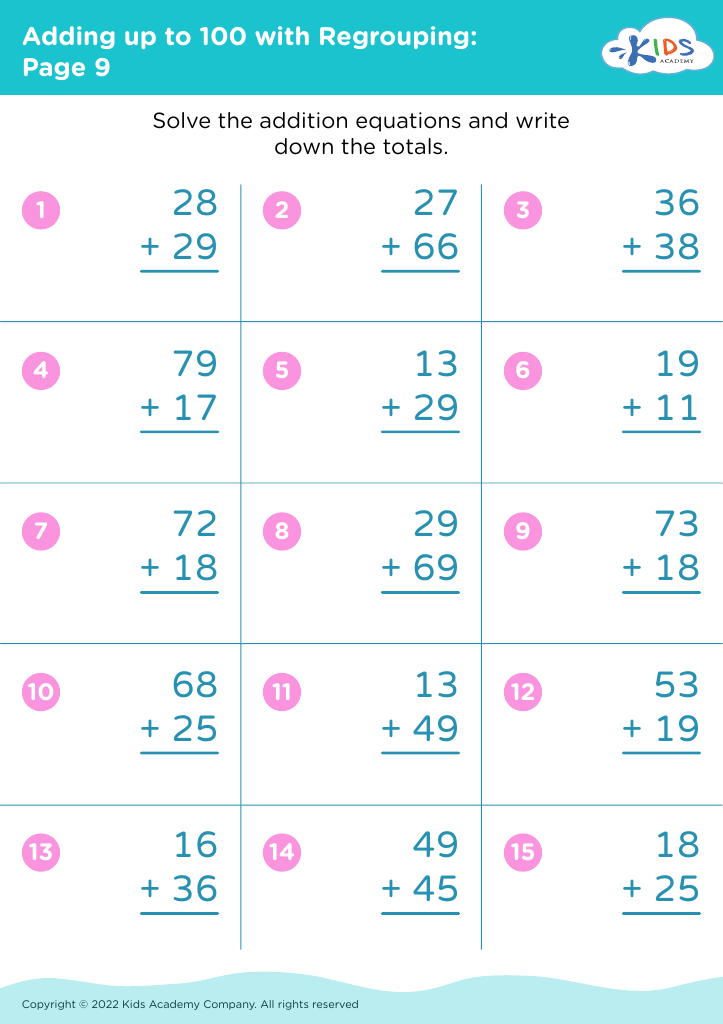
Adding up to 100 with Regrouping: Page 9
Worksheet
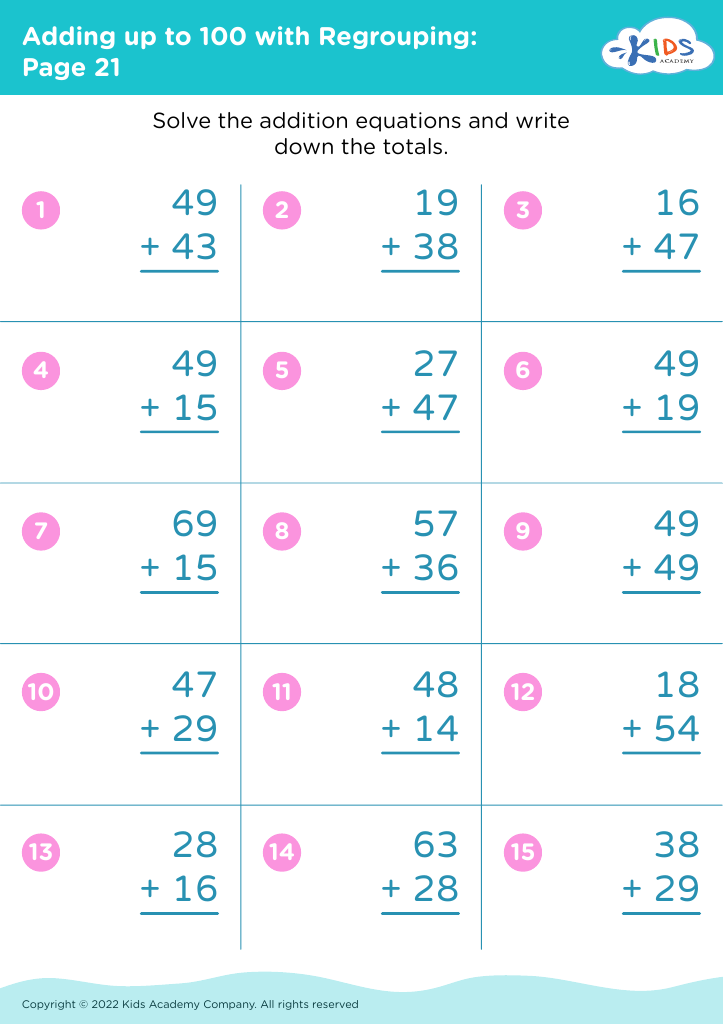
Adding up to 100 with Regrouping: Page 21
Worksheet
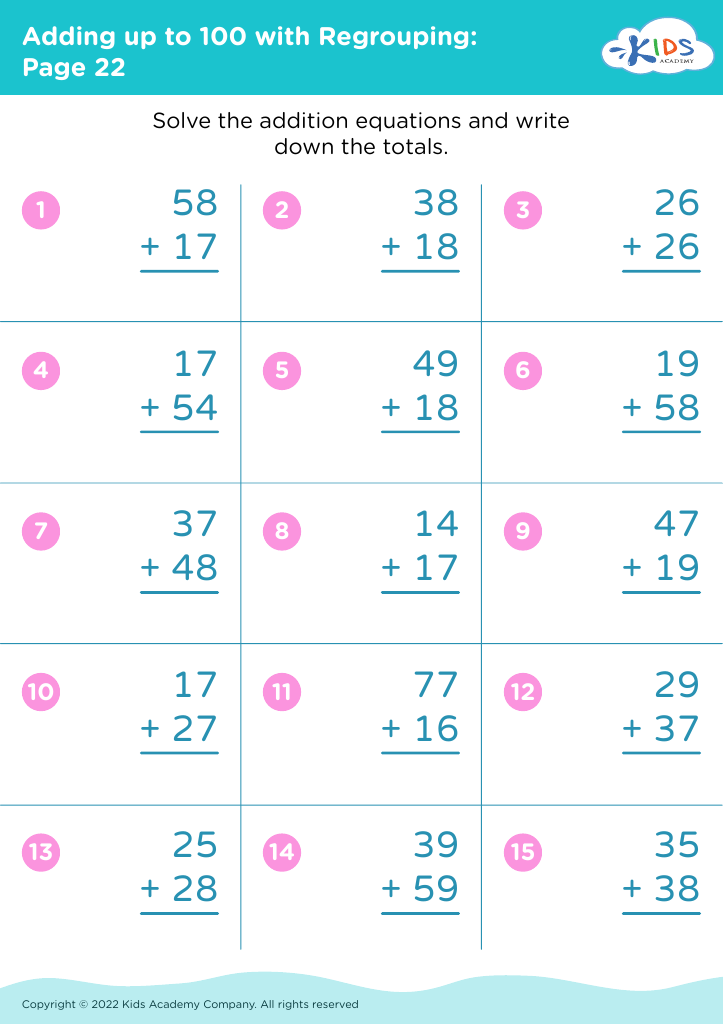
Adding up to 100 with Regrouping: Page 22
Worksheet
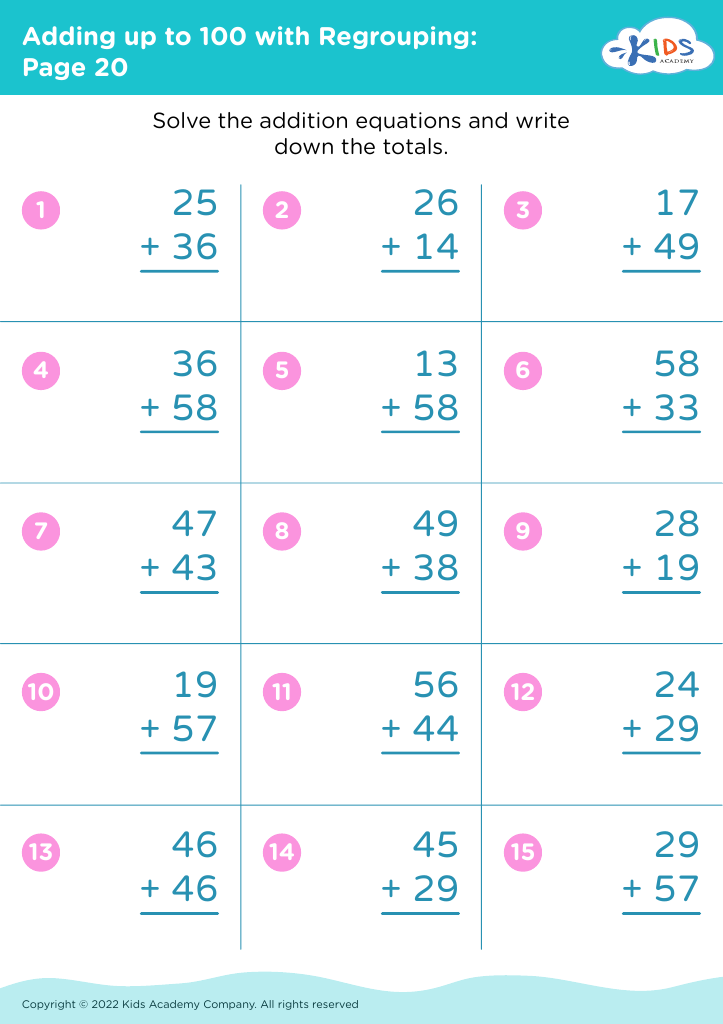
Adding up to 100 with Regrouping: Page 20
Worksheet
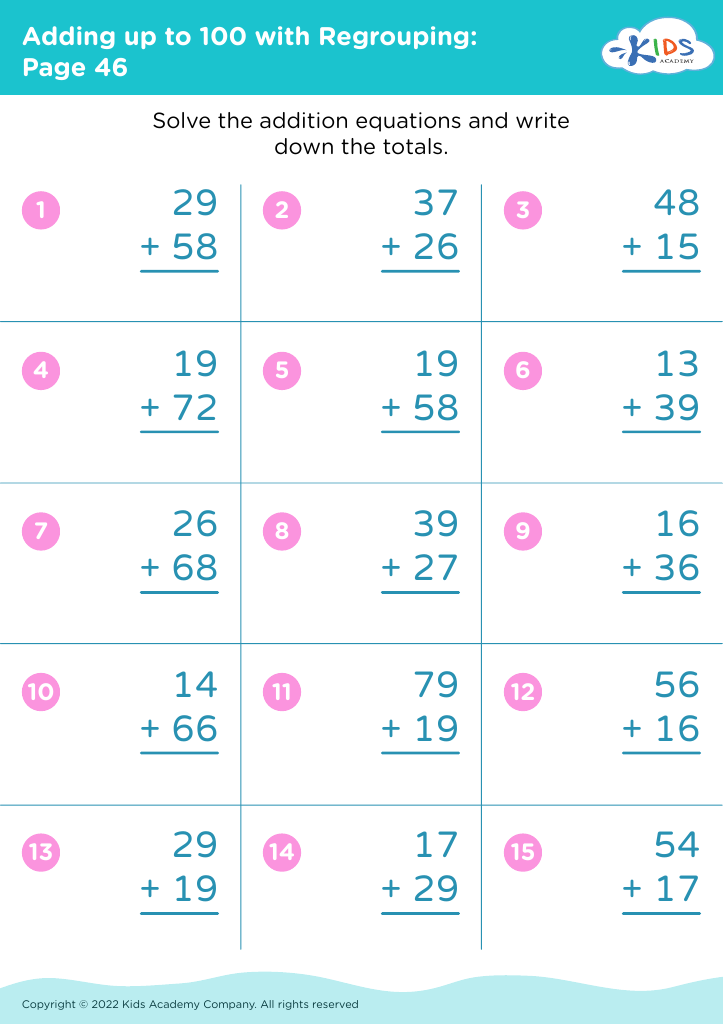
Adding up to 100 with Regrouping: Page 46
Worksheet
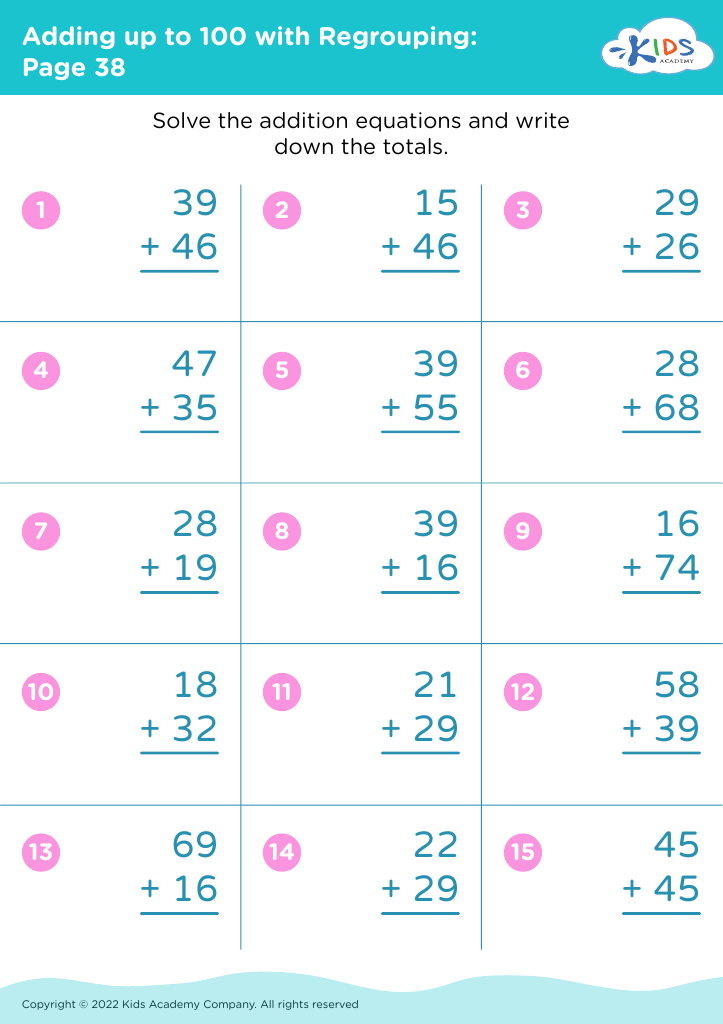
Adding up to 100 with Regrouping: Page 38
Worksheet
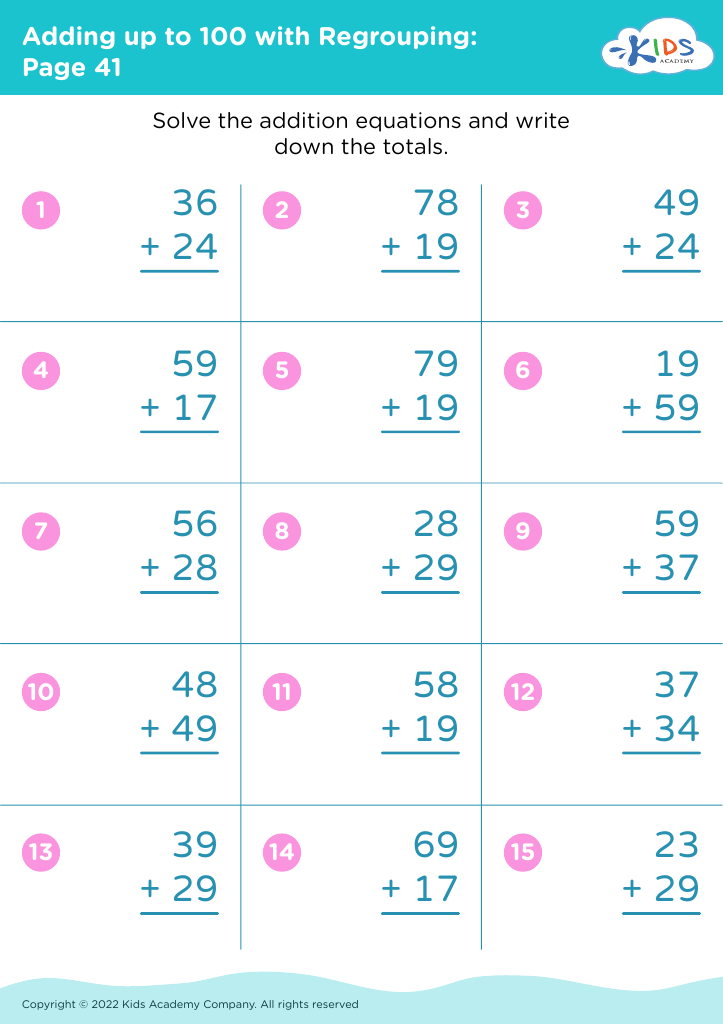
Adding up to 100 with Regrouping: Page 41
Worksheet
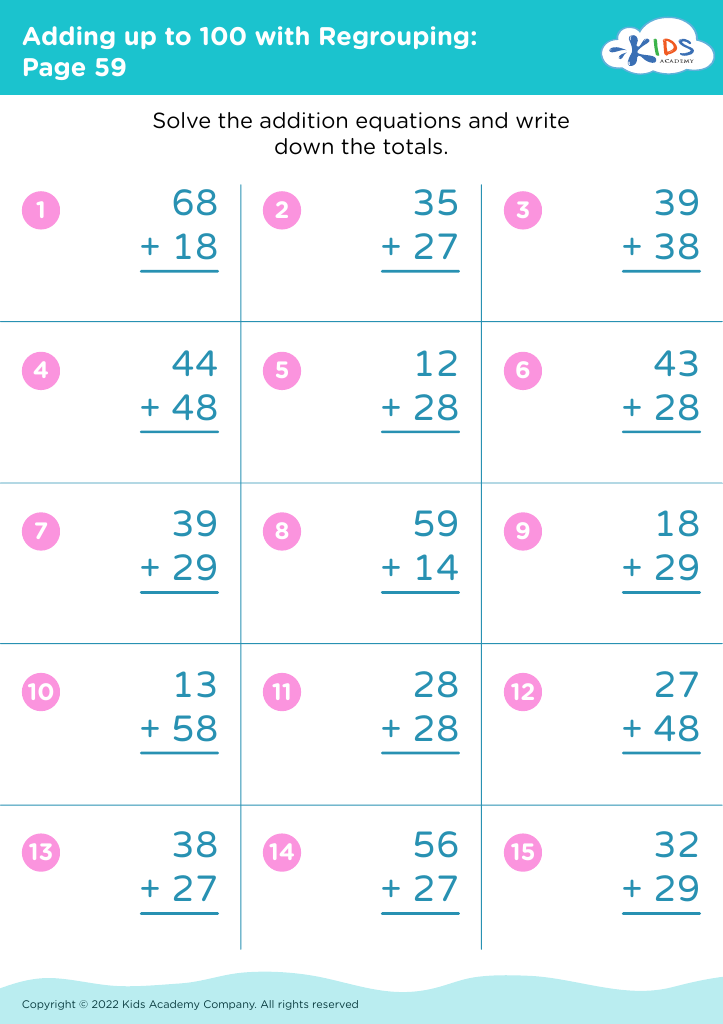
Adding up to 100 with Regrouping: Page 59
Worksheet
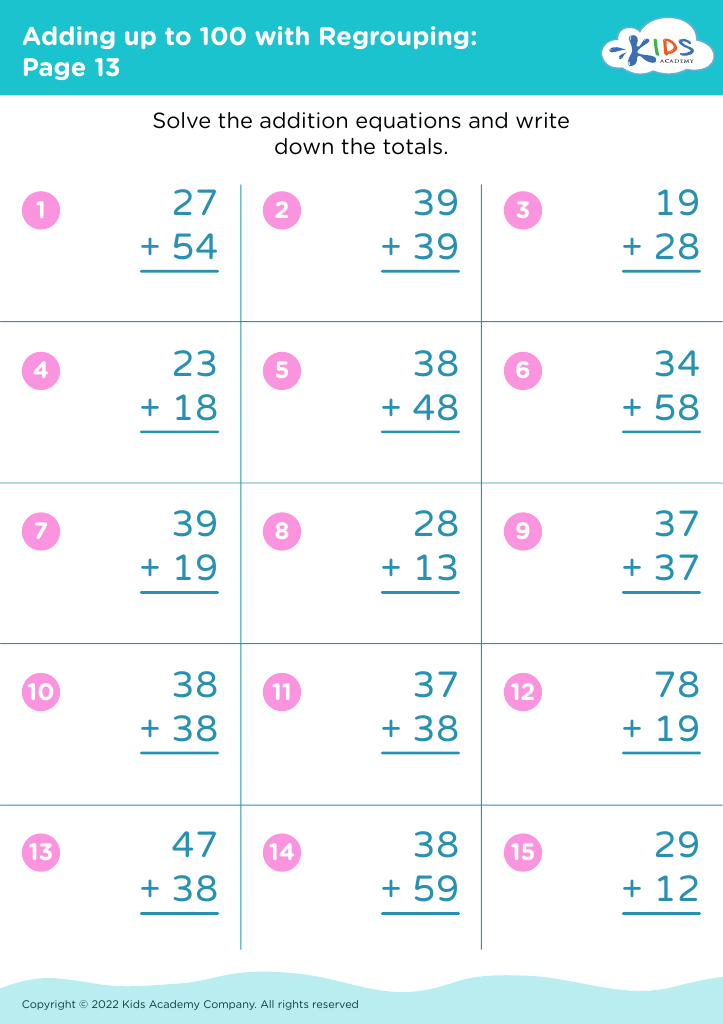
Adding up to 100 with Regrouping: Page 13
Worksheet
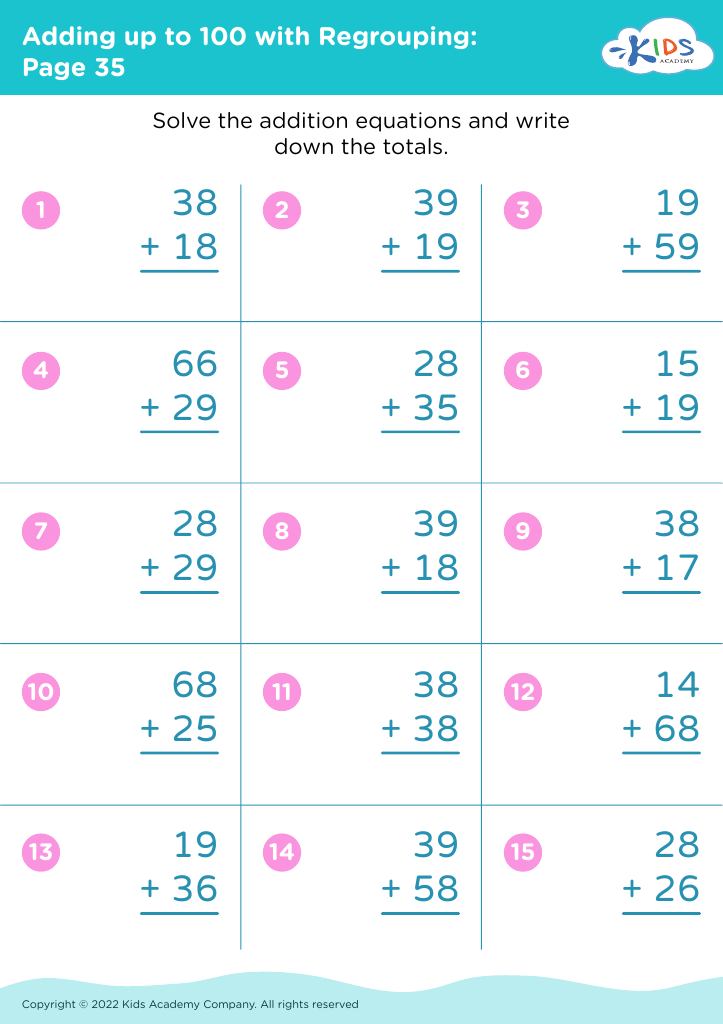
Adding up to 100 with Regrouping: Page 35
Worksheet
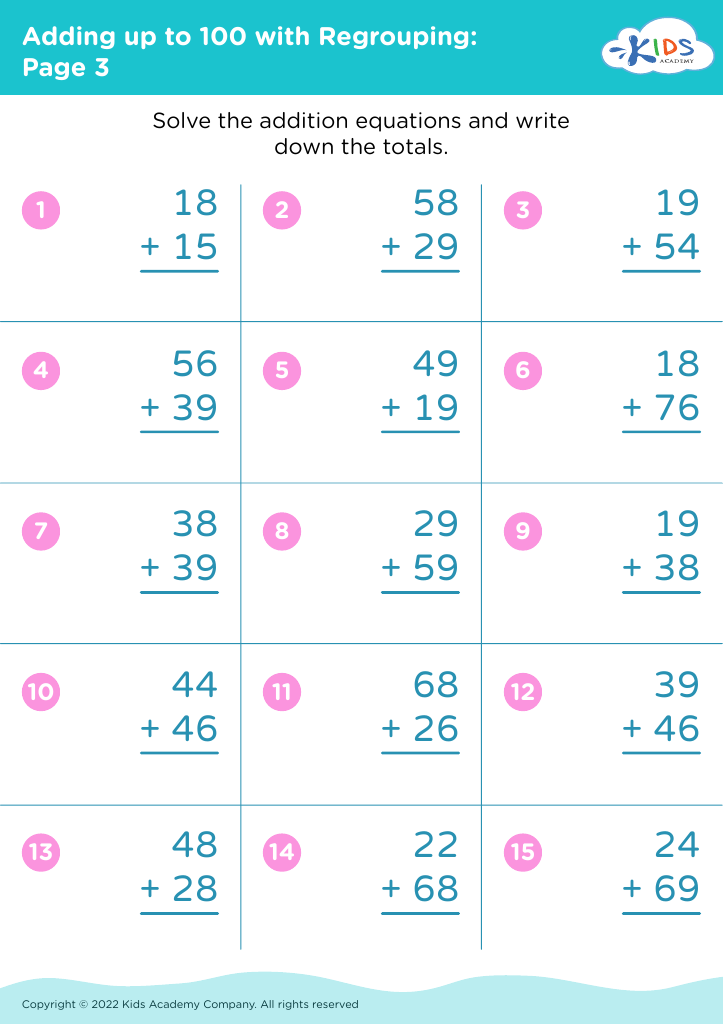
Adding up to 100 with Regrouping: Page 3
Worksheet
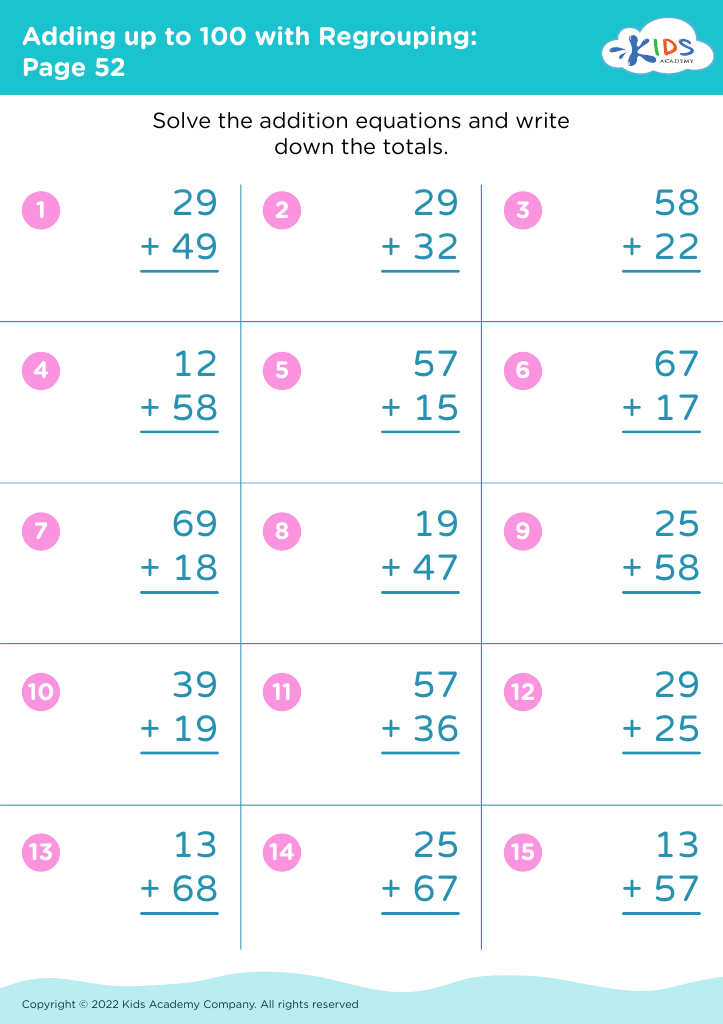
Adding up to 100 with Regrouping: Page 52
Worksheet
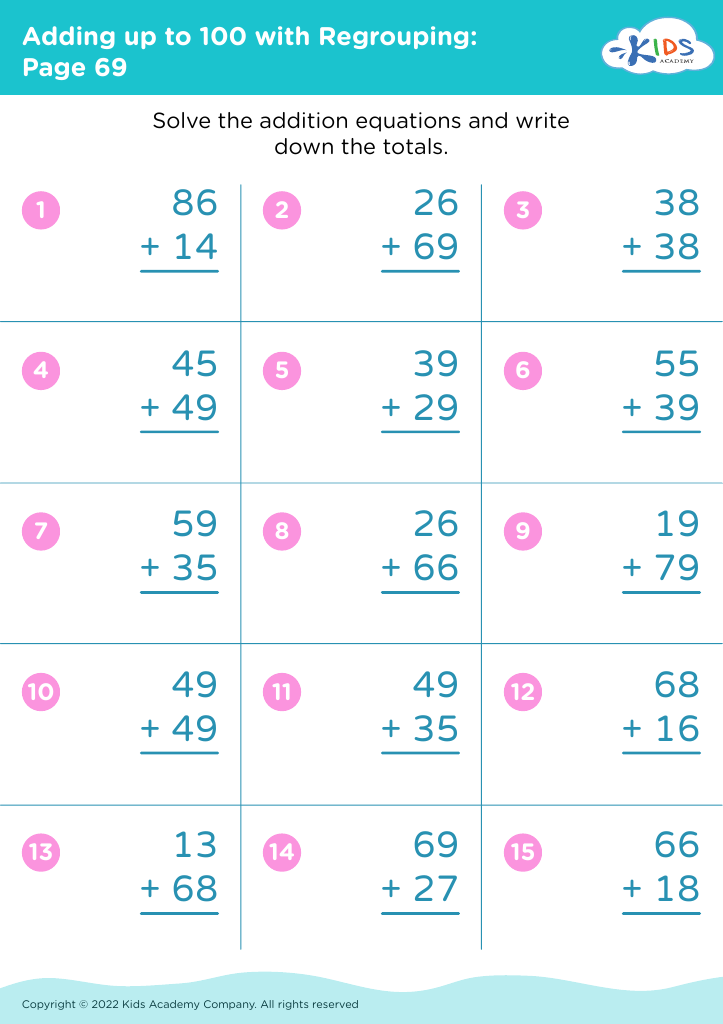
Adding up to 100 with Regrouping: Page 69
Worksheet
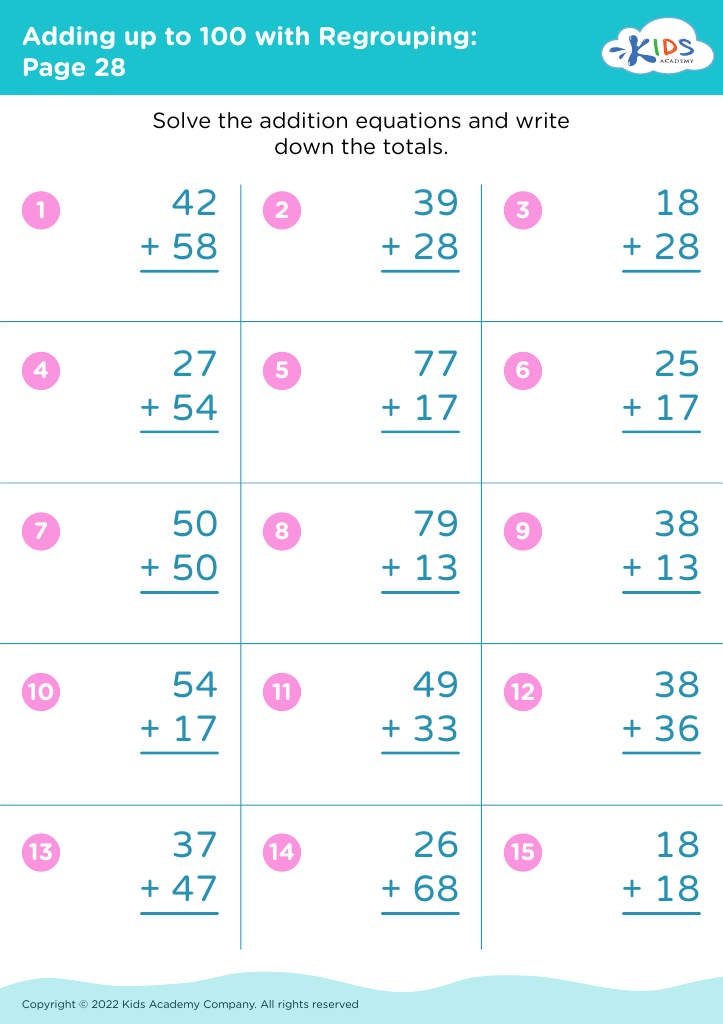
Adding up to 100 with Regrouping: Page 28
Worksheet
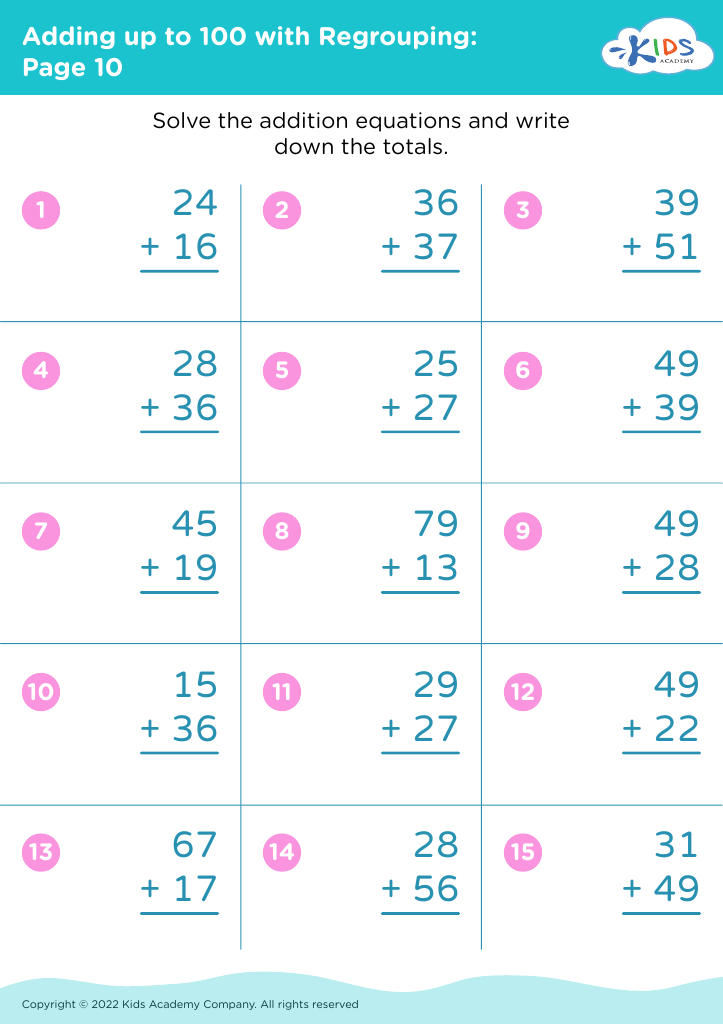
Adding up to 100 with Regrouping: Page 10
Worksheet
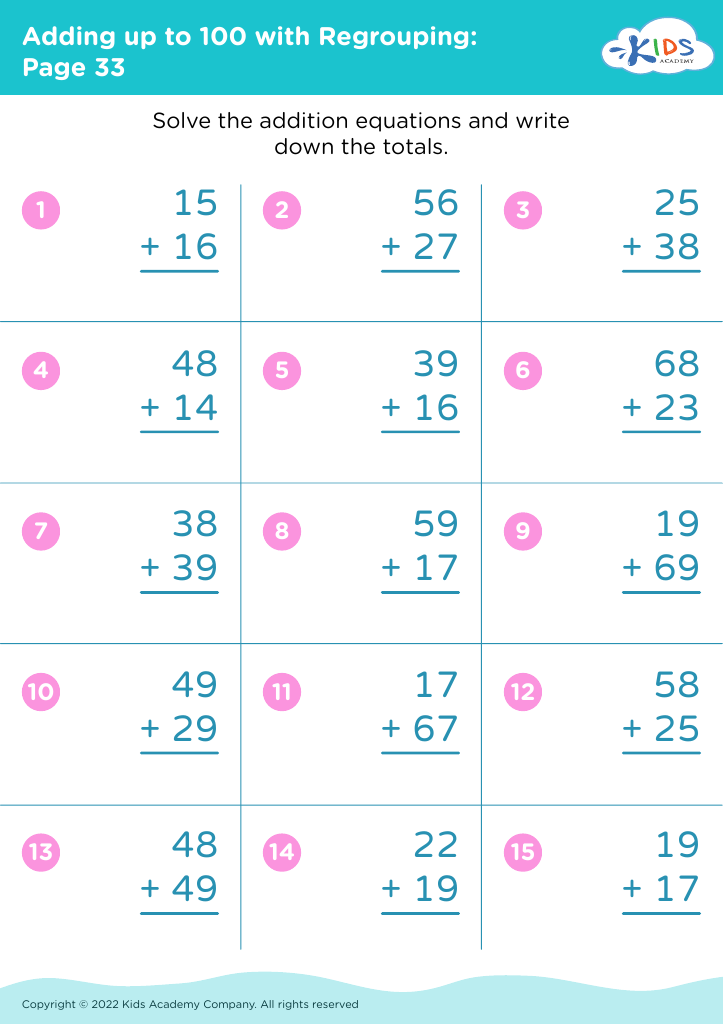
Adding up to 100 with Regrouping: Page 33
Worksheet


Understanding fractions, particularly the concept of adding up to 100 with regrouping, is crucial for children aged 3-7 as it lays the foundation for their mathematical reasoning in the future. Engaging with fractions at an early age supports cognitive development and helps children grasp essential math skills. As they work with fractions, they learn to visualize parts of a whole, an essential step in comprehending more advanced concepts like division and ratios later on.

Moreover, the process of regrouping enhances their problem-solving abilities, helping them learn to manage and manipulate numbers effectively. It encourages logical thinking and promotes resilience as children learn to tackle more complex problems systematically. Understanding these foundational concepts fosters a positive attitude towards math, combating the fear of numbers often encountered in later schooling.

For parents and teachers, supporting children in mastering fractions means they provide them with the necessary competencies to navigate everyday situations—whether it’s sharing pizza slices or understanding measurements in baking. Ultimately, emphasizing fractions builds confidence and sets the stage for a lifelong appreciation of mathematics, empowering future learners to exhibit critical thinking and adaptability in their academic journeys.