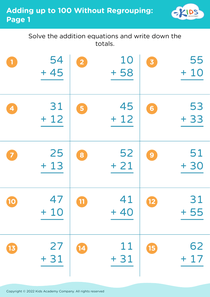
Understanding symmetry Adding up to 100 with Regrouping Worksheets for Ages 3-7
3 filtered results
-
From - To
Discover the exciting world of symmetry and math with our "Understanding Symmetry Adding Up to 100 with Regrouping Worksheets" designed for children ages 3-7. These engaging worksheets promote valuable skills such as visual recognition and basic addition, while introducing the concept of symmetry in a fun and approachable way. Each activity encourages young learners to explore patterns, enhance their critical thinking abilities, and practice essential math concepts through colorful visuals and interactive tasks. Perfect for early childhood education, our resources make learning math enjoyable while fostering a love for numbers and shapes. Start building a strong foundation for your child's future today!
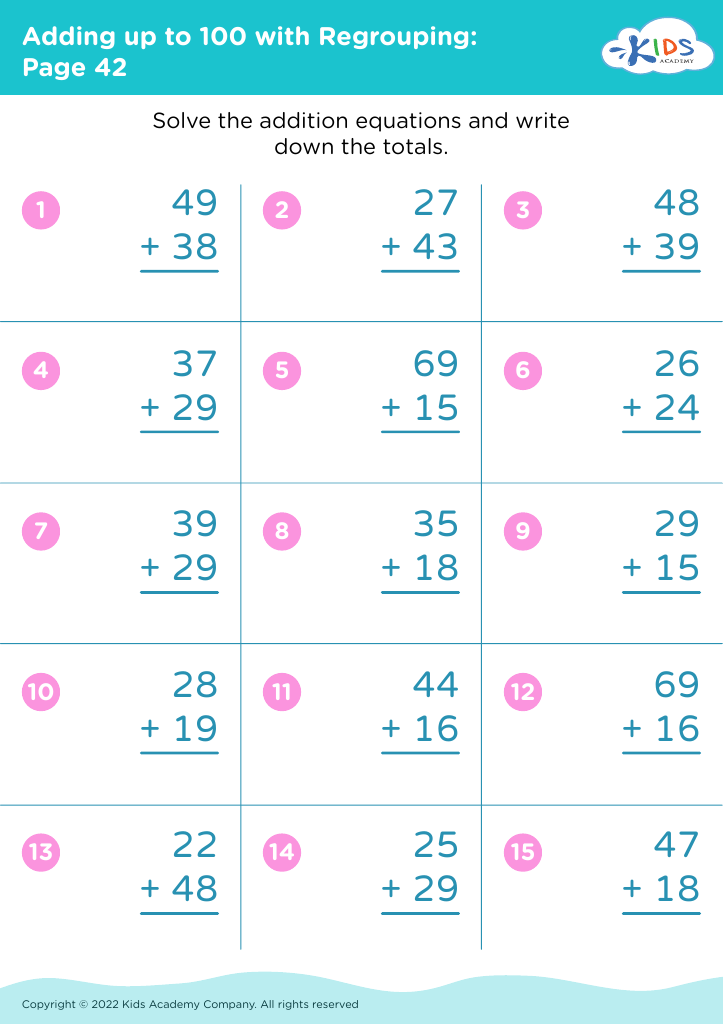
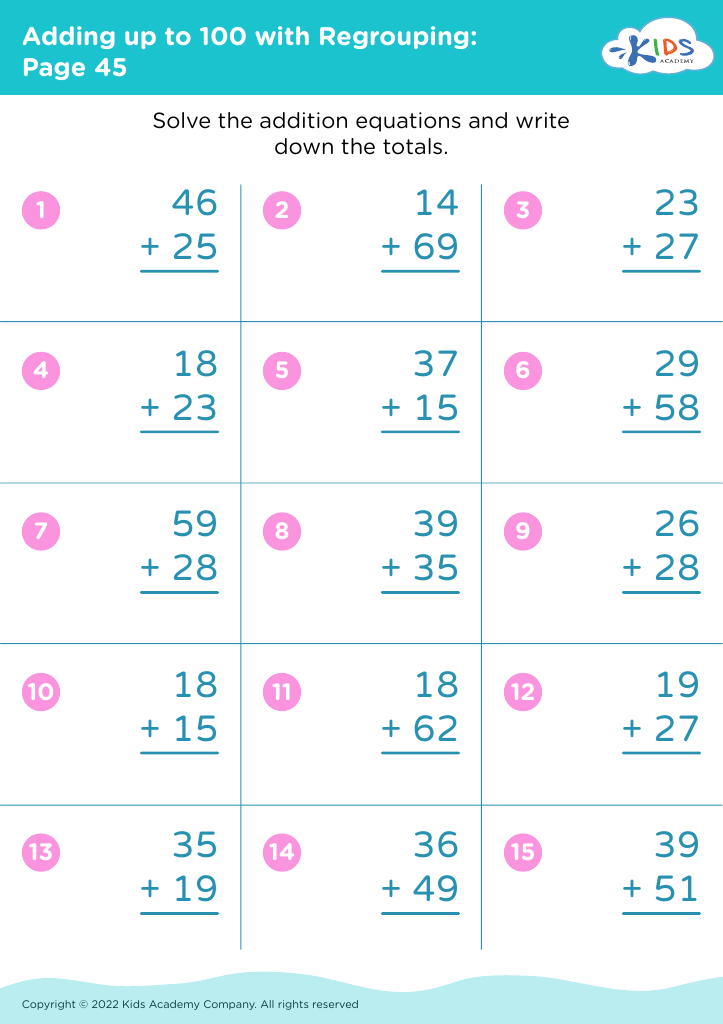
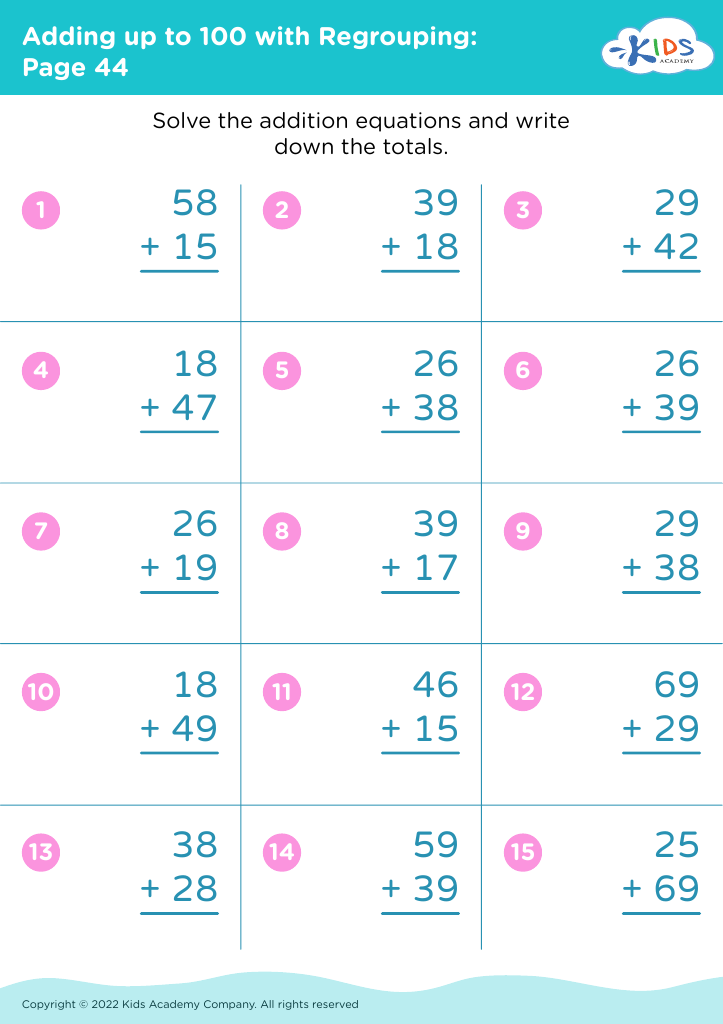




Understanding symmetry and the concept of adding up to 100 with regrouping are fundamental skills for children ages 3-7, vital for developing mathematical reasoning and cognitive abilities.
Symmetry teaches young learners about balance, shapes, and patterns, which can enhance spatial awareness and observational skills. Recognizing symmetry helps children comprehend relationships between objects, fostering a foundation for skills in geometry and art. These concepts are not just mathematical; they promote critical thinking and creativity, encouraging kids to see the world in a more organized manner.
On the other hand, adding up to 100 with regrouping introduces essential arithmetic concepts. This skill nurtures number sense and enhances mathematical fluency. By regrouping, students learn how to simplify complex problems, understand place value better, and realize the relationship between numbers. This aids in their ability to tackle not just basic addition but also subtraction, multiplication, and division as they progress in their education.
By caring about these two areas, parents and teachers help children build vital skills early on that support their future academic success. Additionally, fostering a strong mathematical foundation can cultivate a positive attitude toward math, facilitating lifelong learning and problem-solving abilities. Understanding these concepts prepares young learners for more complex tasks in later grades while making learning engaging and meaningful.