Comparing Fractions Adding up to 100 Without Regrouping Worksheets for Ages 3-7
11 filtered results
-
From - To
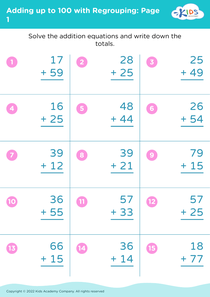
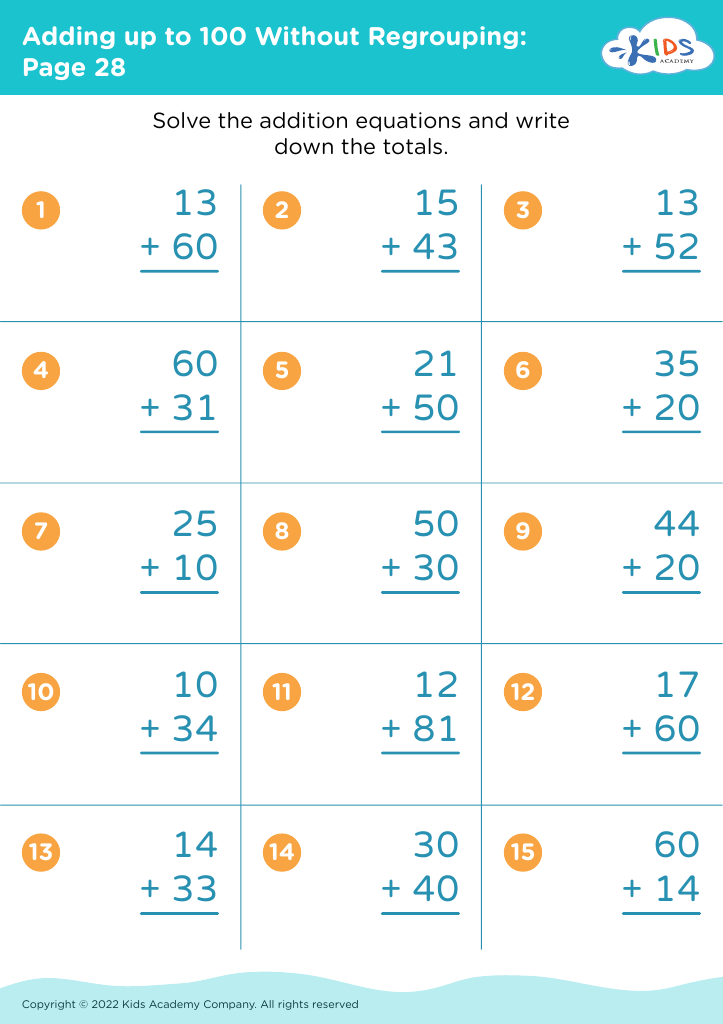
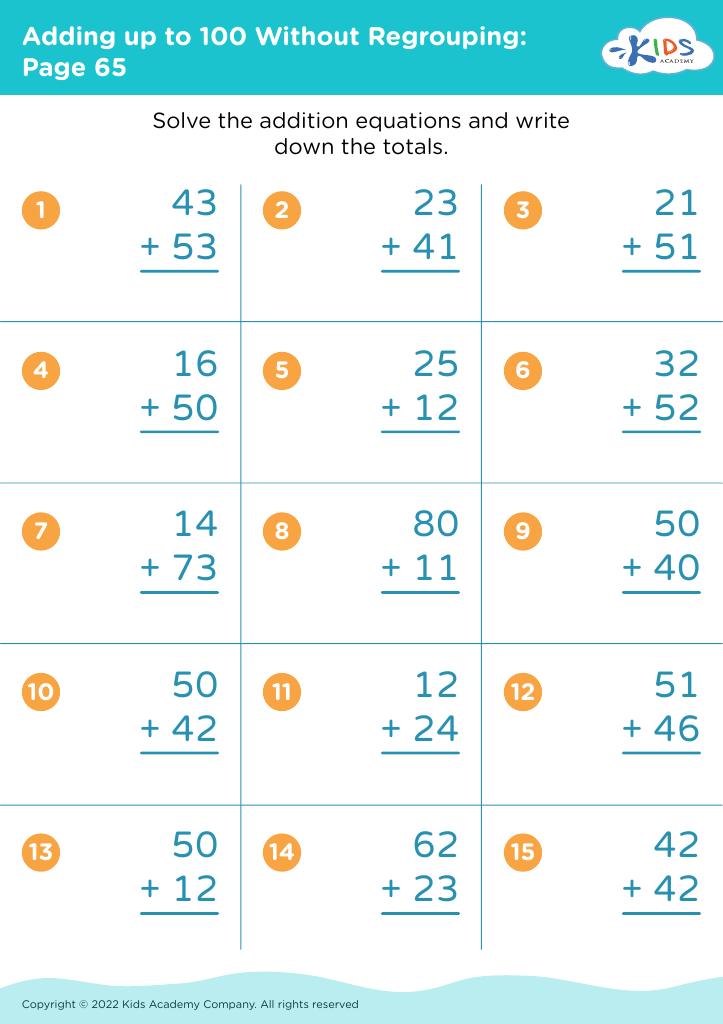
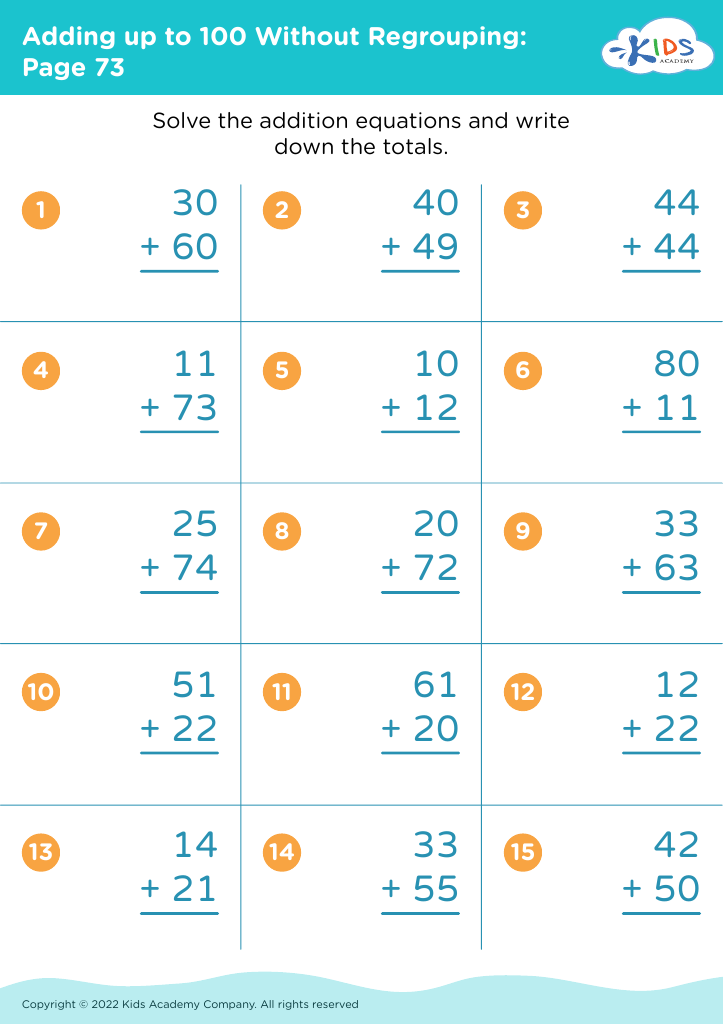
Introducing our "Comparing Fractions Adding up to 100 Without Regrouping Worksheets" for children ages 3-7! These engaging and educational worksheets are designed to help young learners master the fundamentals of comparing fractions while practicing addition up to 100 without regrouping. Each worksheet provides colorful, interactive exercises that make learning fun and effective. Perfect for classroom use or at-home enrichment, these printables are crafted to build confidence and enhance foundational math skills in early learners. Give your child a head start in math with our expertly designed resources, fostering both understanding and excitement for numbers and fractions.
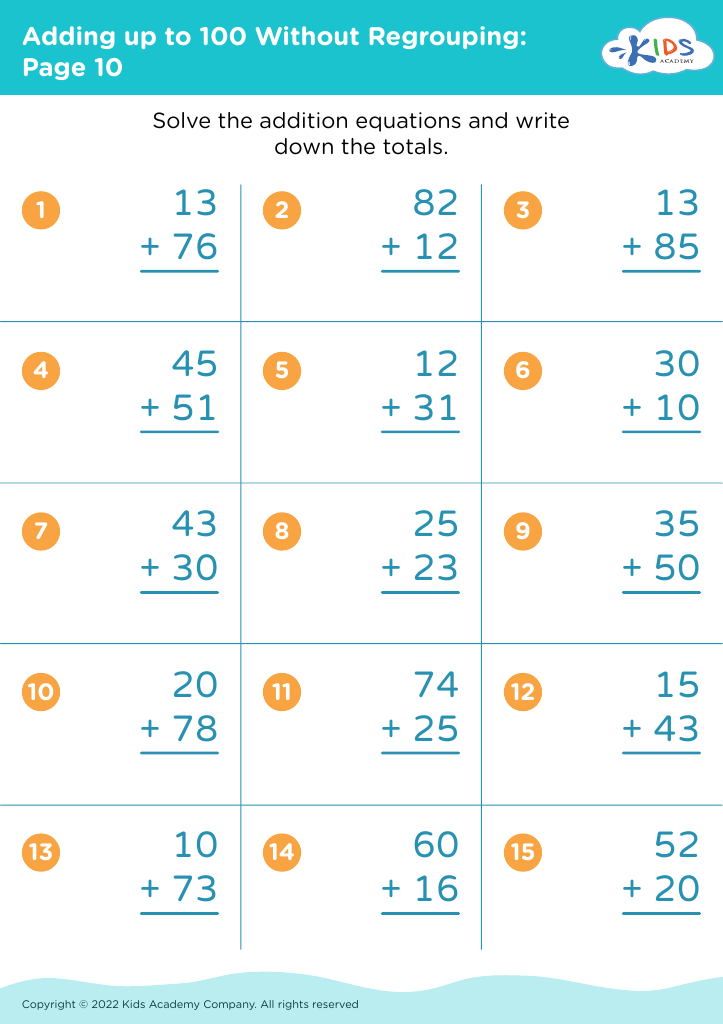
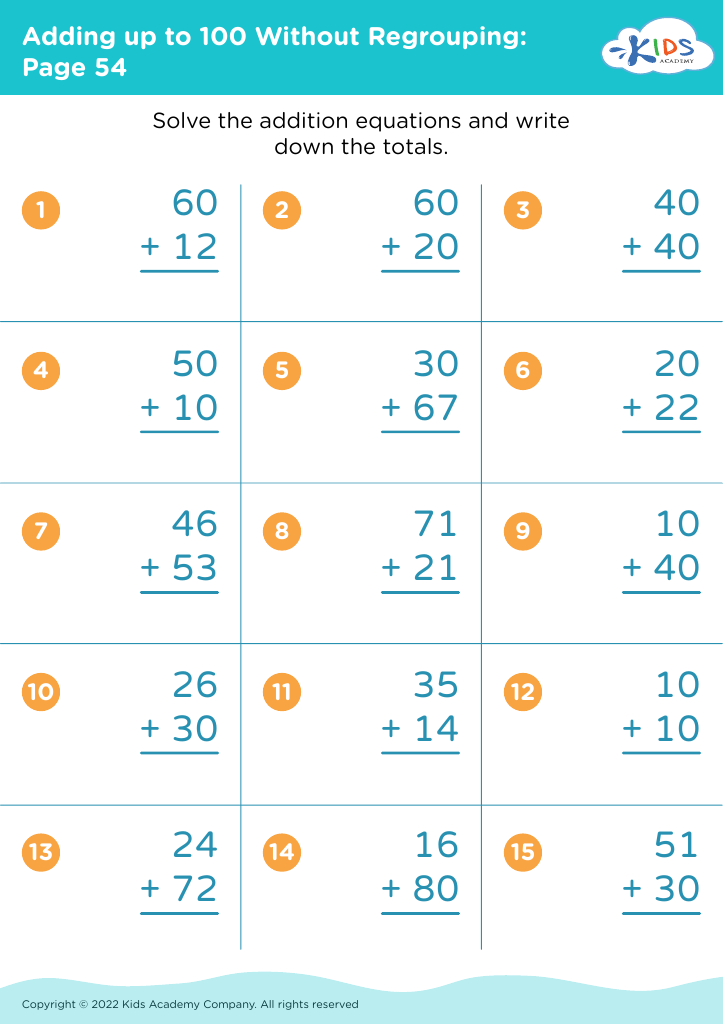
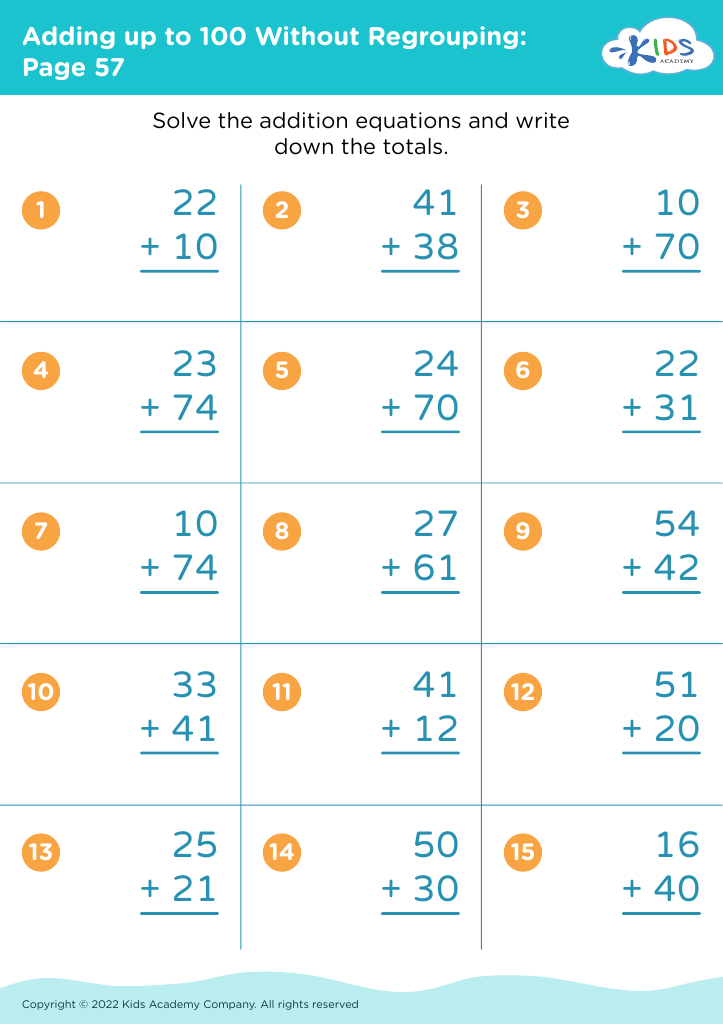
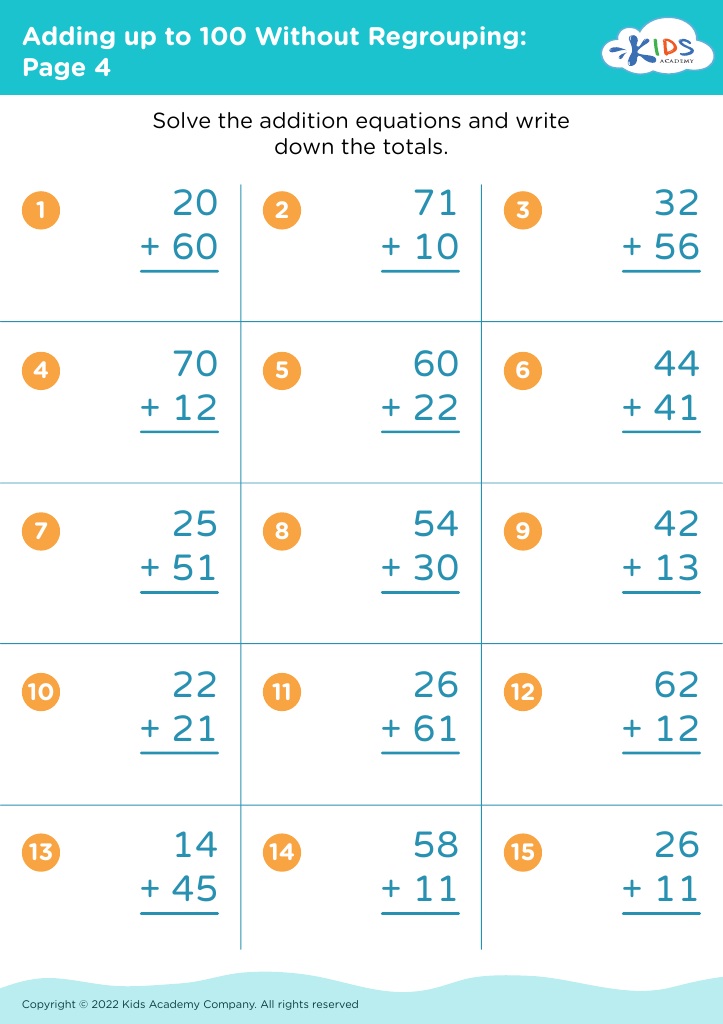
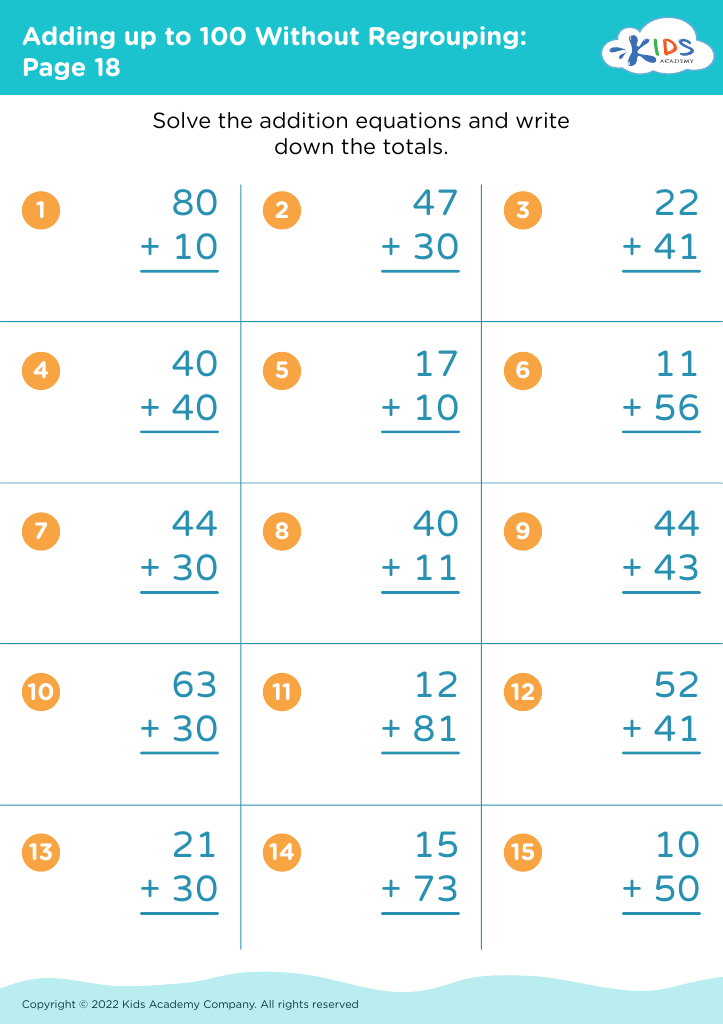
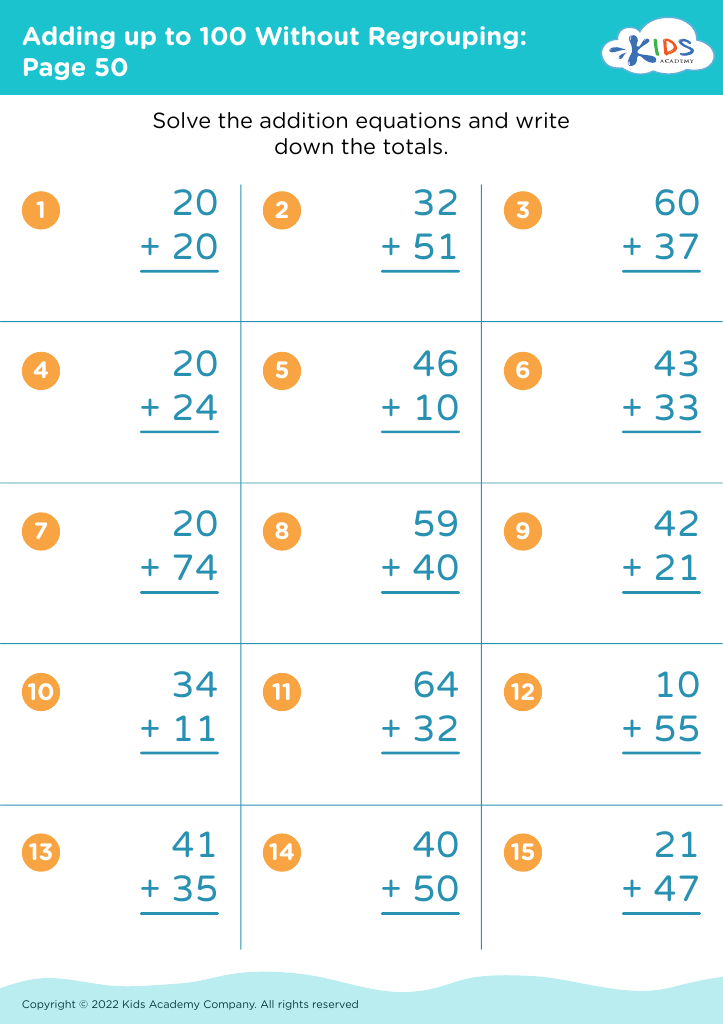
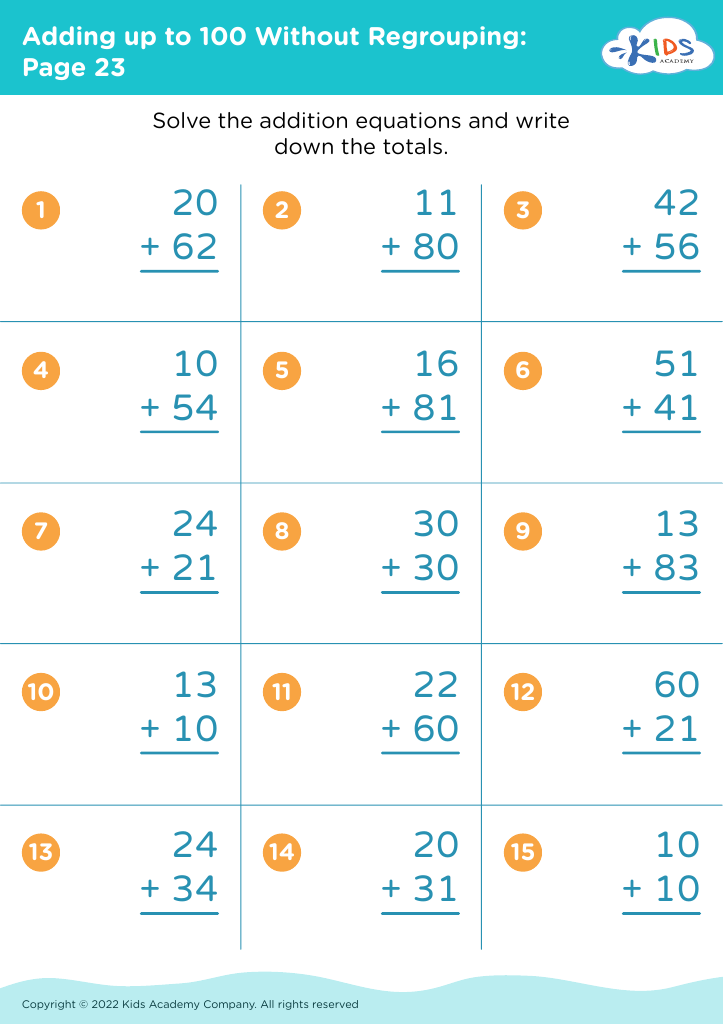
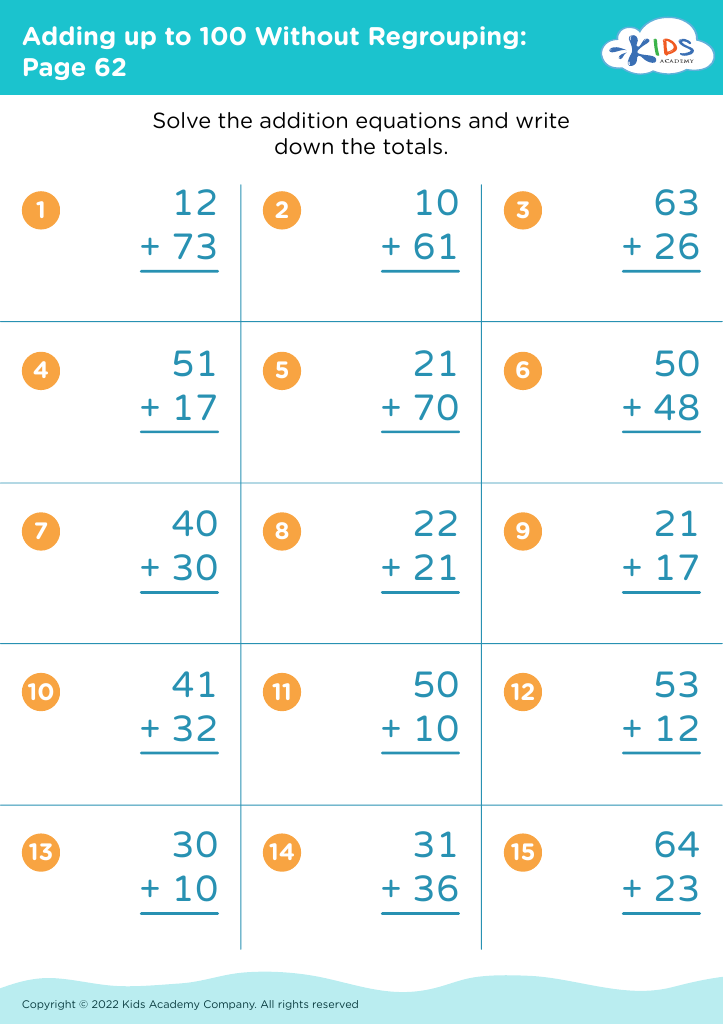




At ages 3-7, children's brains are exceptionally receptive to learning foundational math concepts that set the stage for future academic success. Comparing fractions in simpler forms and understanding the idea of adding up to 100 without regrouping are crucial components of early math education. Here's why parents and teachers should care:
-
Foundation Building: Introducing these concepts helps children develop an early understanding of numeracy. Knowing how fractions work and adding within a set boundary (like 100) strengthens their basic arithmetic skills.
-
Cognitive Development: Younger children naturally develop their cognitive abilities through problem-solving. Activities like comparing fractions and simple addition promote logical thinking and computational skills.
-
Confidence Boost: Mastering these early math concepts without the pressure of complex operations builds confidence. This, in turn, encourages a positive attitude towards math, reducing math anxiety later in life.
-
Real-World Application: Understanding fractions is practical. Whether it’s sharing toys or understanding portions in snacks, these simple math exercises relate to children's everyday experiences, making learning relevant and engaging.
-
Future Readiness: Early familiarity with these concepts ensures they are well-prepared for more advanced math challenges. Laying down a robust mathematical foundation early on makes future learning smoother and more intuitive.
By focusing on these basic skills, parents and teachers provide children with the tools they need for sustained academic success and everyday problem-solving.