Critical Thinking Adding up to 100 Without Regrouping Worksheets for Ages 3-7
3 filtered results
-
From - To
Enhance your child's critical thinking skills with our "Adding Up to 100 Without Regrouping" worksheets, specially designed for kids aged 3-7. These engaging and interactive worksheets focus on foundational math concepts while encouraging logical reasoning and problem-solving abilities. Each activity simplifies the addition process, allowing children to practice adding numbers without regrouping, ensuring a clear understanding of basic arithmetic. Perfect for early learners, these worksheets build confidence and foster a love for math. Empower your child’s cognitive development and watch them excel as they tackle fun, age-appropriate challenges that make learning both enjoyable and effective! Download today and inspire young minds!
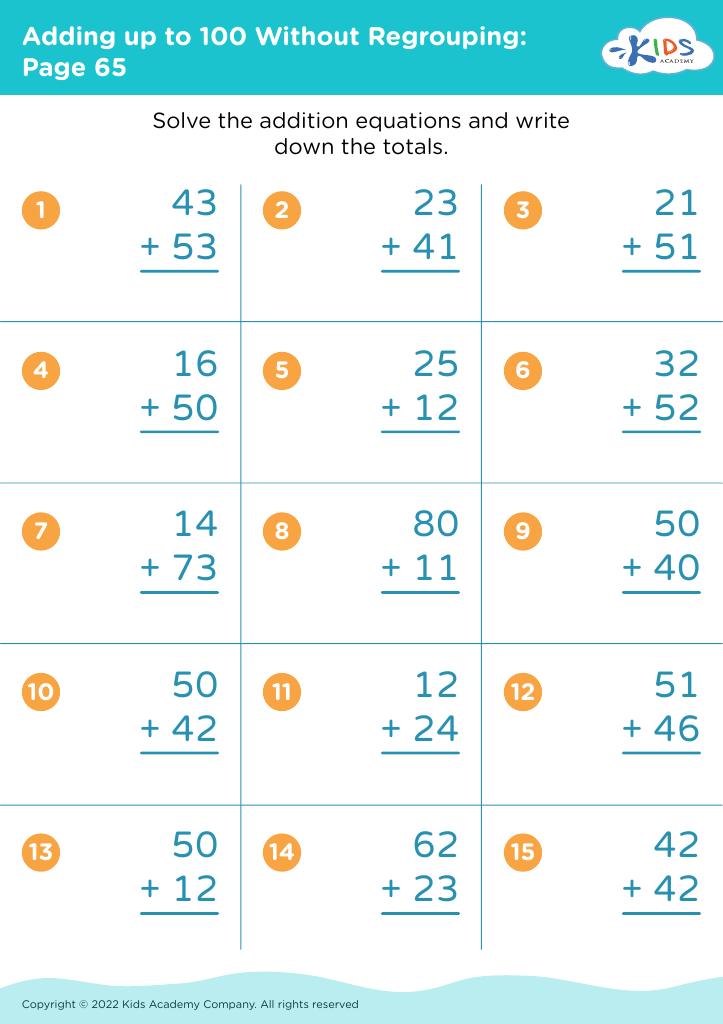
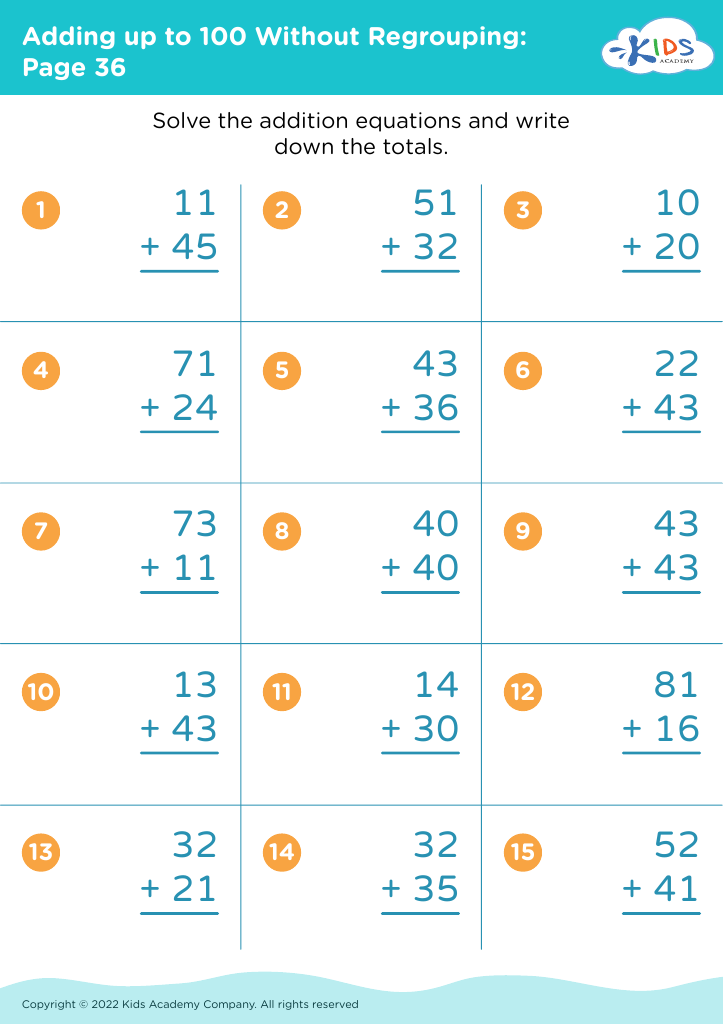
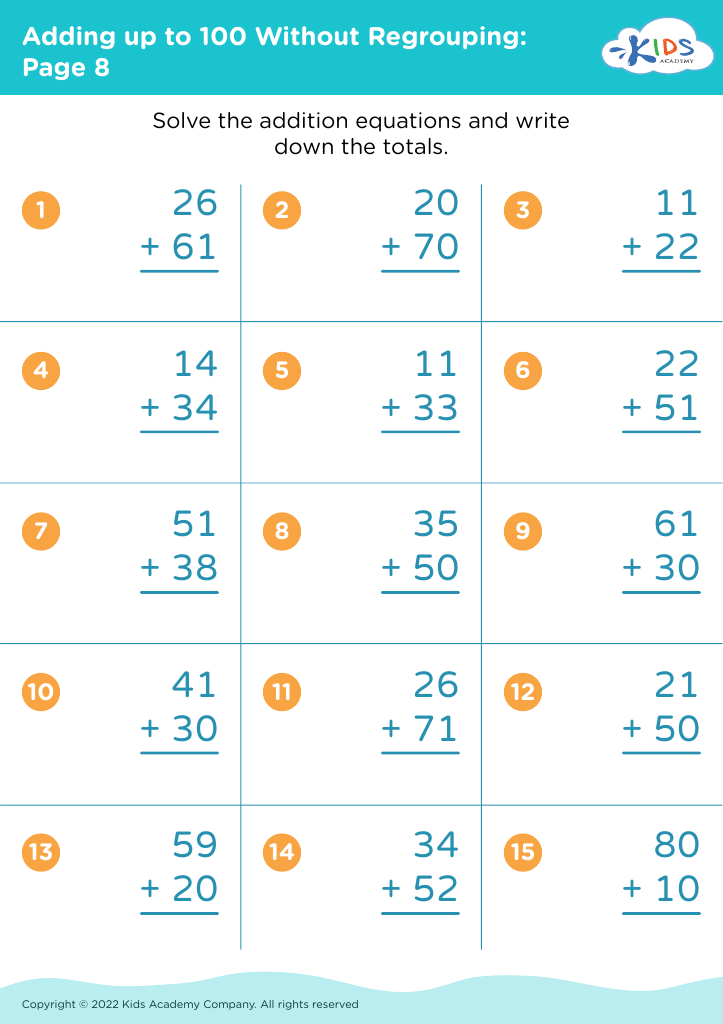




Critical thinking skills are essential for children ages 3-7 as they form the foundation for effective problem-solving and decision-making throughout their lives. Incorporating critical thinking into mathematical concepts, such as adding up to 100 without regrouping, helps children develop various cognitive abilities that they will use beyond math. By practicing this skill, children learn to analyze numbers, identify patterns, and understand relationships between different values.
Parents and teachers should care about critical thinking because it fosters creativity and independent thinking in young learners. Engaging children in activities that require them to think critically about math problems encourages them to approach challenges with confidence and persistence. This builds a positive mindset toward learning and reinforces the idea that mistakes are part of the learning process.
Additionally, teaching children to add up to 100 without regrouping supports their ability to understand more complex mathematical concepts in the future, laying the groundwork for effective numeracy skills. By focusing on critical thinking in early education, parents and teachers provide students with tools that empower them academically and personally, enhancing their overall learning experience and preparing them for success in a rapidly changing world.