Identifying shapes Adding up to 100 Without Regrouping Worksheets for Ages 3-7
4 filtered results
-
From - To
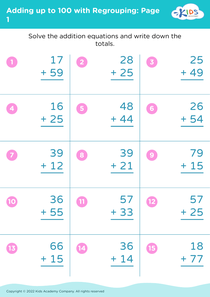
Boost your child's early math skills with our "Identifying Shapes Adding up to 100 Without Regrouping Worksheets" designed for ages 3-7! These engaging, printable worksheets help young learners identify various shapes while practicing basic addition. The thoughtfully crafted exercises focus on adding numbers up to 100, ensuring kids can grasp concepts without the complexity of regrouping. Perfect for preschool and early elementary students, these activities promote problem-solving abilities and build a solid math foundation. Download today from Kids Academy and watch your child master math with confidence and fun!
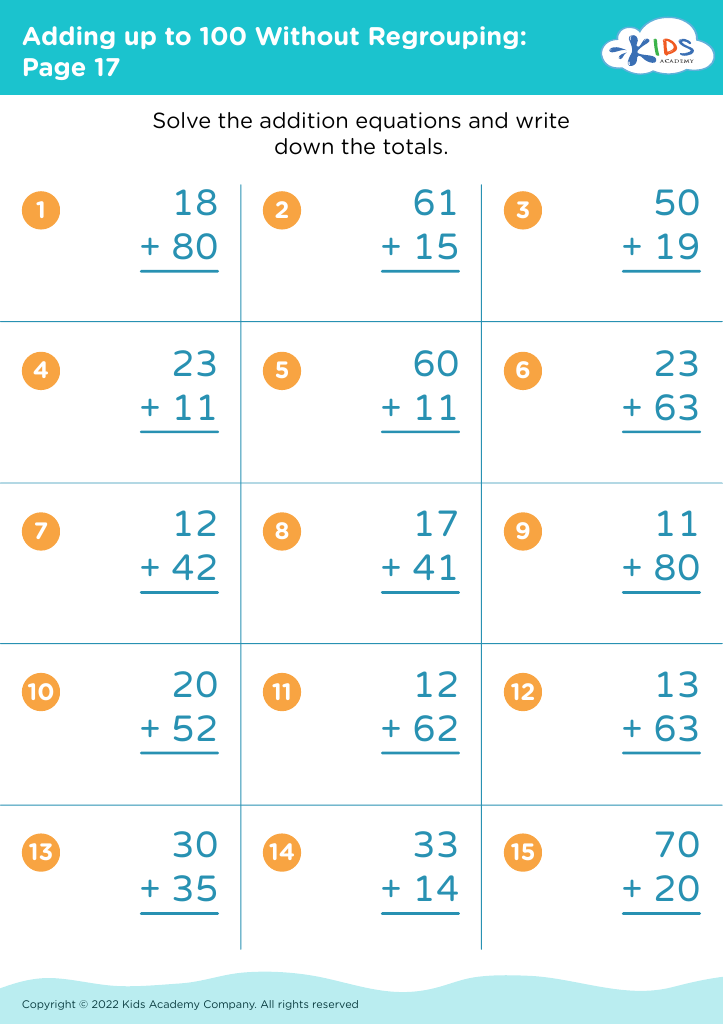
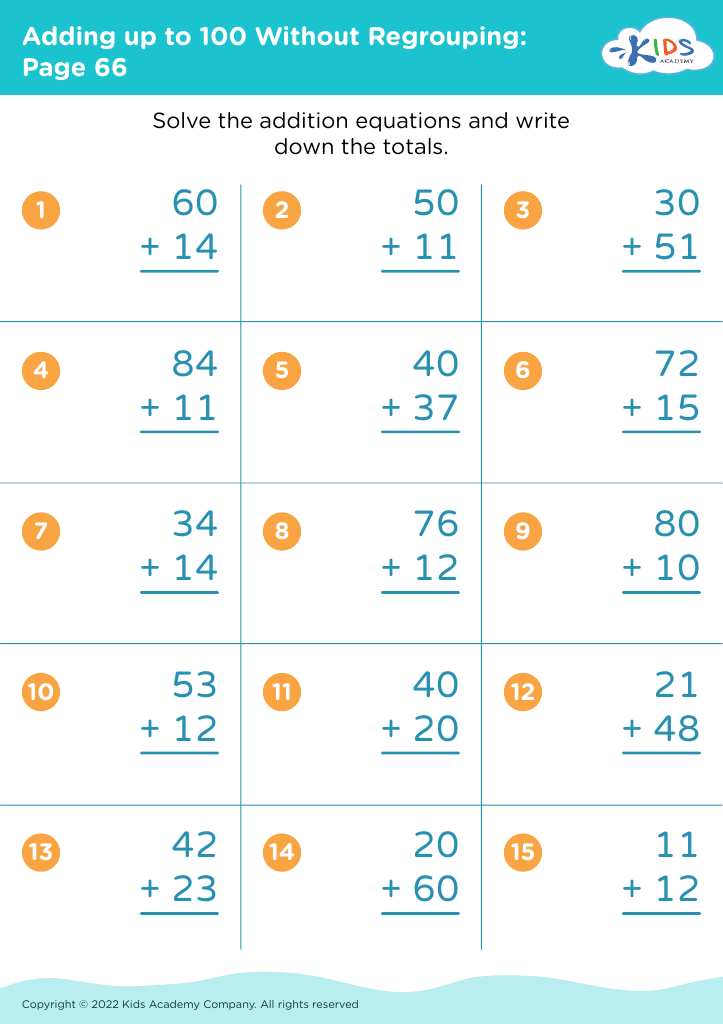
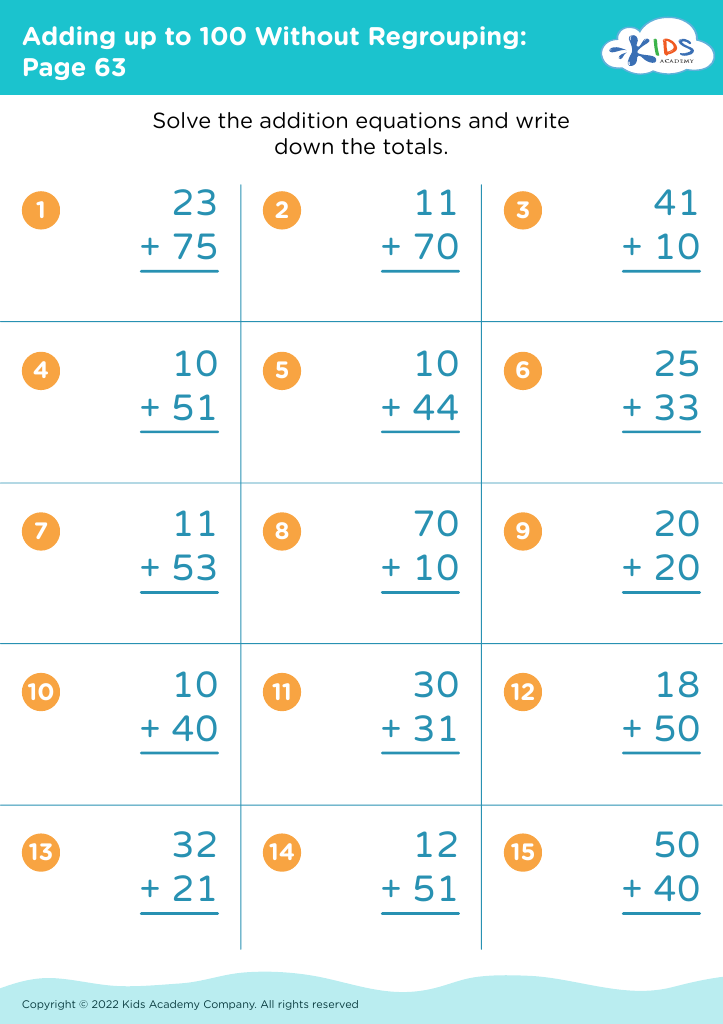
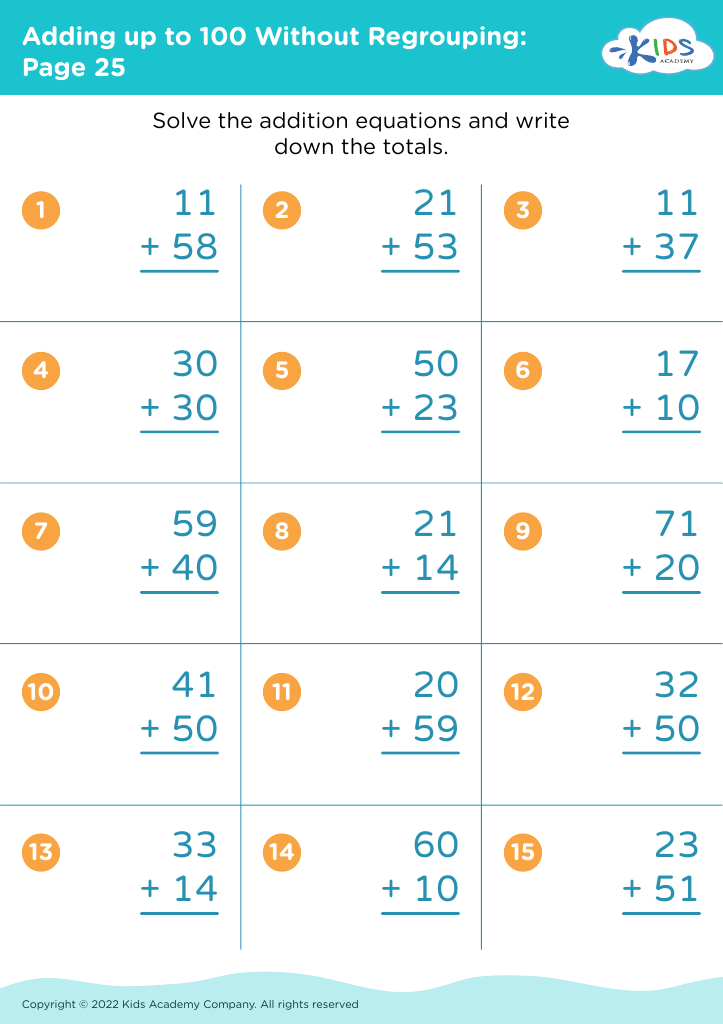




Identifying shapes and adding up to 100 without regrouping are foundational skills for children aged 3-7, crucial for their cognitive and mathematical development. At this early age, the brain is highly adaptable and receptive to new information, making it an ideal time to introduce basic math concepts and geometry.
Understanding shapes fosters spatial awareness, a key component in problem-solving and critical thinking. Shapes are the building blocks of more complex geometry, affecting a child's ability to understand and navigate the physical world. Recognizing different shapes helps in developing visual differentiation skills, which transfer to reading, writing, and understanding all sorts of visual information.
Adding up to 100 without regrouping lays the groundwork for arithmetic proficiency. It enhances number sense, which is the ability to understand and manipulate numbers. This basic addition helps children develop confidence in their math skills. As they grow, students will inevitably tackle more challenging math problems that entail regrouping and other complex strategies. A solid grasp of basic addition thus supports smoother progression to more advanced topics.
Teachers and parents should care because early mastery in these areas opens doors to lifelong academic success and practical everyday competency. Investing time in developing these skills equips children with the tools they need to approach more advanced subjects with ease and confidence.