Improve reading comprehension Adding up to 100 Without Regrouping Worksheets for Ages 3-7
3 filtered results
-
From - To
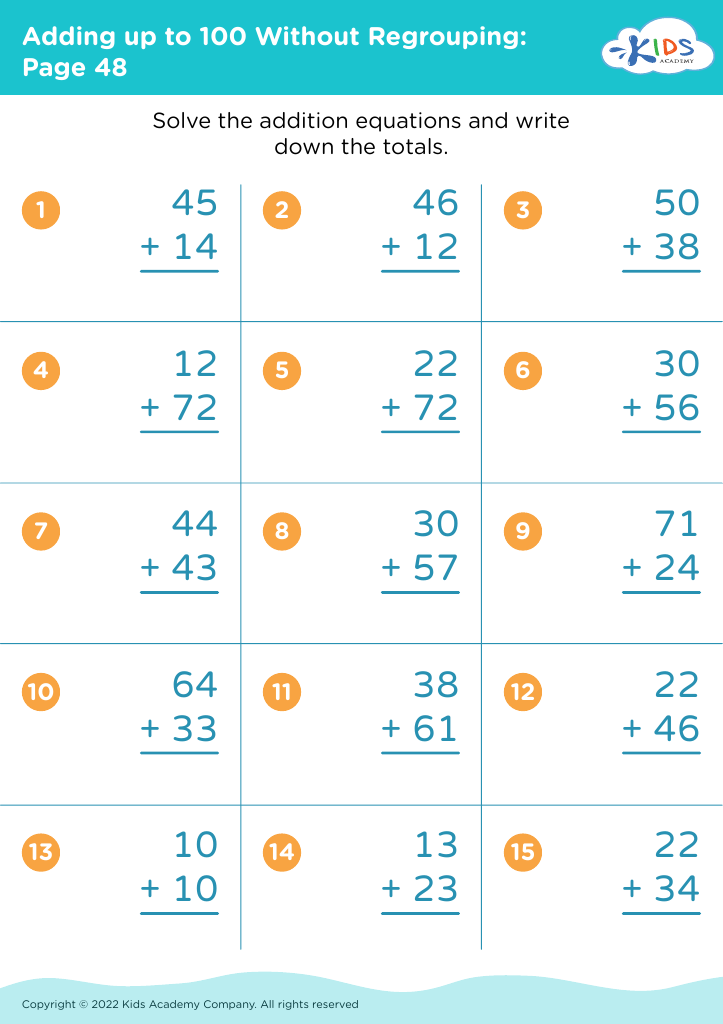
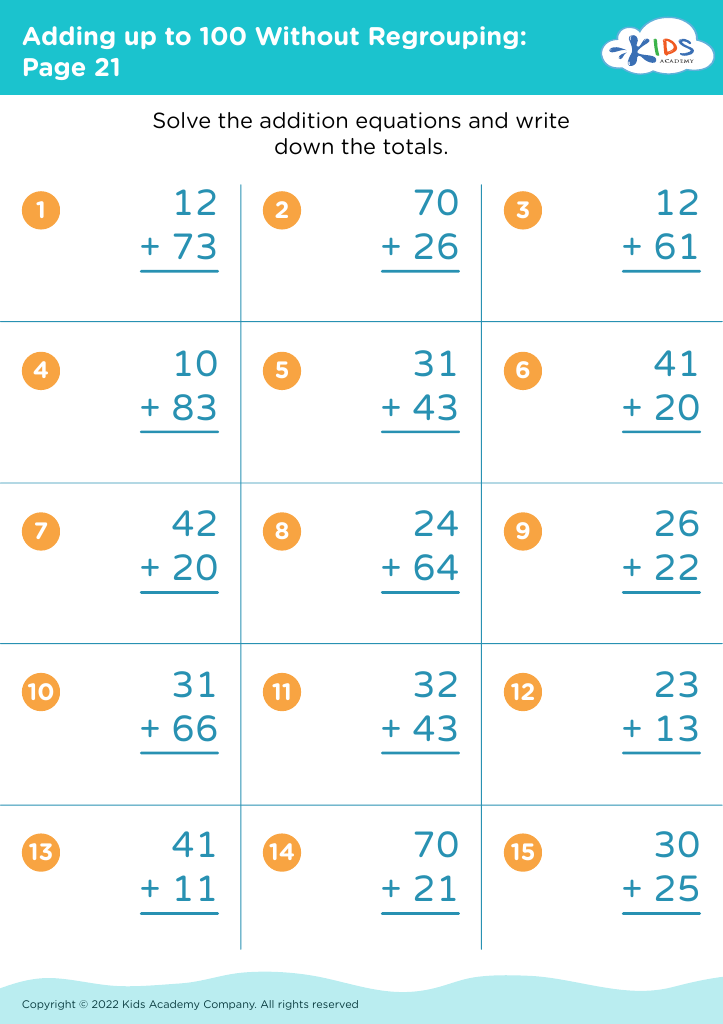
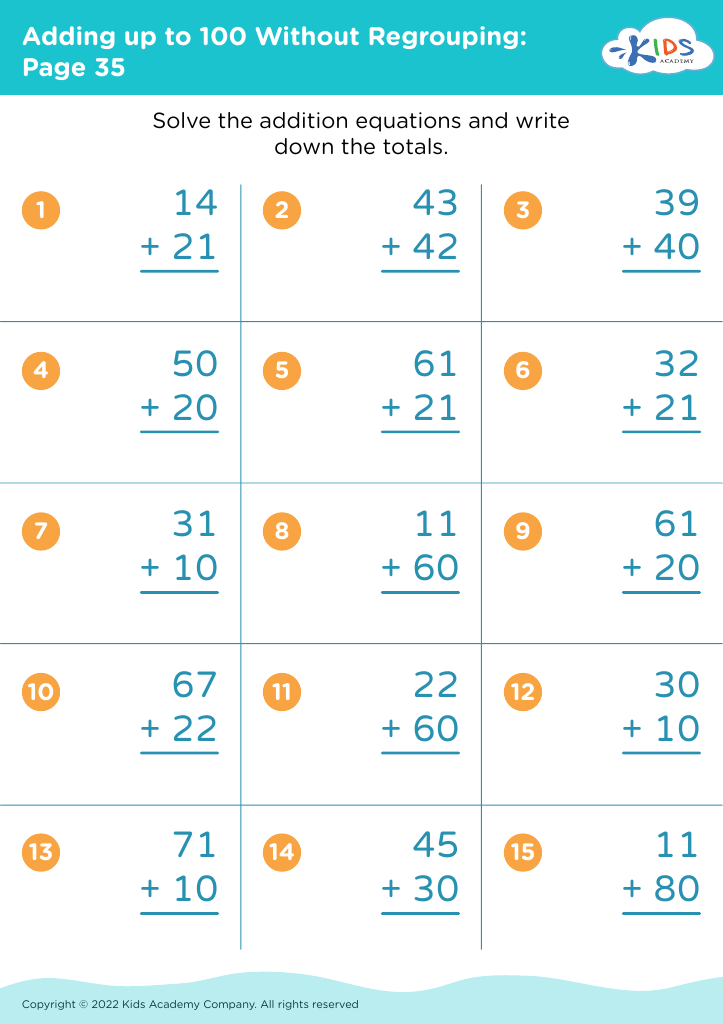
Boost your child's reading comprehension and math skills simultaneously with our "Adding up to 100 Without Regrouping Worksheets for Ages 3-7." These engaging, kid-friendly worksheets blend simple math problems with short reading passages to enhance both numerical and linguistic abilities. Designed for early learners, the exercises include vibrant illustrations and straightforward instructions that capture young minds. This resource not only strengthens basic addition skills but also promotes critical thinking, vocabulary, and sentence structure comprehension. Ideal for home or classroom use, our worksheets offer a fun, educational experience to support your child's academic growth. Visit Kids Academy to discover more.




Early childhood is a crucial time for foundational learning, and focusing on skills such as reading comprehension and basic addition is essential for a child’s overall development. Reading comprehension enables children to understand and engage with the world around them, boosting their vocabulary, imagination, and critical thinking abilities. When children comprehend what they read, it sets the stage for success across all subjects, from science to social studies. This skill is not just about recognizing words but about making sense of text, relating it to their experiences, and asking insightful questions.
Concurrently, mastering addition up to 100 without regrouping serves as a building block for future math success. It introduces young learners to the practical aspects of numbers and patterns while strengthening their problem-solving skills. For children ages 3-7, this math skill lays a solid foundation for more complex concepts like regrouping, multiplication, and beyond.
Integrating these core skills in the early years helps create a well-rounded educational experience. Parents and teachers who prioritize reading comprehension and basic math fluency give children the tools to approach learning with confidence and curiosity. By fostering these abilities, they help ensure academic success, instill a lifelong love of learning, and prepare kids for future challenges.