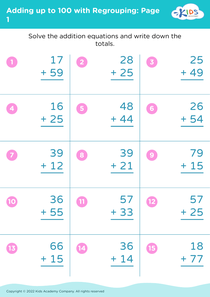
Practicing multiplication Adding up to 100 Without Regrouping Worksheets for Ages 3-7
3 filtered results
-
From - To
Welcome to our "Practicing Multiplication Adding Up to 100 Without Regrouping" worksheets designed for children aged 3-7! These engaging and colorful worksheets provide a fun and interactive way for young learners to strengthen their multiplication skills while adding up to 100 without regrouping. Tailored to support foundational math concepts, these activities foster critical thinking and problem-solving in an enjoyable format. Perfect for classroom settings or at-home learning, our worksheets encourage practice through playful exercises, ensuring children build a solid understanding of multiplication. Transform math time into a joyful adventure with our creatively designed resources that make learning easy and effective!
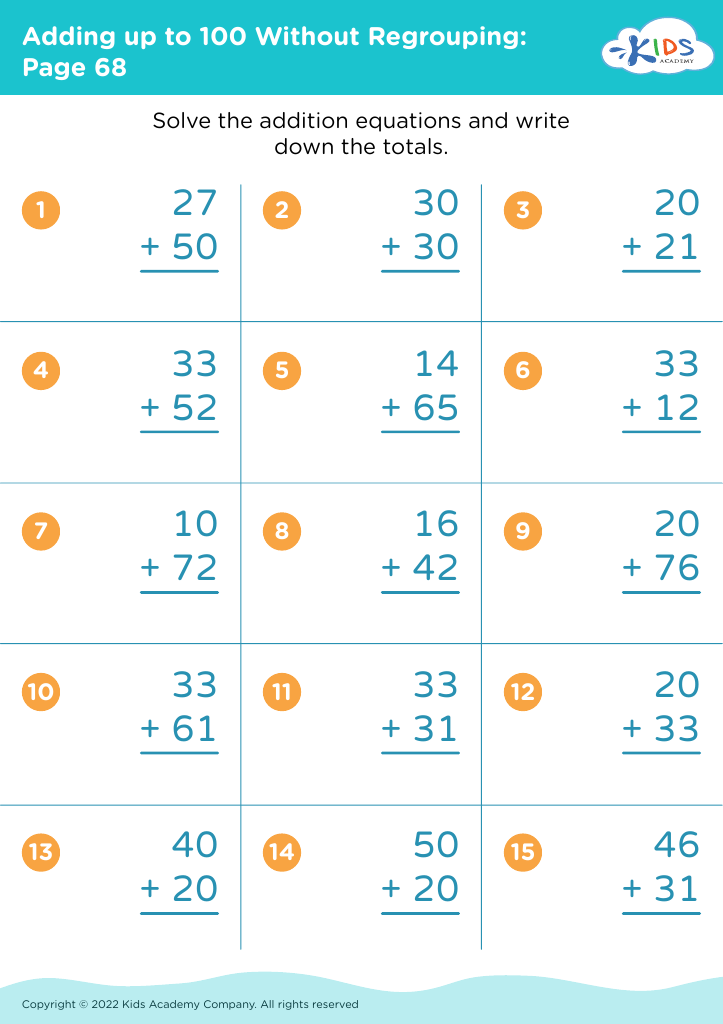
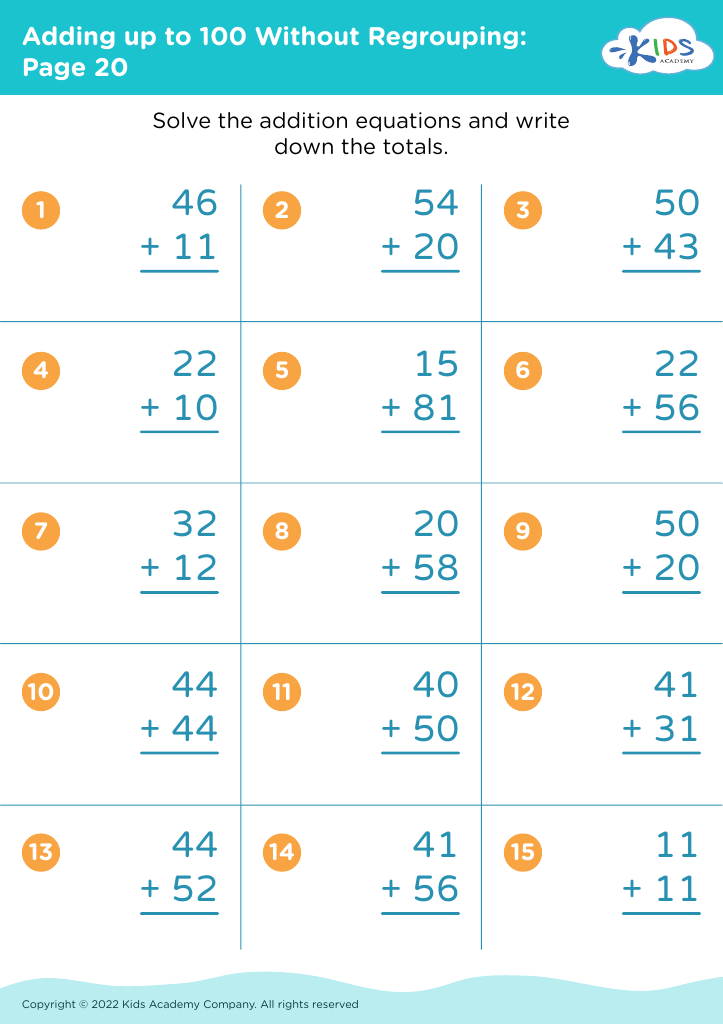
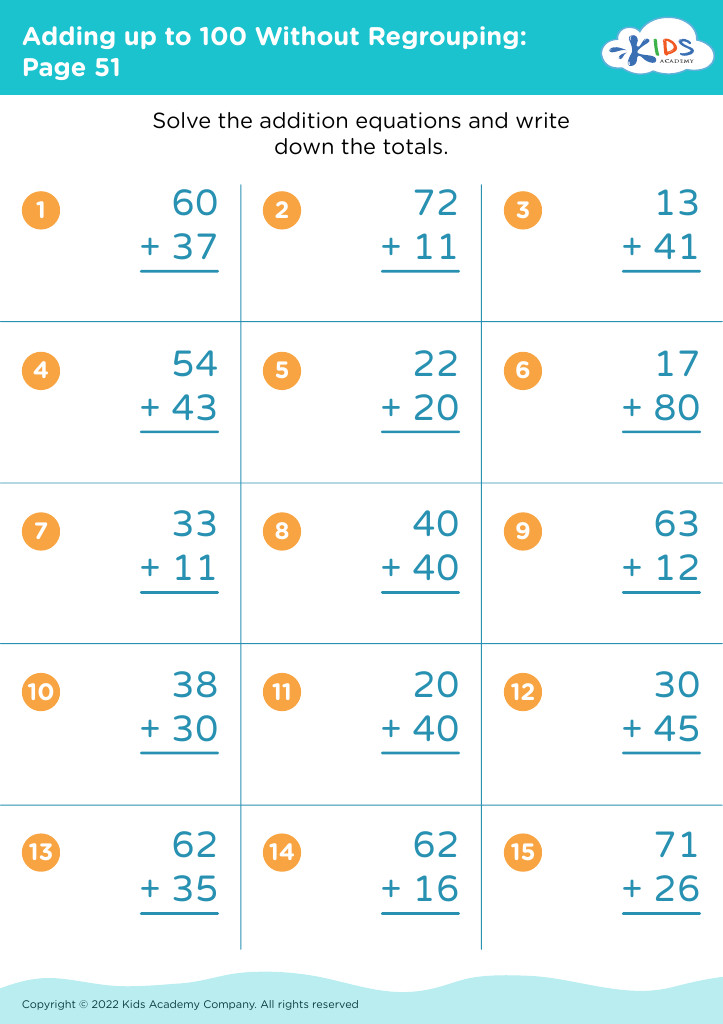




Practicing multiplication that adds up to 100 without regrouping is essential for children aged 3-7, as it lays a solid foundation for their mathematical understanding. At this early age, children are naturally curious and eager to learn. Introducing simple multiplication concepts reinforces counting skills and promotes number manipulation, which is crucial for future math success.
By focusing on multiplication within 100, children can develop a sense of numerical relationships and patterns. This practice enhances problem-solving skills and fosters critical thinking. Without the complexity of regrouping, children can build confidence and achieve a sense of accomplishment, which is vital for their motivation and self-esteem.
Moreover, engaging in such activities strengthens their ability to work with basic facts, making more complex concepts later in school less daunting. Parents and teachers play a pivotal role in creating a supportive learning environment that encourages practice through games and interactive exercises.
Additionally, early multiplication skills can enhance cognitive development, as children start to understand the concepts of groups and total quantities, which are foundational in numerous real-life applications. Therefore, investing time in these practices is crucial for nurturing mathematically proficient learners who are prepared for more advanced mathematical challenges.