Reading comprehension Adding up to 100 Without Regrouping Worksheets for Ages 3-7
3 filtered results
-
From - To
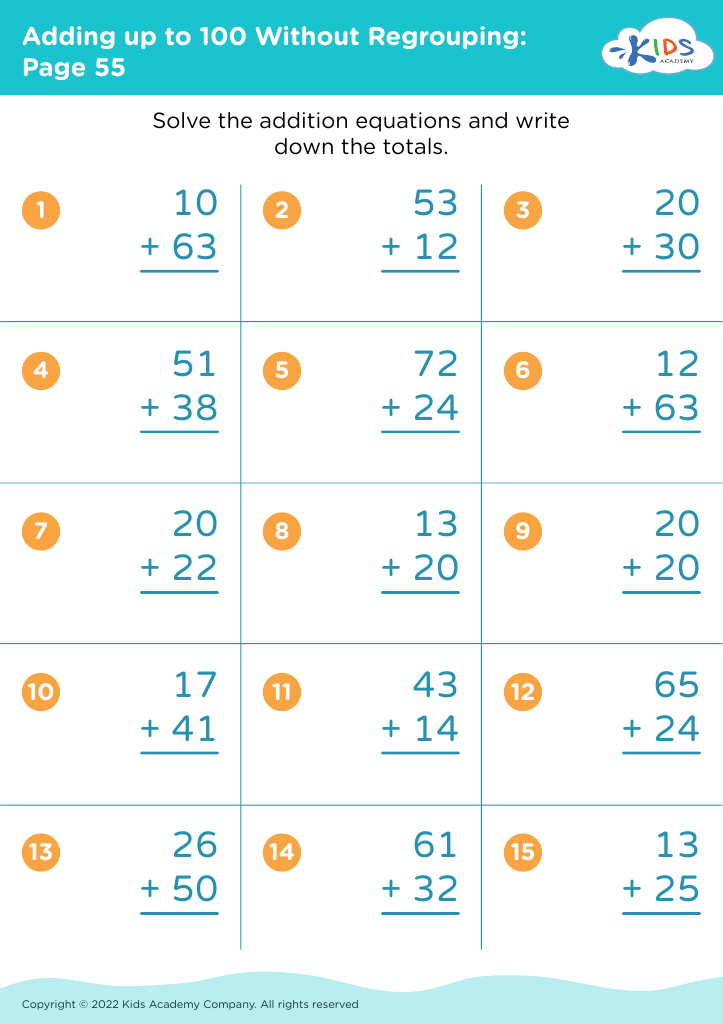
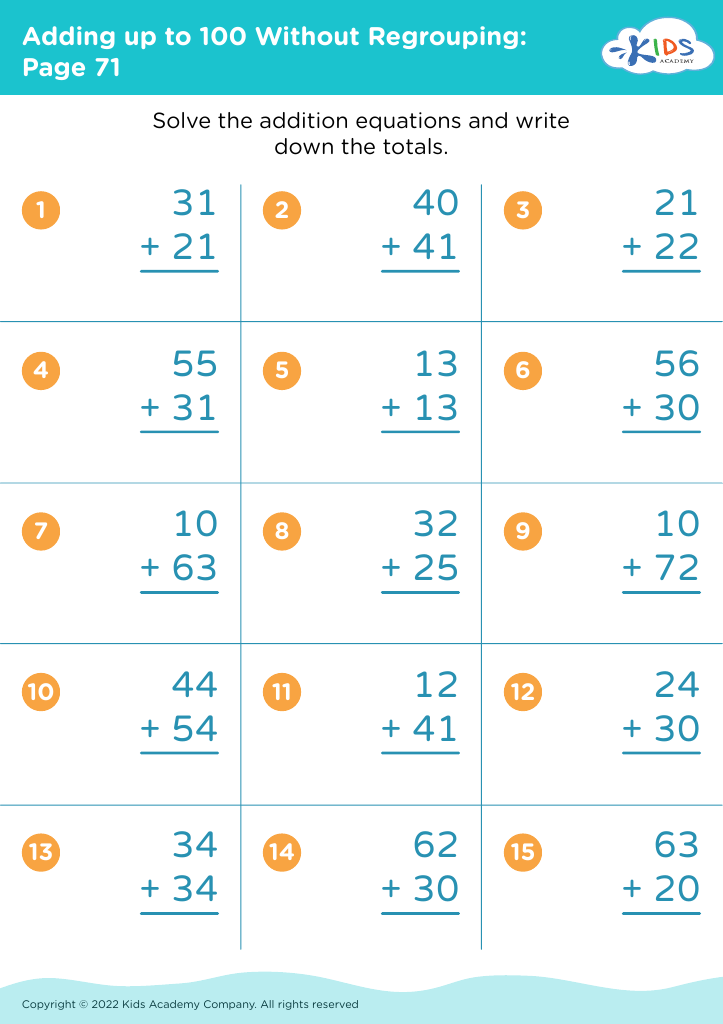
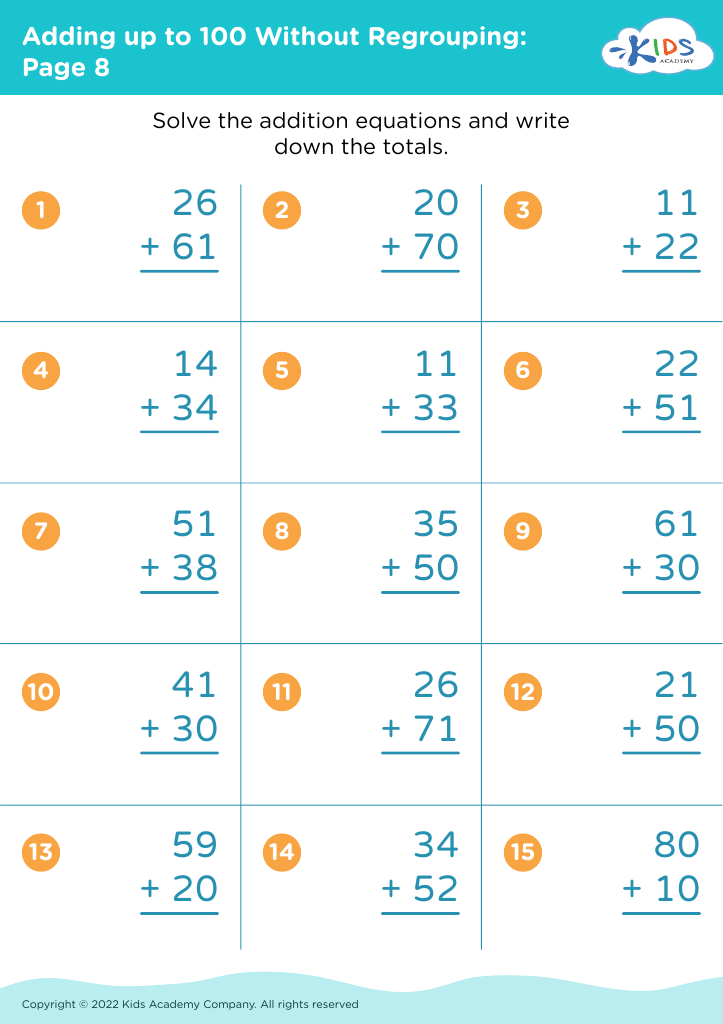
Welcome to our unique collection of Reading Comprehension: Adding up to 100 Without Regrouping Worksheets for ages 3-7! These fun and educational worksheets are designed to strengthen young learners' reading and math skills simultaneously. Through engaging activities, children will master adding numbers up to 100 without the confusion of regrouping. Tailored for preschool to early grade students, our worksheets foster a love for learning while building confidence in reading comprehension and arithmetic. Perfect for home or school use, these resources support a balanced approach to early childhood education and skill development. Download and print now to start the learning adventure!




Reading comprehension and basic math skills like adding up to 100 without regrouping are essential building blocks for young children, ages 3-7. Integrating these skills into early education sets a foundation for future academic success and everyday functioning.
Reading comprehension enhances a child's ability to understand instructions, follow stories, and builds their vocabulary. These skills bode well for all subjects, not just language arts, improving their overall cognitive abilities and critical thinking. Understanding what they read ignites curiosity and fosters lifelong learning. For parents and teachers, nurturing this ensures children keep up in class and gain confidence in their abilities.
On the other hand, mastering basic math operations such as adding up to 100 without regrouping enables children to grasp number sense, place value, and arithmetic fluency. These skills are practical and used in real life, like counting objects or understanding time and money. Fostering math proficiency also correlates with better problem-solving and logical thinking abilities down the road.
Care from parents and teachers in nurturing these areas means providing children with the vital tools they need to excel academically and in daily tasks. Both reading comprehension and math skills lay down a key academic foundation, making children's educational journeys smoother and more engaging.