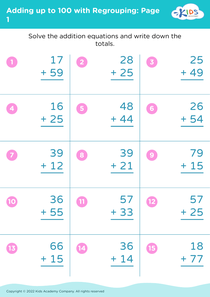
Understanding multiplication Adding up to 100 Without Regrouping Worksheets for Ages 3-7
5 filtered results
-
From - To
Discover our “Understanding Multiplication Adding Up to 100 Without Regrouping Worksheets” designed specifically for children aged 3-7! These engaging worksheets incorporate colorful visuals and interactive activities to help young learners grasp multiplication concepts effortlessly. Through fun exercises, children will enhance their counting, addition, and multiplication skills while building a solid foundation for future math success. Each worksheet is tailored to support early mathematical understanding, ensuring that kids enjoy the learning process. Discover how to combine creativity with essential math skills to encourage a love for learning in your child. Start their multiplication journey today and watch their confidence grow!
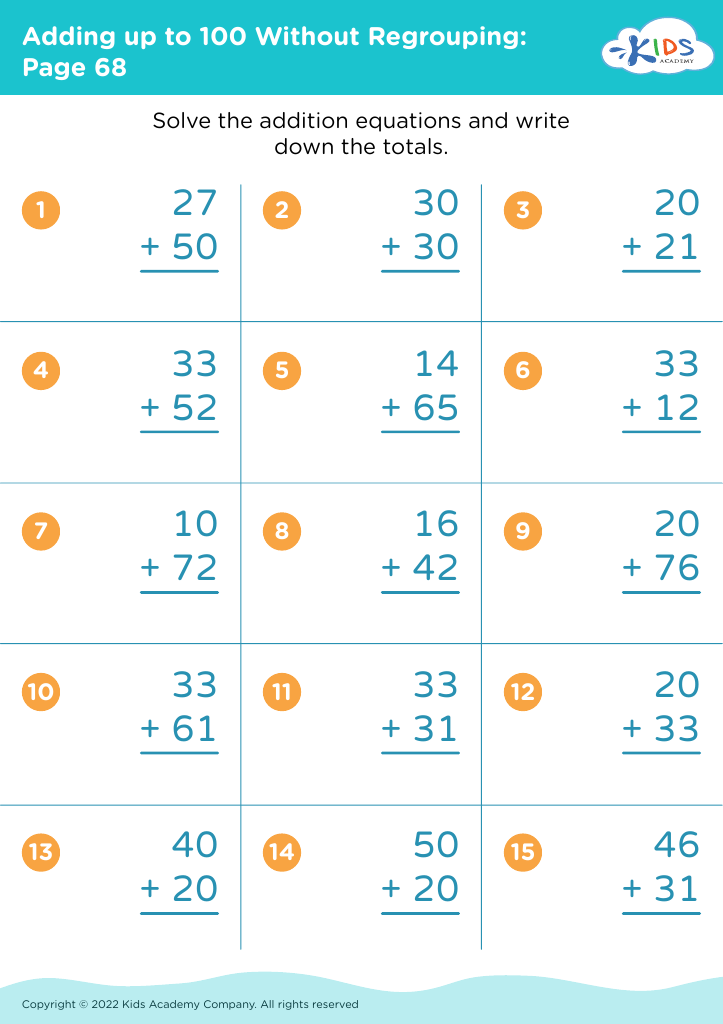
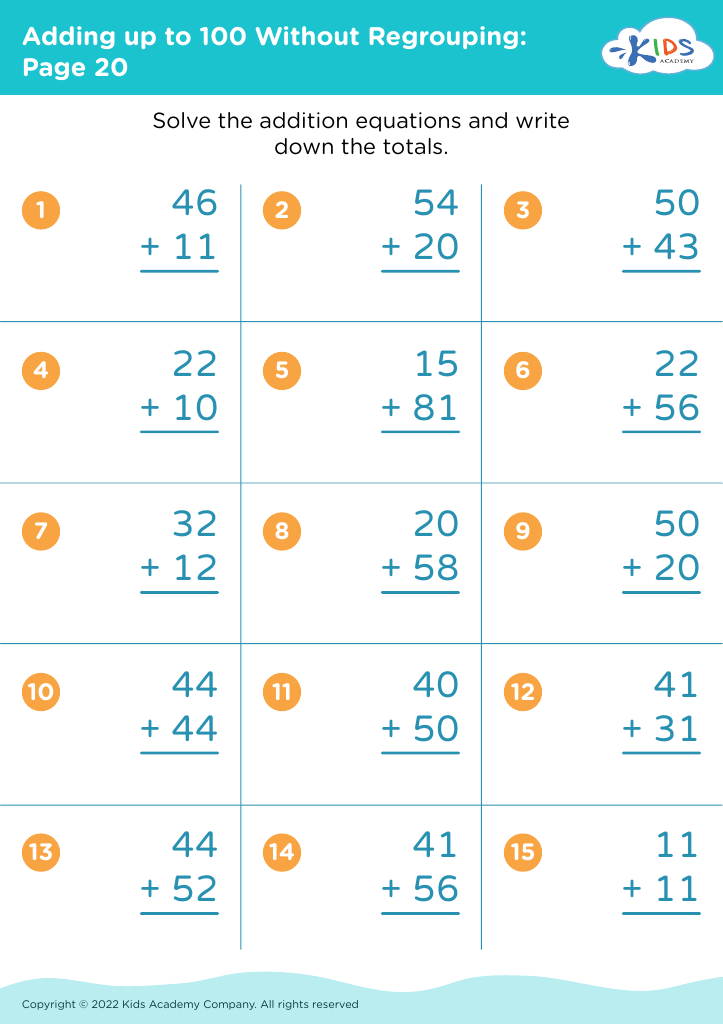
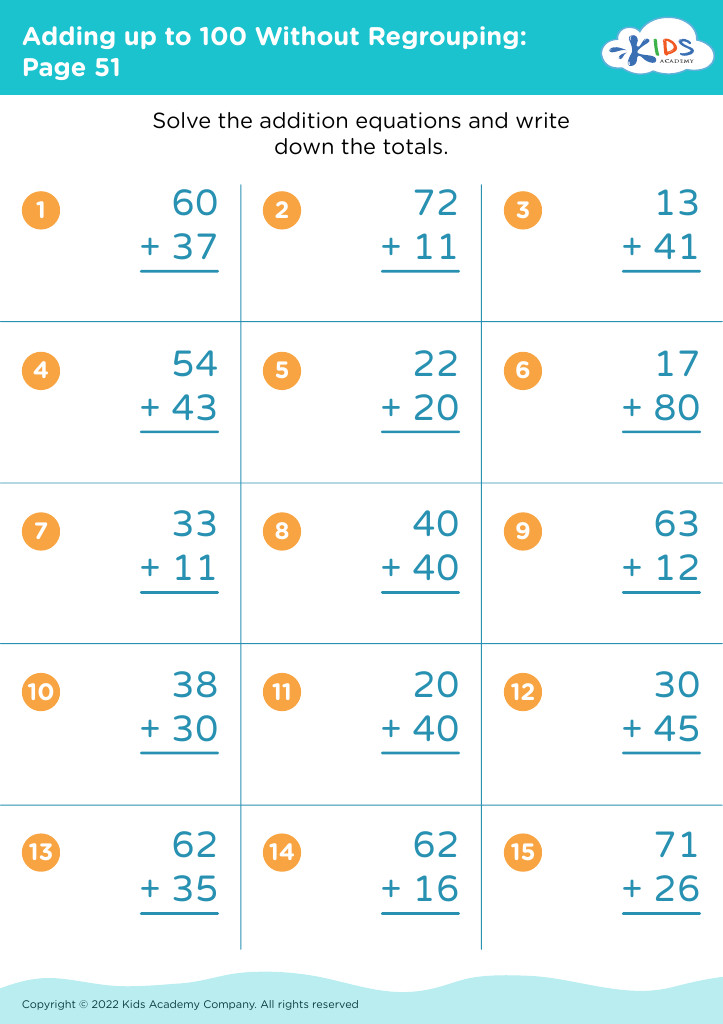
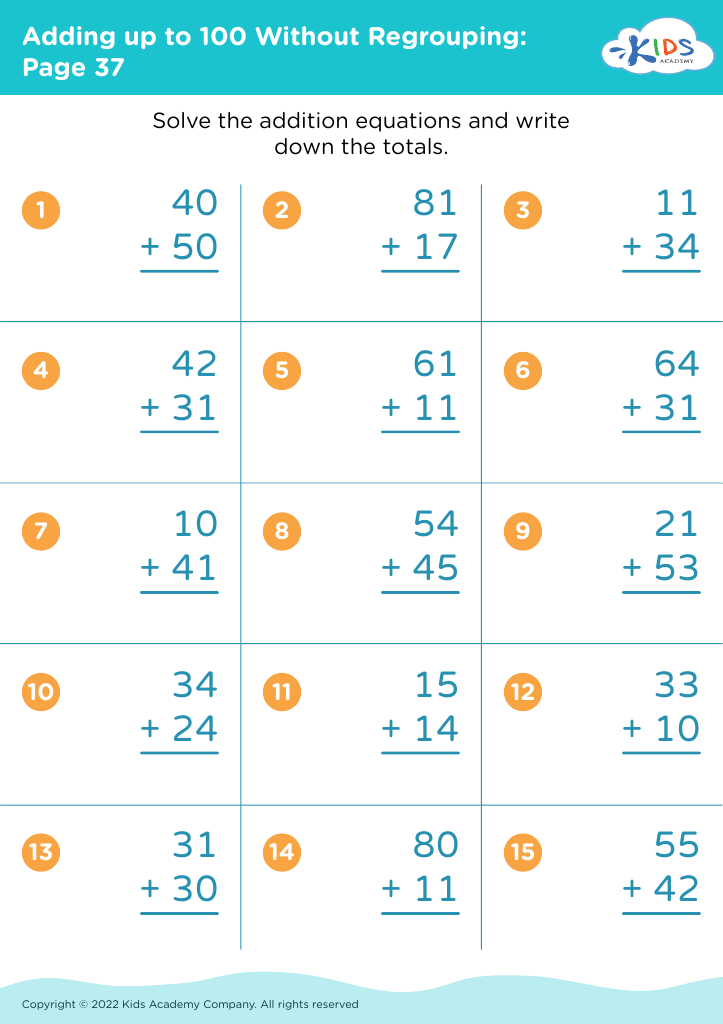
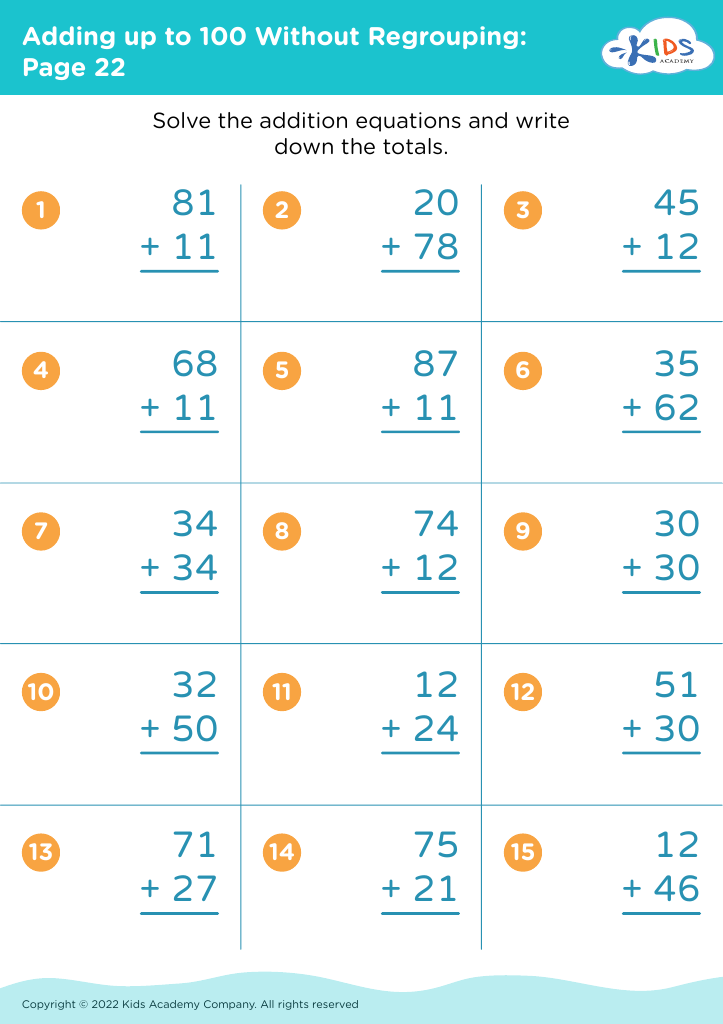




Understanding multiplication, especially in the context of adding up to 100 without regrouping, is vital for children ages 3-7 as it lays the foundation for future mathematical skills. At this early developmental stage, children are like sponges, absorbing concepts that shape their problem-solving abilities and mathematical reasoning.
Engaging young learners with multiplication through addition helps them grasp the concept of groups and repeated addition, essential for mastering multiplication later on. It boosts their confidence and fluency in math while introducing them to number patterns, which can enhance their overall numerical literacy. Moreover, learning to add up to 100 without regrouping simplifies complex problems, making math less intimidating.
For parents and teachers, focusing on these basic mathematical concepts fosters a positive attitude toward math at a young age, guiding children to develop critical thinking skills. Additionally, early mastery of these skills can lead to better performance in later grades, reducing math anxiety and creating lifelong learners.
Ultimately, by investing time and effort into teaching understanding multiplication through simple addition, parents and teachers set a solid groundwork that will benefit children throughout their academic journey and everyday lives.