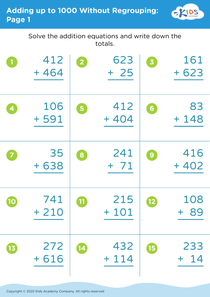
Recognizing shapes Adding up to 1000 with Regrouping Worksheets for Ages 3-7
4 filtered results
-
From - To
Discover our engaging "Recognizing Shapes Adding Up to 1000 with Regrouping Worksheets" designed for young learners aged 3-7! These worksheets seamlessly integrate shape recognition with addition skills, providing a fun and interactive way for children to master math concepts. Each worksheet encourages kids to identify various shapes while practicing addition, helping to solidify their understanding of regrouping and enhance their problem-solving skills. With colorful visuals and age-appropriate challenges, these worksheets cater to early learners, promoting confidence in math and fostering a love for shapes. Join us in making learning enjoyable and effective with our thoughtfully crafted resources!
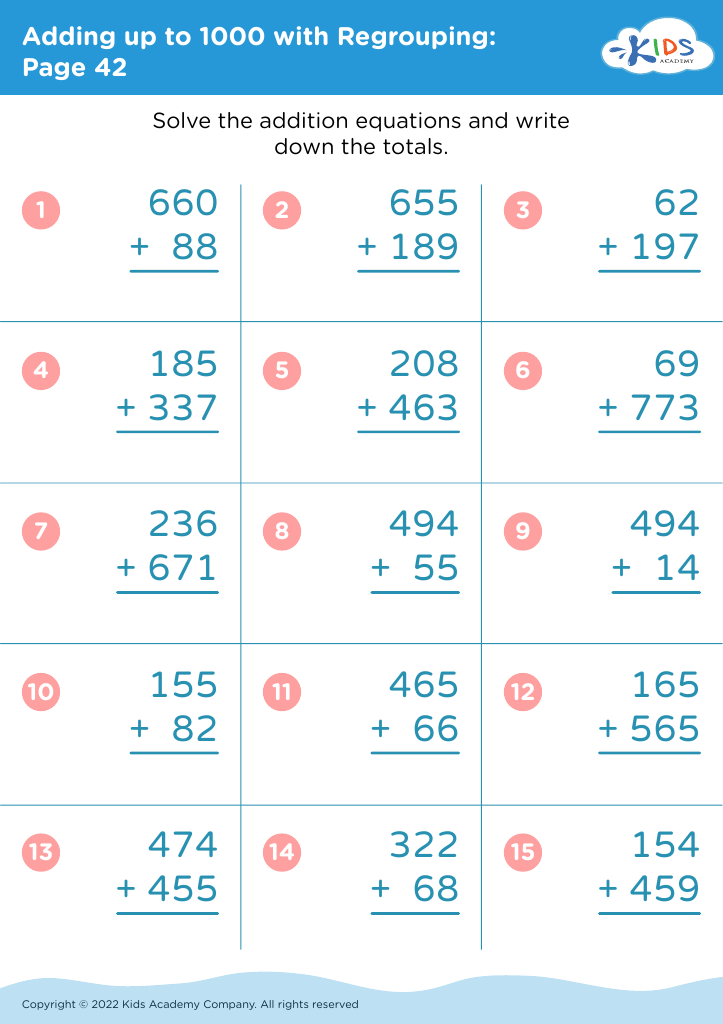
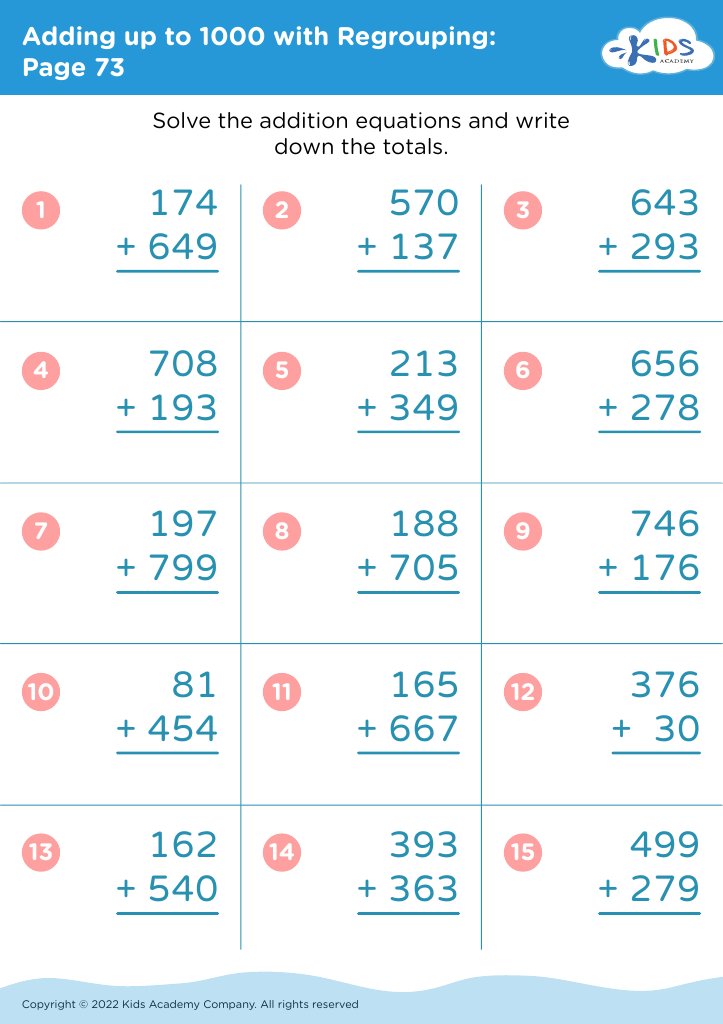
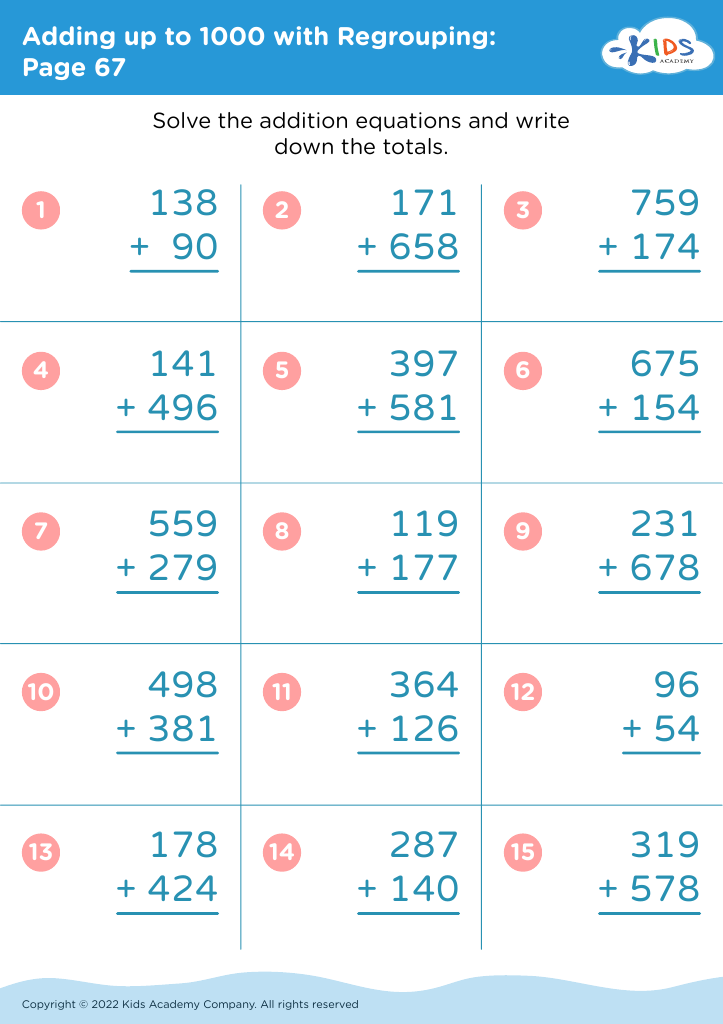
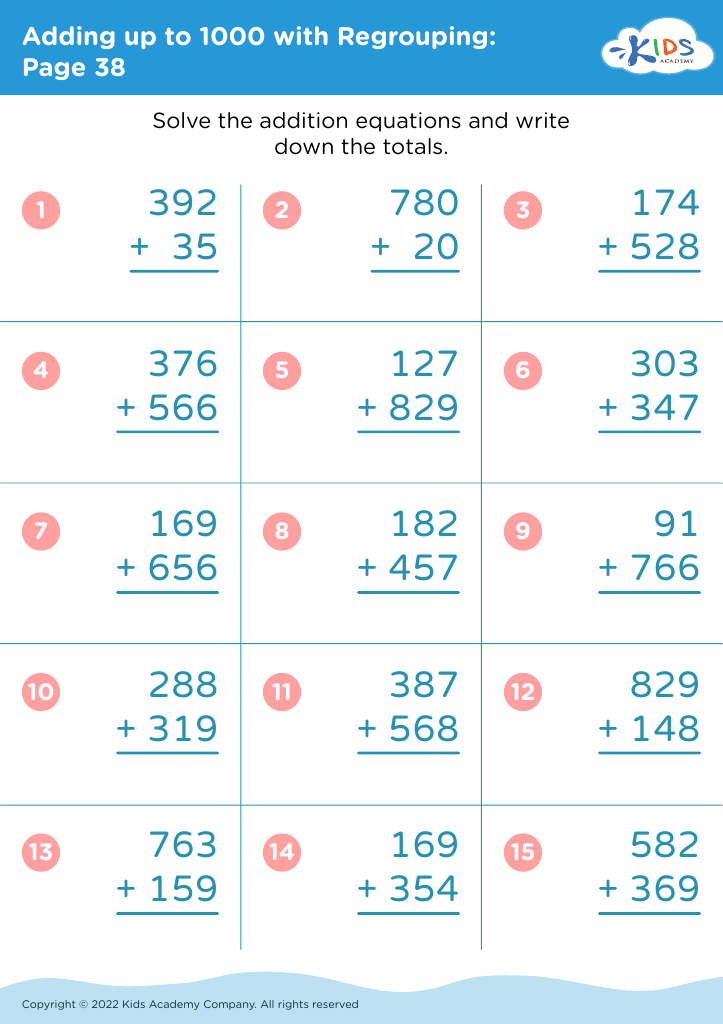


Recognizing shapes and mastering basic addition, including regrouping, are foundational skills for children aged 3-7 that significantly impact their overall development. For early learners, recognizing shapes is not only about geometry; it forms the basis for critical thinking and spatial awareness. Shapes help children make sense of the world around them, enhance their problem-solving skills, and build creativity as they experiment with designs in art and play.
On the other hand, adding numbers up to 1000 with regrouping introduces children to advanced mathematical concepts, promoting a deep understanding of number relationships and promoting maturity in their mathematical skills. This level of addition exercises their cognitive skills and helps them grasp the principles of carrying over values and understanding place value, which are crucial for future math success.
By caring about these skills, parents and teachers set children on a path of lifelong learning. Drafting engaging activities around shapes and addition not only makes learning fun but also builds confidence. These skills empower children to communicate, reason, and collaborate effectively. Hence, investing the time and resources into recognizing shapes and reinforcing addition not only nurtures academic growth but also fosters critical life skills that are essential for thriving in an increasingly complex world.