Improve counting skills Adding up to 1000 Without Regrouping Worksheets for Ages 3-7
4 filtered results
-
From - To
Enhance your child's counting skills with our "Adding Up to 1000 Without Regrouping" worksheets, specially designed for ages 3-7. These engaging, colorful worksheets provide a fun and interactive way for young learners to practice addition confidently without the complexities of regrouping. Each worksheet features simple yet captivating exercises that encourage kids to explore numbers, develop their arithmetic skills, and improve their overall number sense. Ideal for home or classroom use, these resources will make learning to add an enjoyable experience, laying a solid foundation for future mathematical concepts. Start your child’s counting journey today and watch them excel!
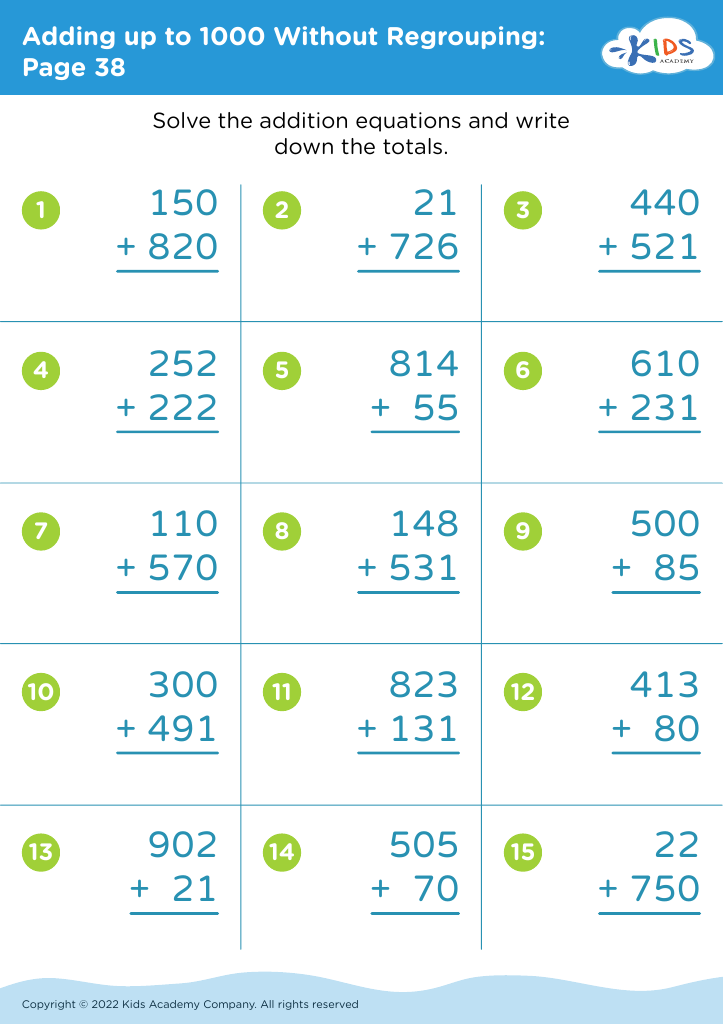
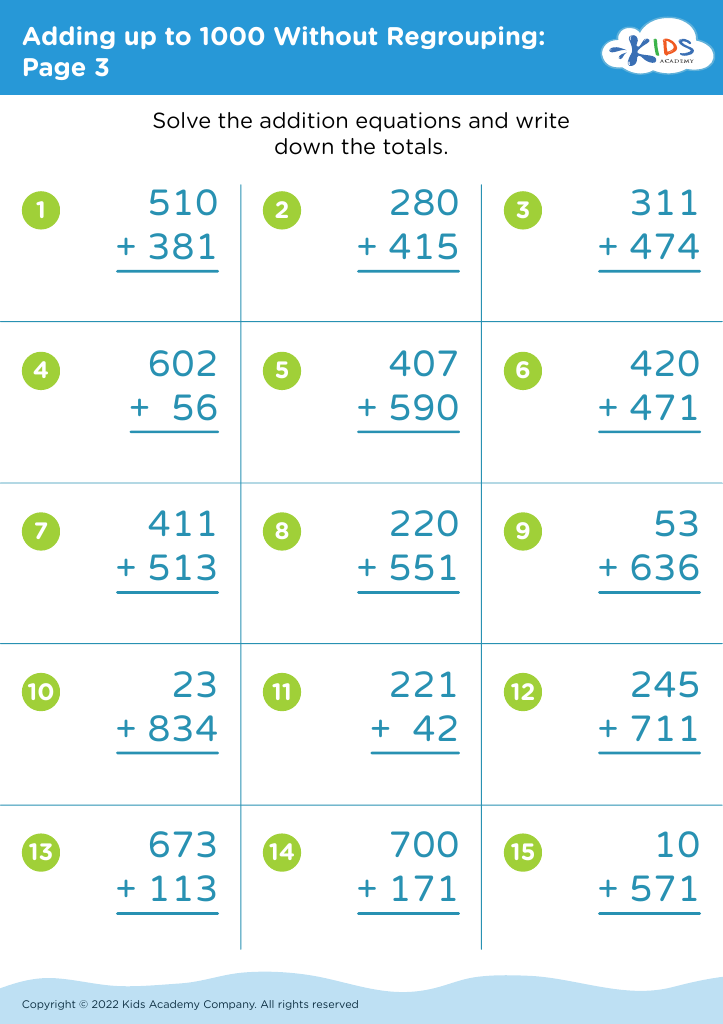
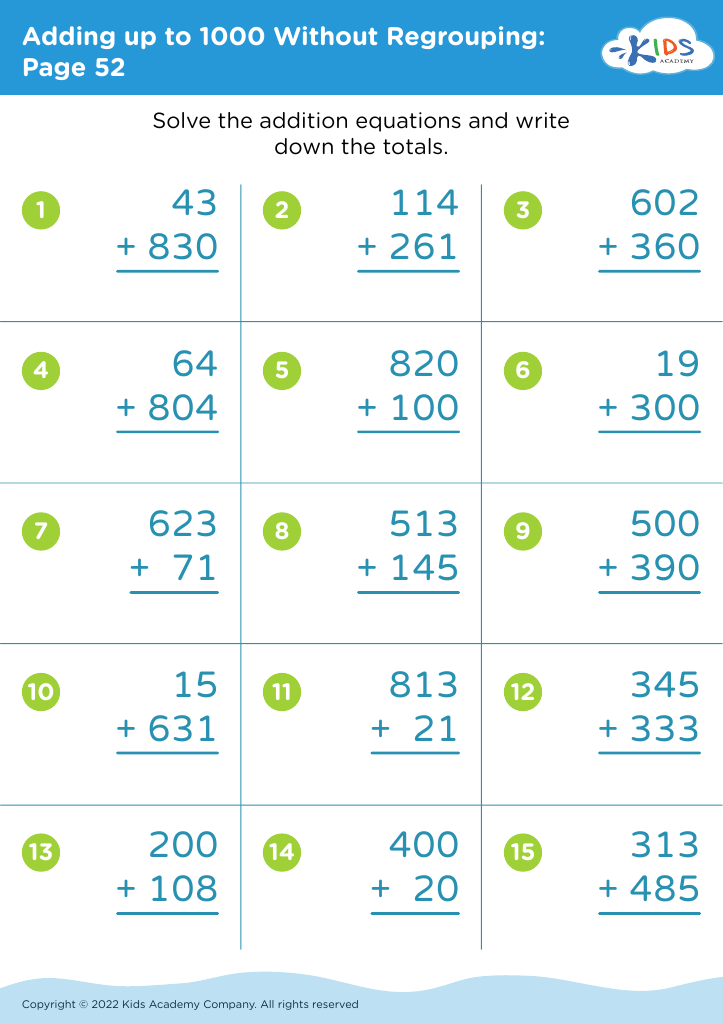
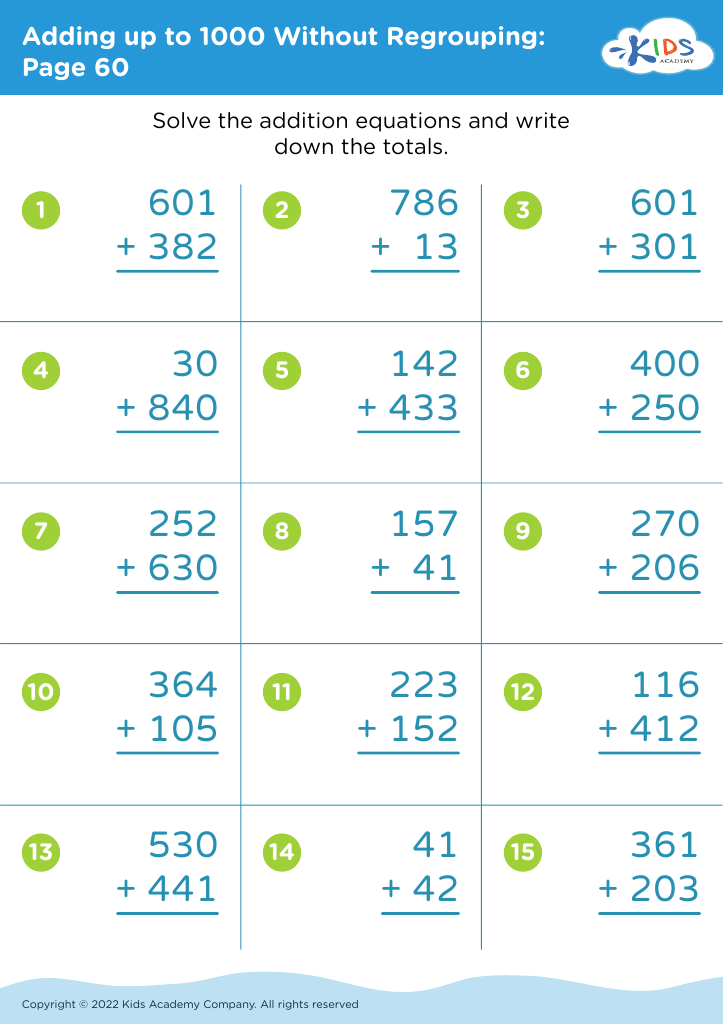


Improving counting skills, specifically adding up to 1000 without regrouping, is essential for children aged 3-7 as it lays a strong foundation for their mathematical understanding. At this early stage, children are developing critical cognitive skills. Mastering basic counting not only boosts their confidence but also enhances their ability to solve more complex problems in the future.
This skill promotes number sense, allowing kids to understand relationships between numbers intuitively. When learners grasp how to add without regrouping, they build mental strategies that aid in quicker and more efficient calculations. This direct experience with numbers encourages exploration and nurtures a positive attitude toward math, making them more resilient when faced with challenges.
Furthermore, counting and addition skills are crucial in everyday life scenarios—whether it’s shopping, baking, or comparing quantities. Teachers and parents play a vital role in supporting these skills, fostering both academic success and practical life skills. Ensuring children can comfortably add numbers up to 1000 without regrouping sets them up to tackle more advanced mathematics with ease as they progress in their education. Ultimately, investing time and effort into nurturing counting skills is an invaluable gift that promotes overall cognitive development and prepares children for lifelong learning.








