Understanding fractions Adding up to 1000 Without Regrouping Worksheets for Ages 3-7
13 filtered results
-
From - To
Discover our expertly designed "Understanding Fractions Adding up to 1000 Without Regrouping Worksheets" tailored for children ages 3-7. These engaging worksheets use fun visuals and simple exercises to help young learners grasp basic fraction concepts while practicing addition up to 1000, without the complexity of regrouping. By blending foundational math skills with age-appropriate content, our worksheets foster confidence and mastery in early math. Perfect for both classroom and at-home learning, they provide parents and educators with valuable resources to support children's academic growth and enthusiasm for mathematics. Boost your child's math skills with our dynamic and effective worksheets today!
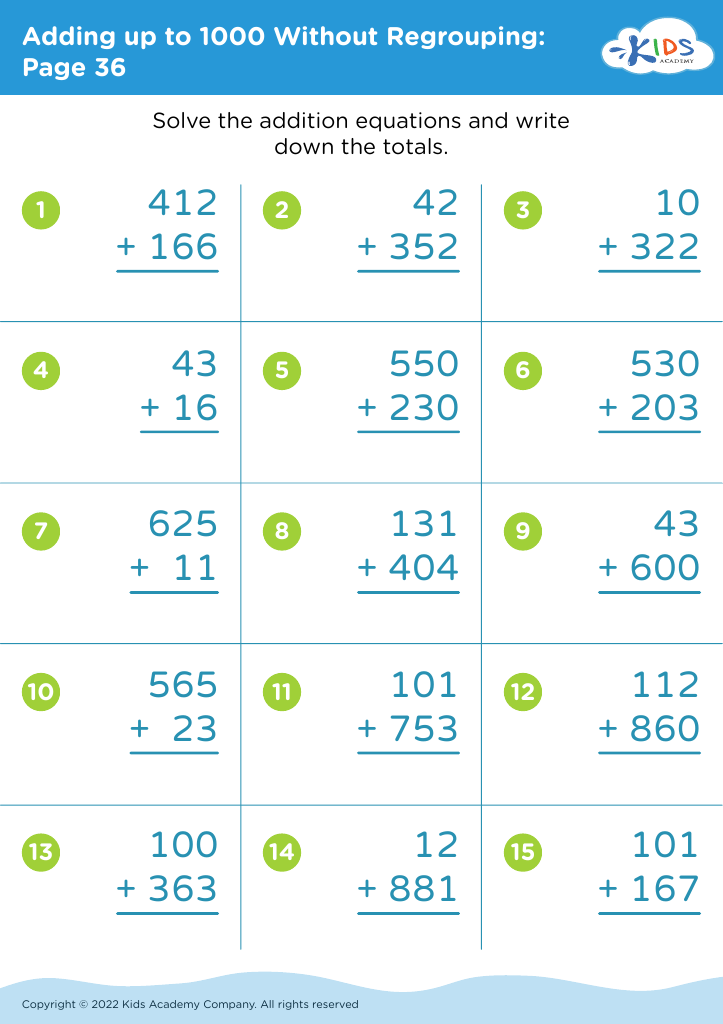
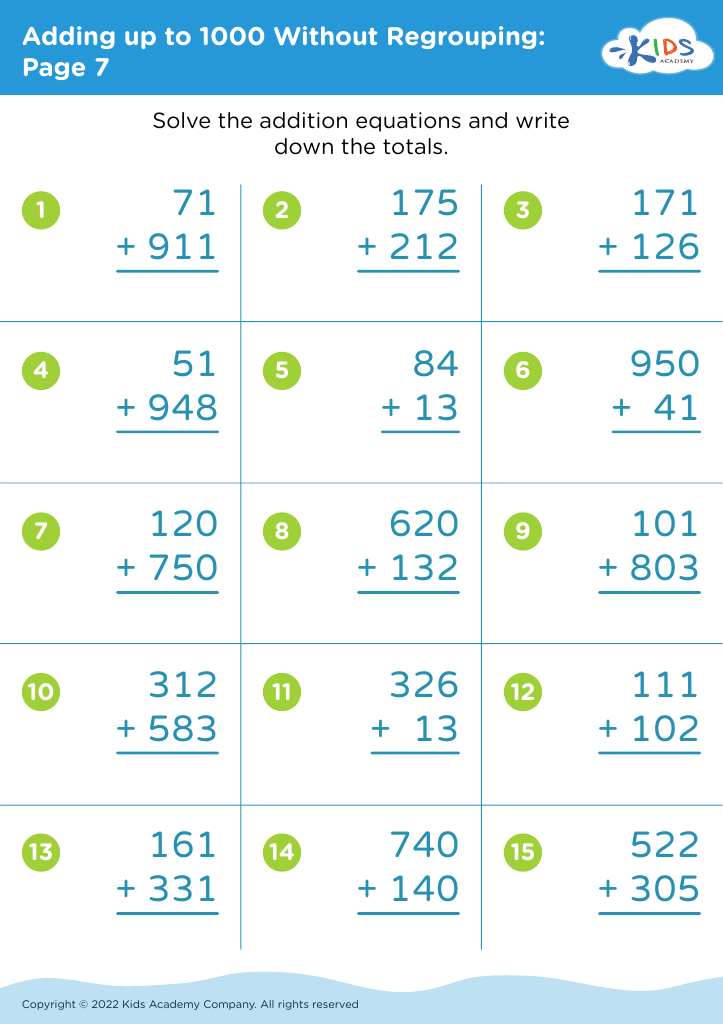
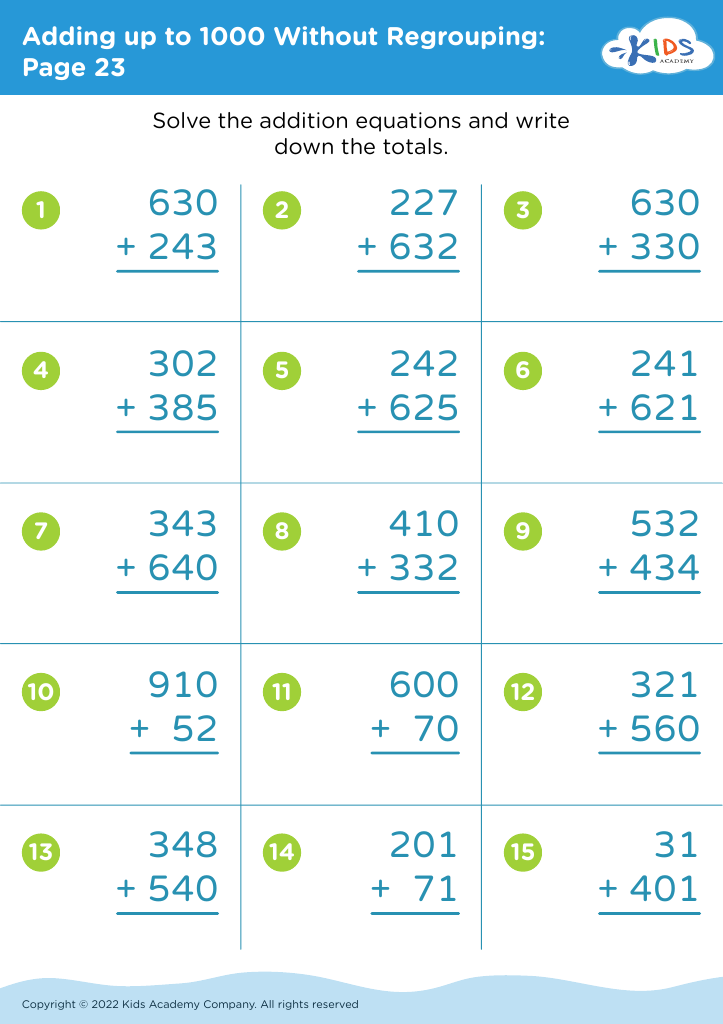
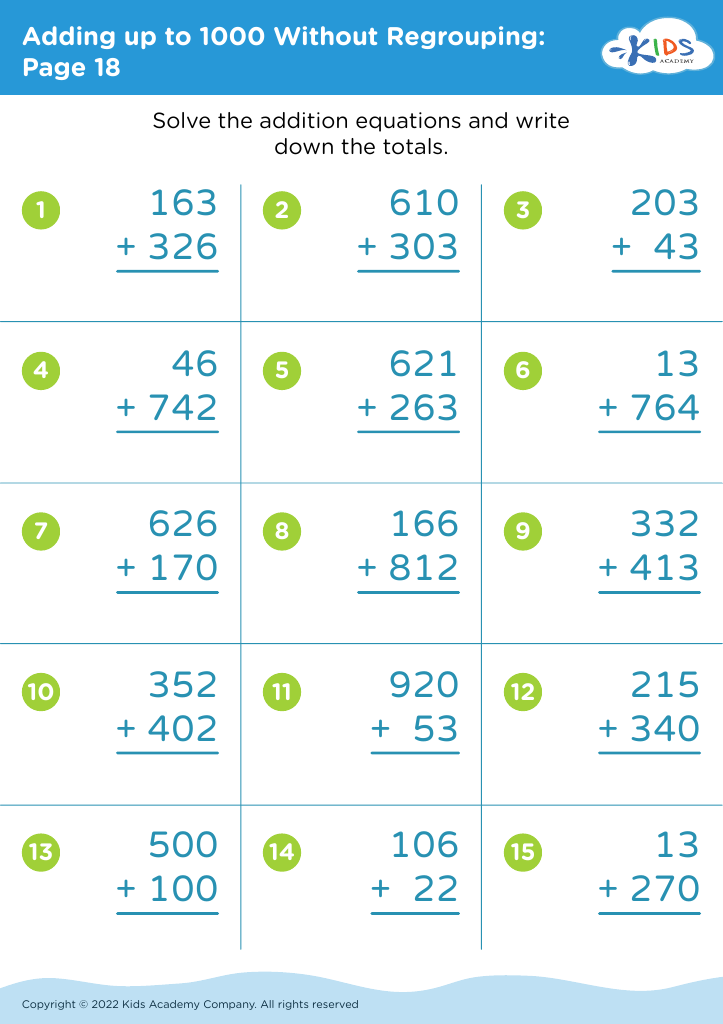
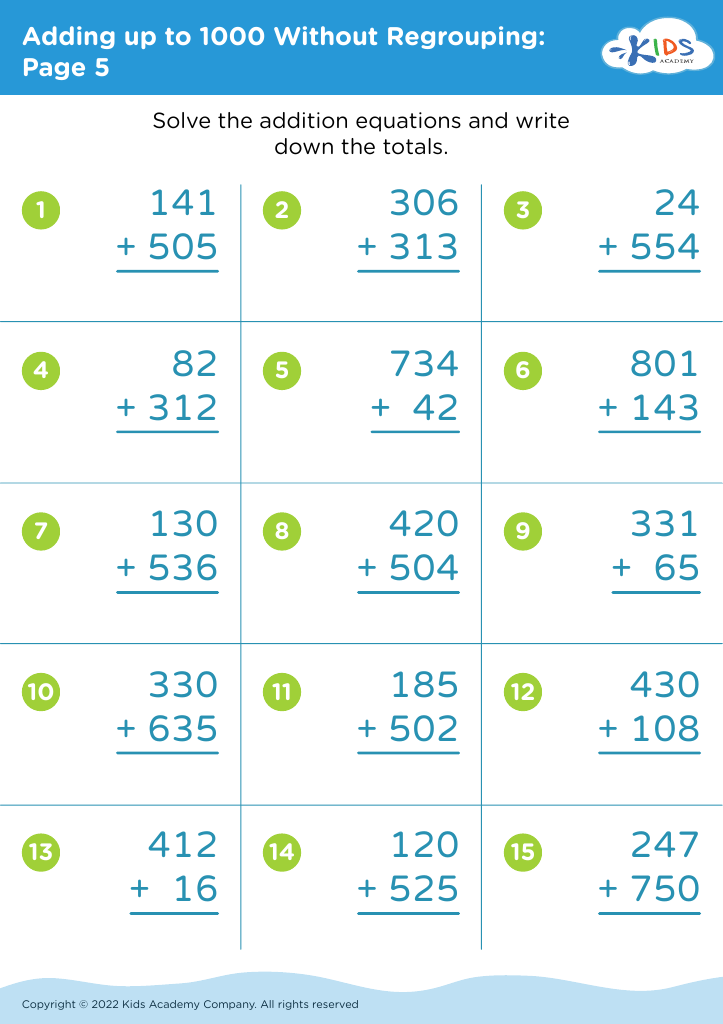
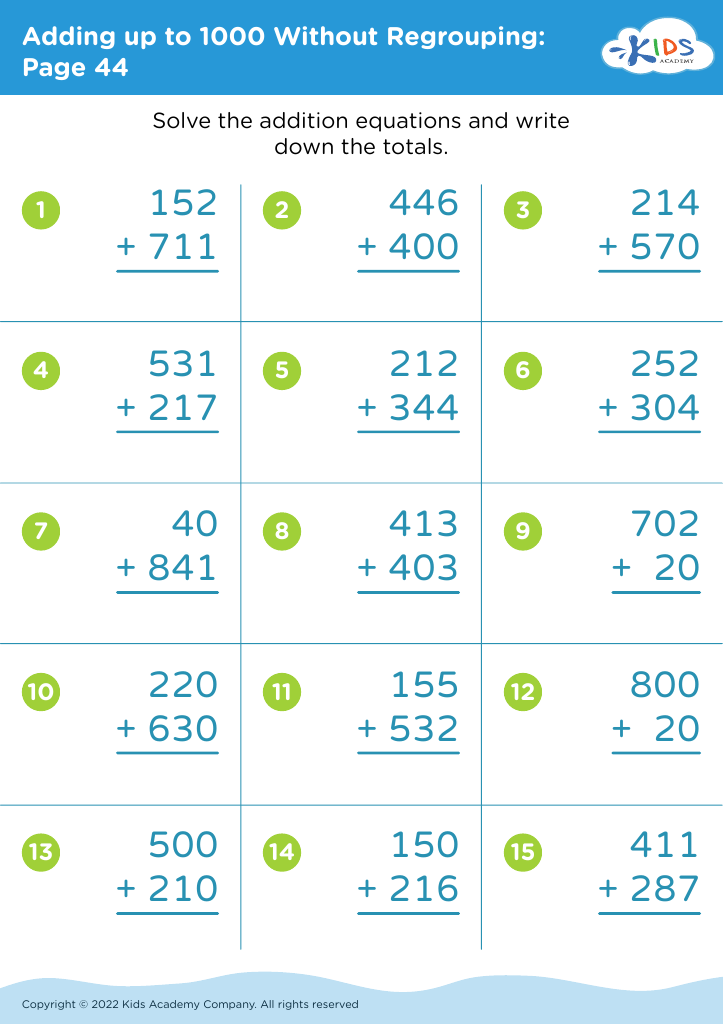
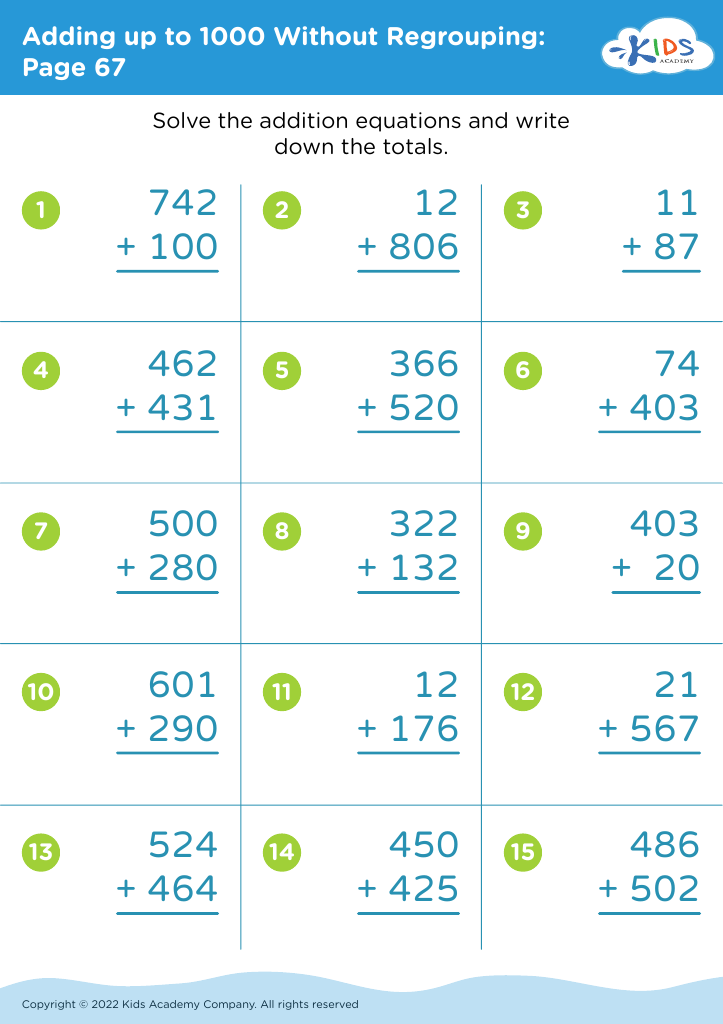
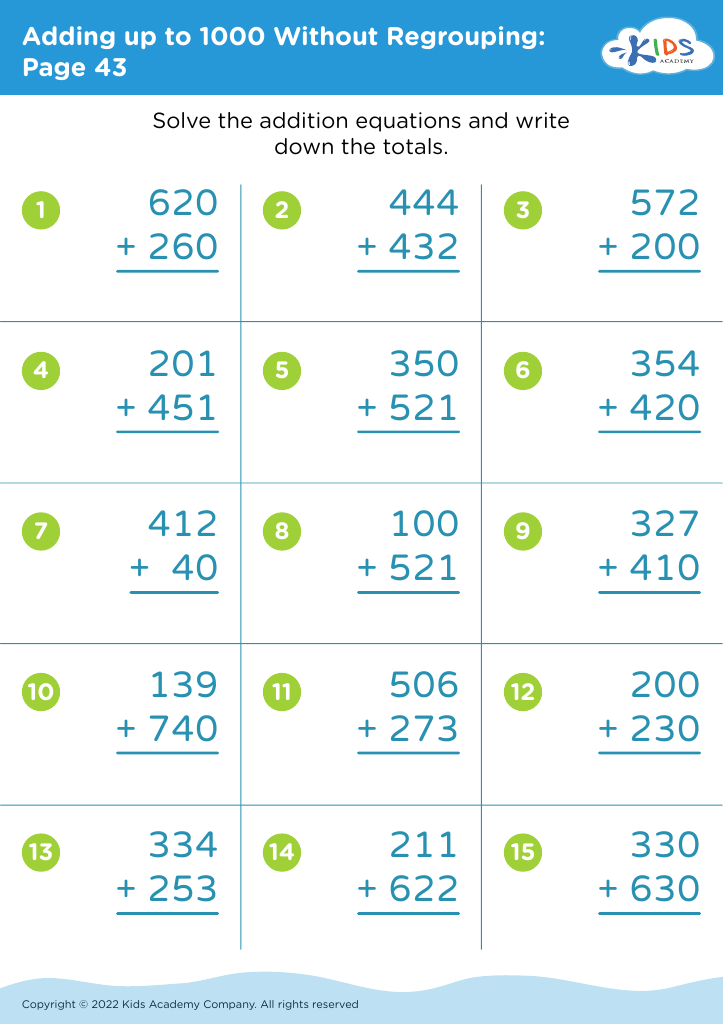
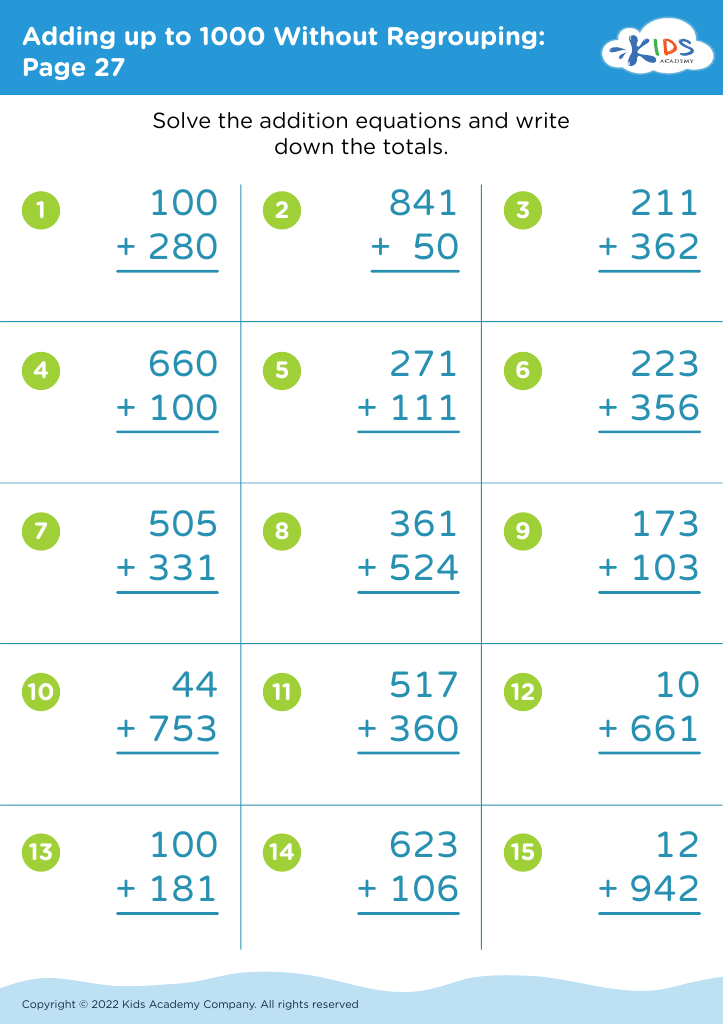
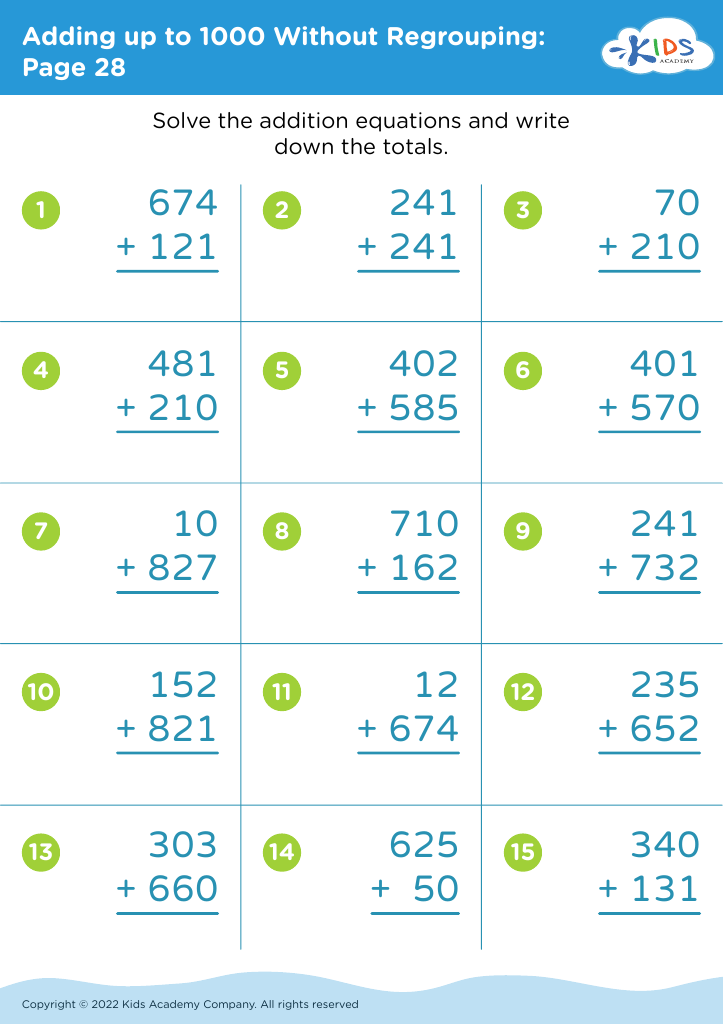
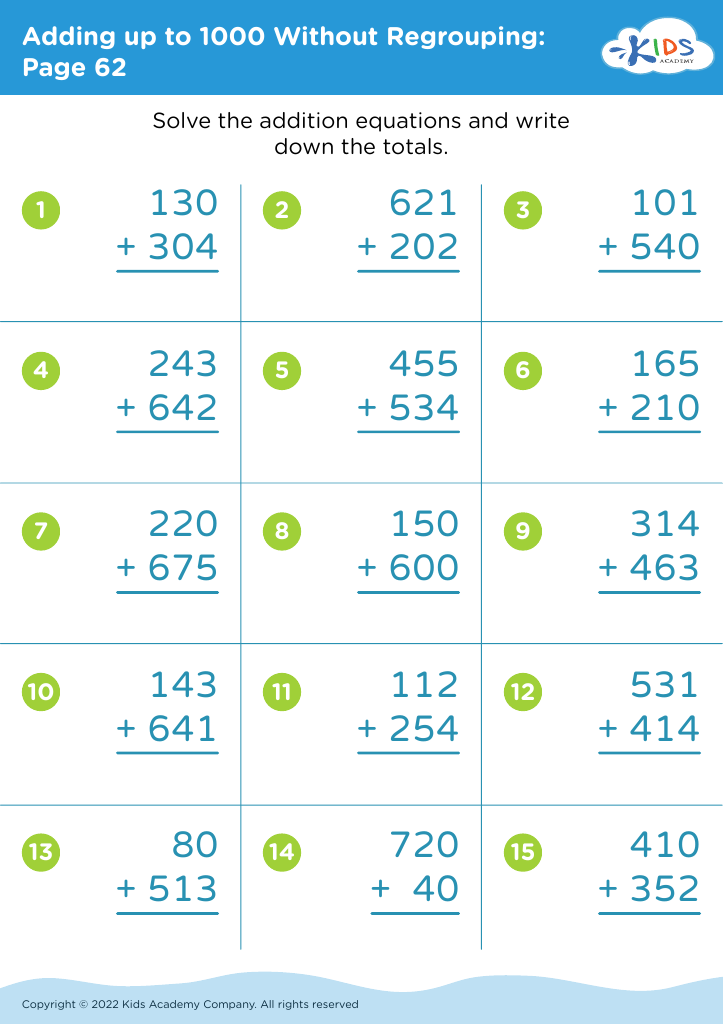
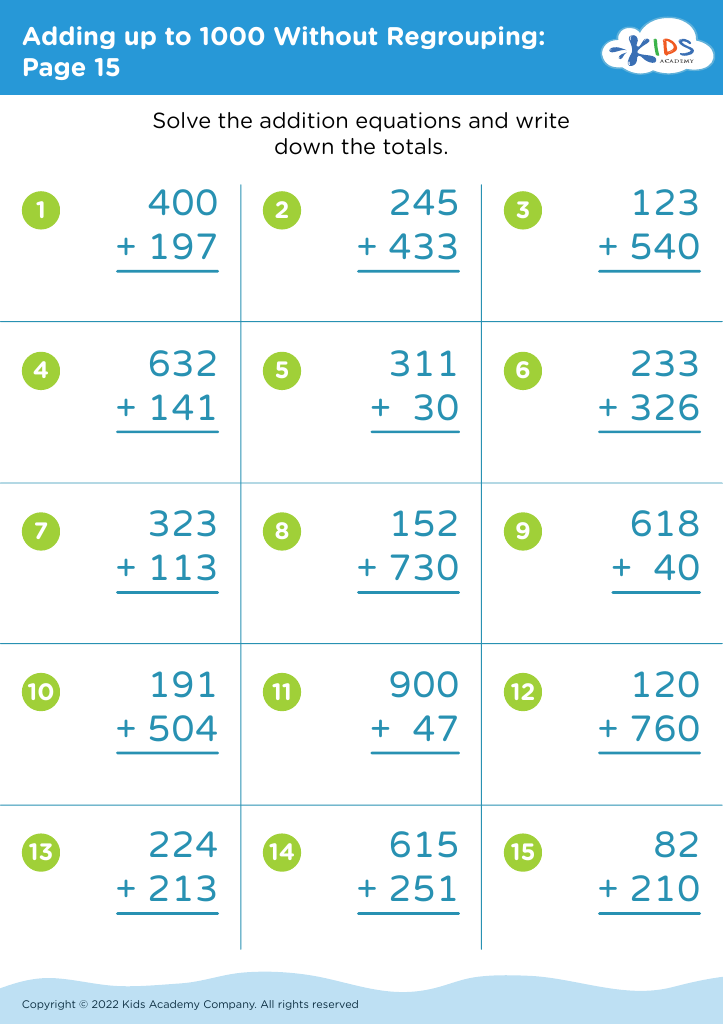
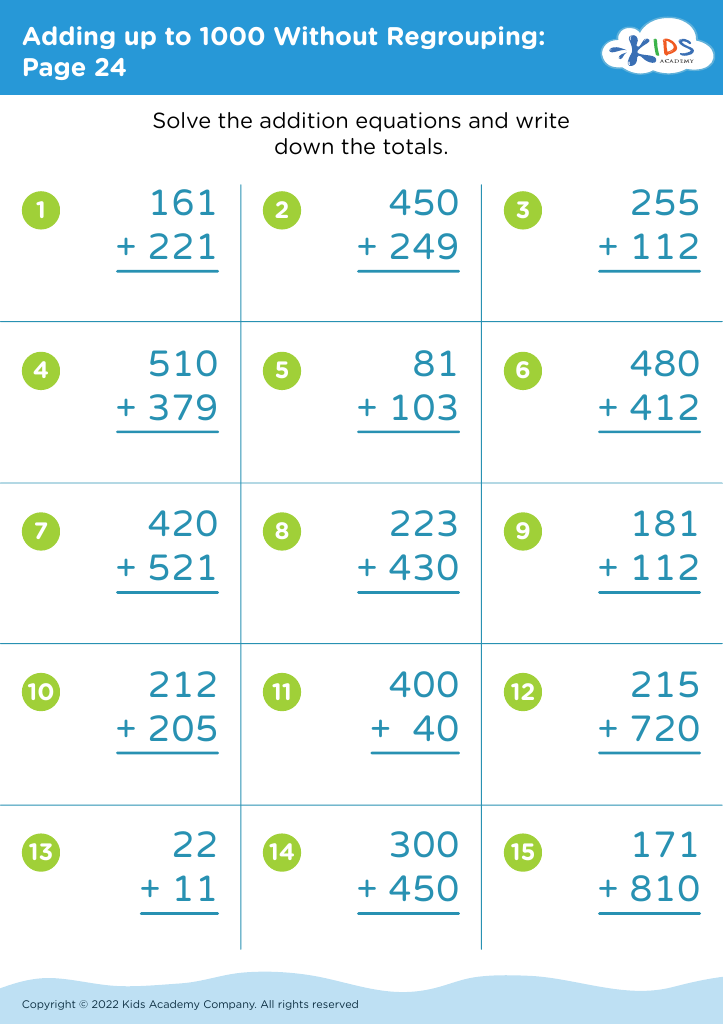


Understanding fractions and adding numbers without regrouping are foundational skills that provide a crucial stepping stone for young learners (ages 3-7). At this developmental stage, children are building basic mathematical concepts that will support more complex problem-solving in the future.
Firstly, fractions introduce the idea of parts making up a whole, which is fundamental in understanding quantity, division, and ratios. This understanding enhances their ability to handle more sophisticated fractions and mathematical concepts as they grow.
Secondly, adding numbers without regrouping helps children develop confidence and accuracy in their basic arithmetic skills. It simplifies the introduction to addition by avoiding the complexity of carrying over digits, making the math easier to grasp and less intimidating. This builds a secure foundation, making higher-level arithmetic operations more intuitive.
Moreover, early success in these areas fosters a positive attitude toward math, reducing potential anxieties and encouraging future engagement. A solid grasp of these skills translates into better performance in school, as math competency is crucial across various subjects and daily activities.
In essence, focusing on these foundational math skills equips young learners with confidence, competence, and a positive mindset toward mathematics, essential for their academic growth and everyday decision-making abilities.