Fraction comparison Adding up to 1000 Worksheets for Ages 3-7
13 filtered results
-
From - To
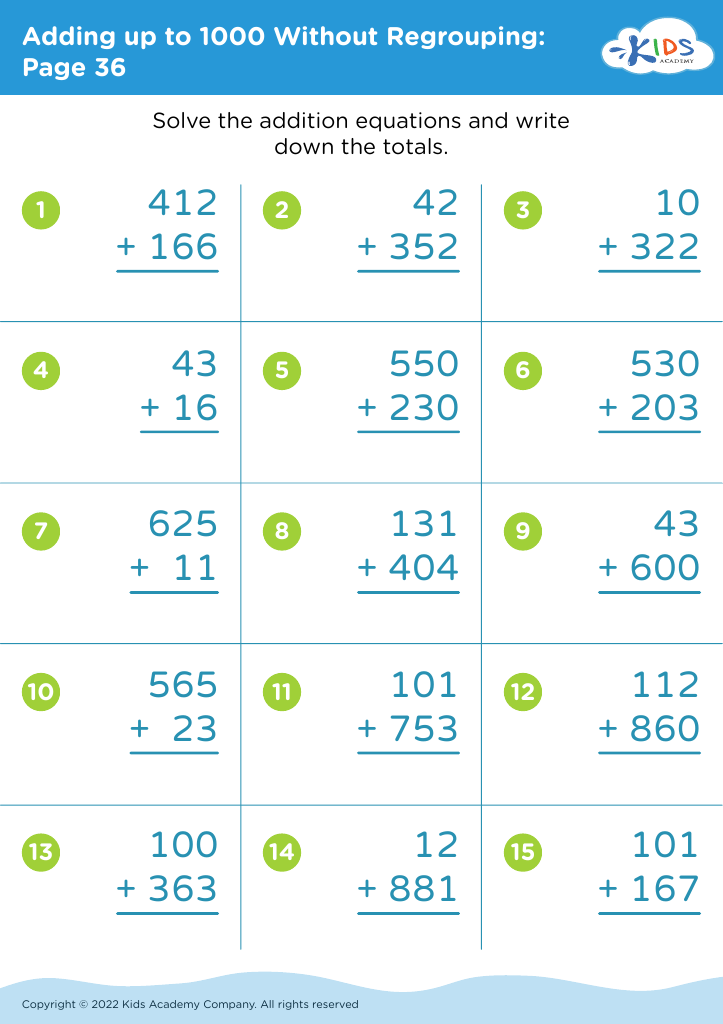
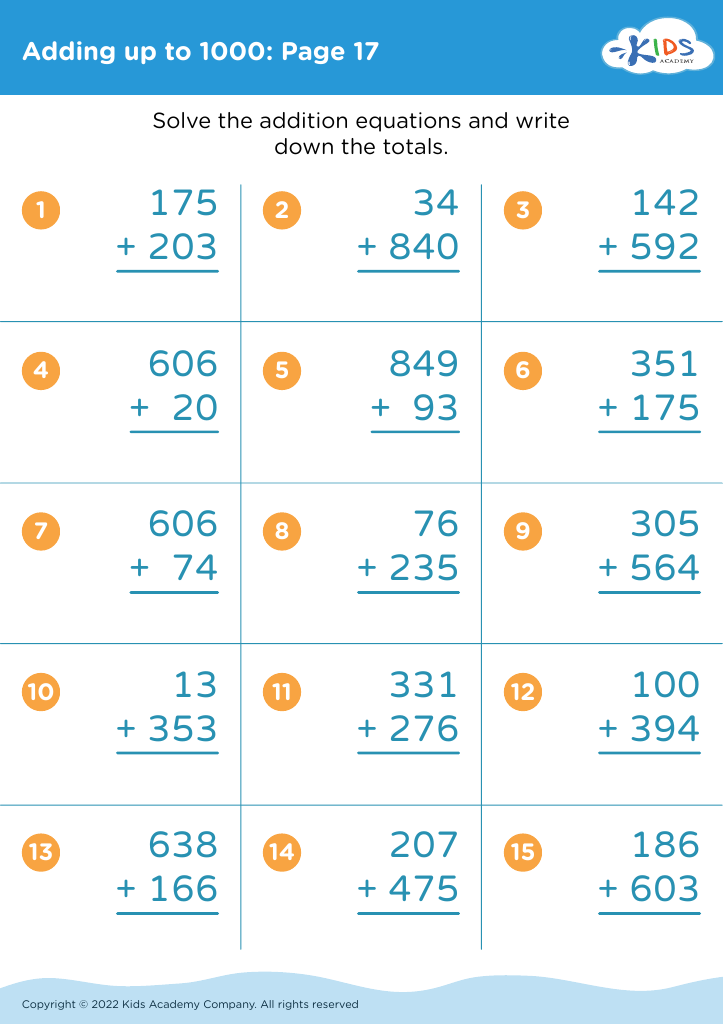
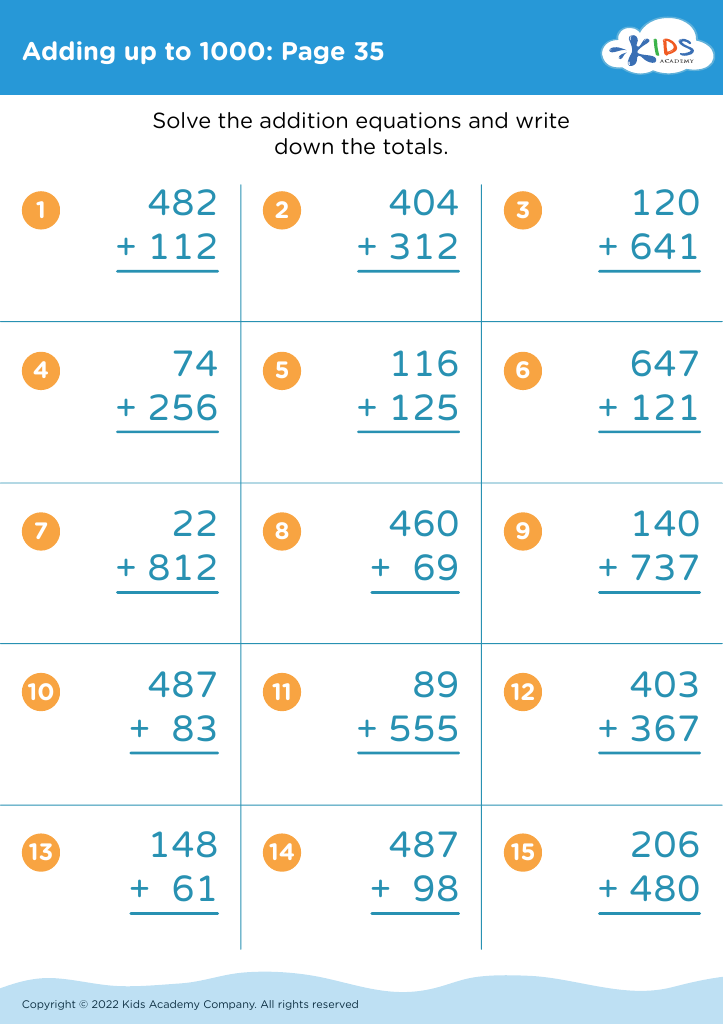
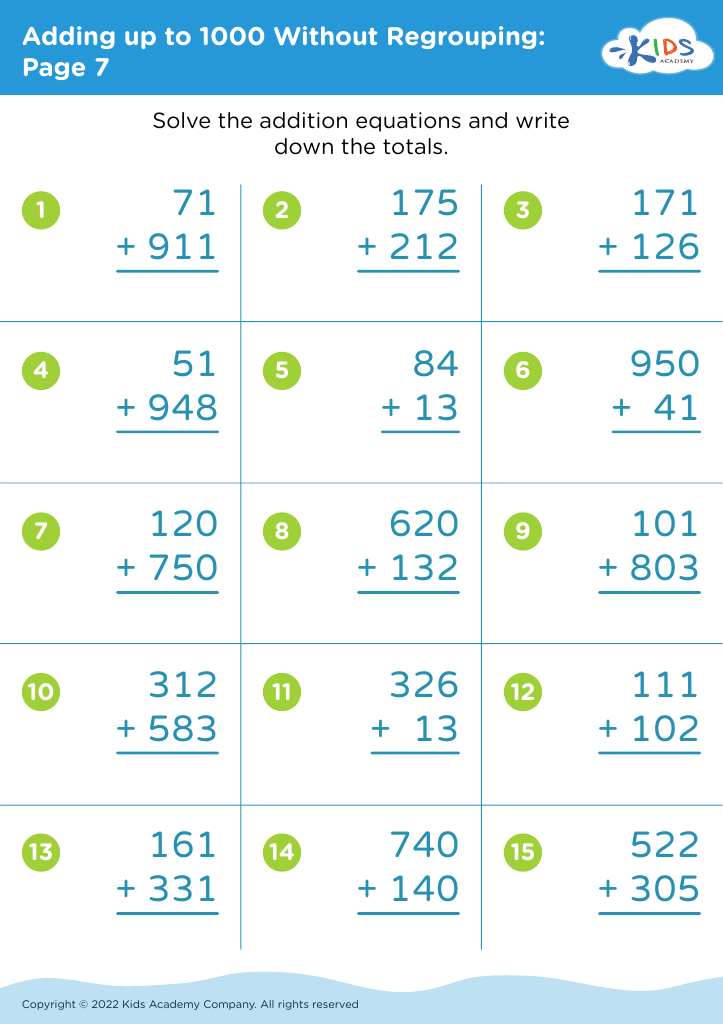
Unlock your child's mathematical potential with our "Fraction Comparison Adding up to 1000 Worksheets" tailored for ages 3-7! These engaging worksheets introduce the concept of fractions in a fun and interactive way, helping young learners understand how to compare different fractions. Designed specifically for early grade students, these resources incorporate vibrant visuals and age-appropriate activities that make learning enjoyable. Each worksheet encourages critical thinking and problem-solving skills while boosting confidence in math. Perfect for at-home learning or in the classroom, these worksheets lay a strong foundation for future math success. Explore the world of fractions today and watch your little mathematicians thrive!
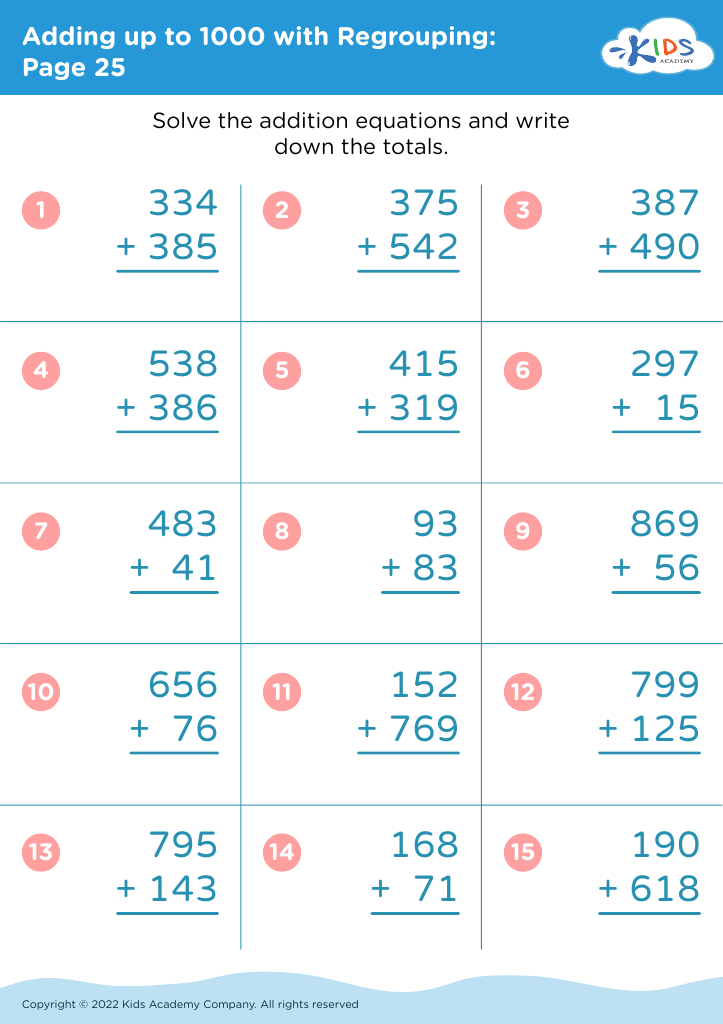



Understanding fraction comparison is crucial for children aged 3-7 as it lays the foundational skills for more complex math concepts later on. At this stage, children begin to develop their number sense and spatial awareness, and grasping fractions nurtures these skills. When parents and teachers encourage children to compare fractions, they engage in critical thinking and problem-solving. This promotes cognitive development and enhances their ability to make connections between numbers and their representations.
Additionally, mastering fraction comparison fosters a sense of order and proportion in young learners, helping them understand relationships between parts and wholes. For instance, a 3-year-old learning that 1/4 is smaller than 1/2 can start to visualize and appreciate differences in quantities, supporting their overall comprehension of numbers.
As children progress, skills like comparing fractions lead to deeper mathematical concepts, like addition and subtraction, which they’ll face in later grades. Reinforcing these skills during early education ensures children are well-prepared for future learning. Ultimately, parents and teachers play a vital role in developing these essential skills, encouraging children to enjoy math as an engaging and intuitive part of their everyday experiences.








