Simplifying Fractions Adding up to 1000 Worksheets for Ages 3-7
6 filtered results
-
From - To
Introduce young learners to easy and fun ways to simplify fractions with Kids Academy's "Simplifying Fractions Adding up to 1000 Worksheets for Ages 3-7." Specially designed for children aged 3 to 7, these printable worksheets make learning fractions enjoyable and stress-free. Each worksheet combines colorful graphics with engaging exercises to help children grasp the fundamentals of simplifying fractions while building their confidence. Whether learning at home or in a classroom, our resources support and pace each child’s unique learning journey. Equip your child with essential math skills through interactive and imaginative practice. Visit Kids Academy and start the adventure today!
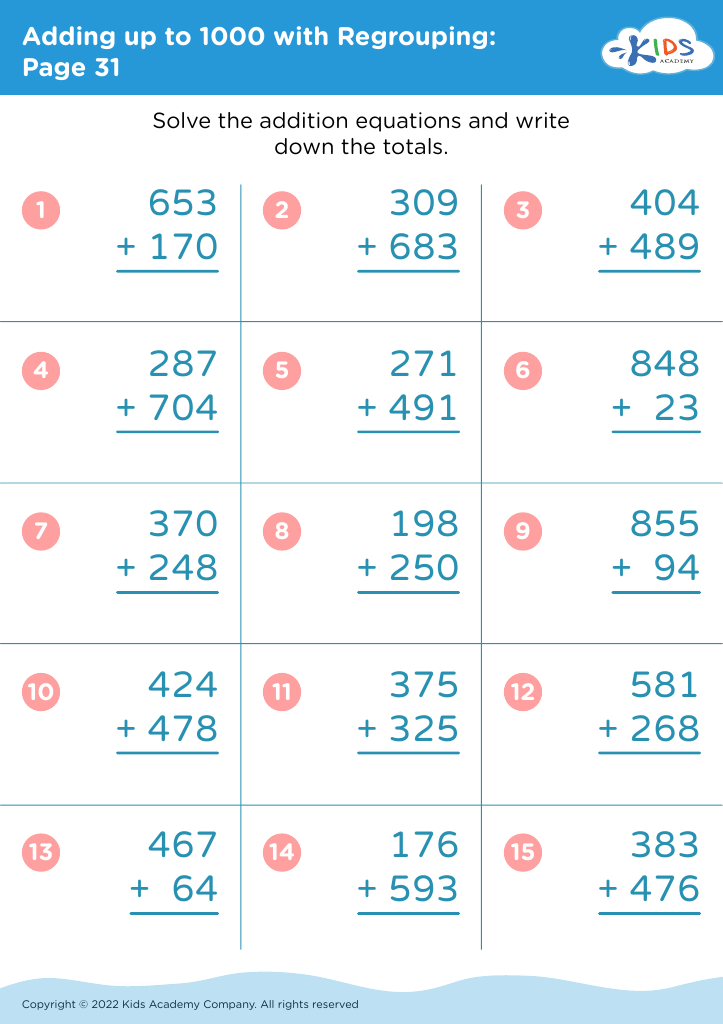
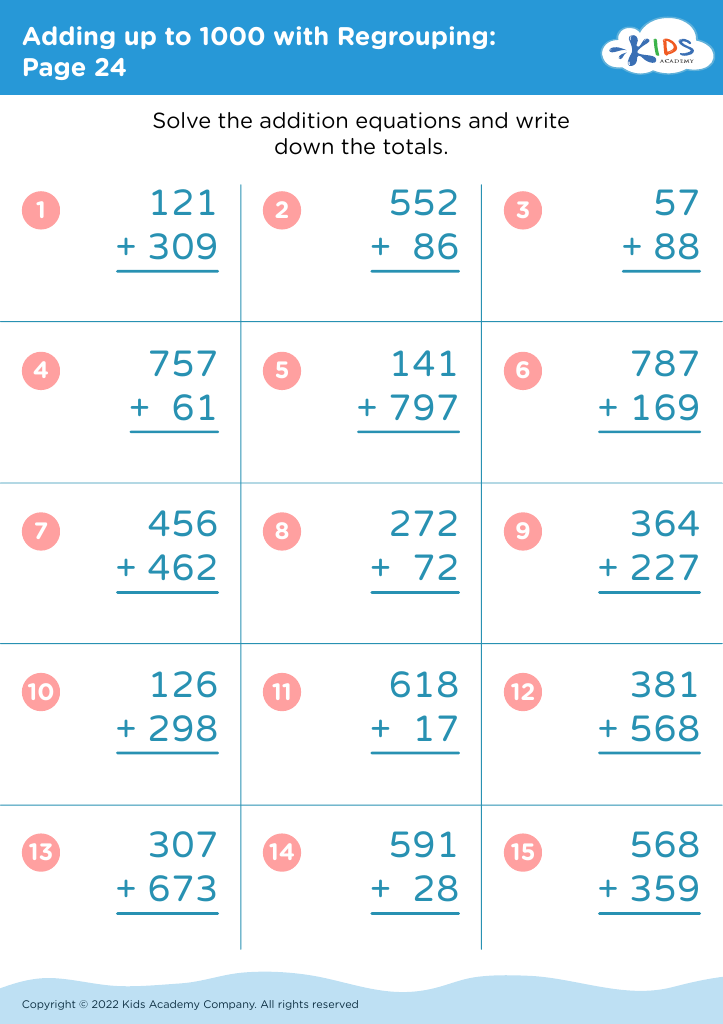
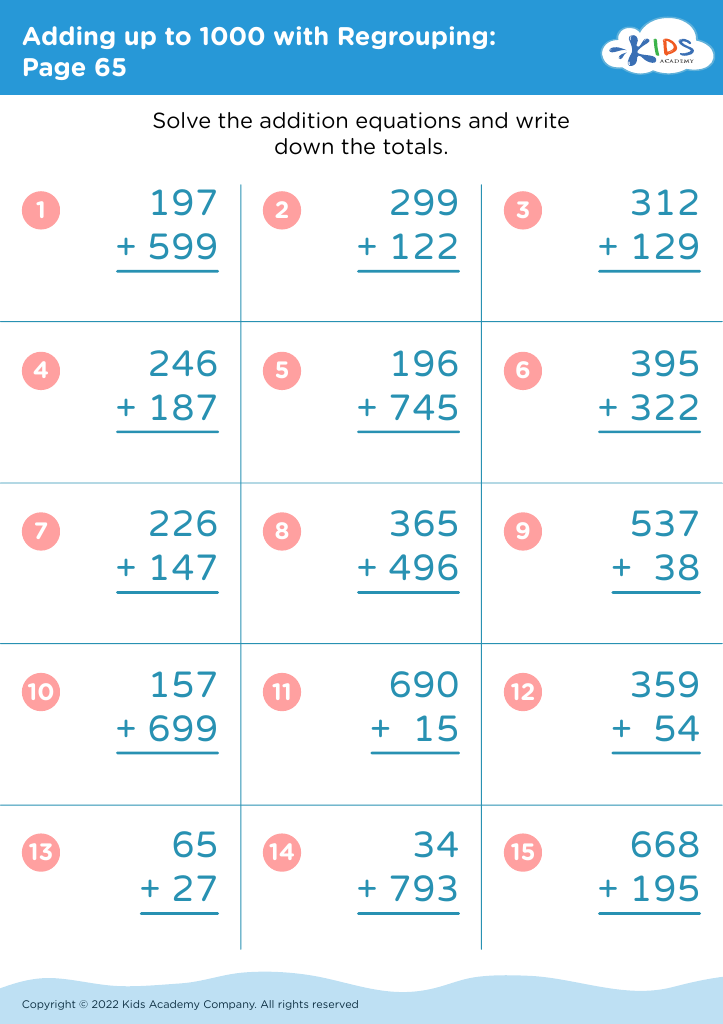
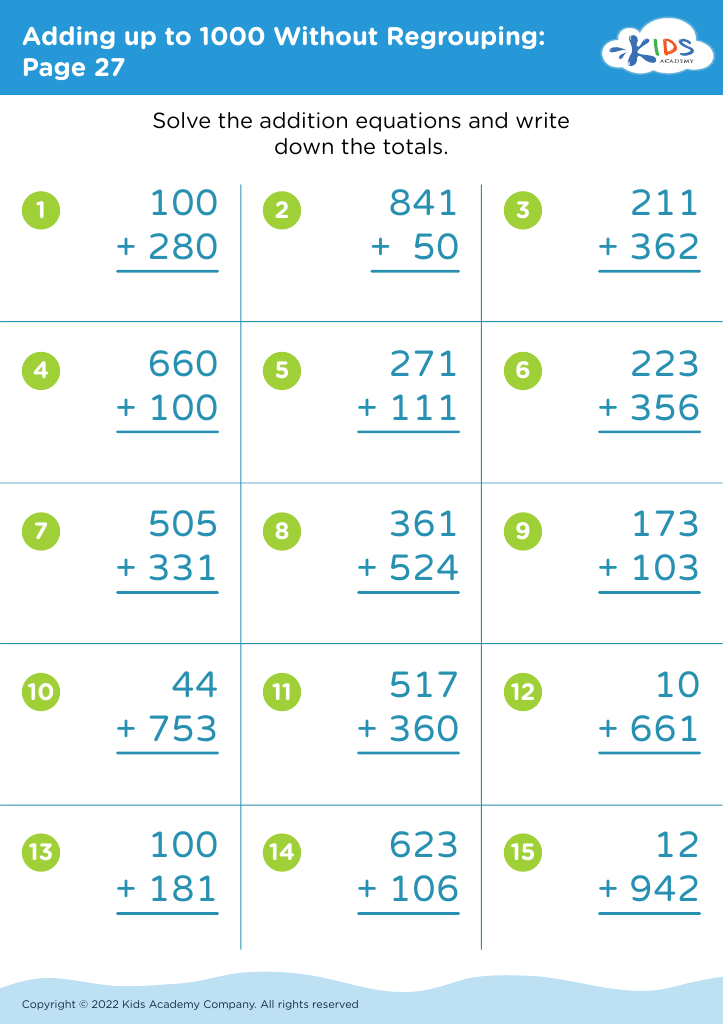
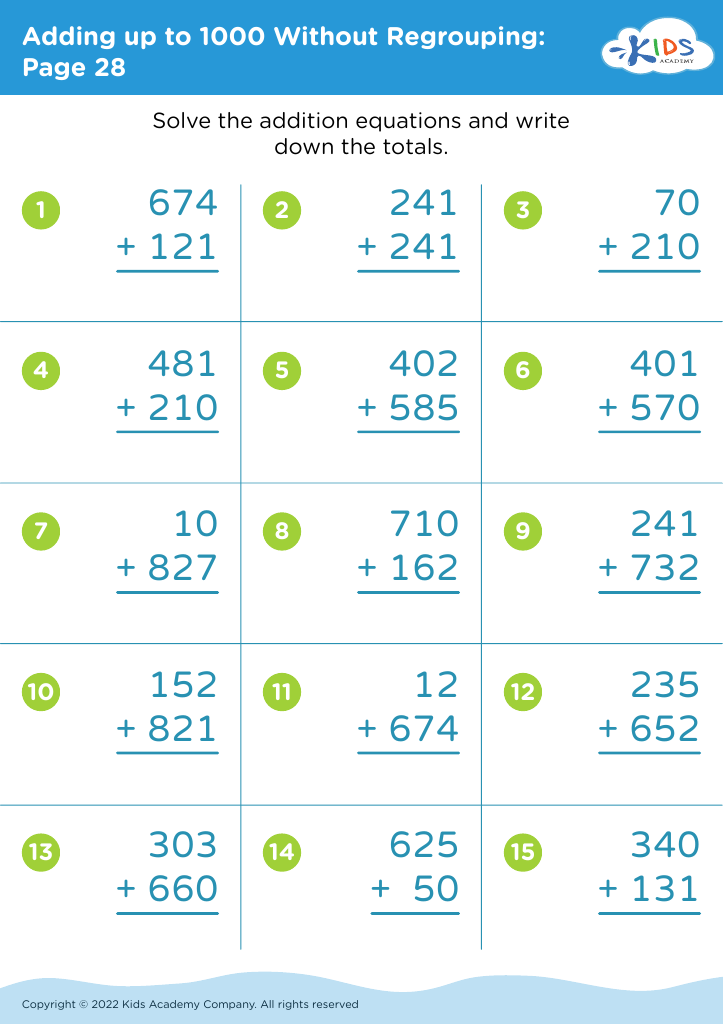
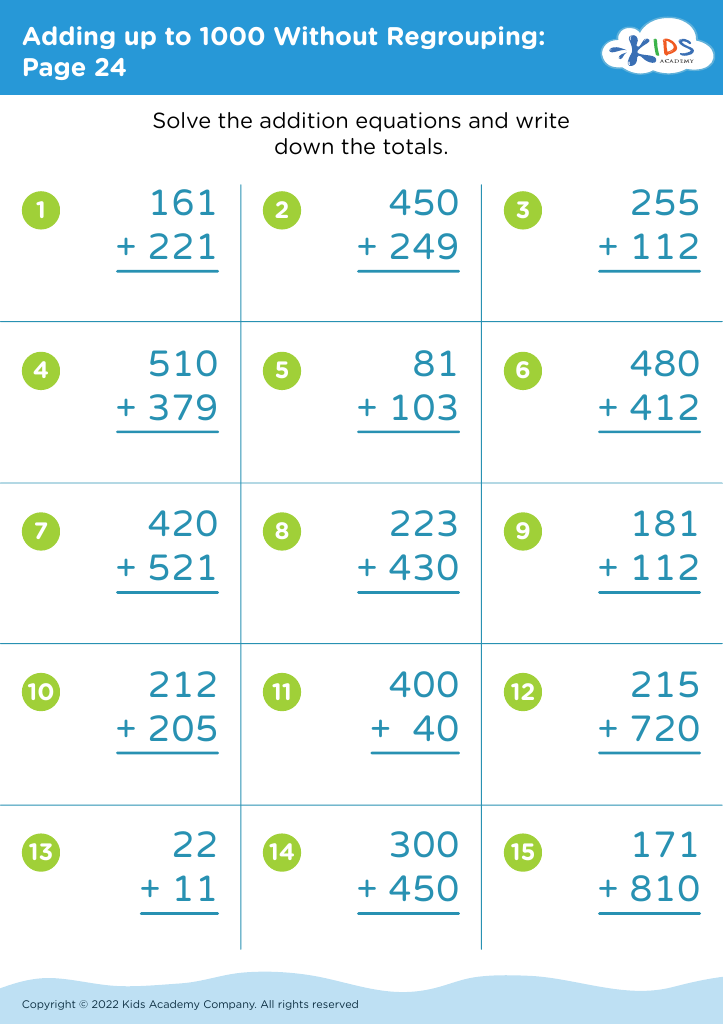



While the concept of simplifying fractions and adding up to 1000 may sound advanced for children aged 3-7, introducing foundational mathematical skills early is crucial. Early exposure to these concepts, in an age-appropriate manner, can nurture a child’s natural curiosity and build a strong foundation for future learning.
First, understanding fractions helps kids grasp the idea of parts and wholes, which is a fundamental math concept. It aligns with everyday activities like sharing snacks or dividing pieces of a puzzle, making learning relatable and engaging. Simplifying these fractions develops their analytical and critical thinking skills by encouraging them to recognize patterns and relationships between numbers.
Second, dealing with numbers up to 1000 in simple ways, such as verbal counting or recognizing large number forms, builds number sense. Kids who grasp large numbers early are more likely to be comfortable with these numbers later. This prepares them for elementary math, forming a smooth transition to more complex operations like addition and subtraction within 1000.
Finally, parents and teachers nurturing these skills foster confidence in young learners. Confidence at an early age creates a positive attitude toward math, reducing math anxiety and encouraging a lifelong interest in the subject. This supportive effort at home and school can unlock each child's full potential, setting the stage for academic success.








