Understand fractions Adding up to 1000 Worksheets for Ages 3-7
4 filtered results
-
From - To
Explore our engaging "Understand Fractions Adding Up to 1000 Worksheets" designed for children ages 3-7. These educational resources help young learners grasp foundational fractions concepts, fostering essential math skills. Through fun and interactive activities, kids will identify, compare, and add fractions, reinforcing their understanding in a playful way. Our colorful worksheets cater to various learning styles, ensuring every child can enjoy their journey in mastering fractions. Perfect for use at home or in the classroom, these worksheets make learning fractions enjoyable and accessible. Start nurturing a strong mathematical foundation today and watch your child's confidence in math grow!
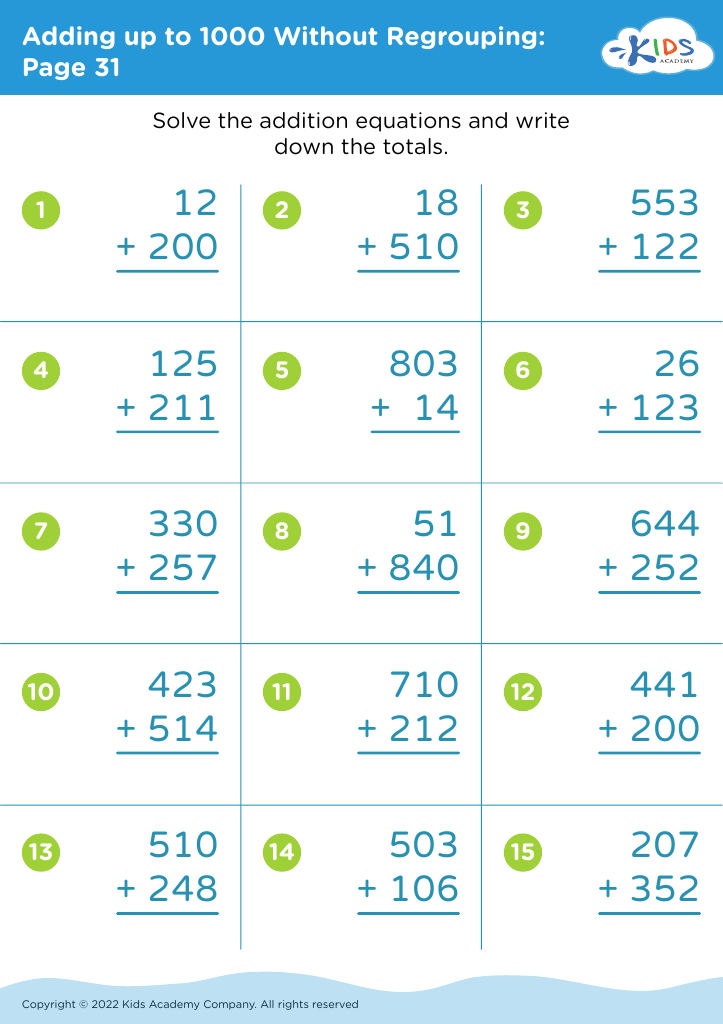
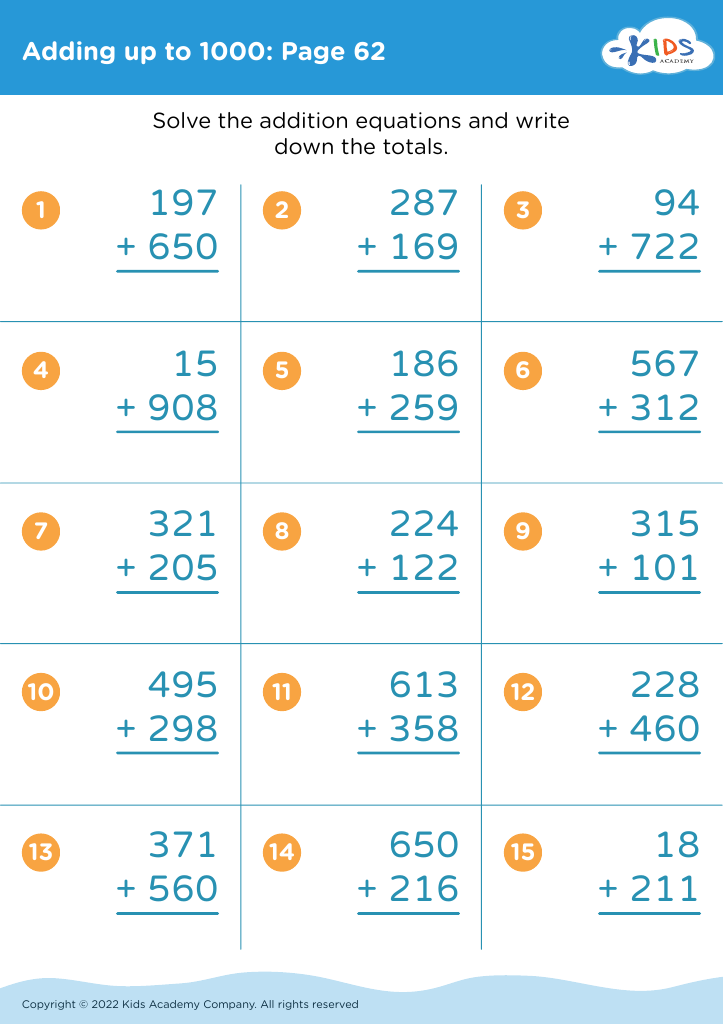
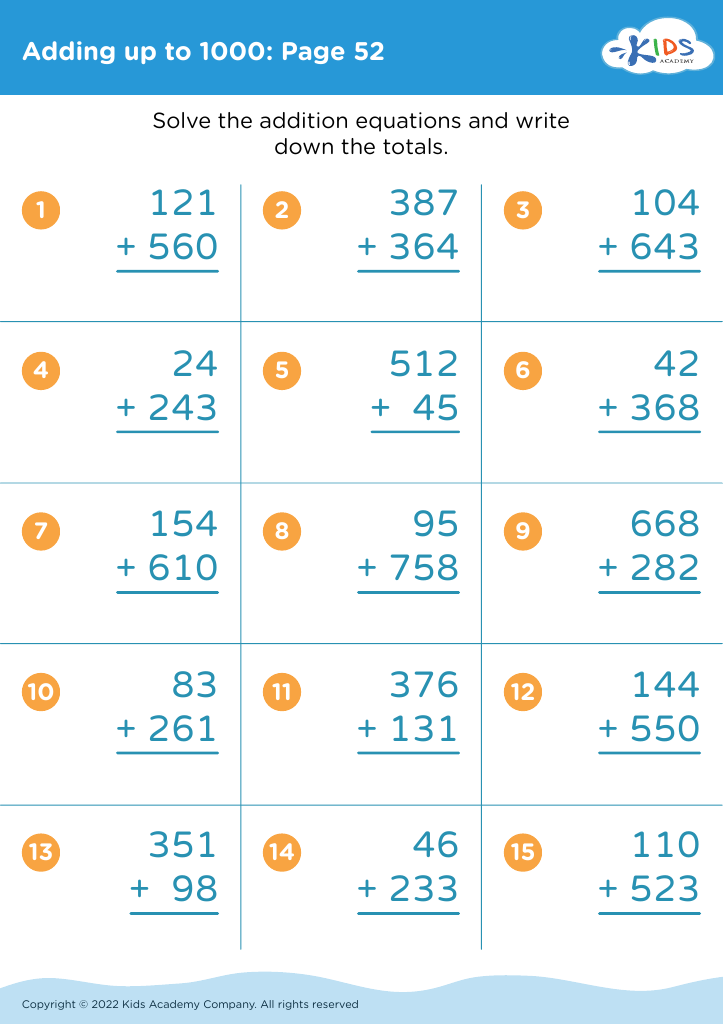
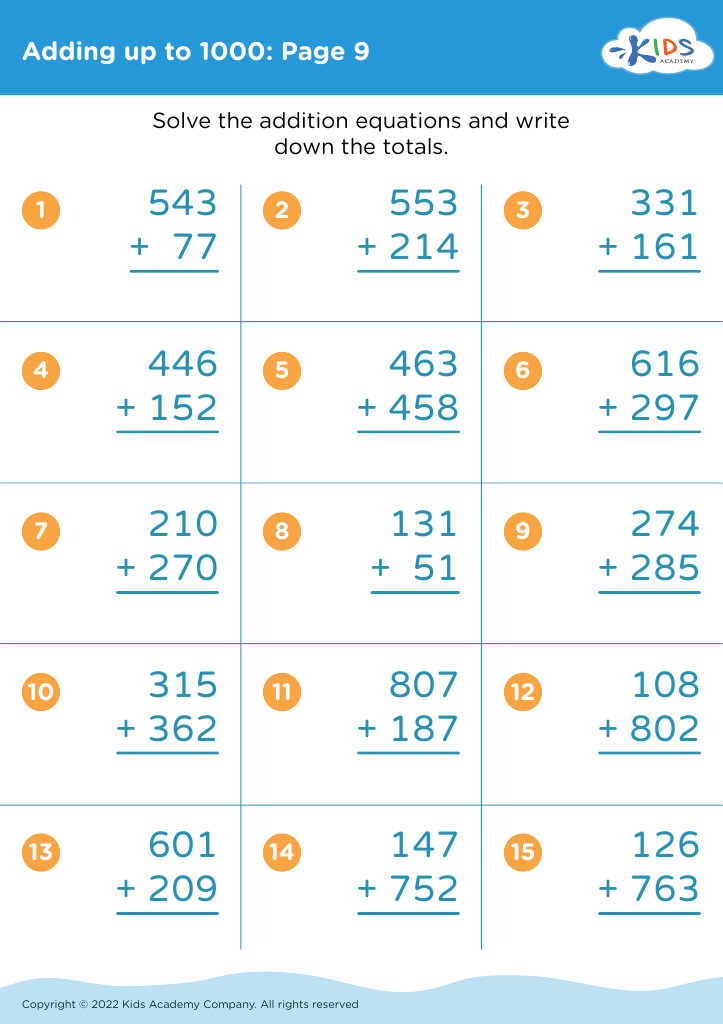



Understanding fractions and the concept of adding up to 1000 is crucial for children ages 3-7, as it lays the foundation for their mathematical development. Fractions are essential for fostering early number sense, which helps children grasp relationships between numbers and develop problem-solving skills. Introducing these concepts at a young age can significantly enhance their ability to understand measurement, sharing, and comparisons, which are common in everyday situations.
Moreover, teaching children to visualize and manipulate numbers up to 1000 aids in building their confidence in handling larger quantities, promoting a sense of accomplishment. Engaging with fractions through hands-on activities—like using pie slices or building blocks—encourages critical thinking as children learn to divide whole into parts.
Moreover, laying a solid mathematical foundation can positively impact their academic success. Early exposure to these concepts not only cultivates a positive attitude towards math but also equips children with the tools needed for more complex mathematical operations in the future. When parents and teachers prioritize these skills, they present children with opportunities to explore, innovate, and fully prepare them for lifelong learning in mathematics, ultimately fostering a generation with strong mathematical proficiency.








