Understanding fractions Adding up to 1000 Worksheets for Ages 3-7 - Page 2
44 filtered results
-
From - To
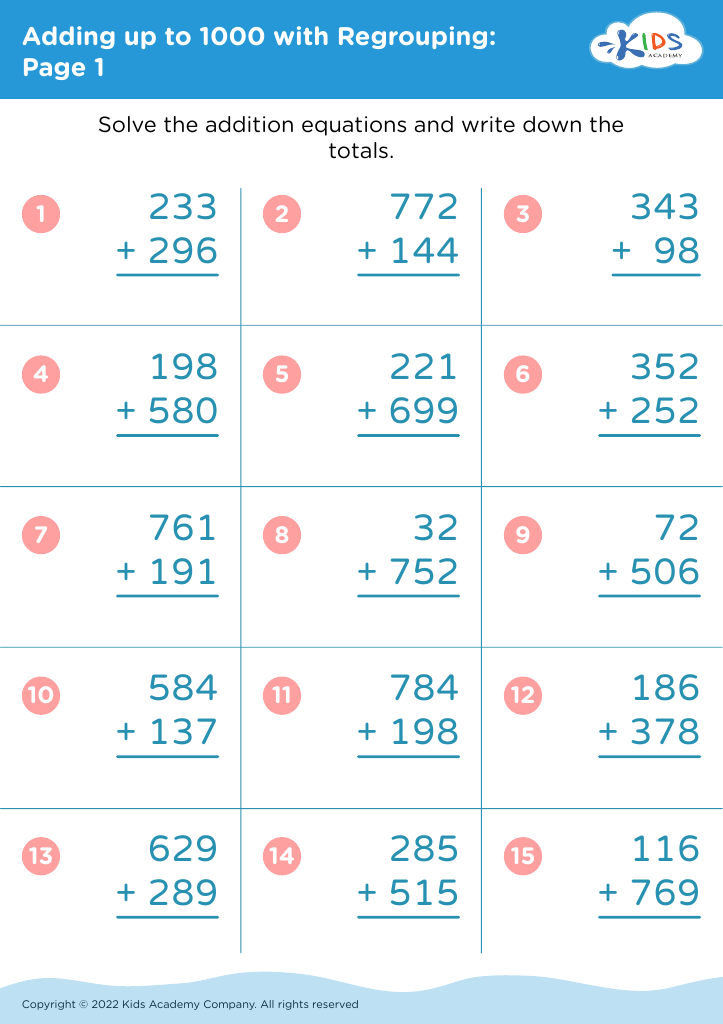
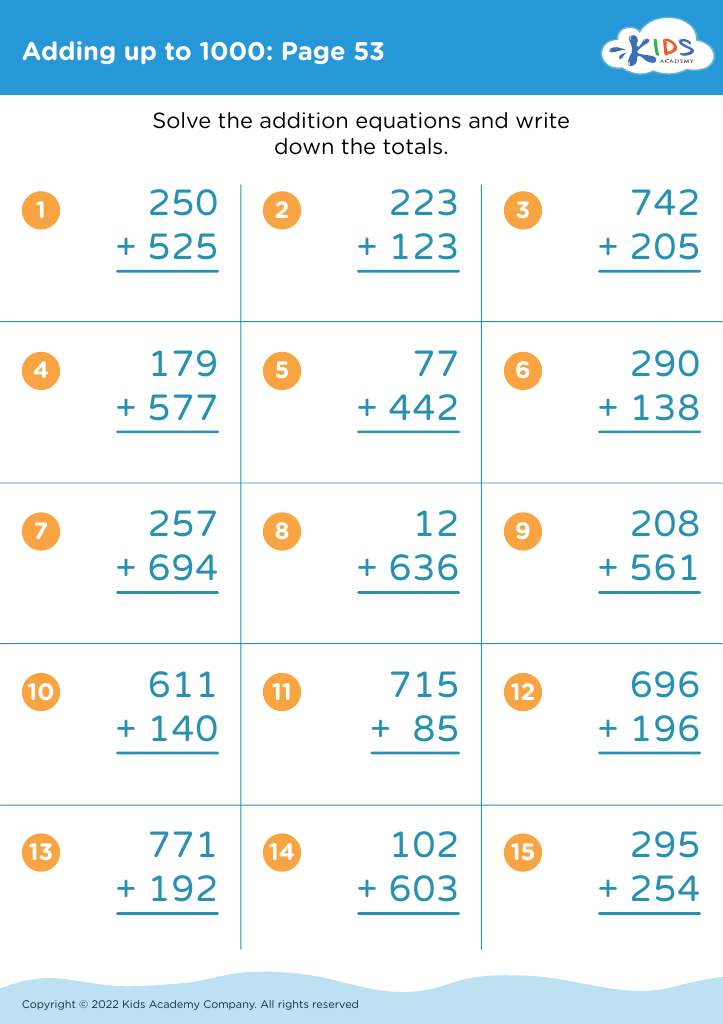
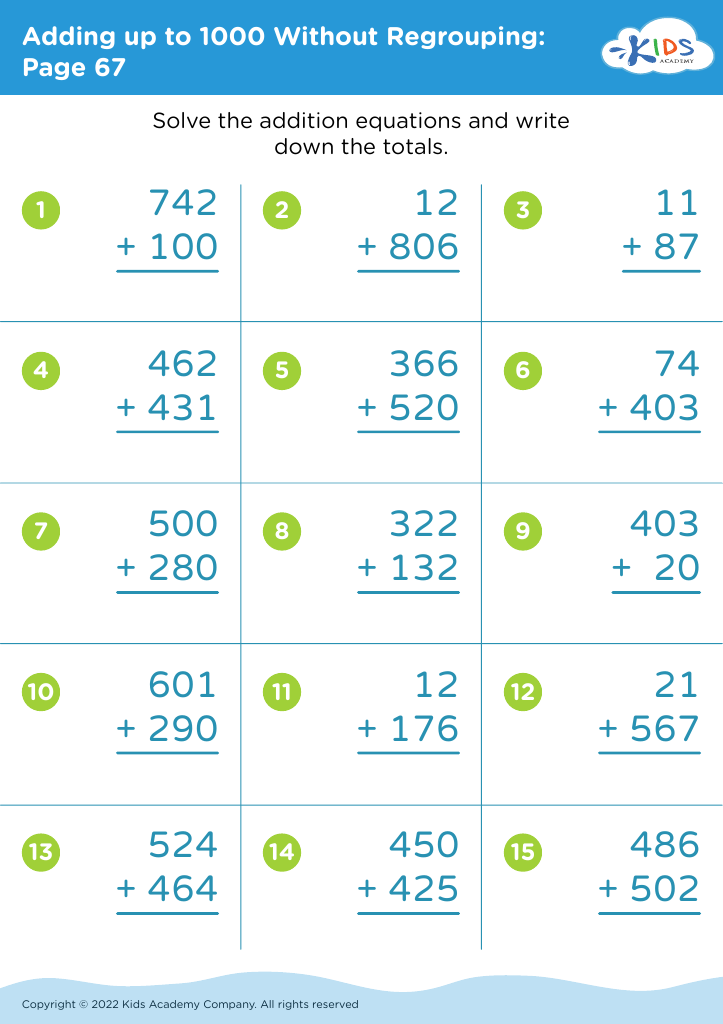
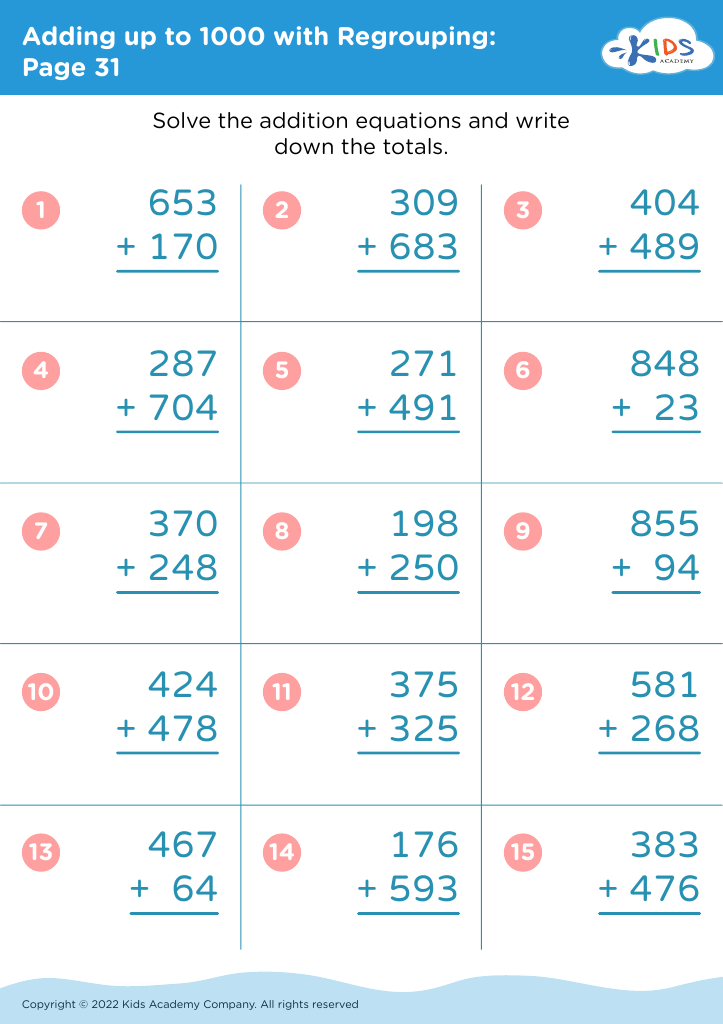
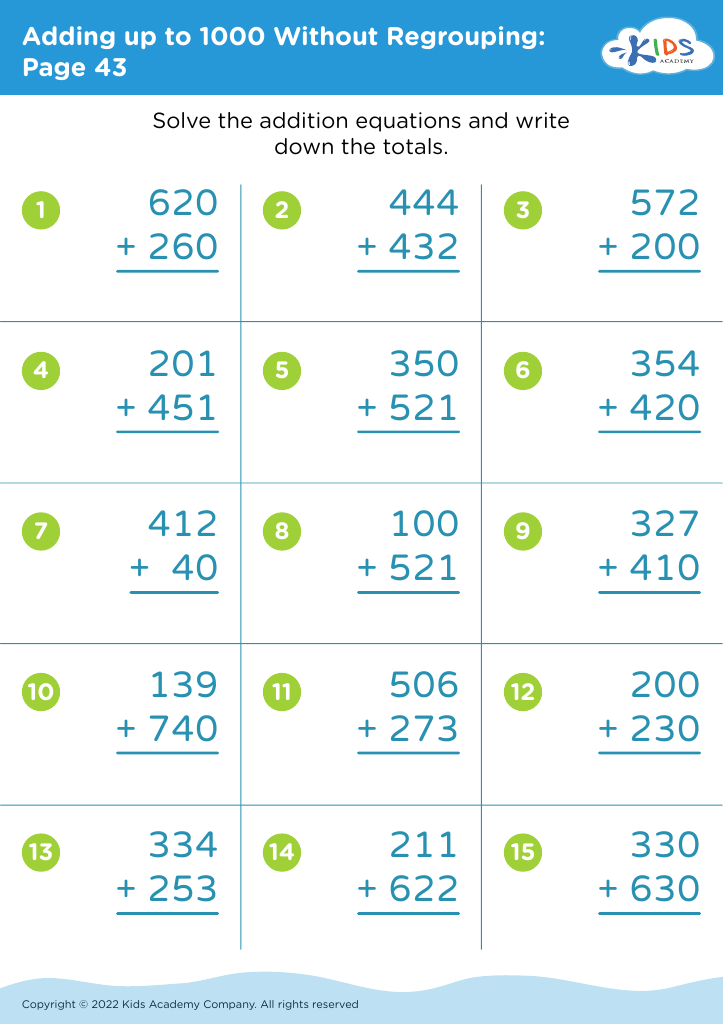
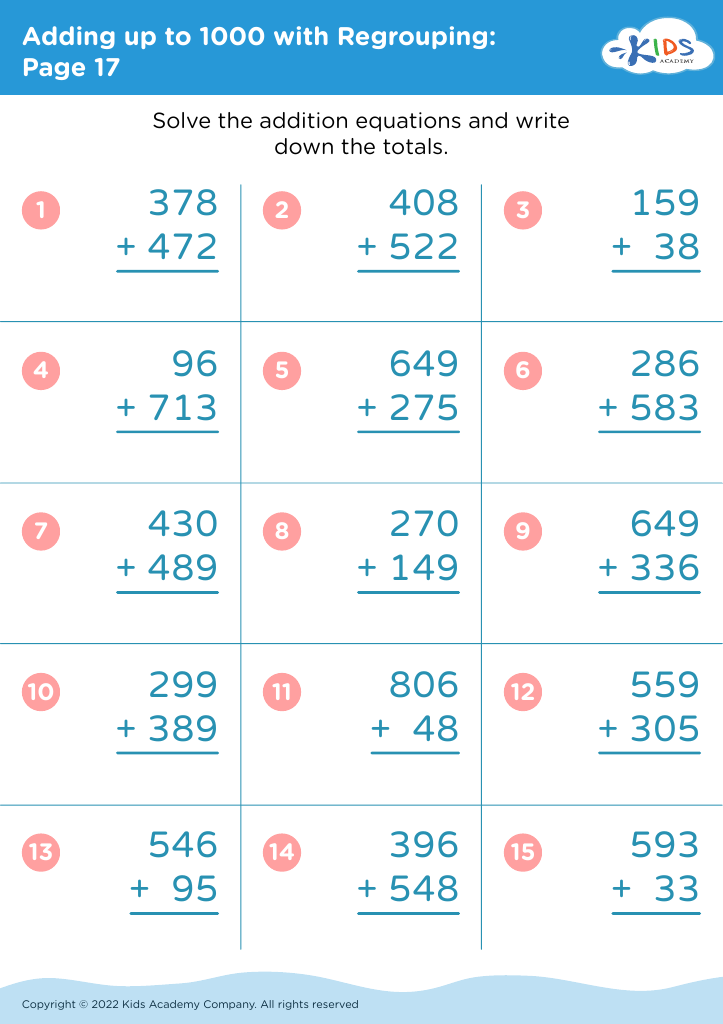
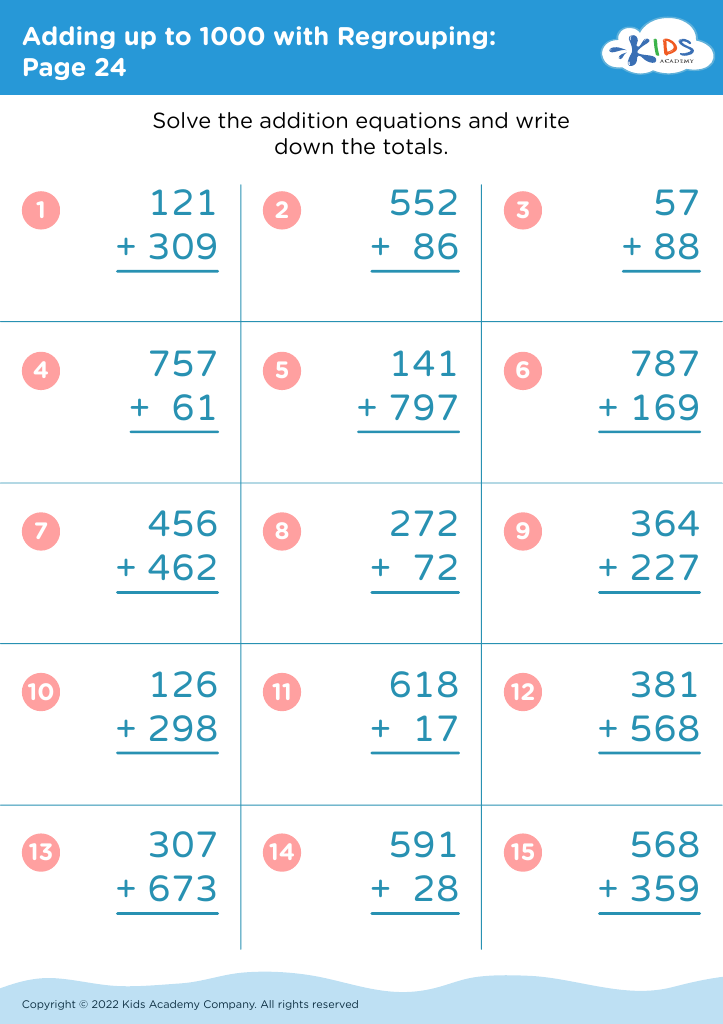
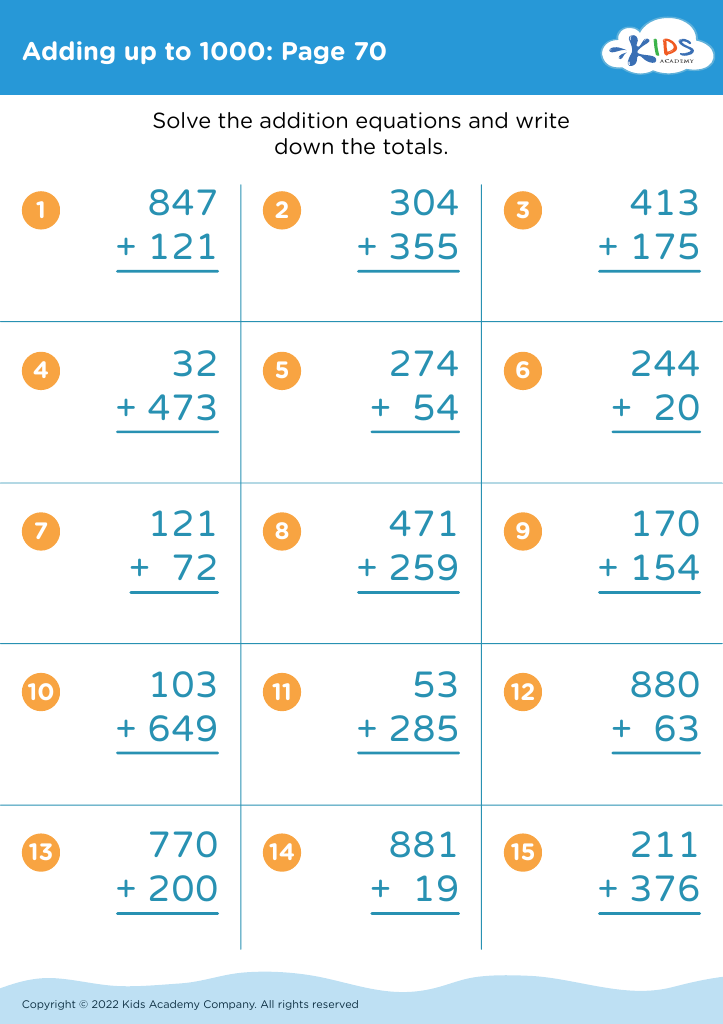
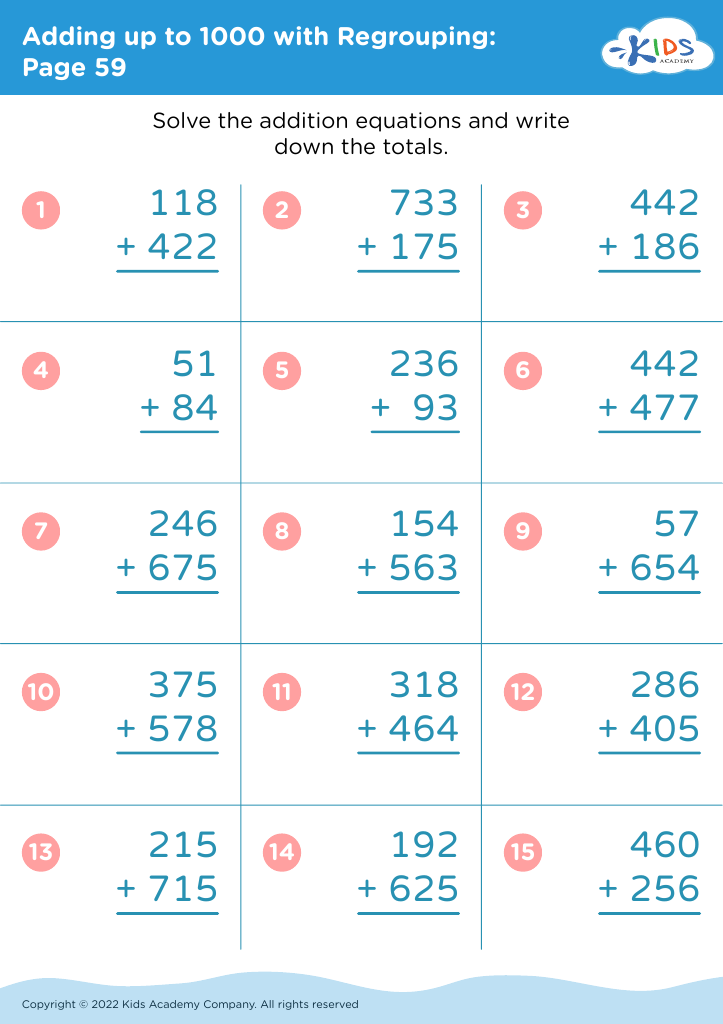
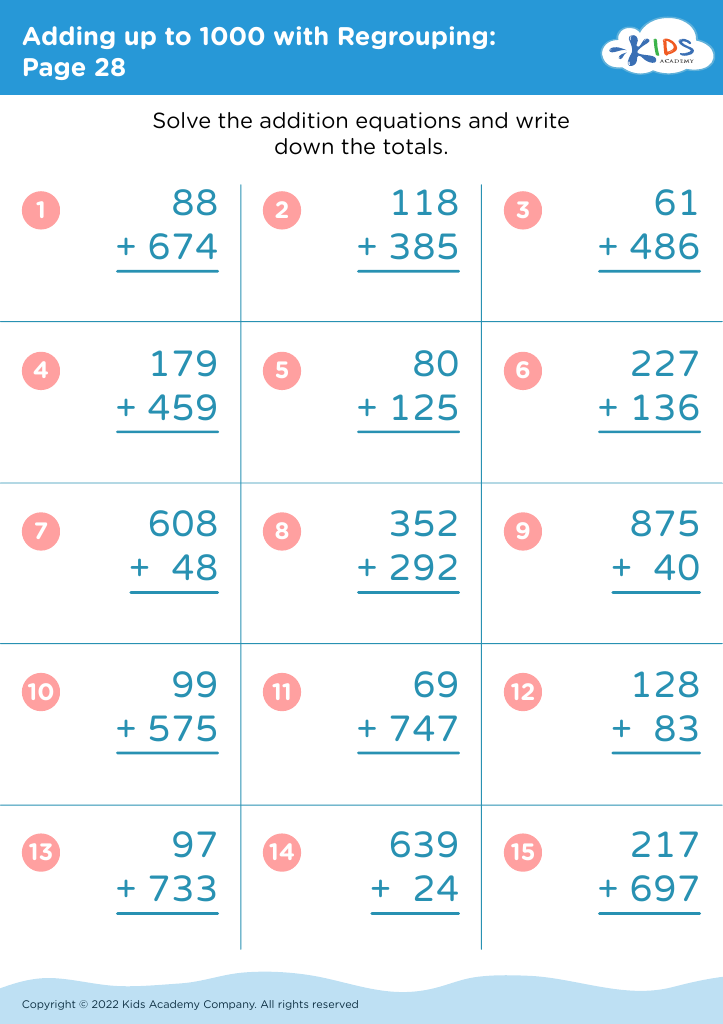
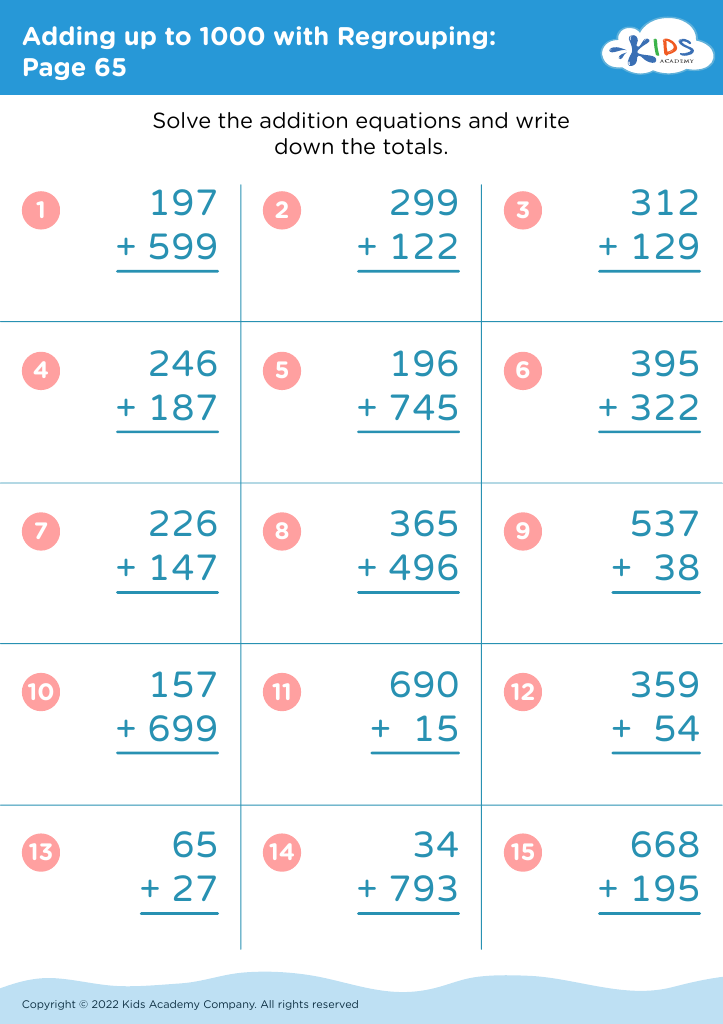
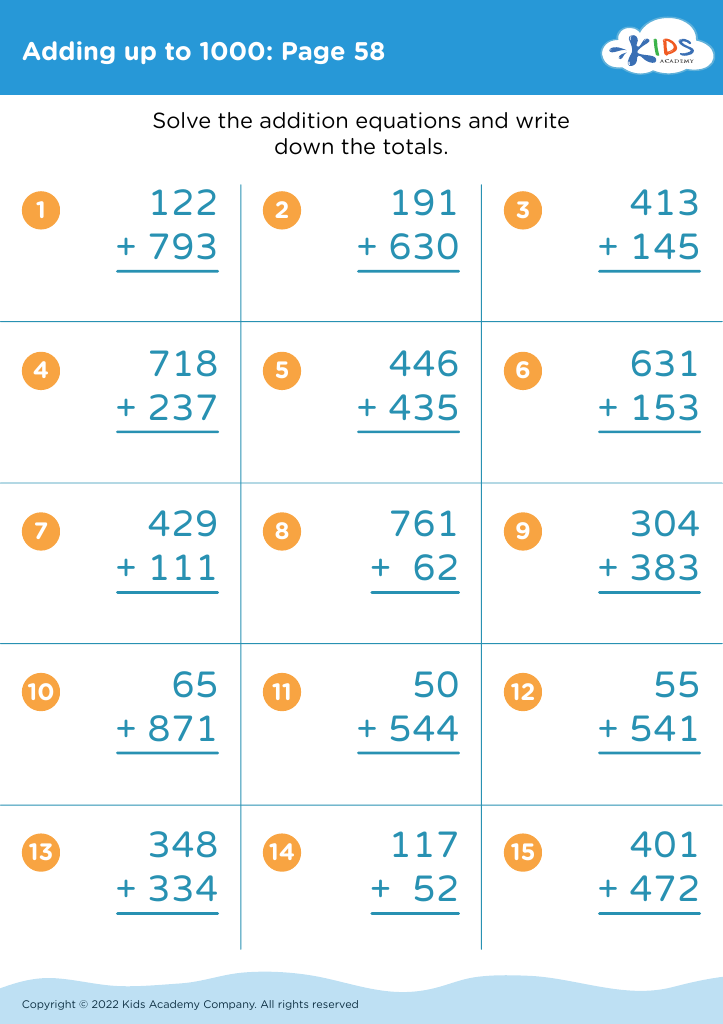
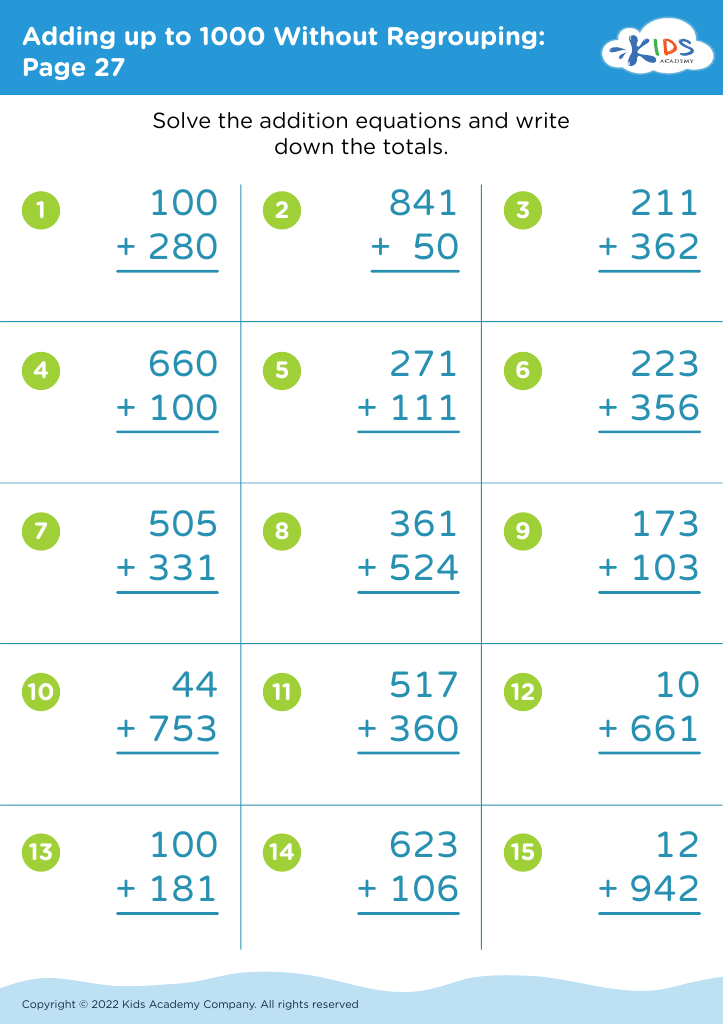
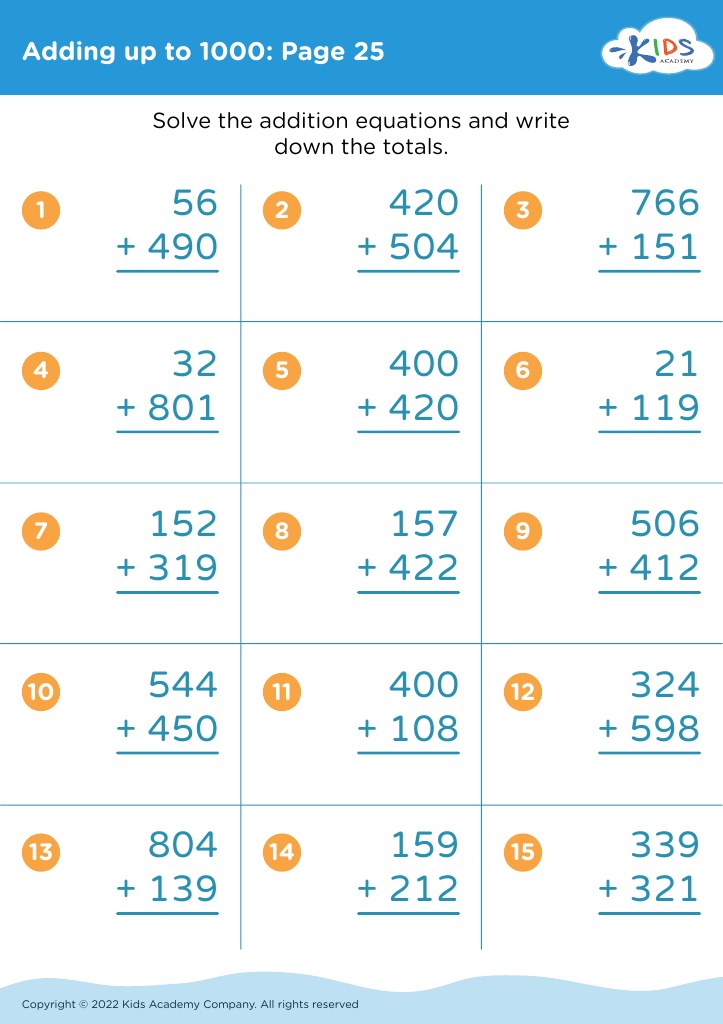
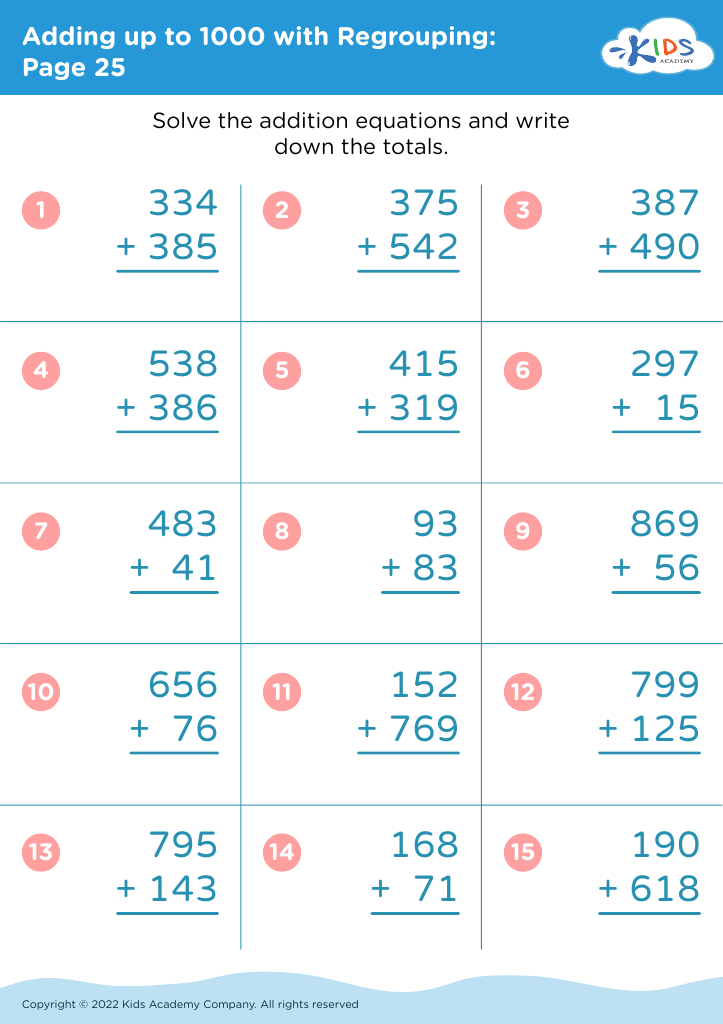
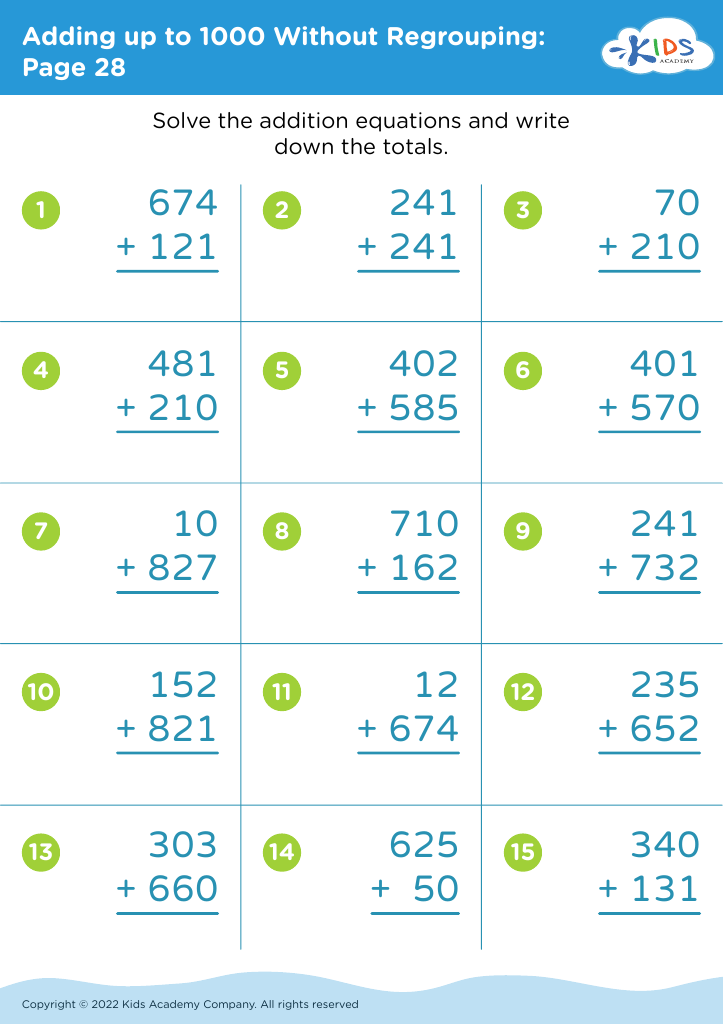
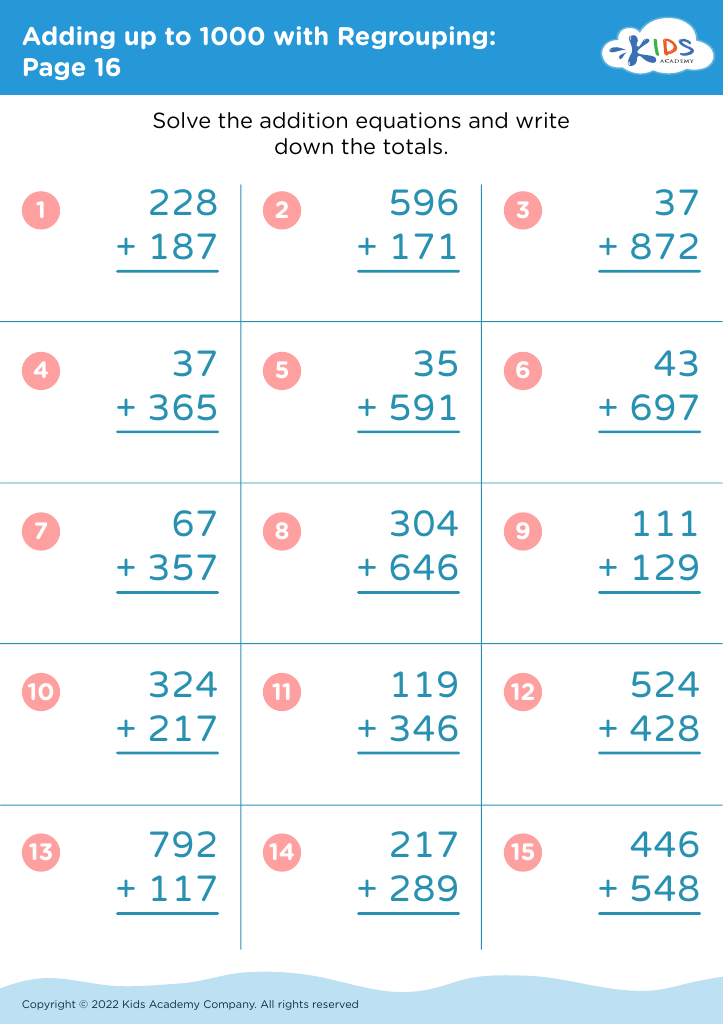
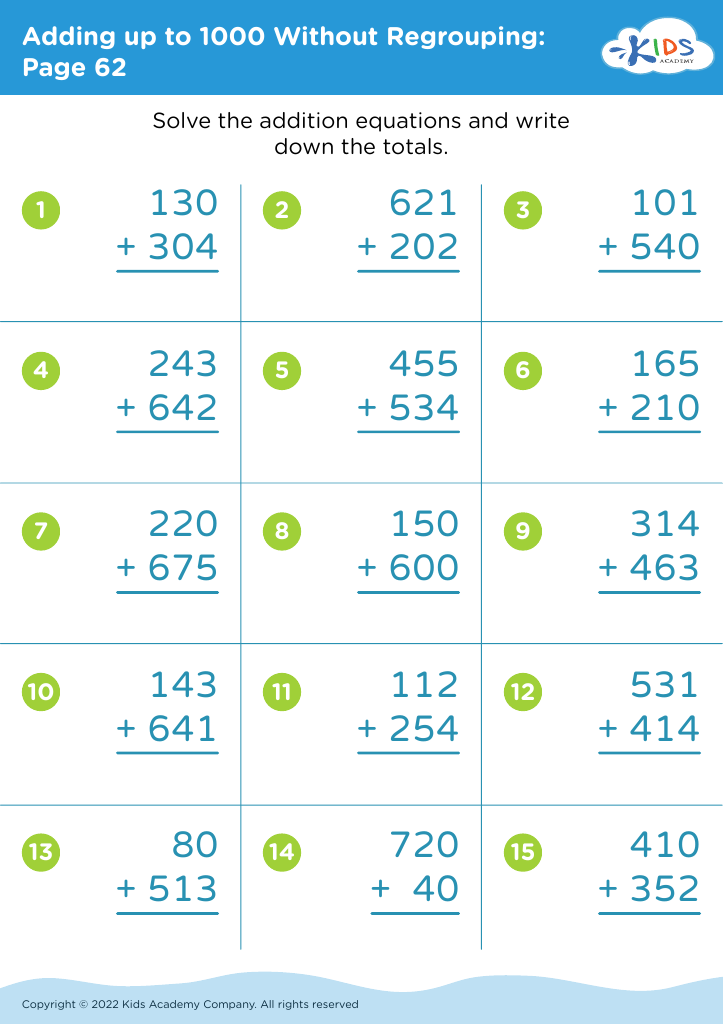
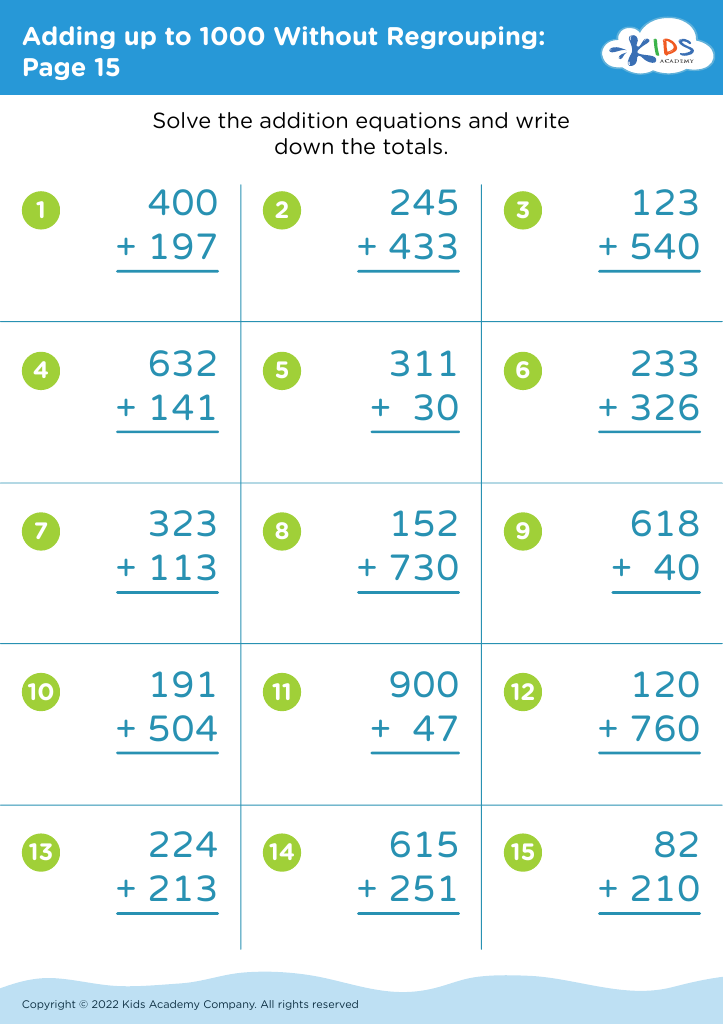
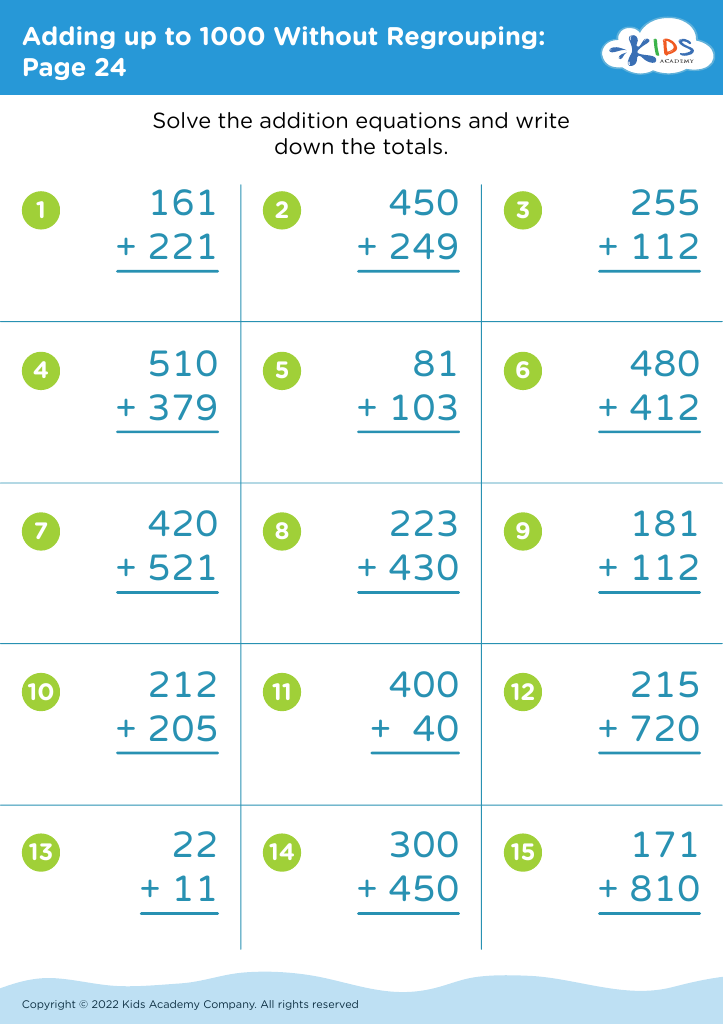




Understanding fractions is a fundamental skill that lays the groundwork for future mathematical learning. For children aged 3-7, comprehending fractions, such as those that add up to 1000, helps them appreciate the concept of parts and wholes, which is essential for grasping more complex mathematical ideas in later years. Teaching fractions early promotes critical thinking, as children learn to visualize and manipulate parts of a whole.
Parents and teachers play a crucial role in this developmental stage. By introducing concepts of fractions in a playful and engaging manner, such as through visual aids or everyday situations—like sharing food—they can foster a positive attitude towards math. This early exposure helps develop numerical literacy, problem-solving capabilities, and a sense of confidence in handling math, reducing fear around the subject as they progress through school.
Moreover, understanding fractions sets the tone for discussions about ratios and proportions, critical to subjects like science and economics encountered in later schooling. Encouraging children to grasp these concepts now ensures they are adequately prepared for complex mathematical challenges ahead, making it essential for both parents and educators to focus on them.








