

.jpg)
%20(1).jpg)


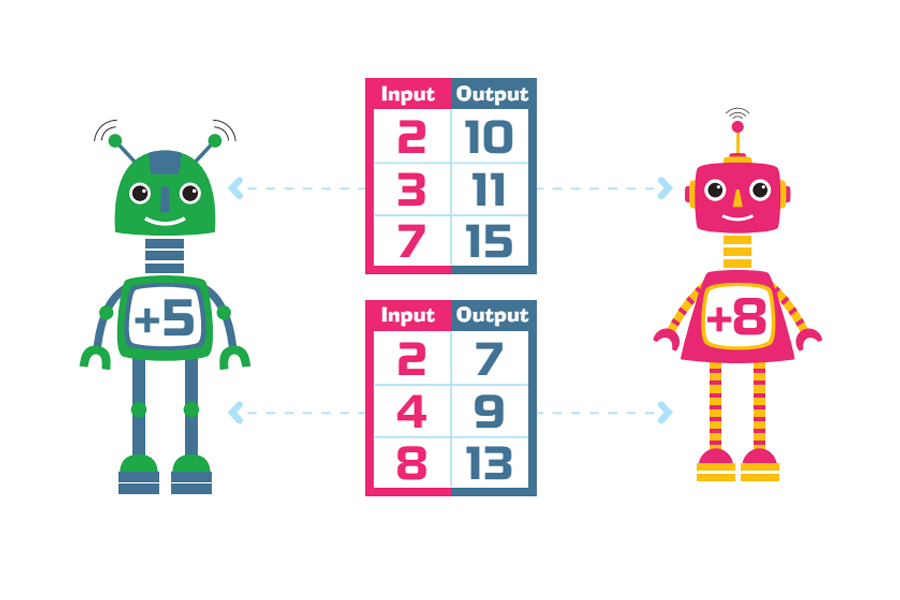

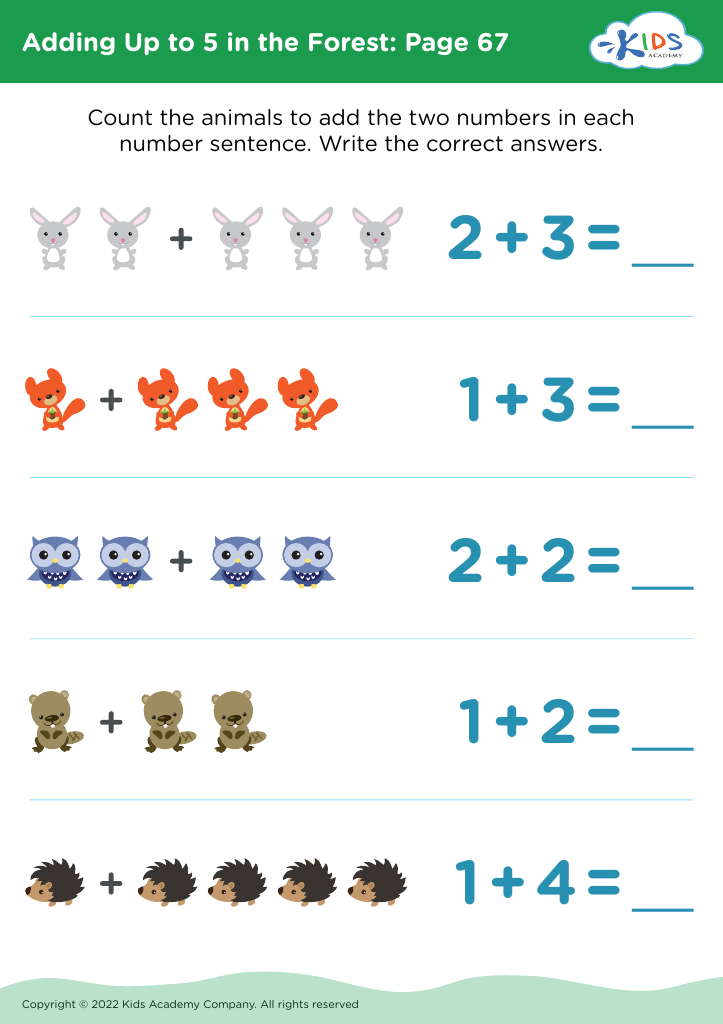
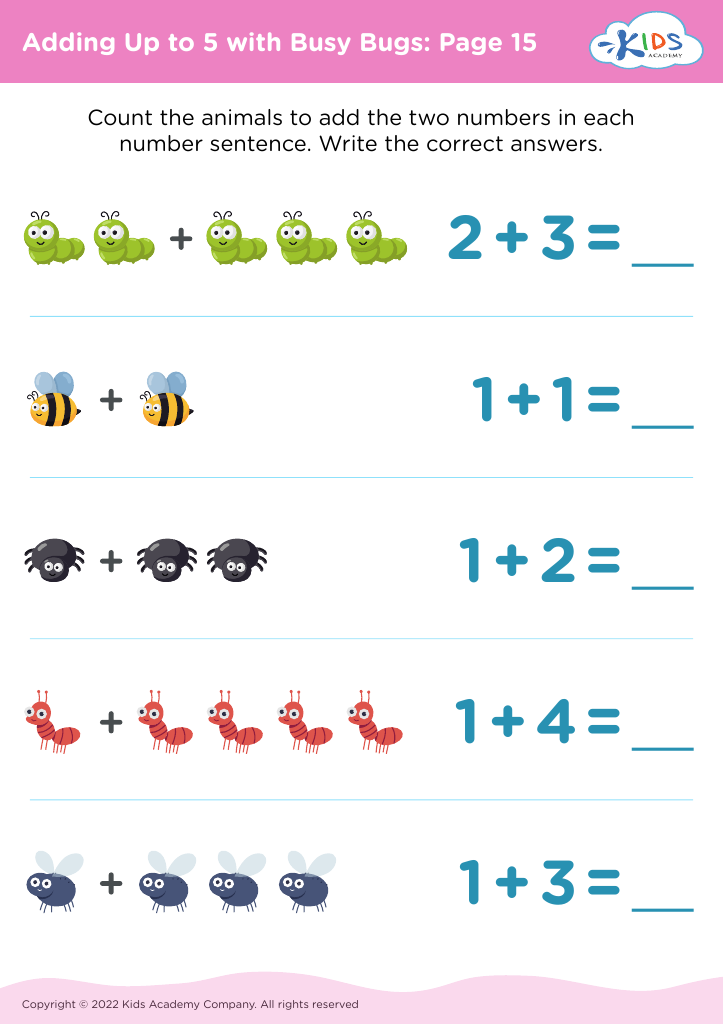
Addition practice for children aged 3-7 is crucial for several reasons. First, mastering addition up to 5 lays a strong foundational understanding of numeracy skills. At this age, children's cognitive abilities are rapidly developing, making it an ideal time to introduce basic math concepts. Engaging in these practices helps enhance number sense, which is critical for more advanced math concepts later on.
Secondly, learning addition encourages problem-solving and critical thinking. As children practice adding small numbers, they develop the ability to recognize patterns and relationships in numbers, which fosters confidence in their mathematical abilities. This early exposure demystifies math, making it less intimidating as they progress.
Parents and teachers also play a pivotal role in creating a positive learning environment. By incorporating fun and interactive addition practices—like using physical objects or games—children are more likely to show enthusiasm for math, linking it to positive experiences. Such an approach nurtures a lifelong interest in learning. Ultimately, focusing on addition practice not only accelerates children's academic development but also equips them with essential life skills such as patience, perseverance, and logical reasoning. In sum, investing time in addition practice today secures a brighter, more competent tomorrow for our children.








