Filters

21 filtered results

Clear all filters
Favorites
With answer key
Interactive

21 filtered results

Difficulty Level

Grade


Discover our engaging "Basic Math Skills: Adding Up to 5" worksheets designed for children ages 3-7! Perfect for early learners, these activities introduce addition in a fun and interactive way. Each worksheet features colorful visuals and simple problems, helping kids grasp fundamental math concepts while boosting their confidence in arithmetic. Tailored for young minds, our resources support developmental milestones through play-based learning. Ideal for parents and teachers, these printable worksheets make math accessible and enjoyable, laying the groundwork for future success in mathematics. Start your child's mathematical journey today and watch them add up to success!
Check out this FREE Trial Lesson on Adding Up to 5 for age 3-7!

My Family

Favorites
With answer key
Interactive
  • 3-7
  • Basic Math Skills
  • Adding Up to 5
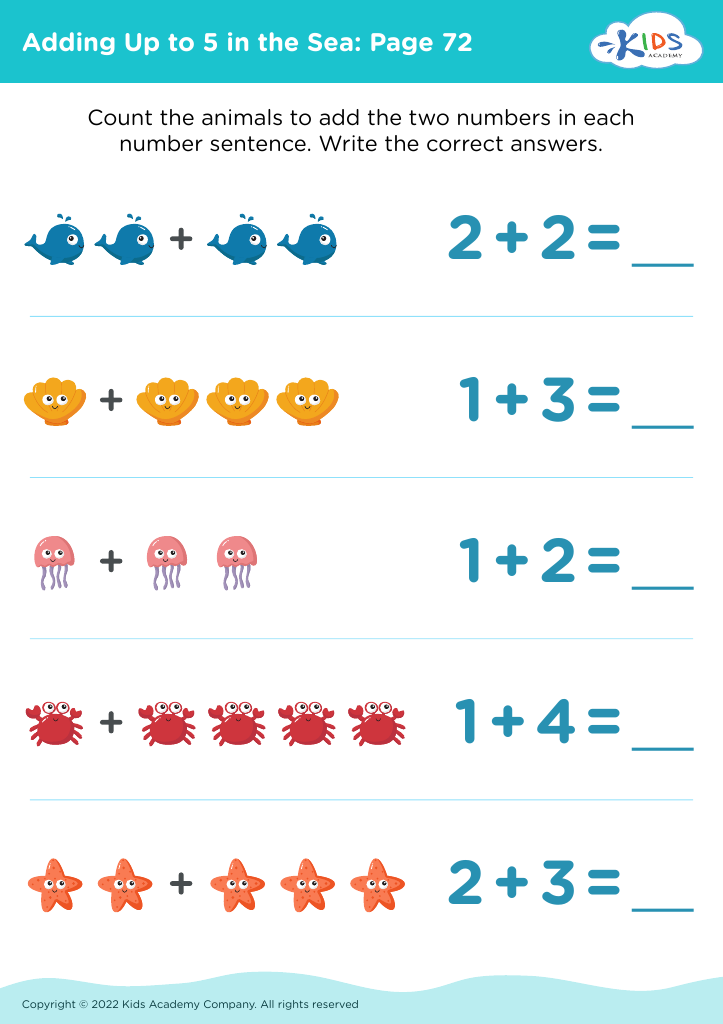
Adding Up to 5 in the Sea: Page 72
Worksheet
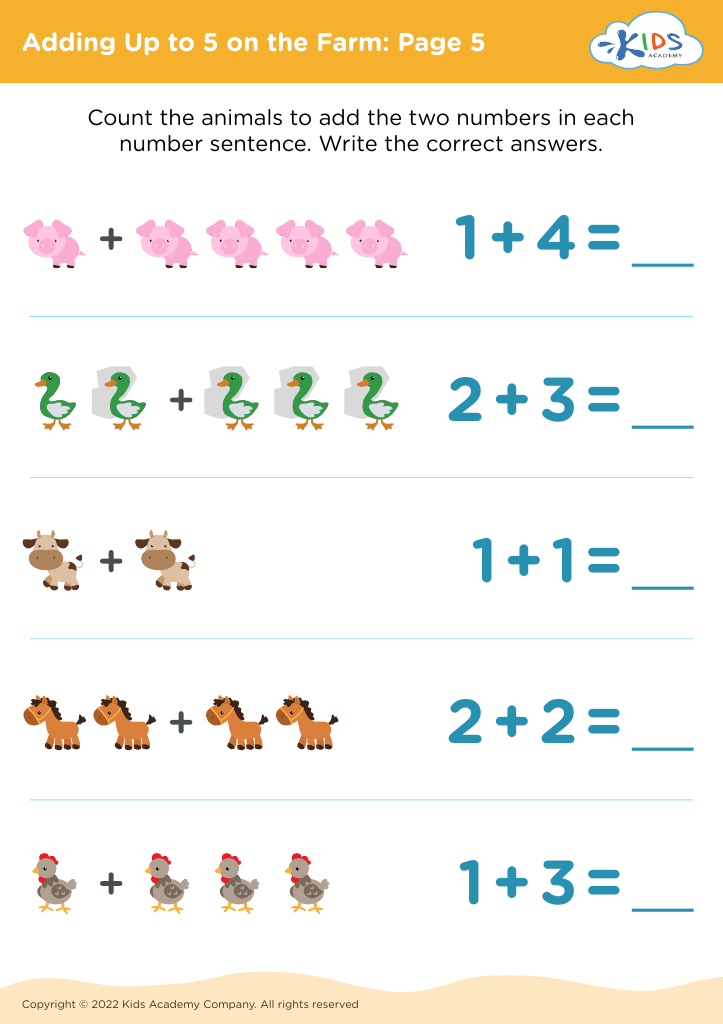
Adding Up to 5 on the Farm: Page 5
Worksheet
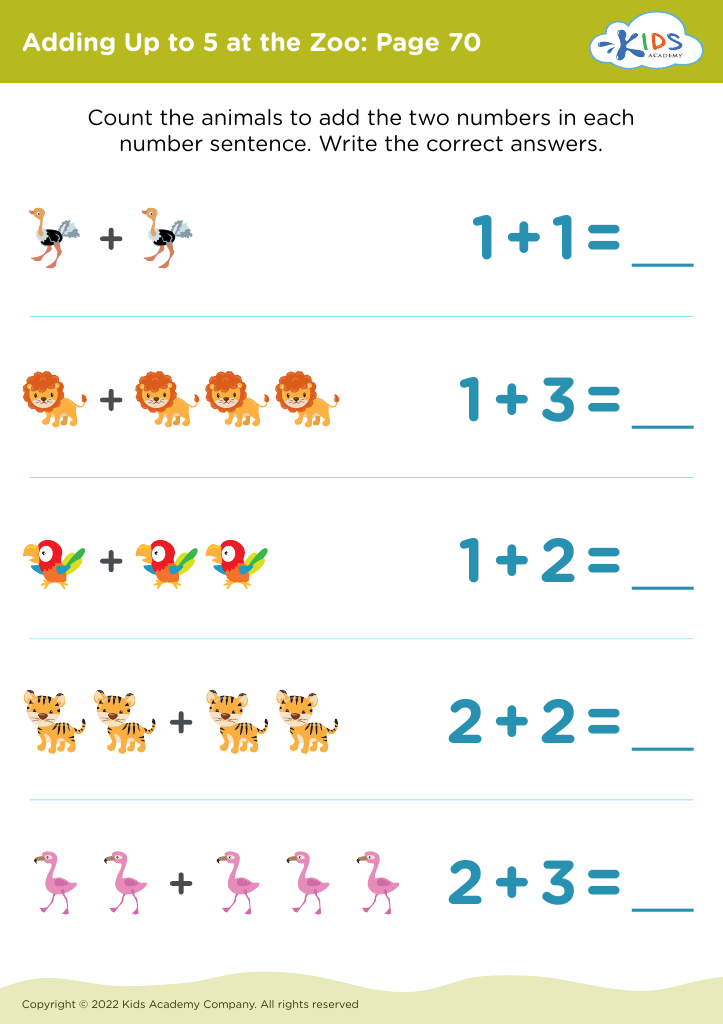
Adding Up to 5 at the Zoo: Page 70
Worksheet
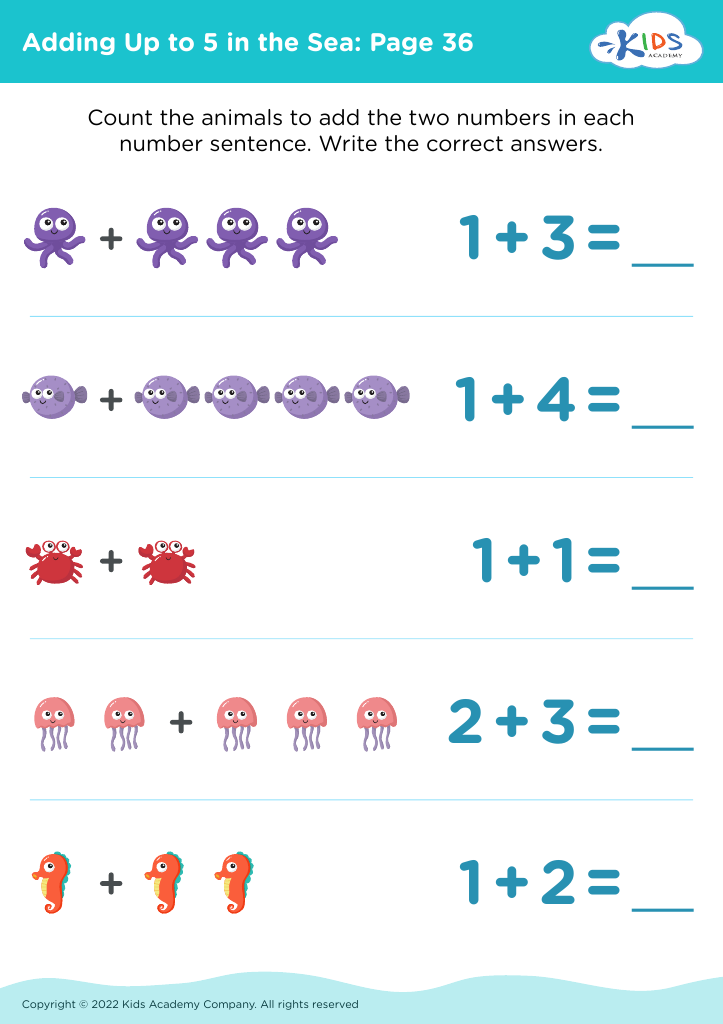
Adding Up to 5 in the Sea: Page 36
Worksheet
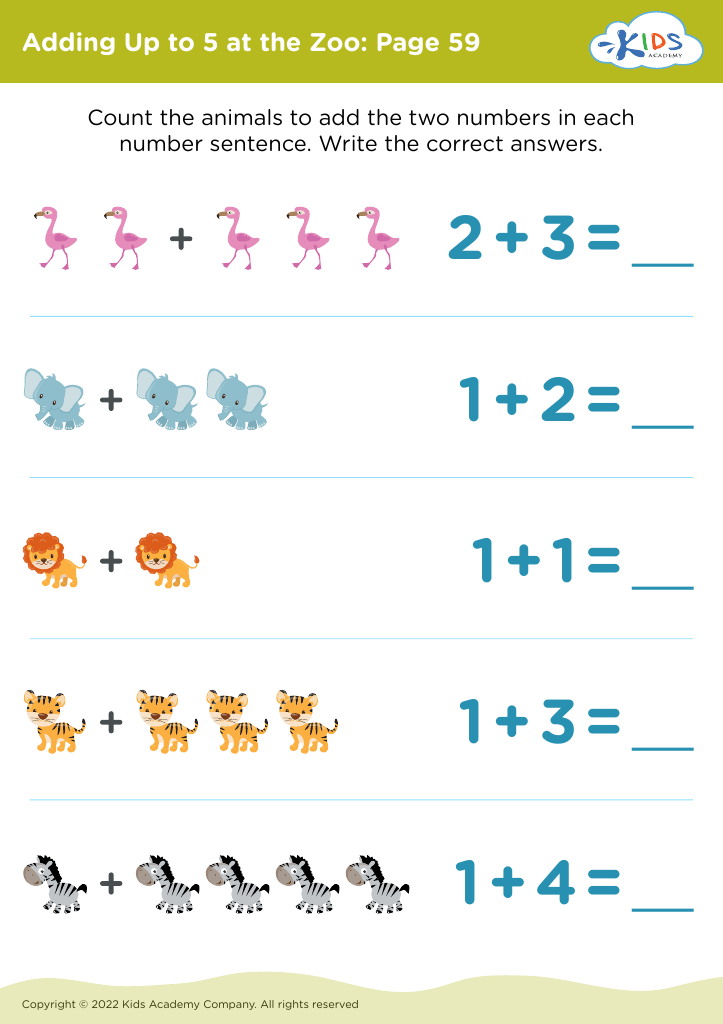
Adding Up to 5 at the Zoo: Page 59
Worksheet
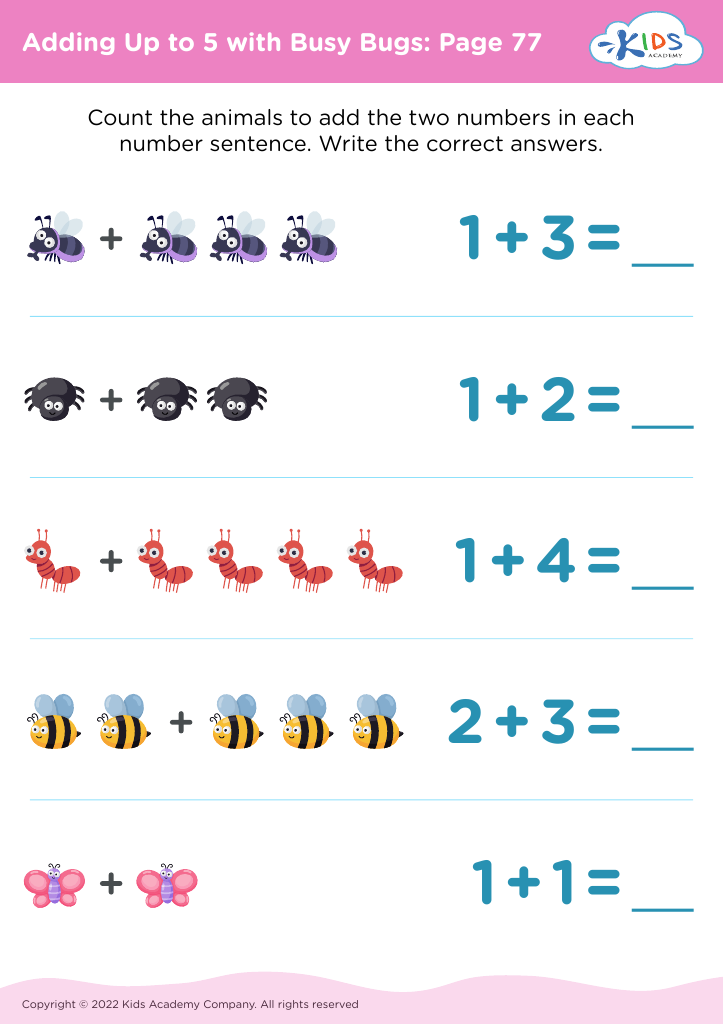
Adding Up to 5 with Busy Bugs: Page 77
Worksheet
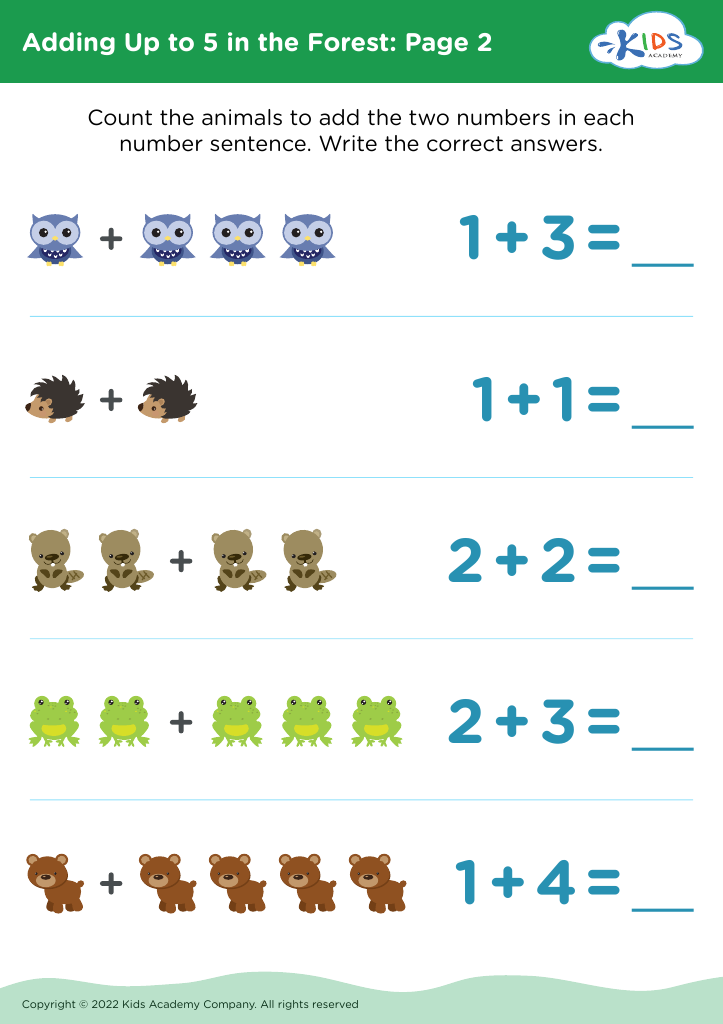
Adding Up to 5 in the Forest: Page 2
Worksheet
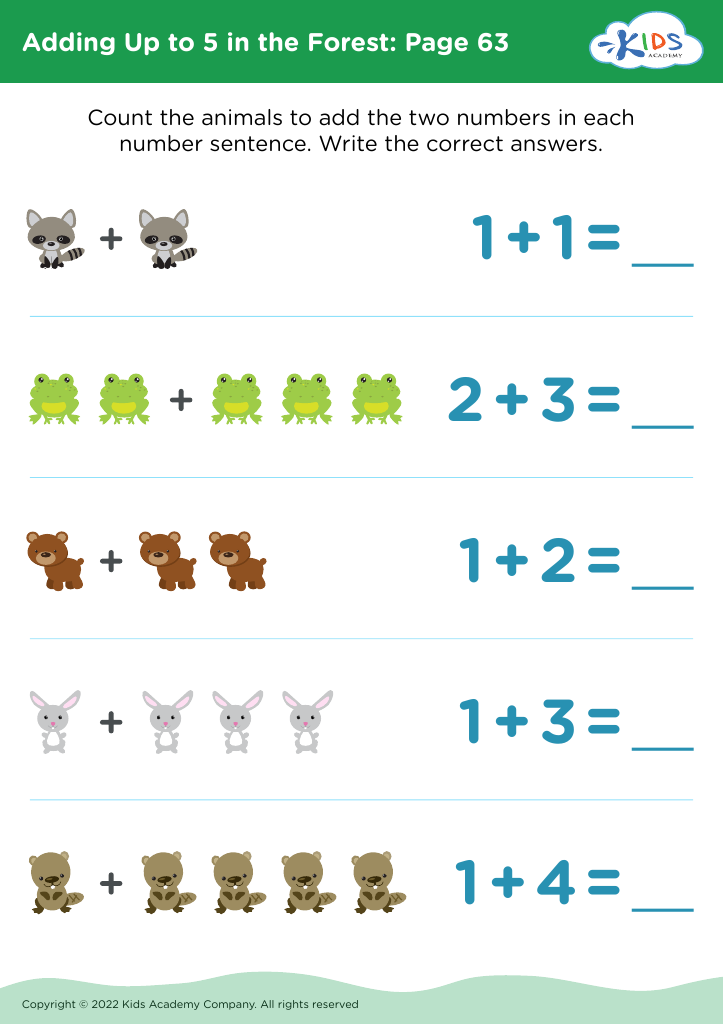
Adding Up to 5 in the Forest: Page 63
Worksheet
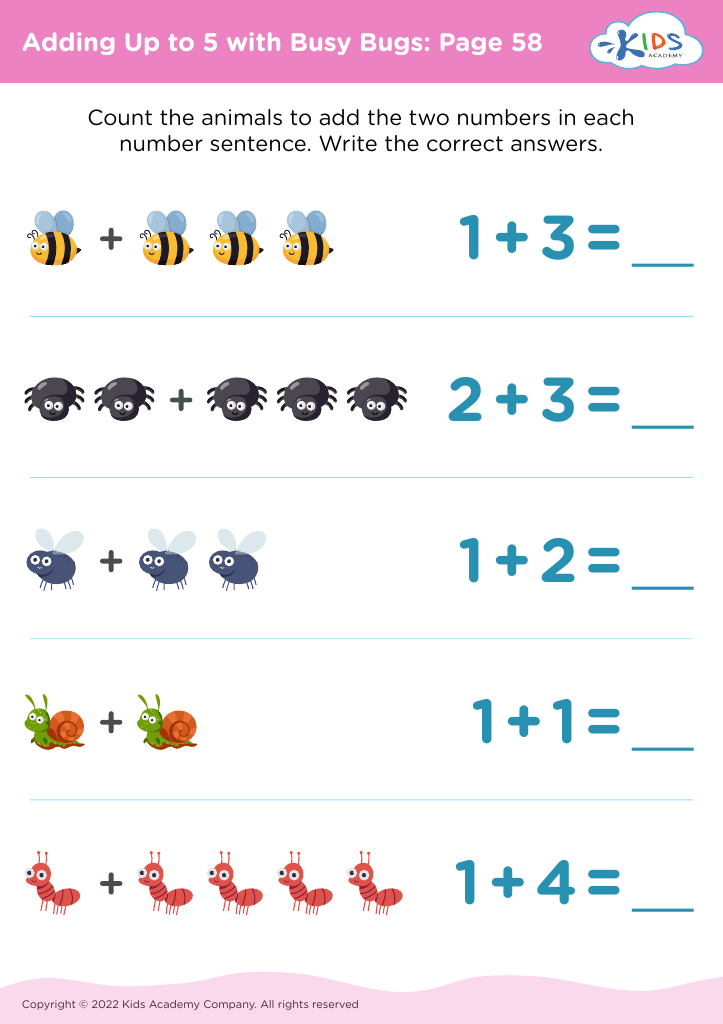
Adding Up to 5 with Busy Bugs: Page 58
Worksheet
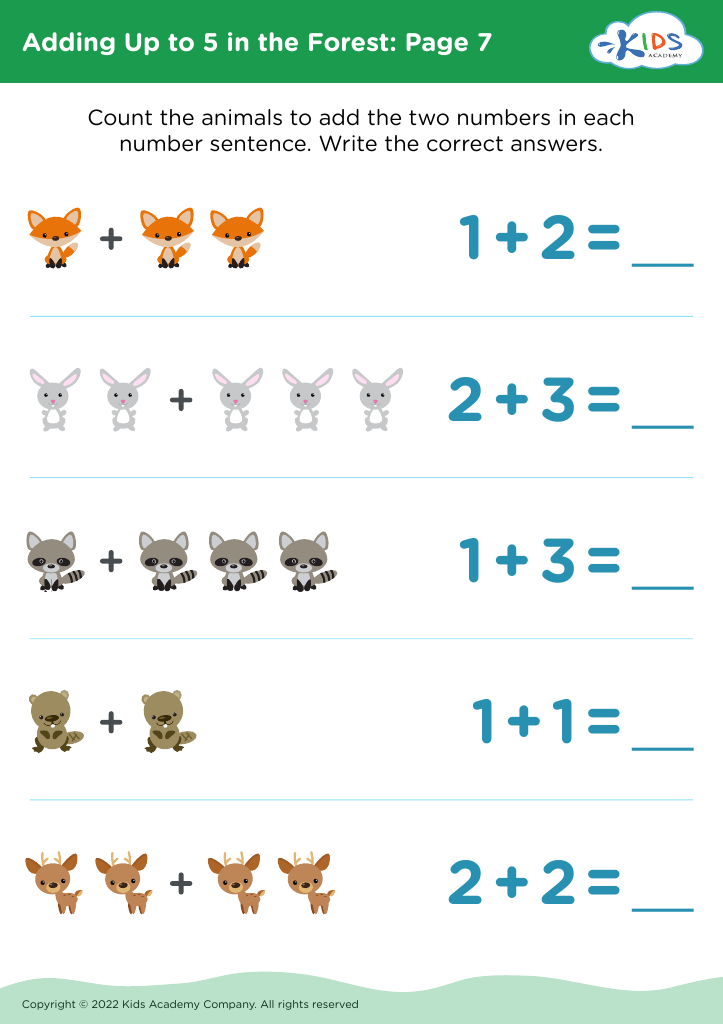
Adding Up to 5 in the Forest: Page 7
Worksheet
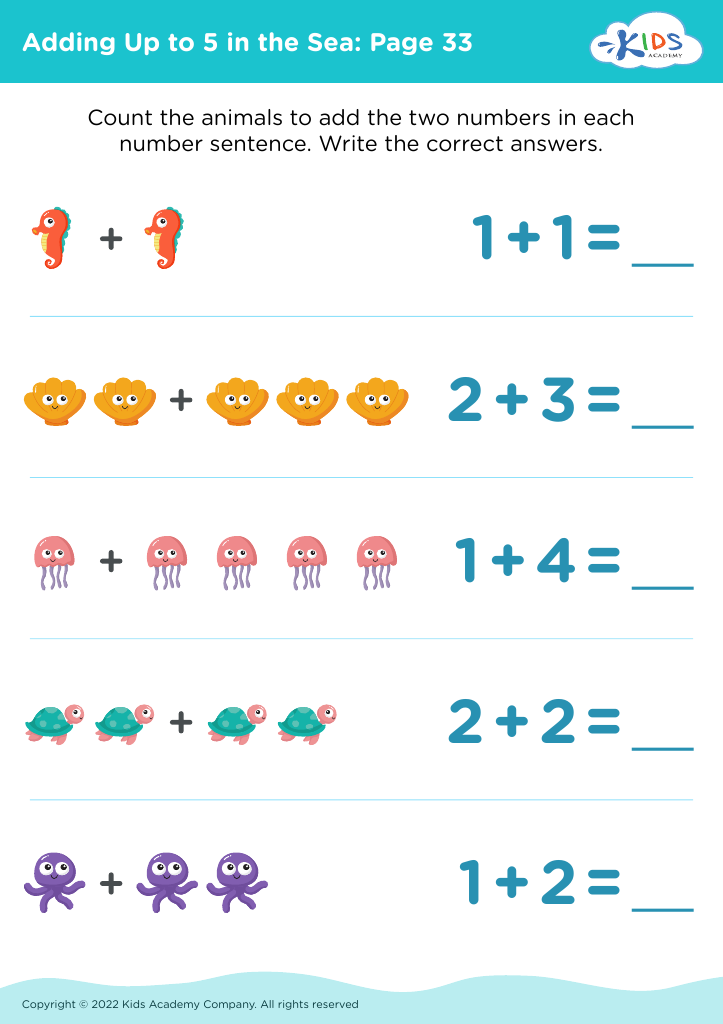
Adding Up to 5 in the Sea: Page 33
Worksheet
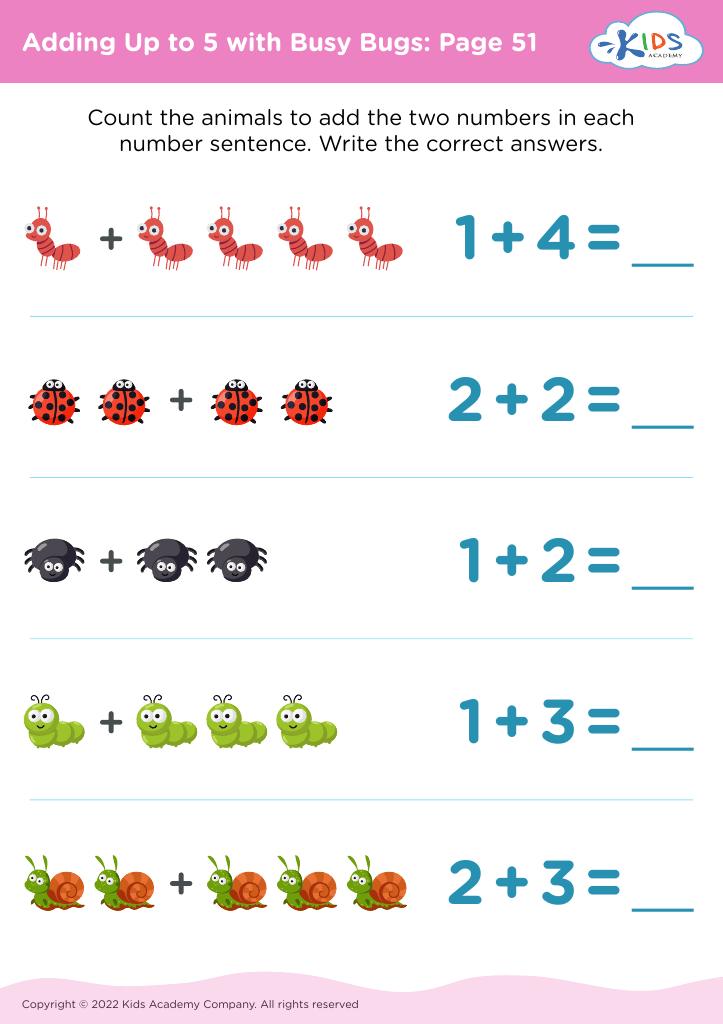
Adding Up to 5 with Busy Bugs: Page 51
Worksheet
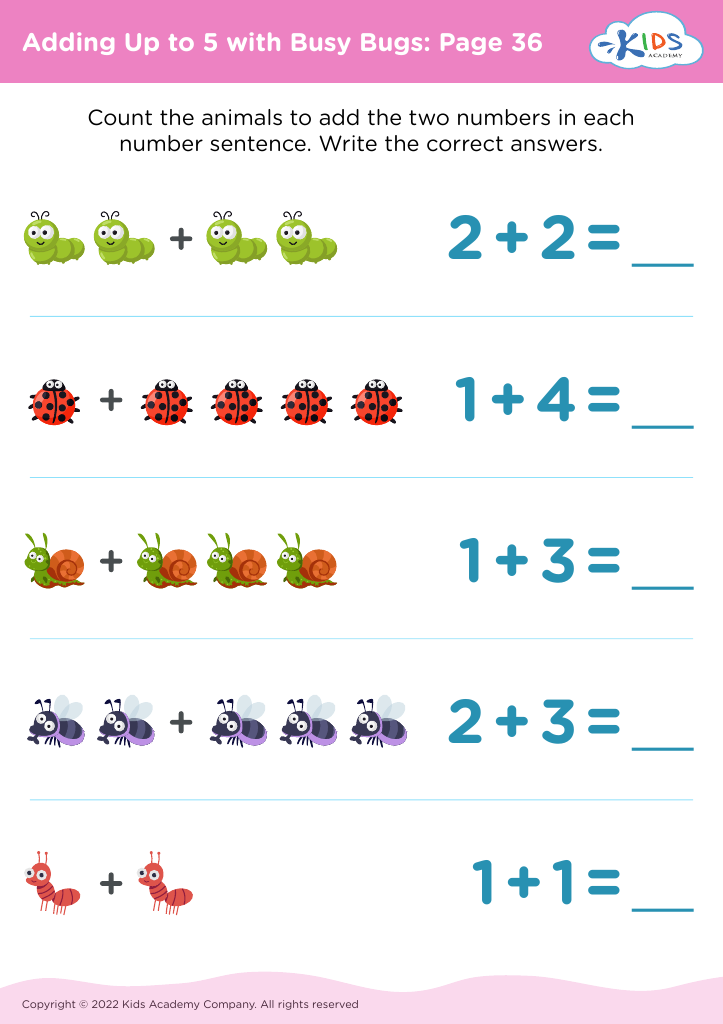
Adding Up to 5 with Busy Bugs: Page 36
Worksheet
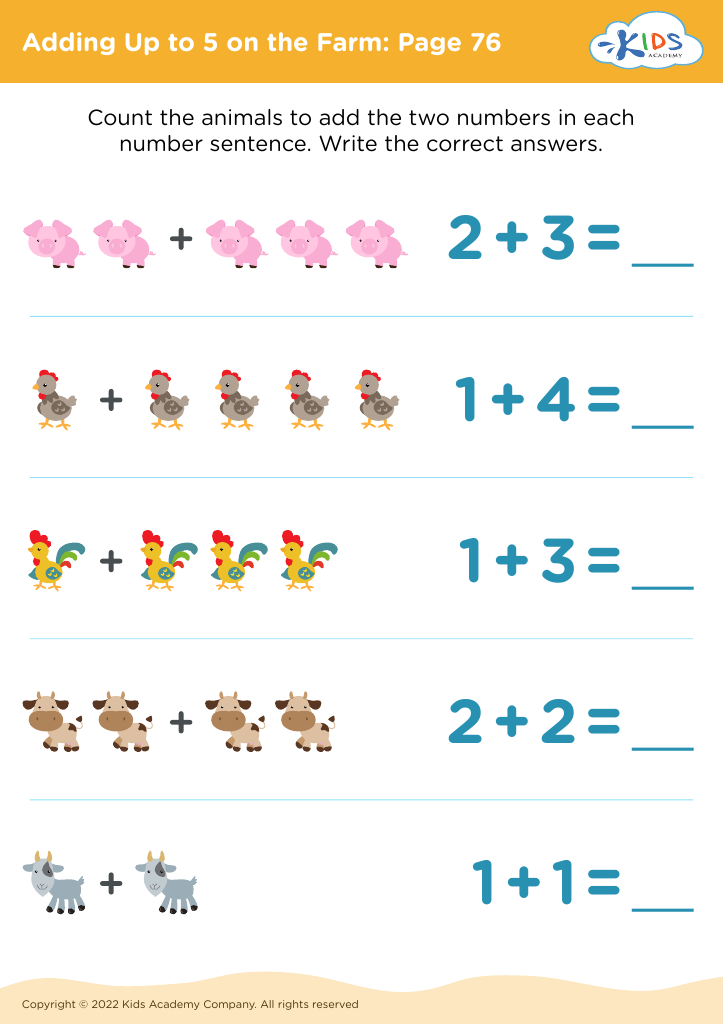
Adding Up to 5 on the Farm: Page 76
Worksheet
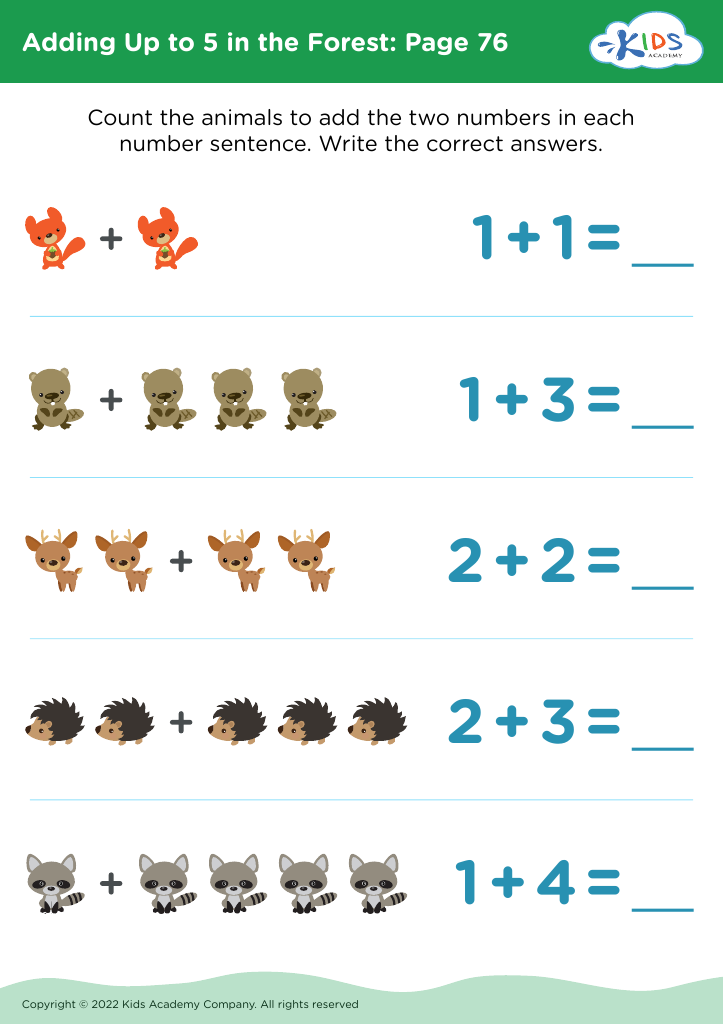
Adding Up to 5 in the Forest: Page 76
Worksheet
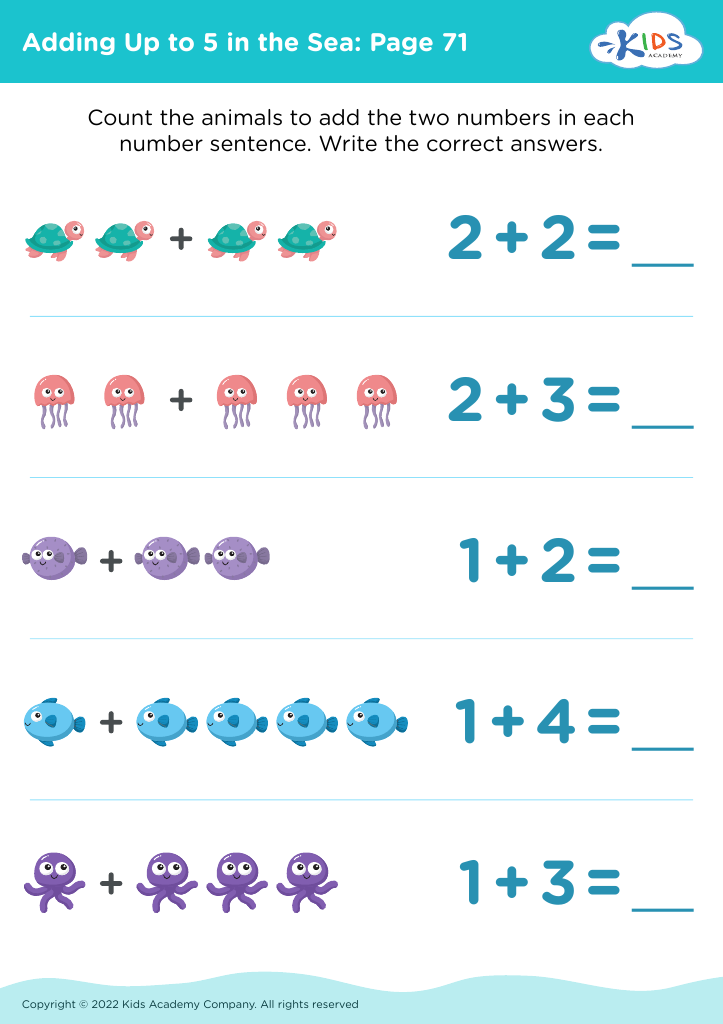
Adding Up to 5 in the Sea: Page 71
Worksheet
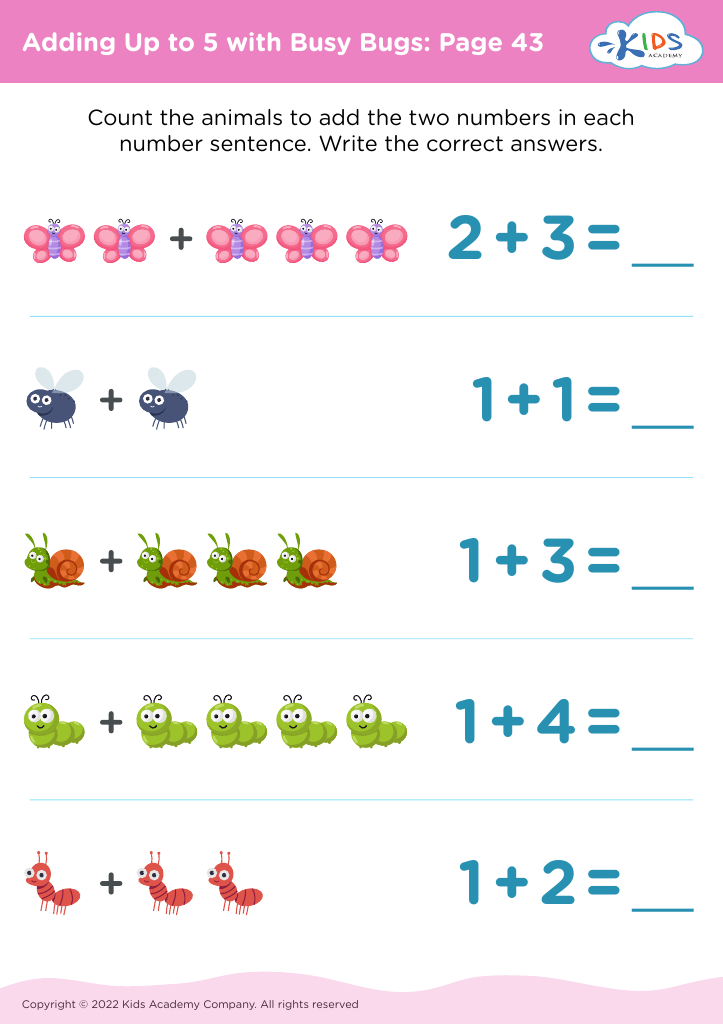
Adding Up to 5 with Busy Bugs: Page 43
Worksheet
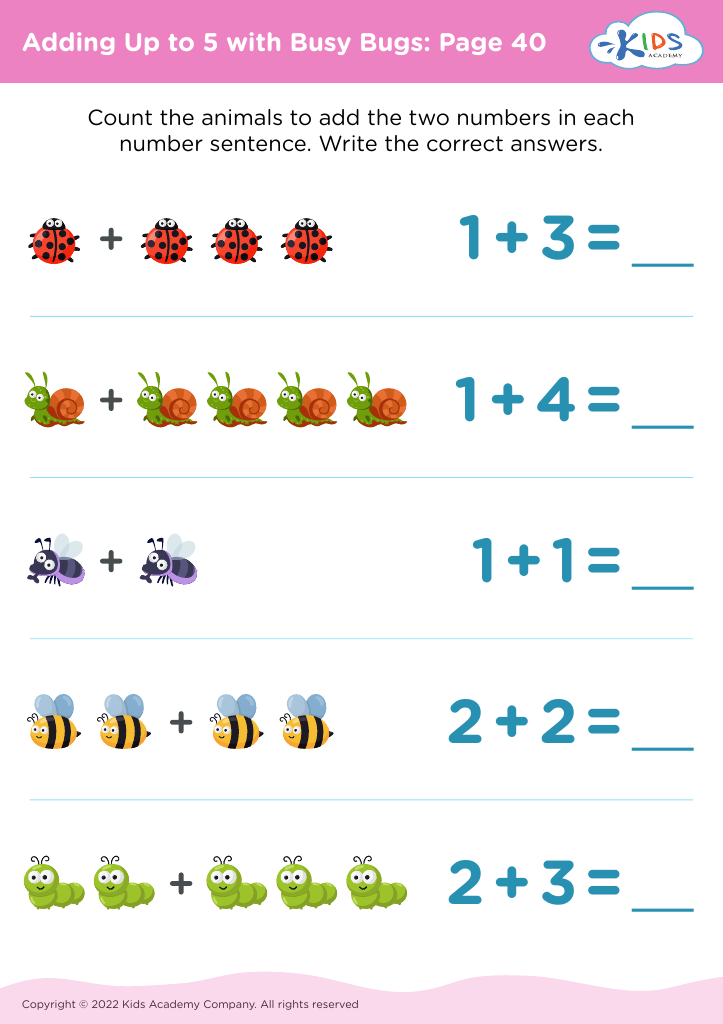
Adding Up to 5 with Busy Bugs: Page 40
Worksheet
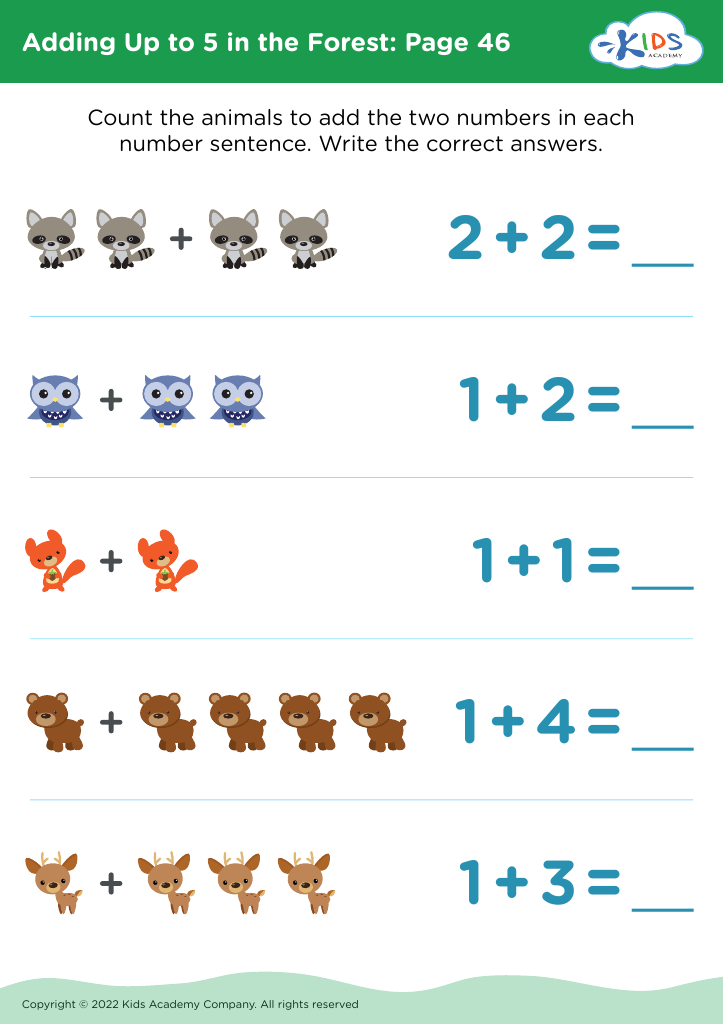
Adding Up to 5 in the Forest: Page 46
Worksheet
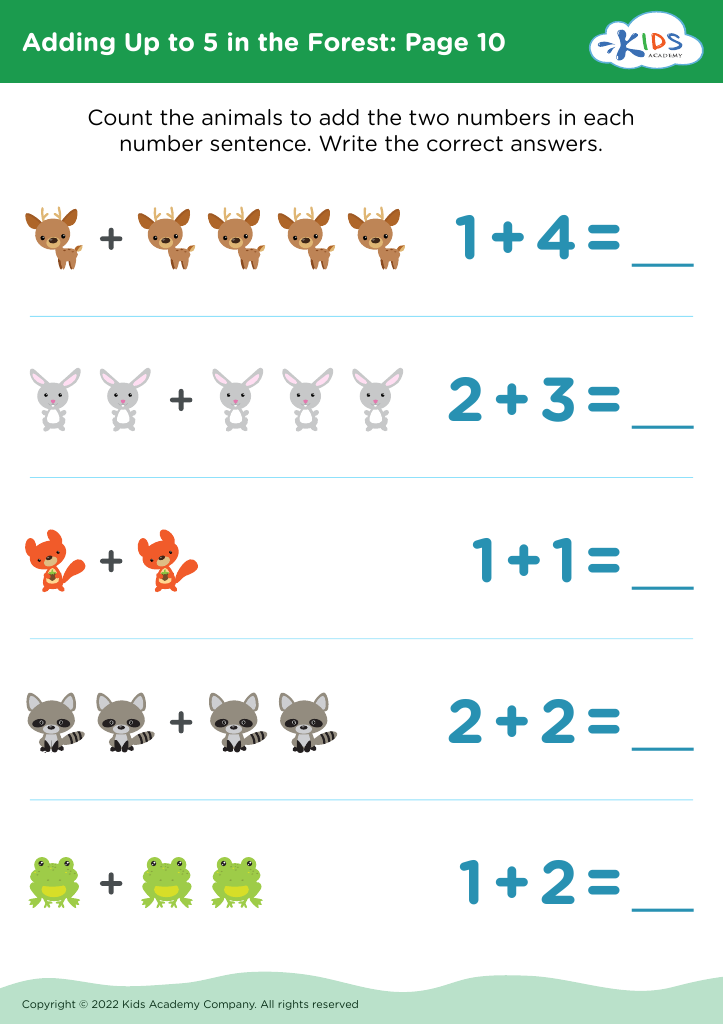
Adding Up to 5 in the Forest: Page 10
Worksheet
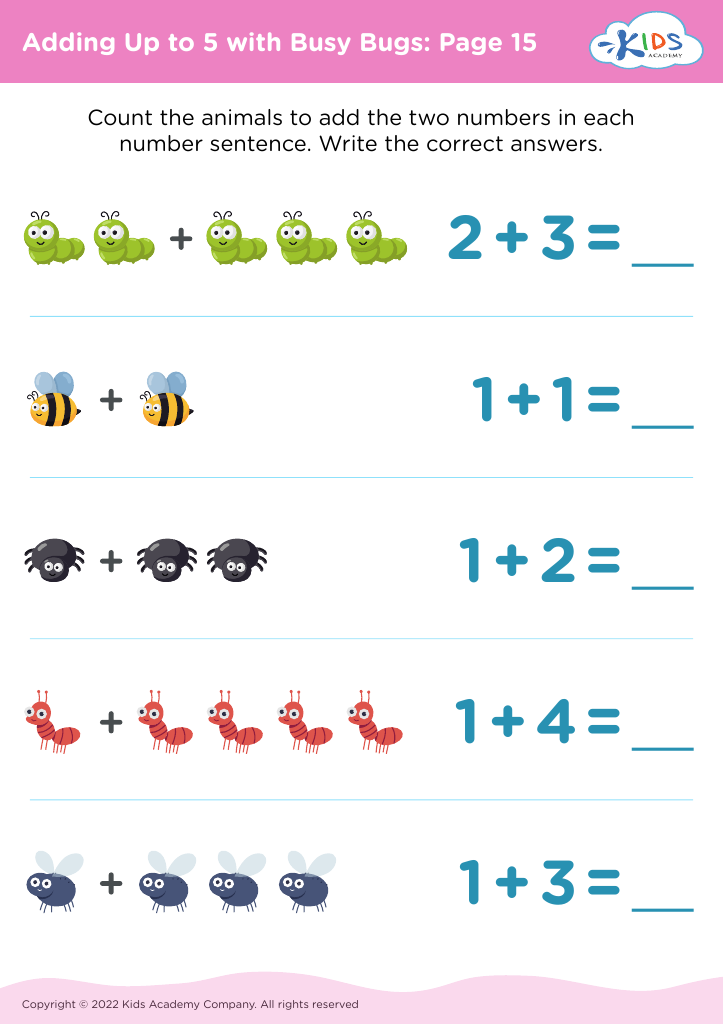
Adding Up to 5 with Busy Bugs: Page 15
Worksheet


Parents and teachers should prioritize basic math skills, particularly addition up to 5, for children aged 3-7, as these foundational abilities serve as the building blocks for their future mathematical understanding. Mastering addition within this range encourages cognitive development, promoting critical thinking and problem-solving skills essential for academic success.

At this early age, children learn through play, exploration, and interaction, making math an engaging part of their everyday lives. By focusing on simple addition, educators and parents can incorporate fun activities—such as counting objects, playing number-based games, or using manipulatives—that support both social interaction and language development.

Furthermore, early mastery of basic math fosters self-confidence, as children experience success in their learning journey. This confidence leads to a positive attitude toward math as they progress in their education. Building these skills early creates a strong foundation, ensuring children can tackle more complex concepts later on.

Additionally, research demonstrates that early mathematical skills are linked to later academic achievement. Therefore, investing time and effort in teaching addition up to 5 will yield long-lasting benefits, not only within mathematics but across various subjects throughout a child's educational path.