Basic Math understanding Adding Up to 5 Worksheets for Ages 3-7
7 filtered results
-
From - To
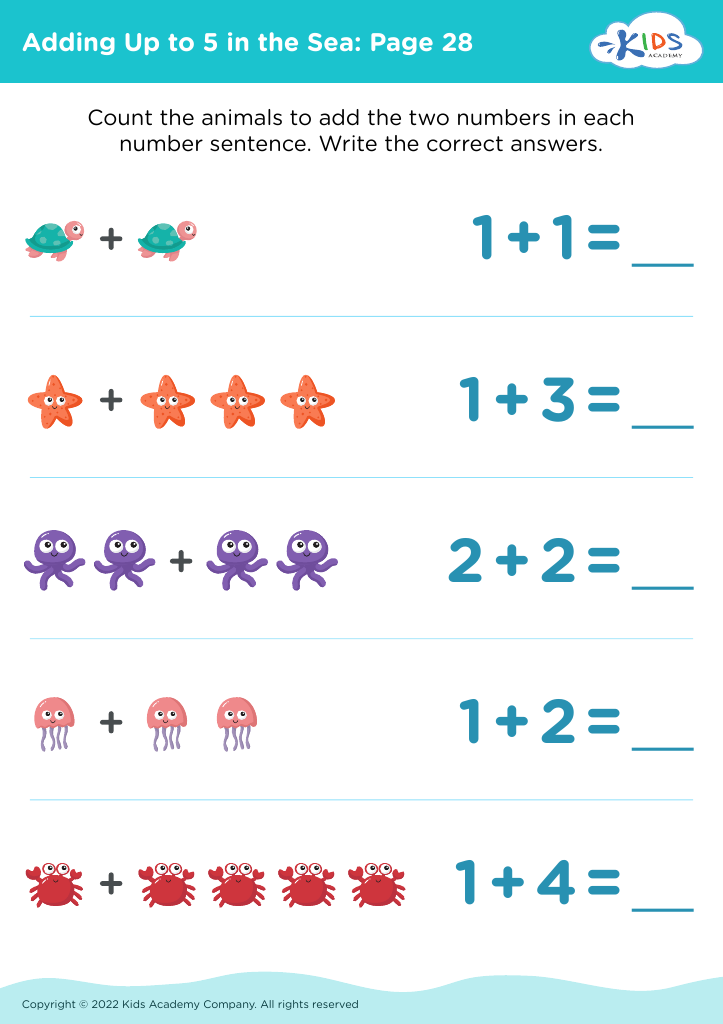
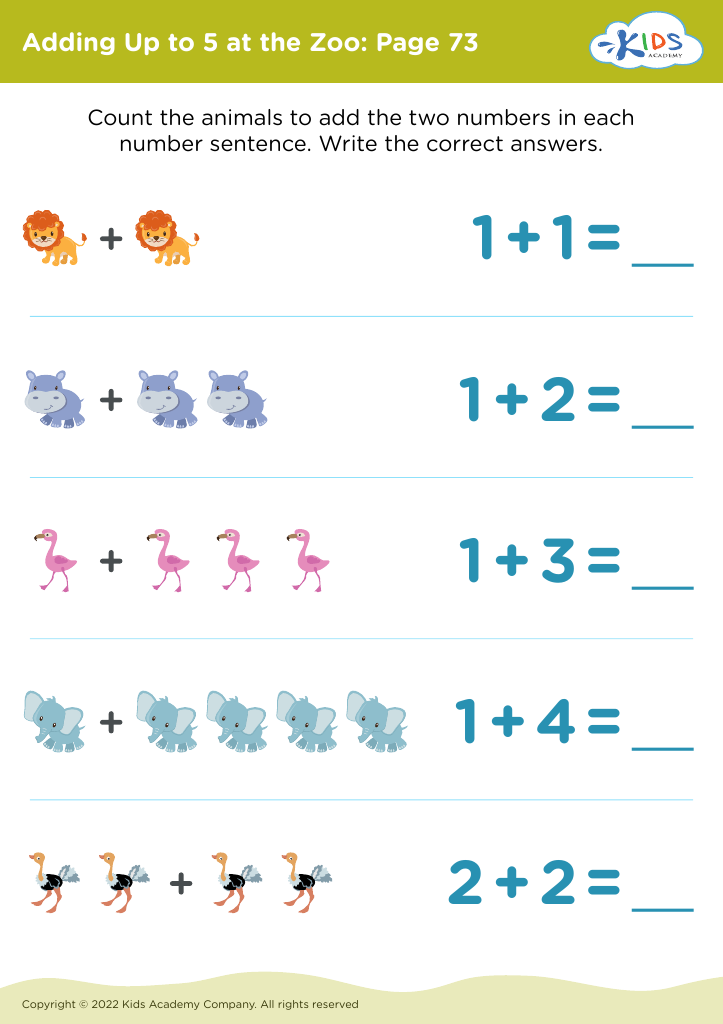
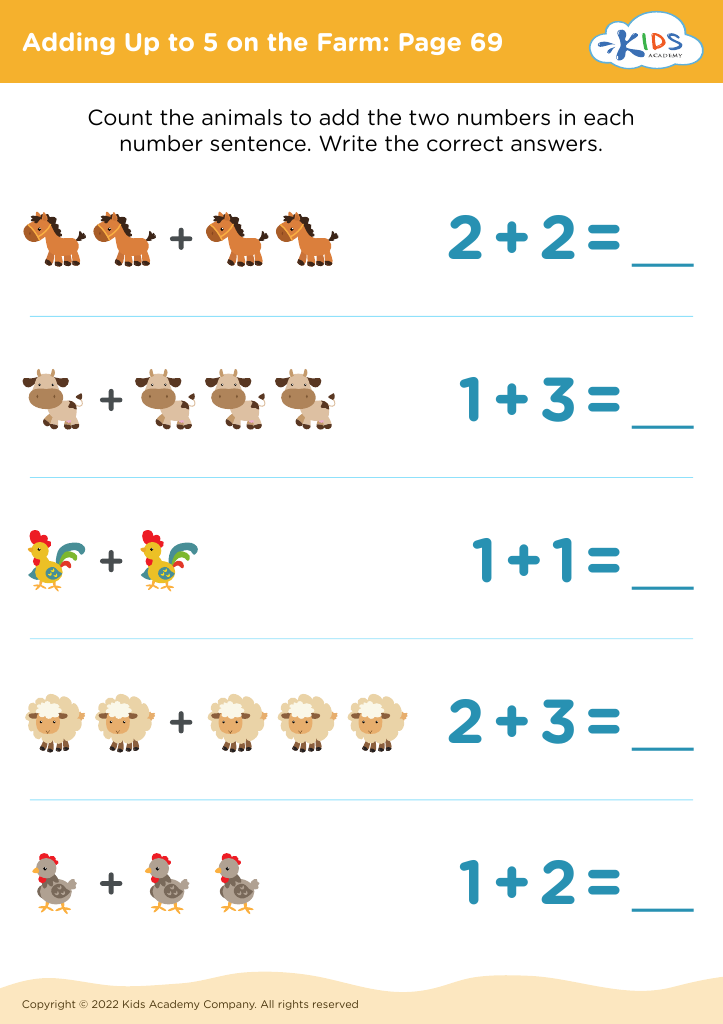
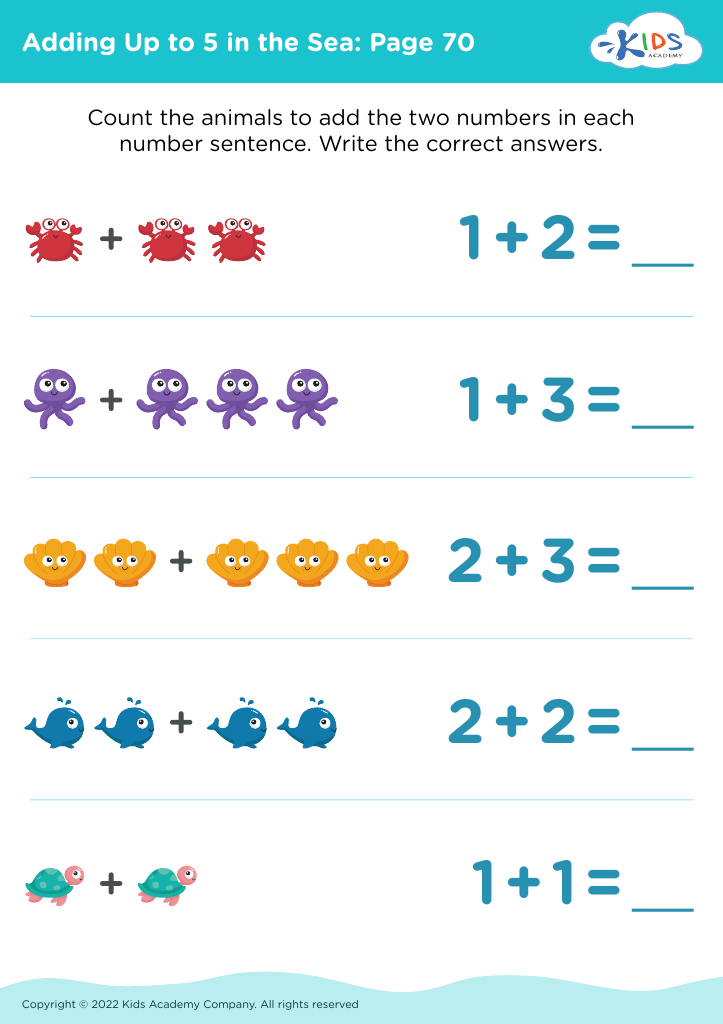
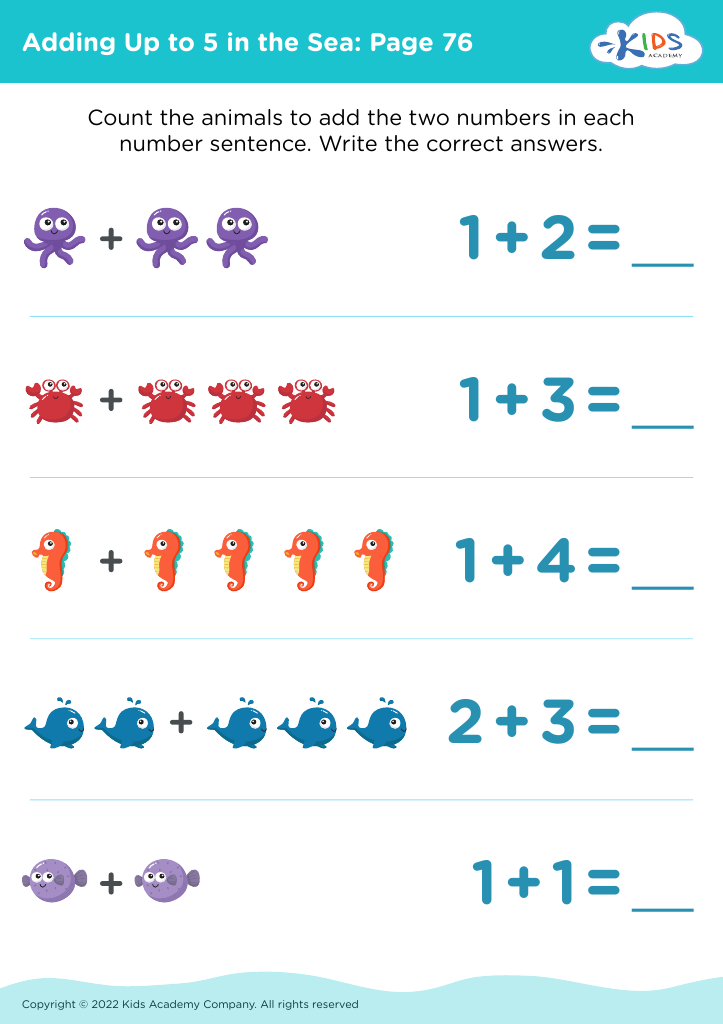
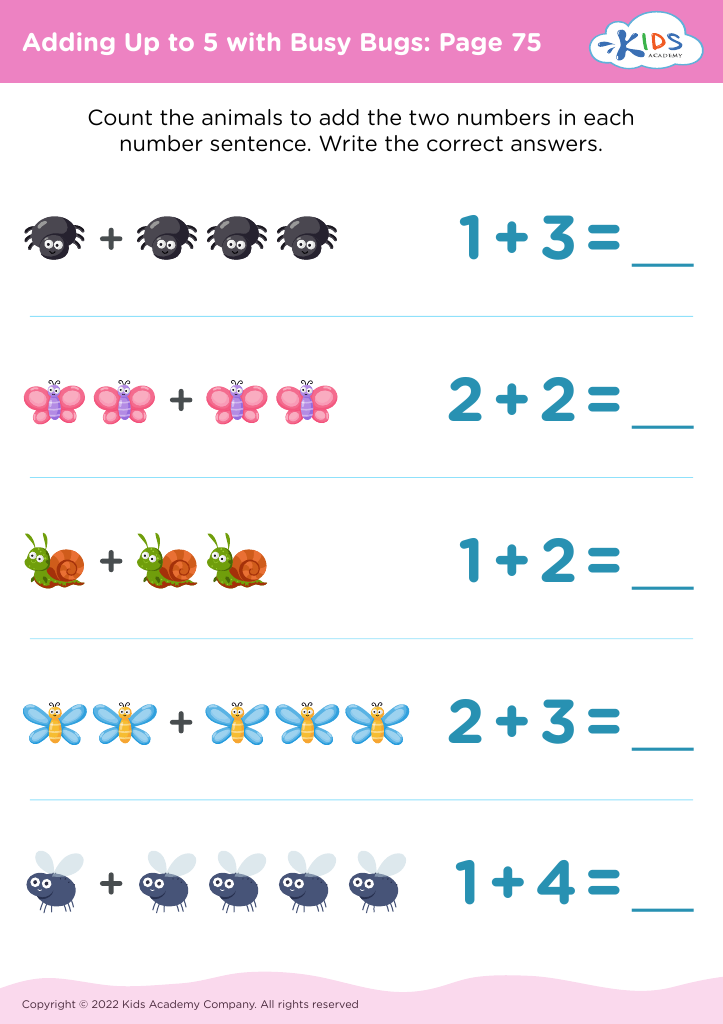
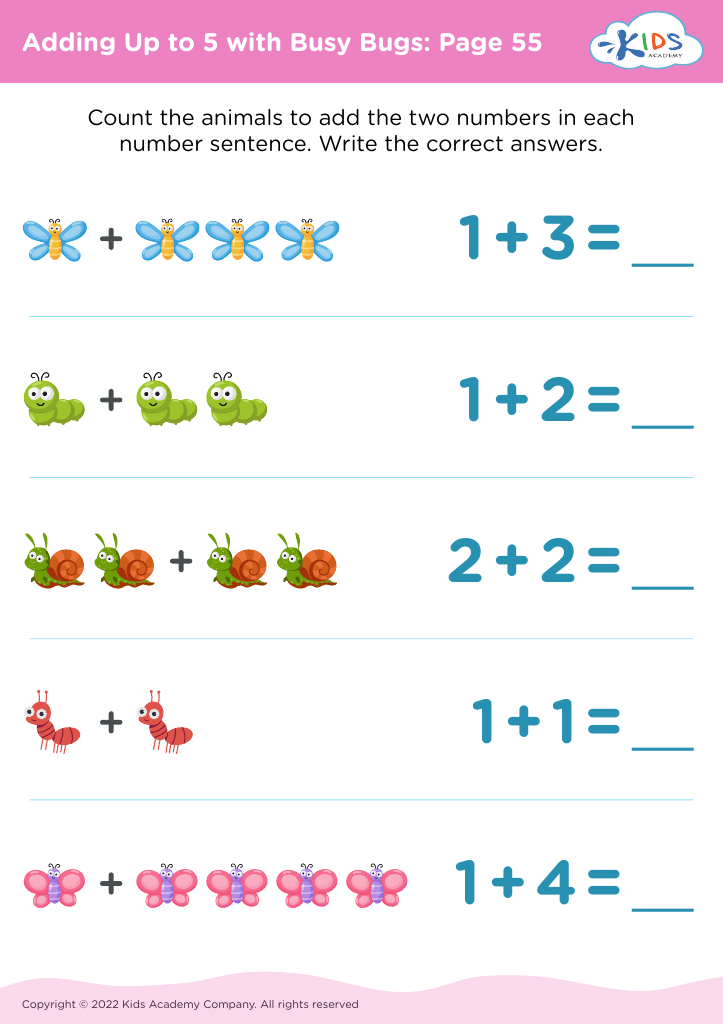
Our "Basic Math Understanding: Adding Up to 5 Worksheets for Ages 3-7" is designed to introduce young learners to foundational math concepts. Tailored for children ages 3 to 7, these engaging worksheets enhance counting skills, number recognition, and addition fluency. Easy-to-follow exercises aid in building confidence as kids practice adding numbers up to 5, fostering a solid arithmetic base. Ideal for use at home or in the classroom, these printable activities support repeated practice and are perfect for reinforcing early math skills in a fun and interactive way. Transform your child's math journey with our expertly crafted worksheets!






%20(1).jpg)

Parents and teachers should greatly value a child's understanding of basic math, such as adding up to 5, during the ages of 3-7 because it forms the foundation for all future math learning. At these ages, children's brains are highly receptive and can develop strong cognitive connections that are essential for more complex problem-solving later on. Basic math skills, like adding numbers up to 5, enhance a child's numeracy, fostering an intuitive grasp of numbers and their relationships.
Proficiency in early math also builds critical thinking and reasoning skills, as children learn to make simple calculations and recognize patterns. These skills extend beyond mathematics itself, aiding in everyday tasks and decision-making processes. Additionally, the sense of achievement children gain from mastering basic math can boost their confidence and enthusiasm towards learning, which positively impacts their overall educational motivation.
Furthermore, engaging children in math activities encourages the development of their fine motor skills and spatial awareness, contributing to their physical development as well. By focusing on these early math skills, parents and teachers can cultivate a supportive and stimulating learning environment, setting children on a path of academic success and fostering a lifelong appreciation for mathematics.








