Problem-solving abilities Adding Up to 5 Worksheets for Ages 3-7
13 filtered results
-
From - To
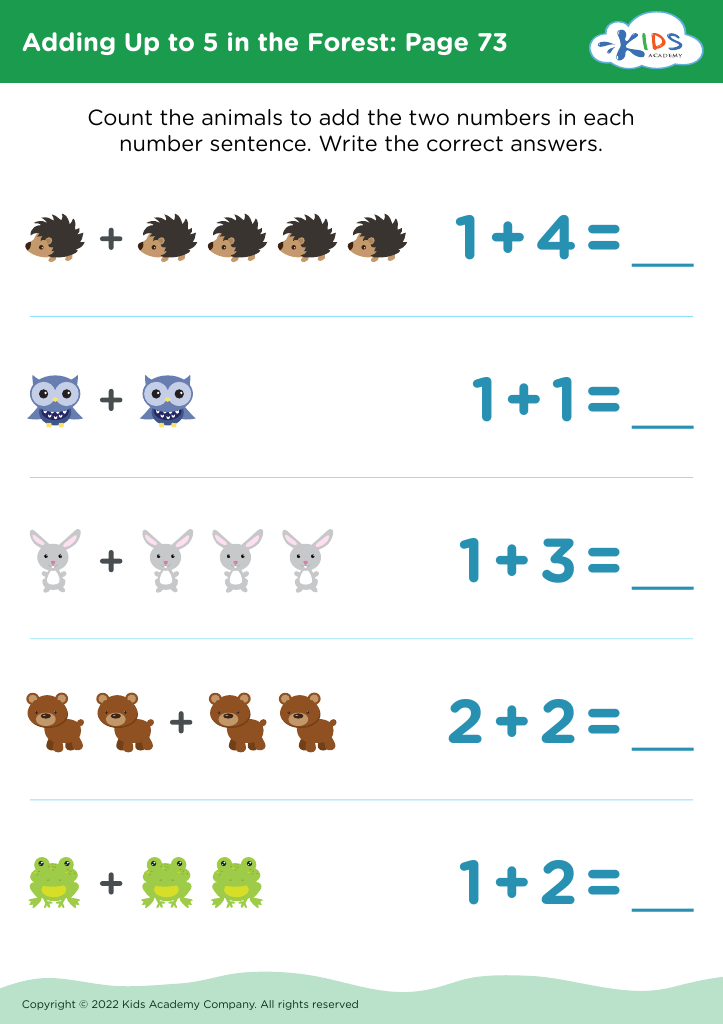
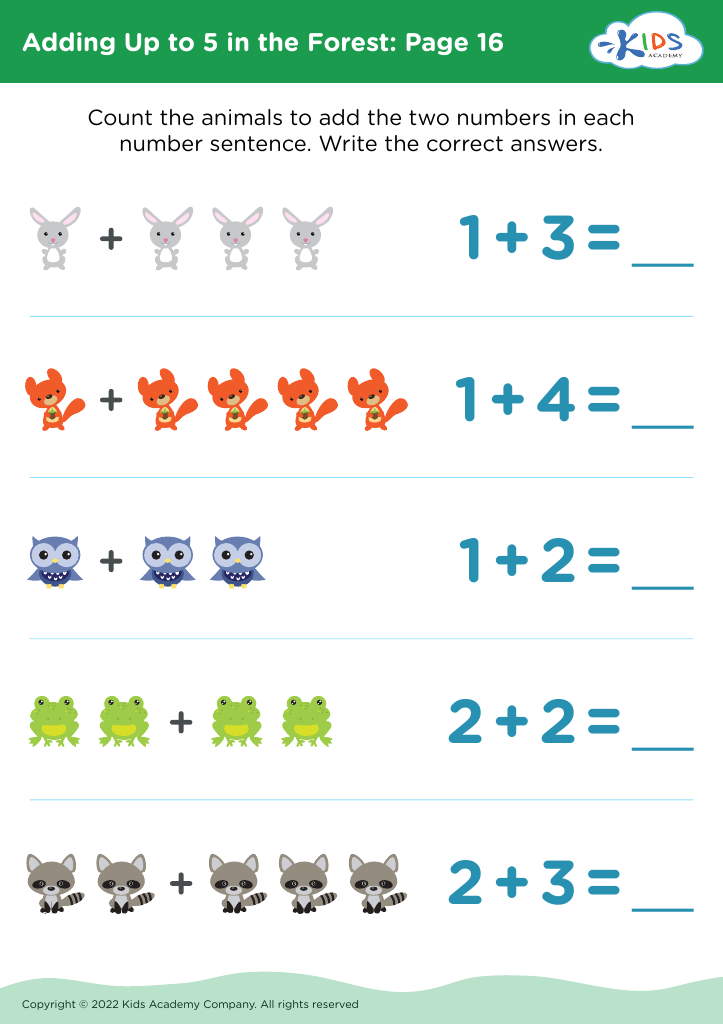
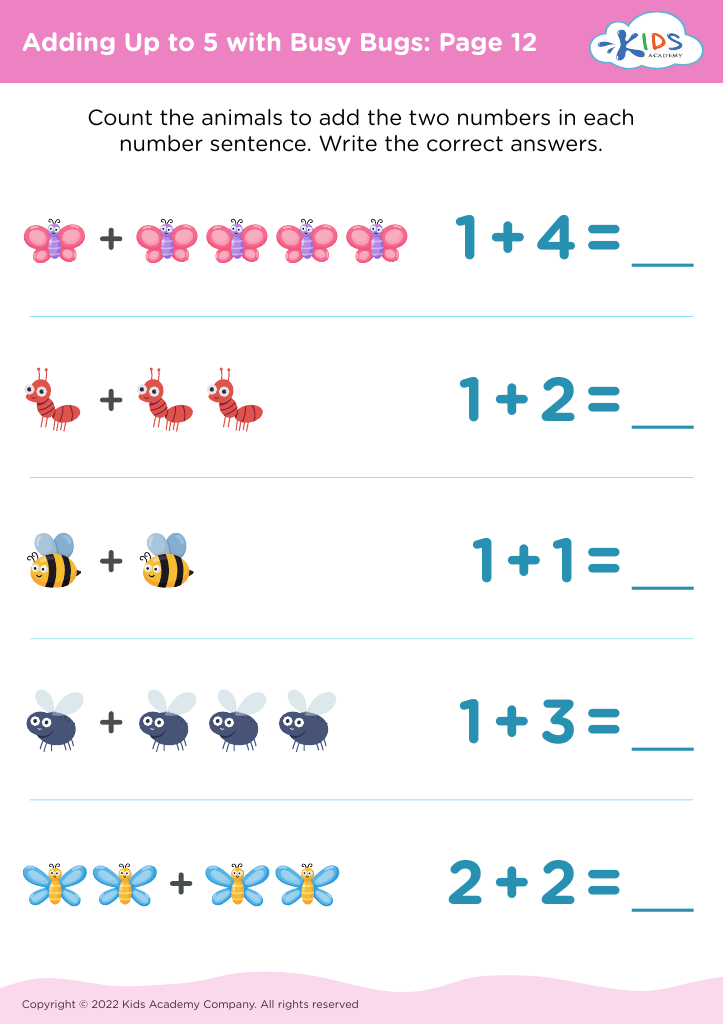
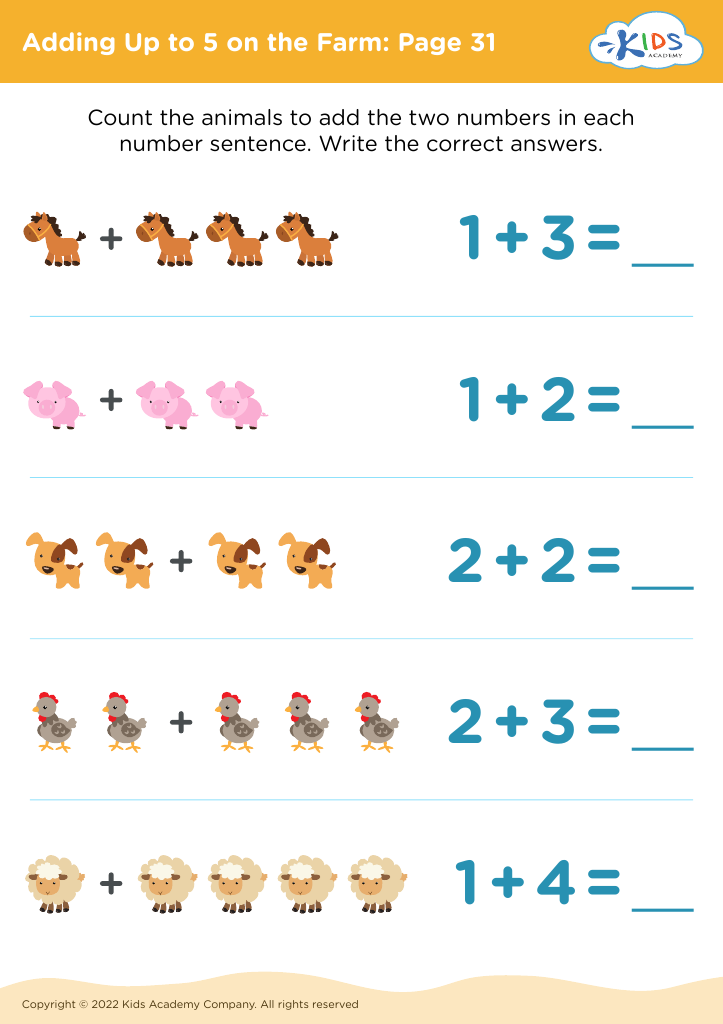
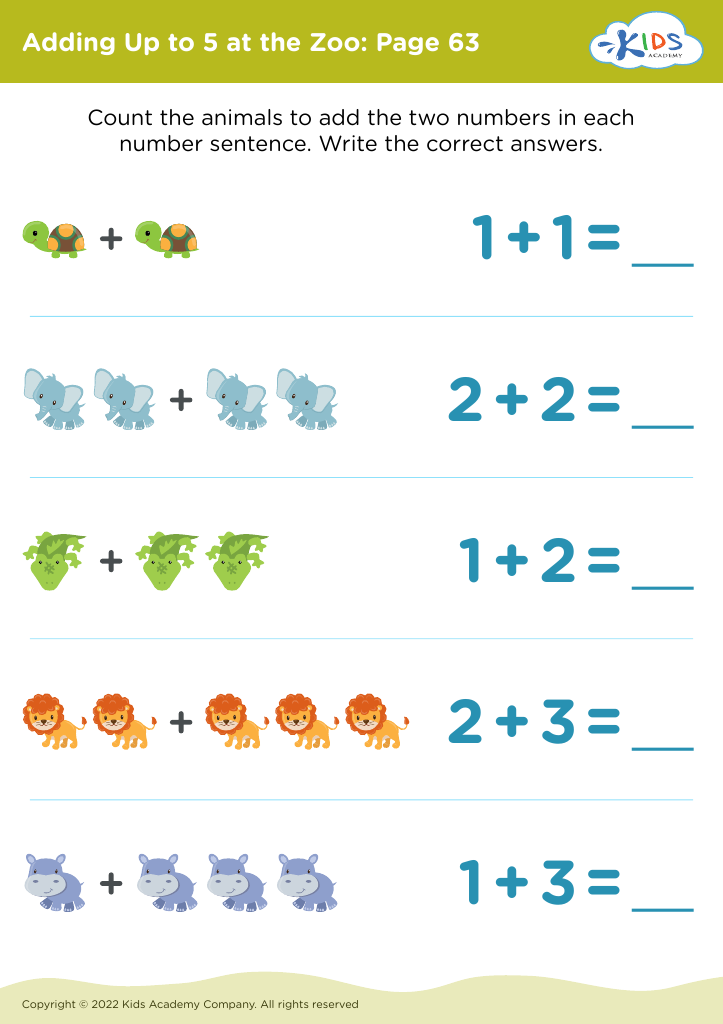
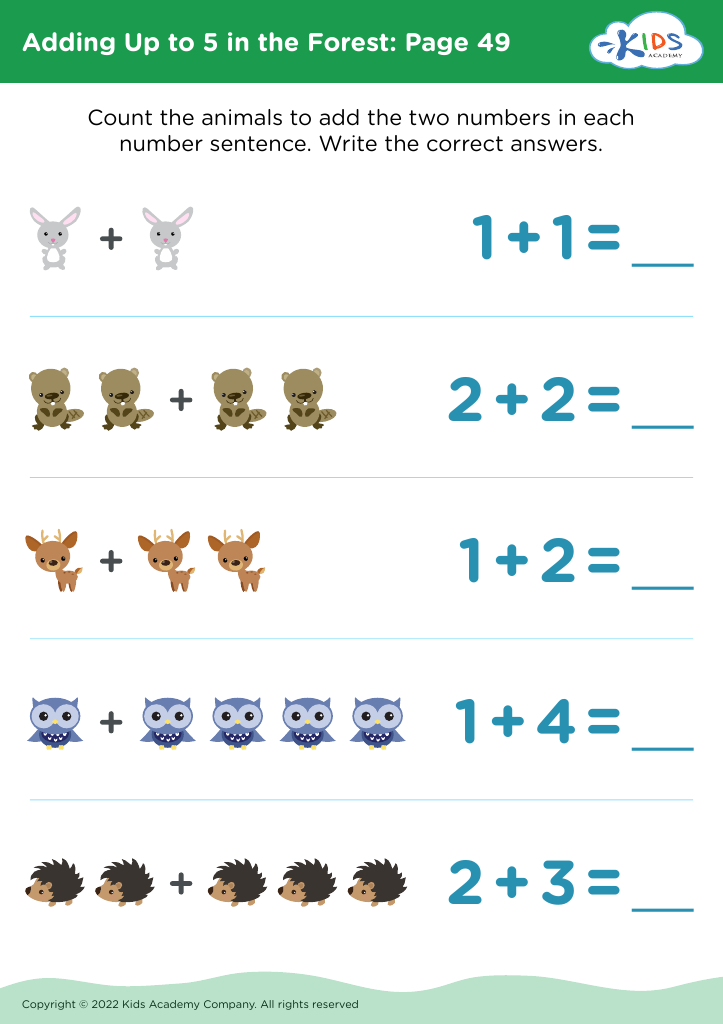
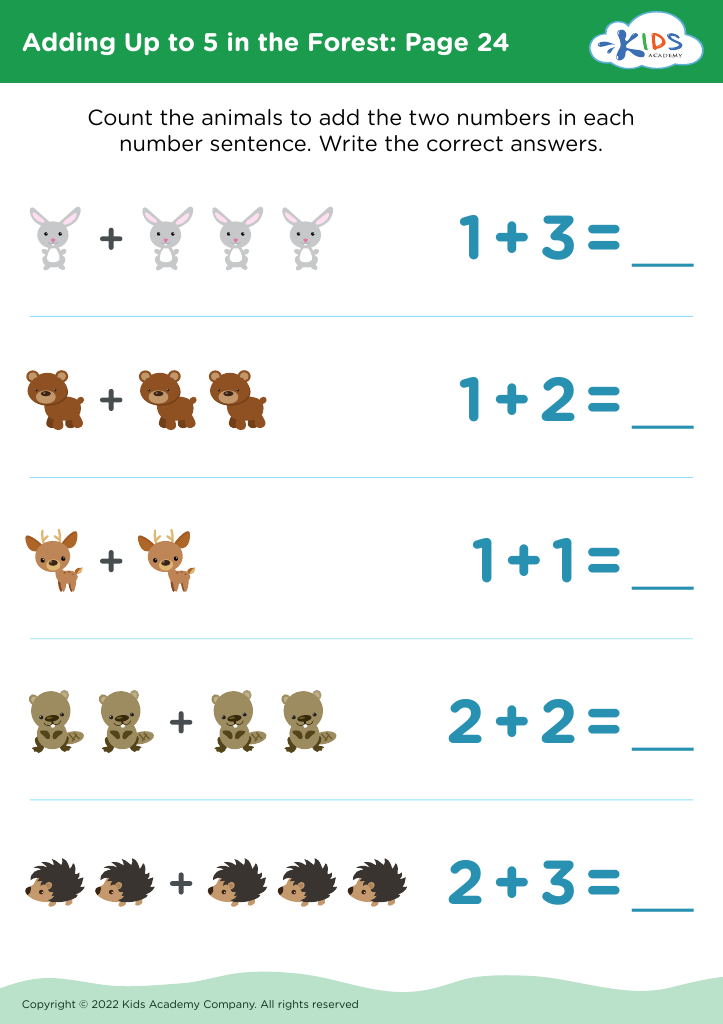
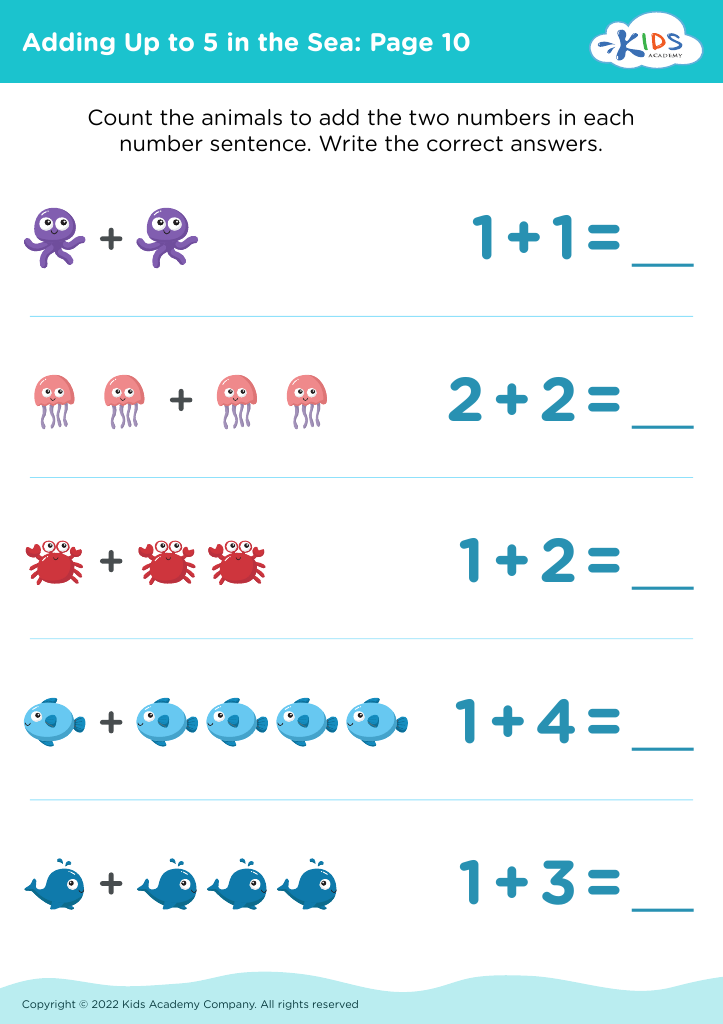
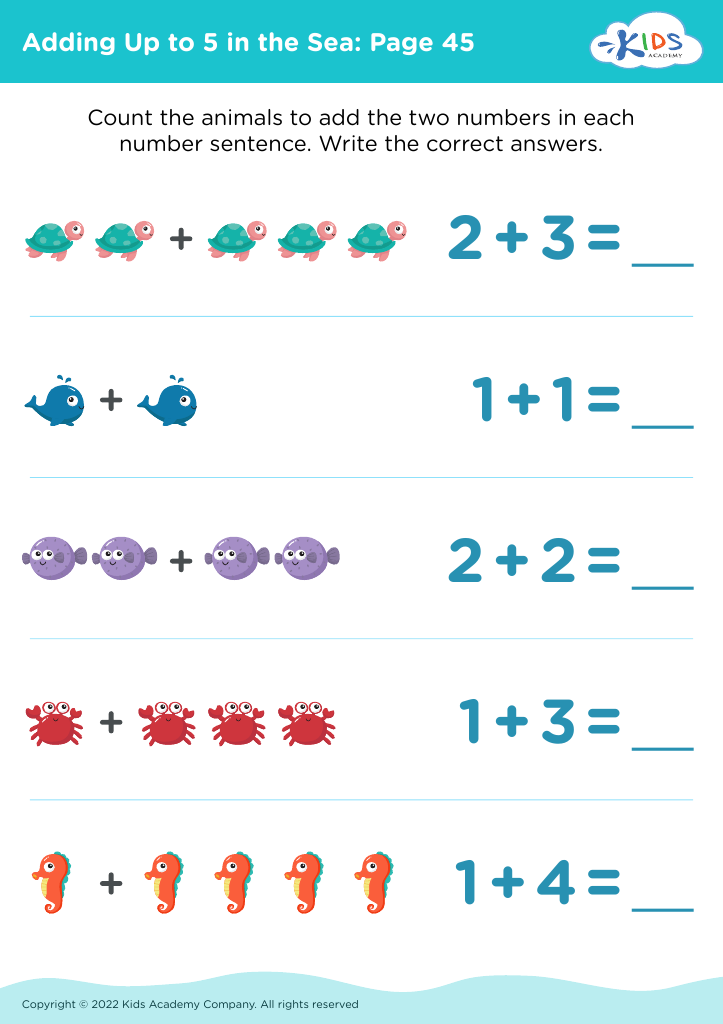
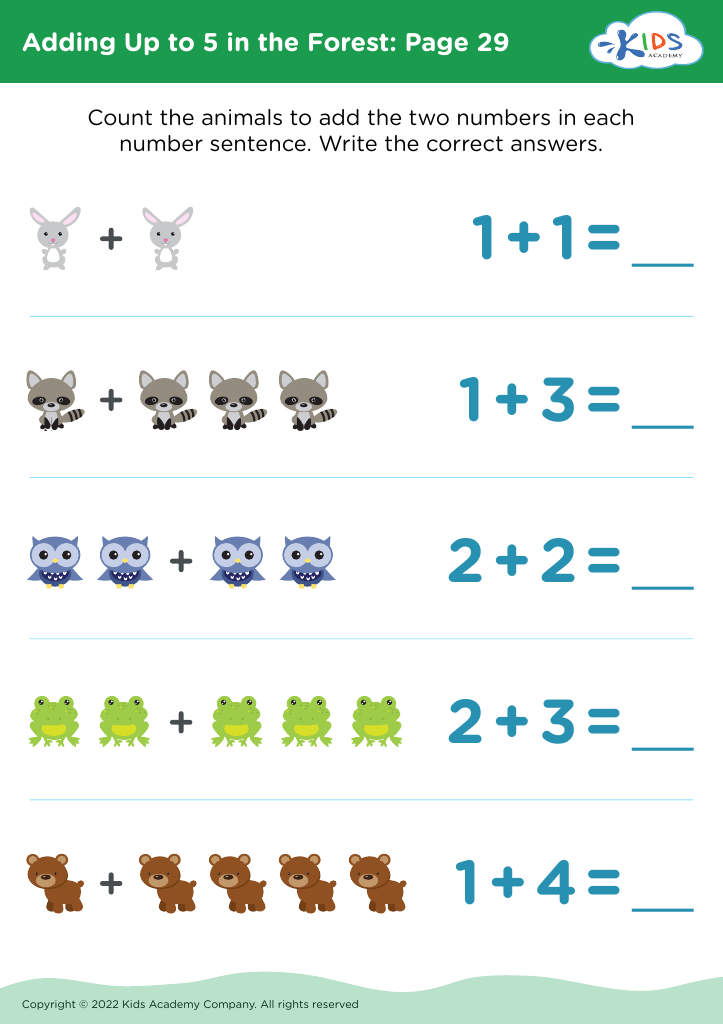
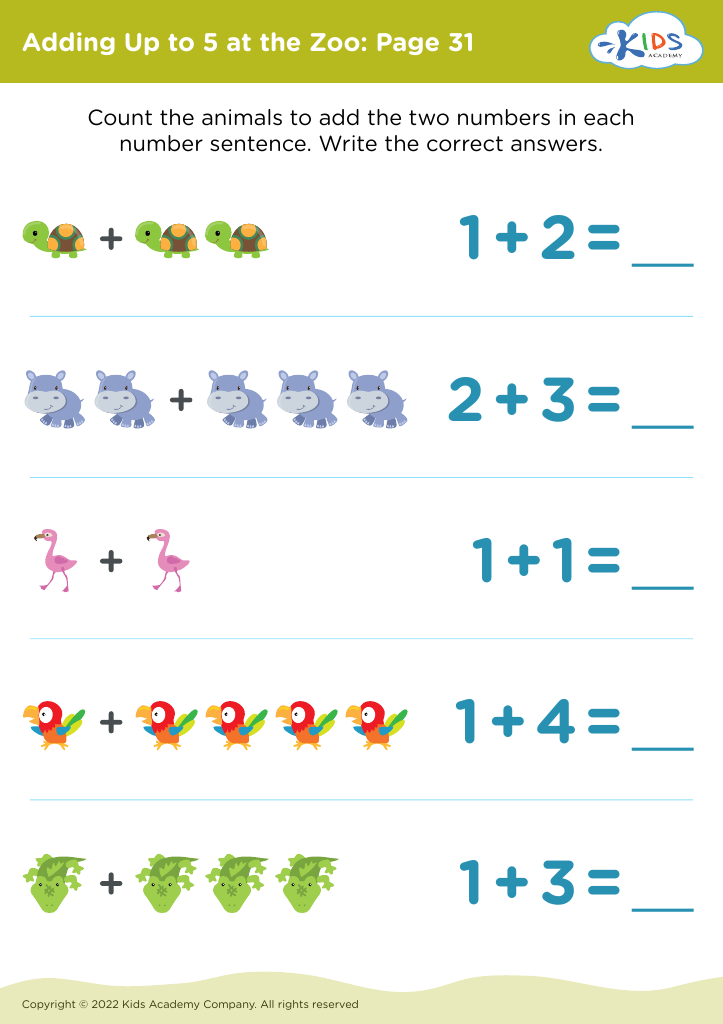
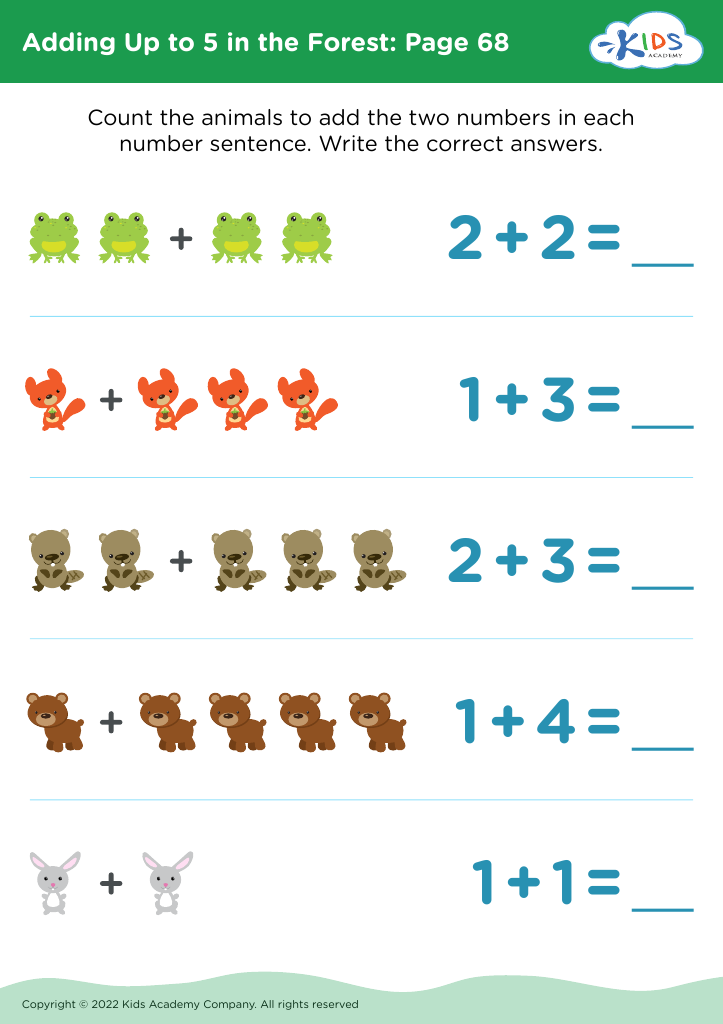
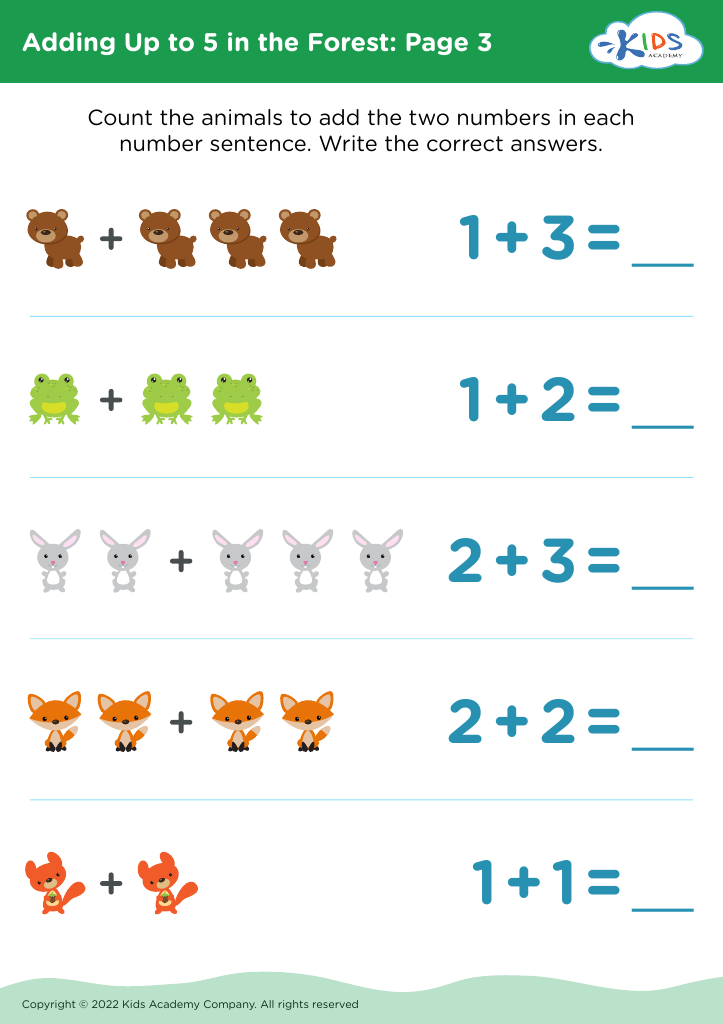
Enhance your child's problem-solving skills with our "Adding Up to 5" worksheets designed for ages 3-7! These engaging and interactive worksheets provide countless opportunities for young learners to practice basic addition while developing critical thinking. Through colorful illustrations and fun scenarios, children will joyfully navigate numbers and enhance their understanding of addition in a hands-on way. Each worksheet encourages kids to think creatively and analytically as they solve problems, fostering not just mathematical skills but also essential cognitive abilities. Perfect for home or classroom use, these worksheets are an excellent way to make learning both enjoyable and impactful!





%20(1).jpg)


Problem-solving abilities, particularly in the context of adding up to 5, are crucial for young children aged 3-7. Mastering basic addition is foundational for developing mathematical literacy, which fosters critical-thinking skills. When parents and teachers emphasize these skills, they help children gain confidence in their ability to tackle numerical challenges.
In early childhood, children actively engage with their environment, and introducing addition concepts through fun activities—like counting objects, using manipulative toys, or playing interactive games—can ignite their interest in math. These experiences not only enhance number recognition but also encourage logical reasoning, making complex problems more manageable as they grow.
Additionally, developing problem-solving abilities at this stage supports neurological growth, as the brain benefits from practice in analytical thinking and pattern recognition. It sets the stage for future mathematical concepts and real-life scenarios that will require these skills.
Finally, fostering problem-solving in young learners also promotes social interactions. Collaborating on math games or group problem-solving fosters communication, teamwork, and patience, equipping children with skills essential for both academic success and social functioning. By prioritizing addition to 5, parents and teachers play an active role in nurturing well-rounded, confident learners.








