Understanding numeracy Adding Up to 5 Worksheets for Ages 3-7
4 filtered results
-
From - To
"Understanding Numeracy: Adding Up to 5 Worksheets for Ages 3-7" offers engaging and developmentally appropriate activities designed to enhance early math skills. These printable worksheets help young learners grasp fundamental addition concepts through colorful, fun exercises. Suitable for children aged 3-7, each worksheet focuses on simple addition problems that add up to 5, promoting a strong numerical foundation. Perfect for parents and educators, the resources support interactive learning and improve number recognition, counting, and basic arithmetic skills, setting the stage for future math success in a playful and supportive environment.
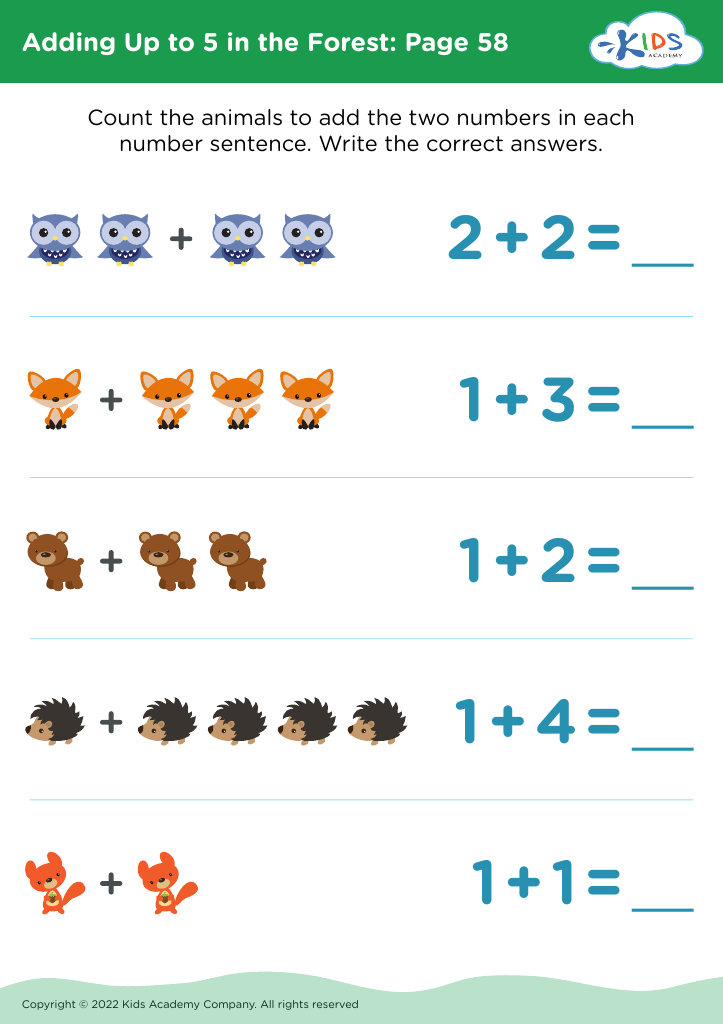
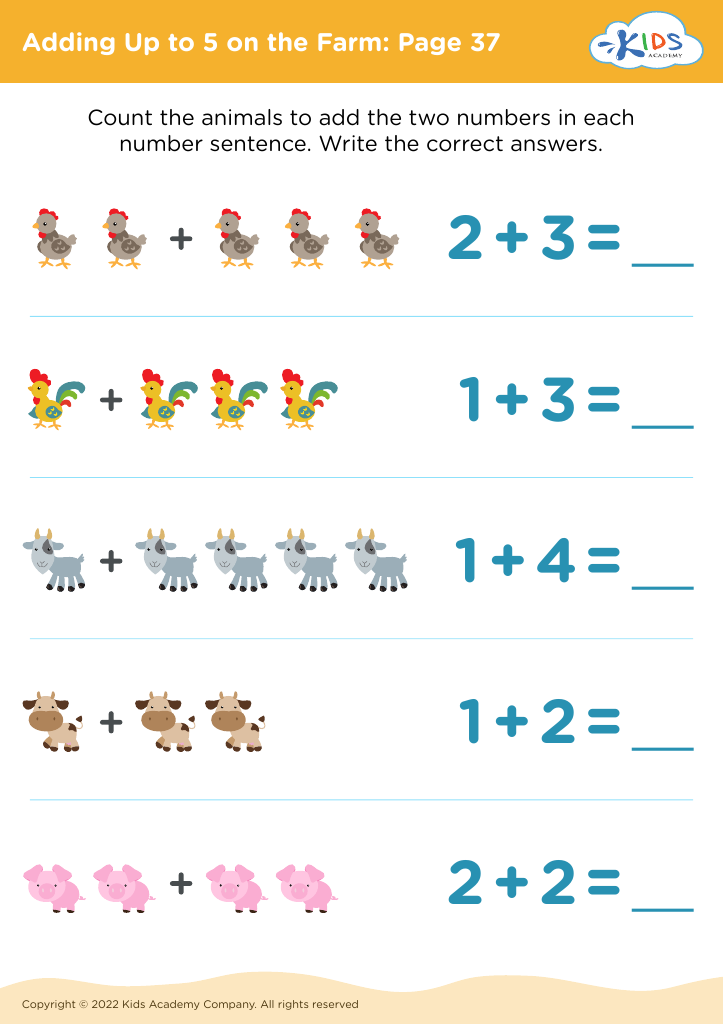
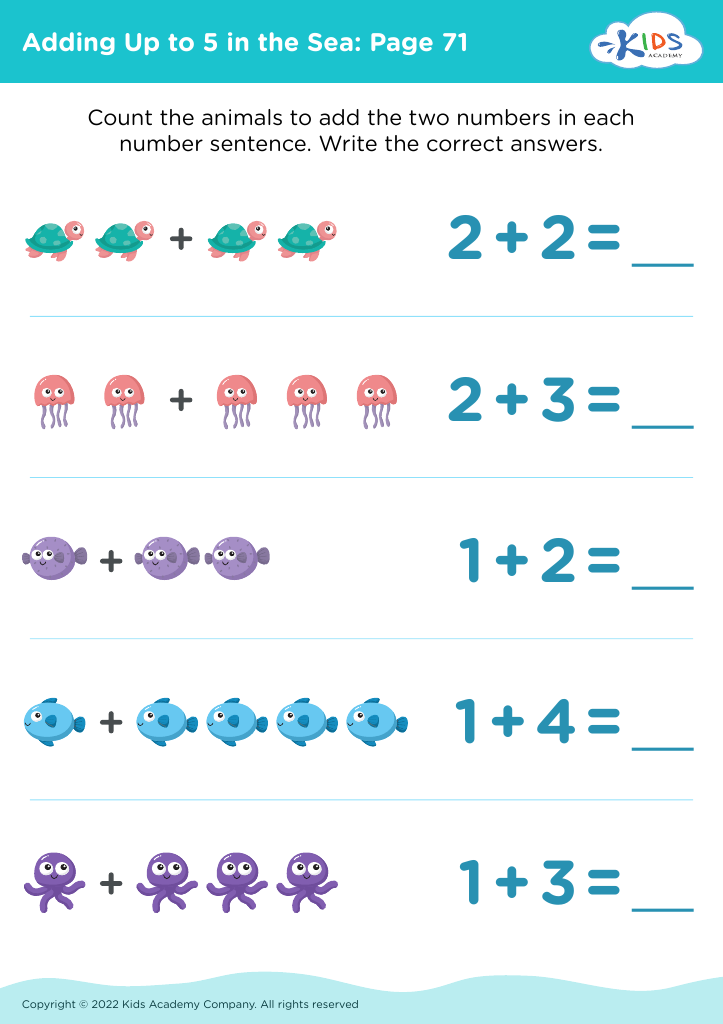
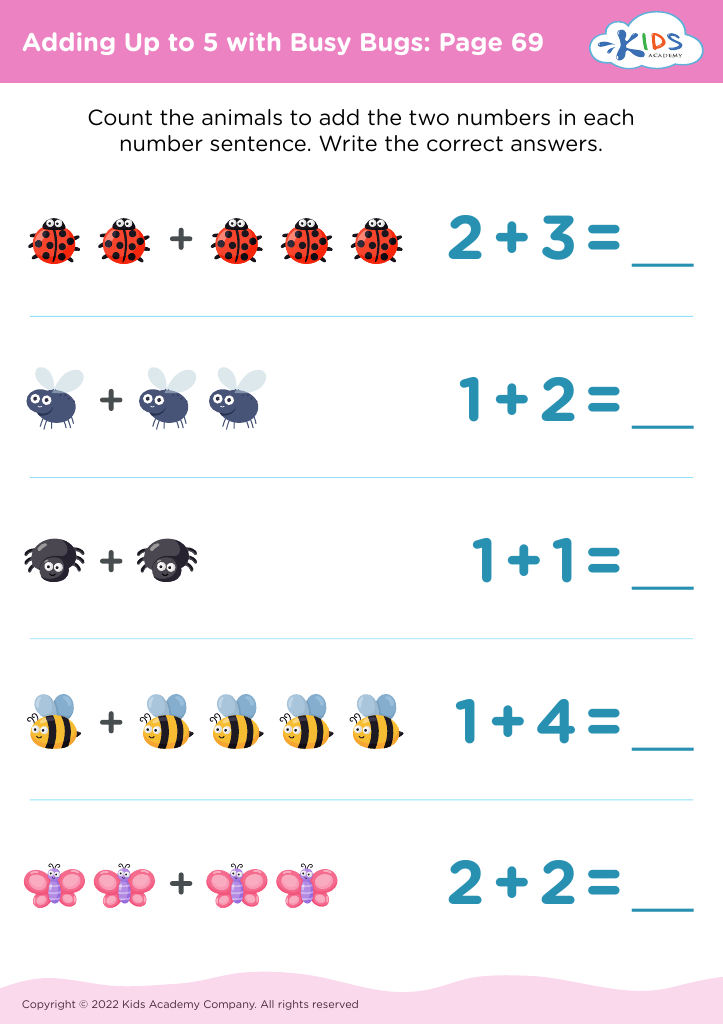







%20(1).jpg)
Understanding numeracy, particularly the ability to add up to 5, is crucial for children aged 3-7 because it lays the groundwork for all future mathematical learning. During these formative years, children's brains are exceptionally plastic, meaning they can absorb information more readily. Numeracy skills, much like literacy, are essential life skills that contribute to a child's overall cognitive development. When children grasp basic addition, they learn to think logically and solve problems, fostering critical thinking skills that will benefit them throughout their education and in everyday life.
Adding up to 5 is a foundational skill that introduces young learners to mathematical concepts such as quantity, numerical relationships, and the function of addition. These early math experiences are predictive of later academic achievements, not just in math, but across all other subjects. For teachers and parents, engendering a positive attitude towards math at this early stage can dispel any anxiety or aversion, leading to a confident approach to more complex challenges later on.
Moreover, structured mathematical exercises early on help to anchor mathematical knowledge in concrete experiences—using toys, fingers, or drawings—which enhances understanding. Prioritizing numeracy education sets children on a path to a lifelong appreciation and mastery of math, giving them vital tools for both academic success and daily life.








