Filters

36 filtered results

Clear all filters
Favorites
With answer key
Interactive

36 filtered results

Difficulty Level

Grade


Check out this FREE Trial Lesson on Adding Up to 5 for age 3-7!

Match Exactly the Same

Favorites
With answer key
Interactive
  • 3-7
  • Understanding Quantities
  • Adding Up to 5
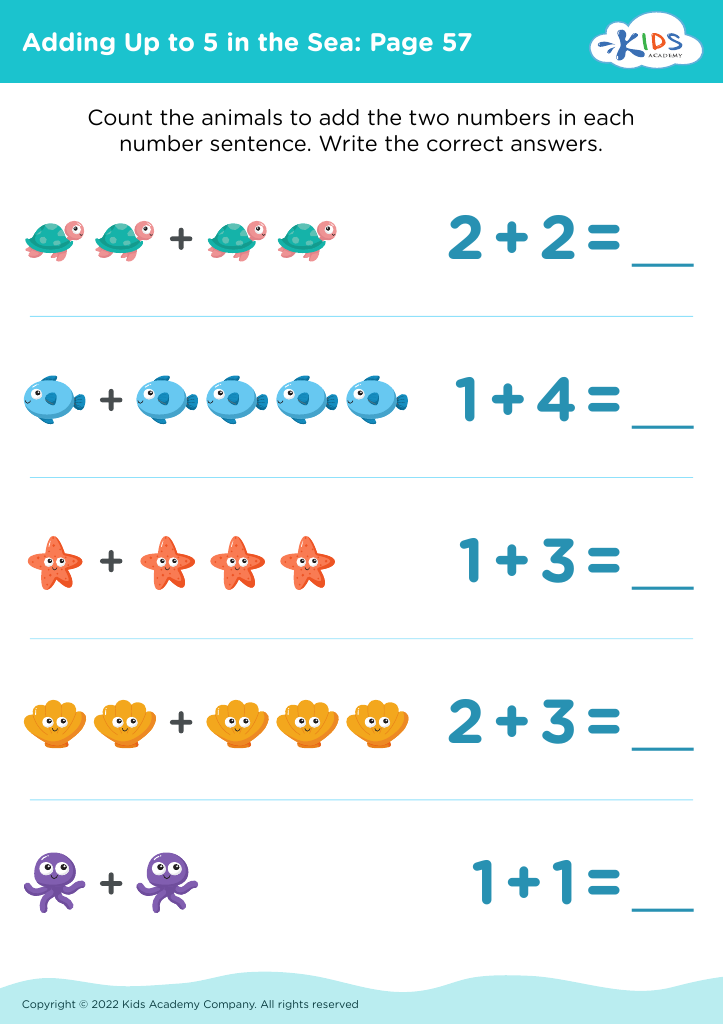
Adding Up to 5 in the Sea: Page 57
Worksheet
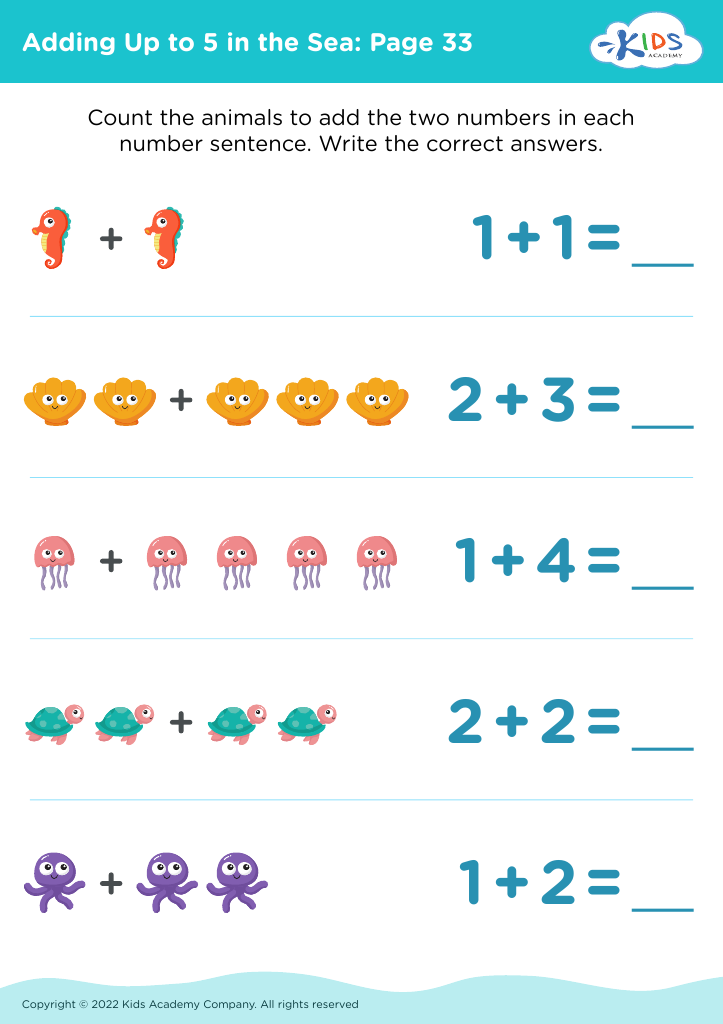
Adding Up to 5 in the Sea: Page 33
Worksheet
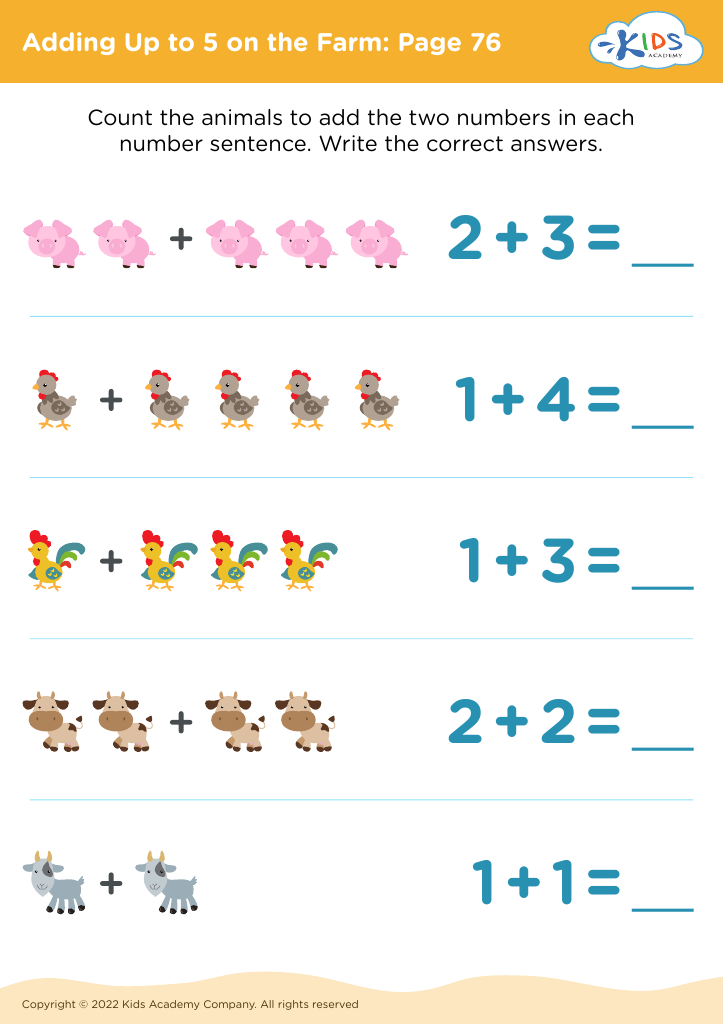
Adding Up to 5 on the Farm: Page 76
Worksheet
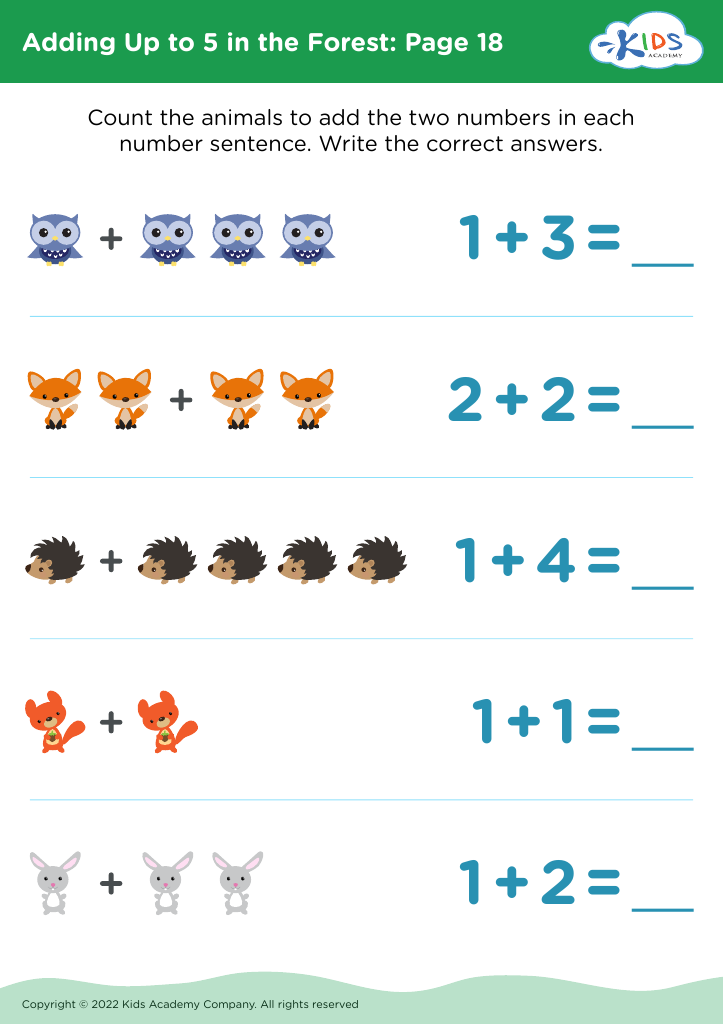
Adding Up to 5 in the Forest: Page 18
Worksheet
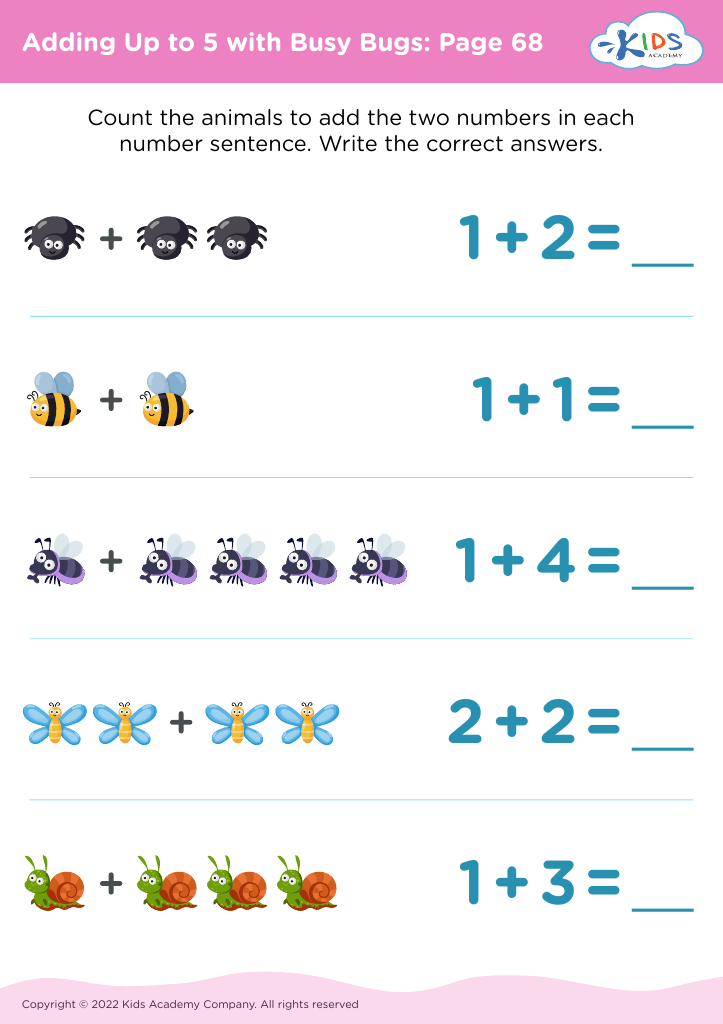
Adding Up to 5 with Busy Bugs: Page 68
Worksheet
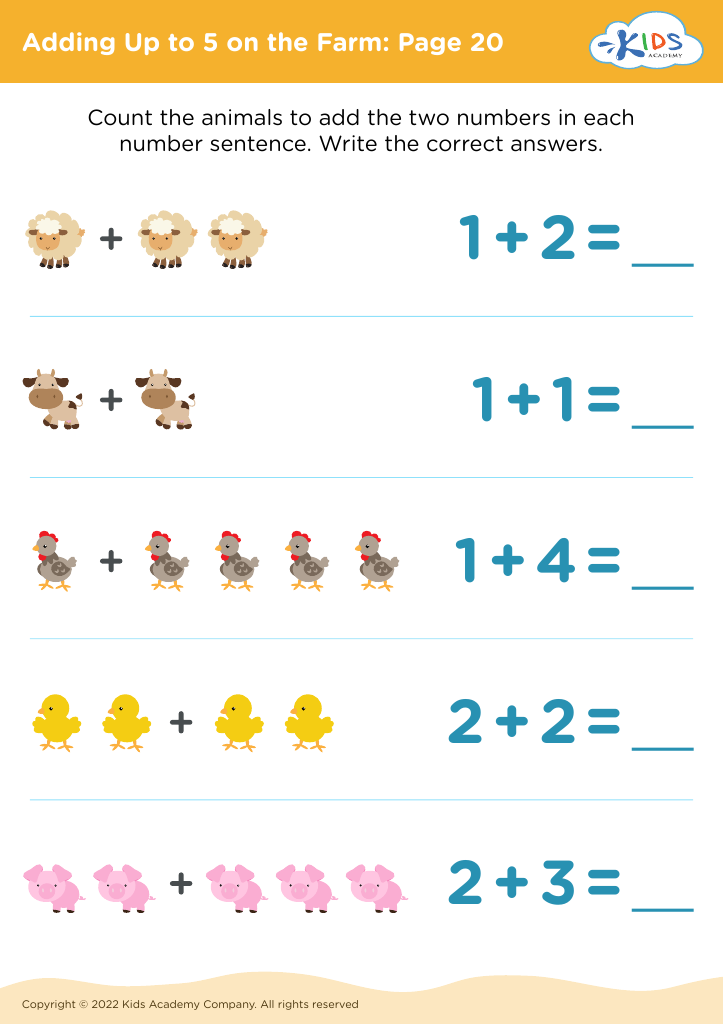
Adding Up to 5 on the Farm: Page 20
Worksheet
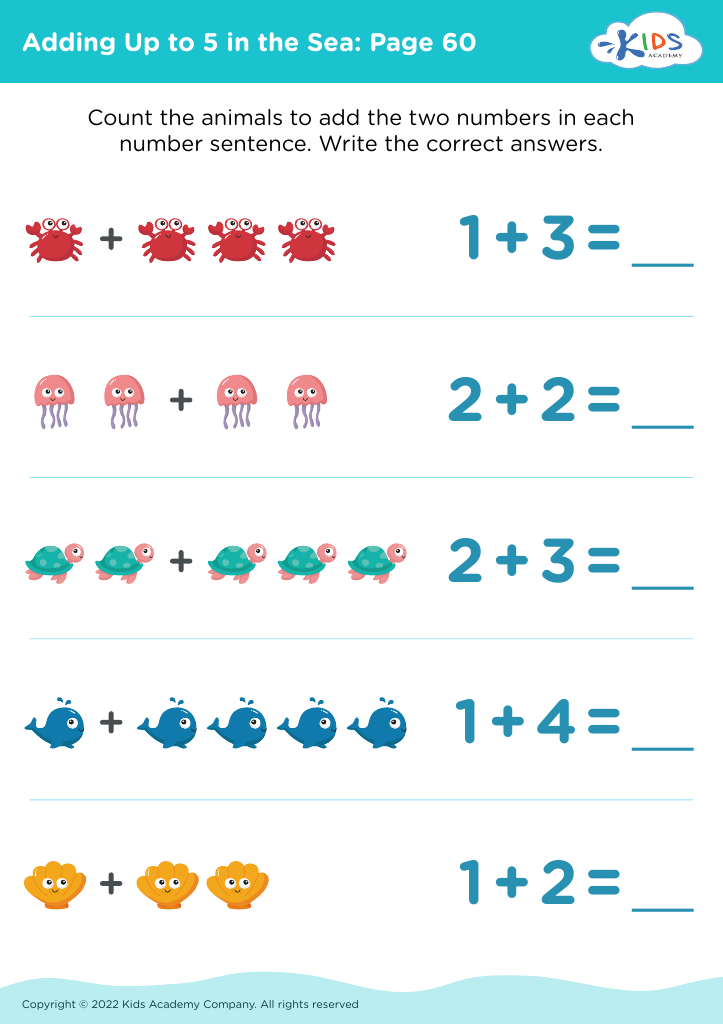
Adding Up to 5 in the Sea: Page 60
Worksheet
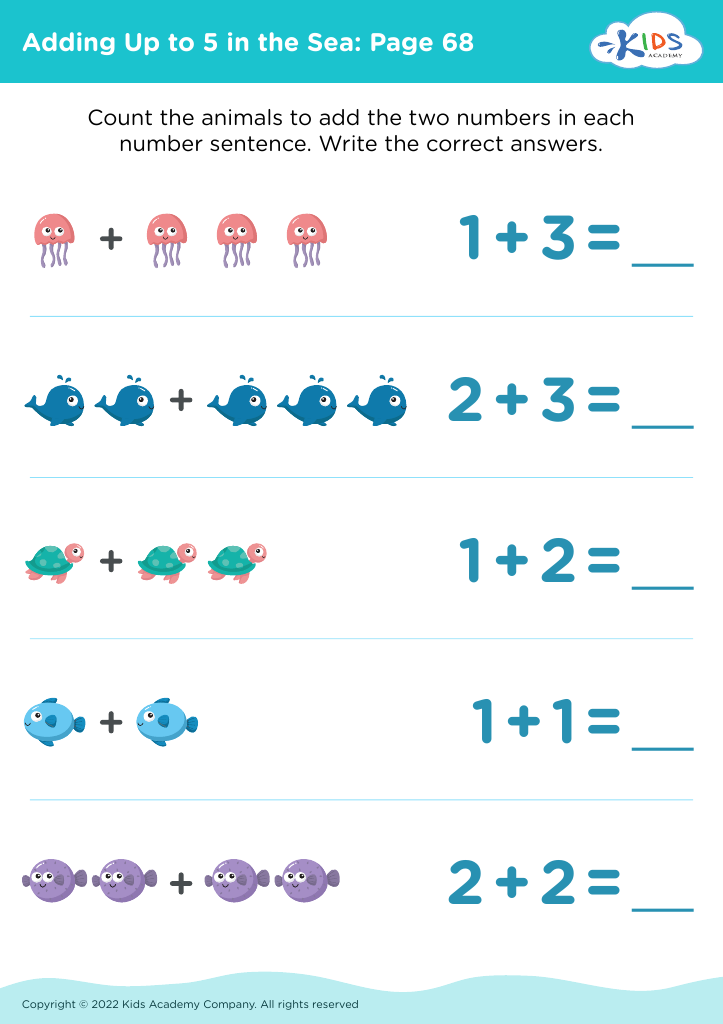
Adding Up to 5 in the Sea: Page 68
Worksheet
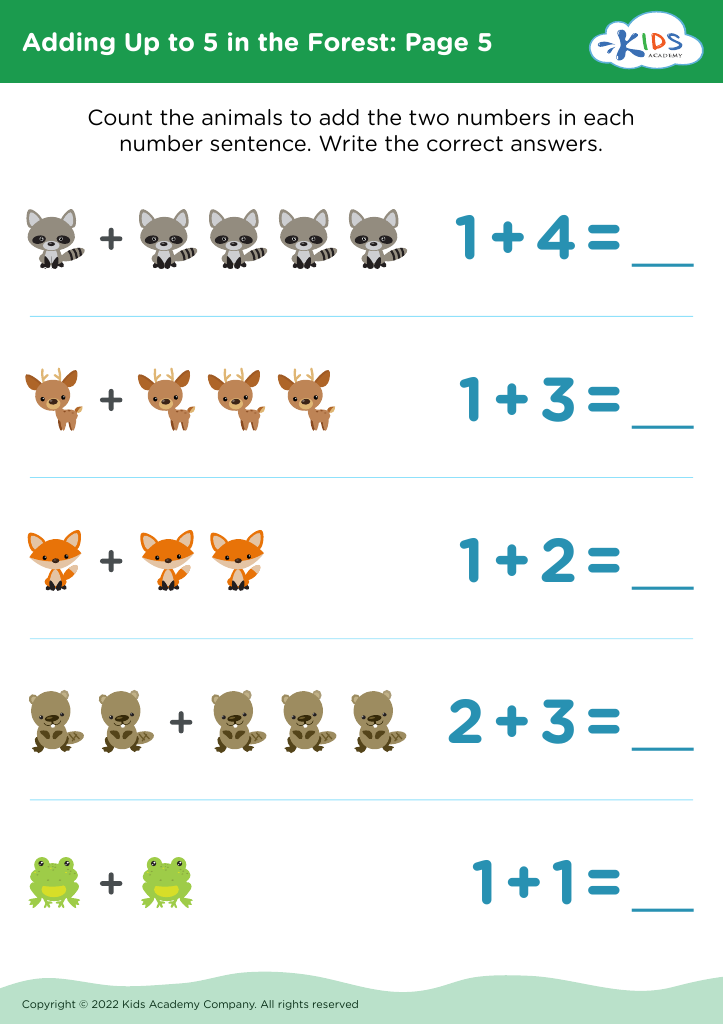
Adding Up to 5 in the Forest: Page 5
Worksheet
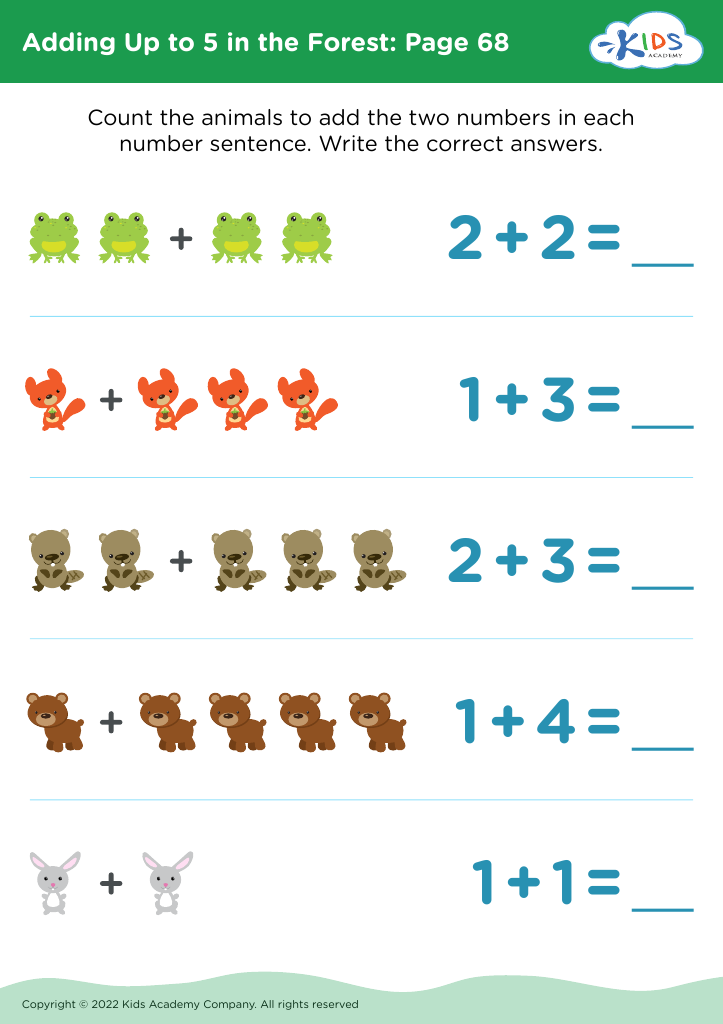
Adding Up to 5 in the Forest: Page 68
Worksheet
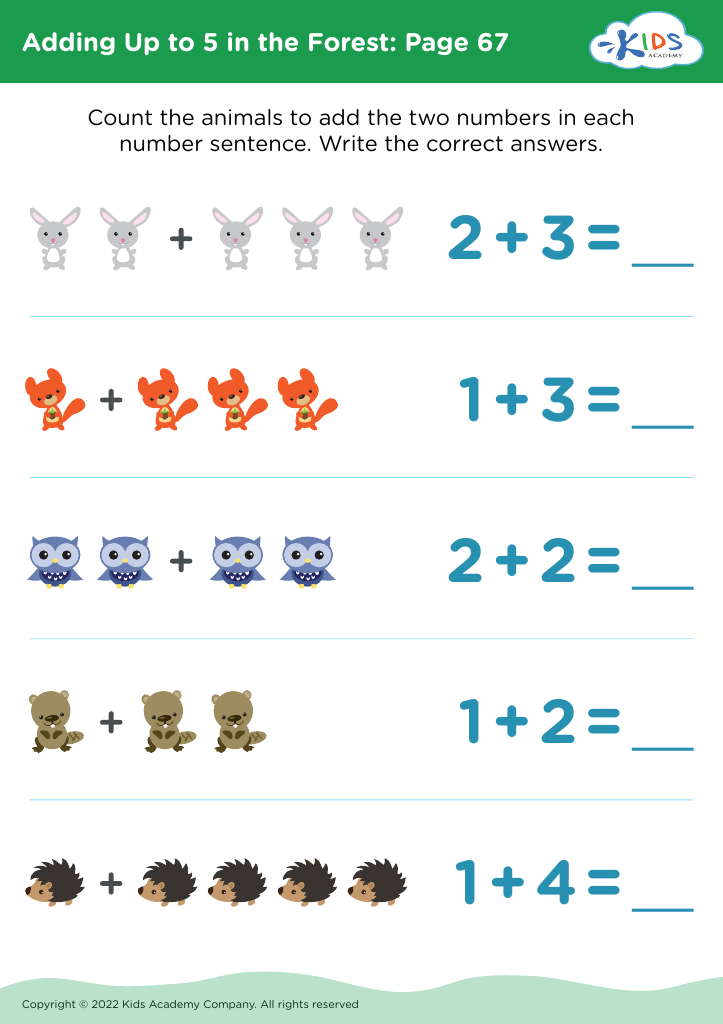
Adding Up to 5 in the Forest: Page 67
Worksheet
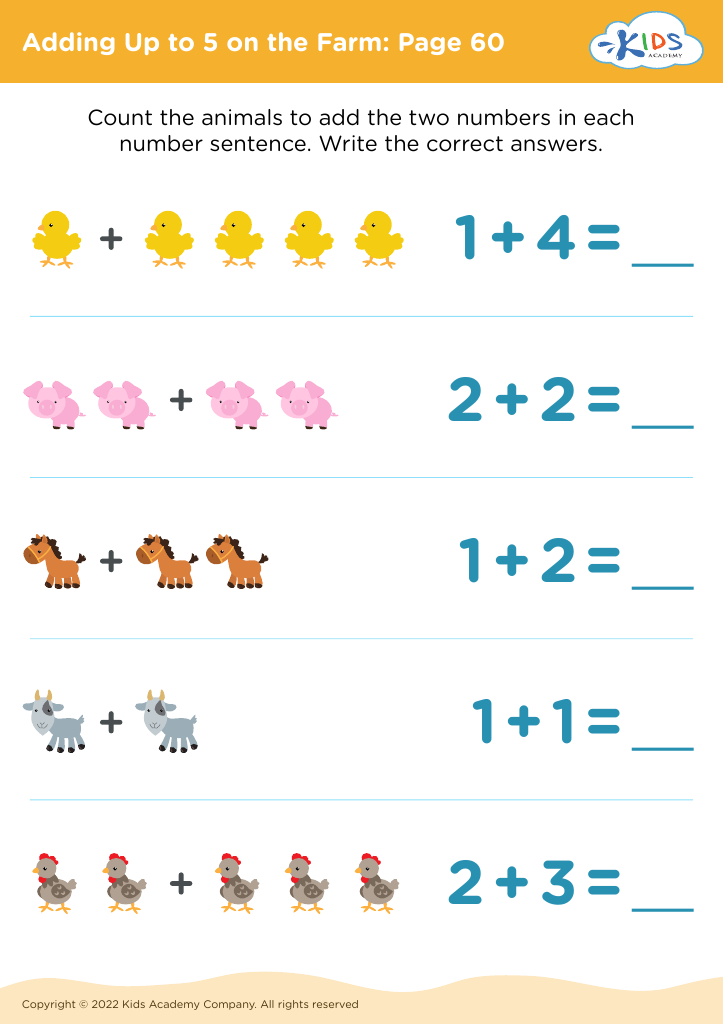
Adding Up to 5 on the Farm: Page 60
Worksheet


Understanding quantities that add up to 5 is crucial for children ages 3-7 as it lays the foundation for mathematical thinking and problem-solving skills. During these formative years, children begin to grasp basic mathematical concepts, which are essential for their future academic success.

When children comprehend that different combinations of numbers can equal the same total, such as 2 + 3 or 1 + 4, they not only develop their addition skills but also enhance their ability to recognize patterns and relationships within numbers. This understanding fosters a flexible mindset toward math, enabling them to approach more complex mathematical ideas with confidence.

Moreover, learning to see numbers in terms of greater and lesser quantities promotes critical thinking and boosts cognitive development. It prepares children for subsequent lessons in arithmetic, algebra, and further mathematical concepts, ensuring they have the requisite skills to progress successfully through their education.

For parents and teachers, emphasizing this early understanding cultivates a love for learning and exploration of mathematics in young children. Engaging them in playful, hands-on activities related to quantities can make learning enjoyable and meaningful, setting positive attitudes toward math that will last throughout their academic journey and beyond.