Visual-motor skills Adding Up to 5 Worksheets for Ages 3-7
3 filtered results
-
From - To
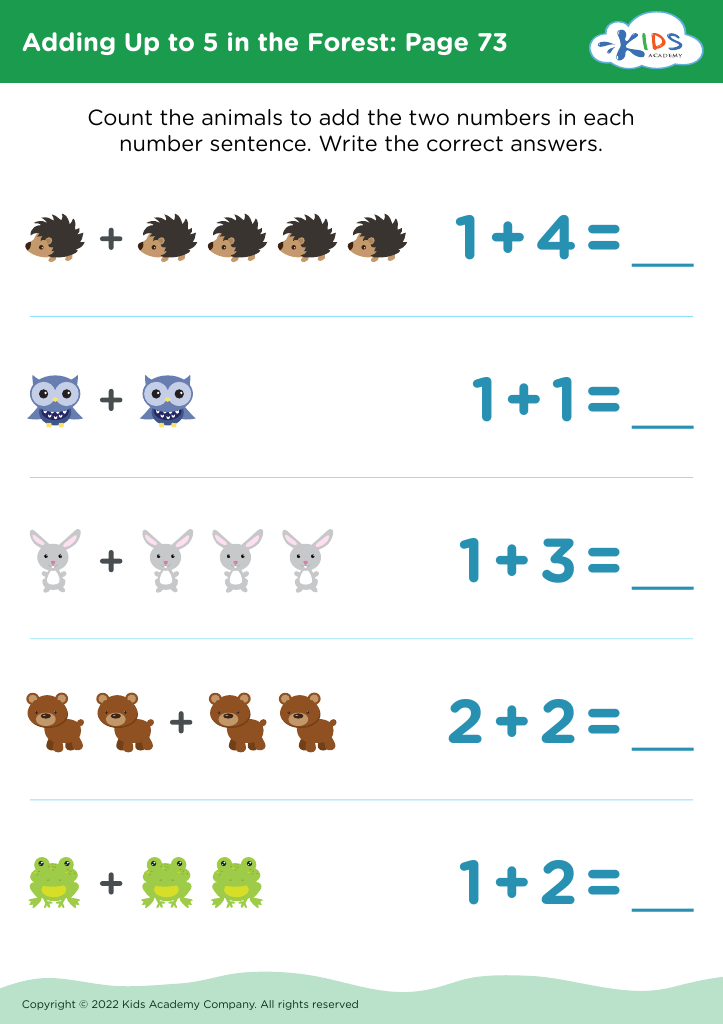
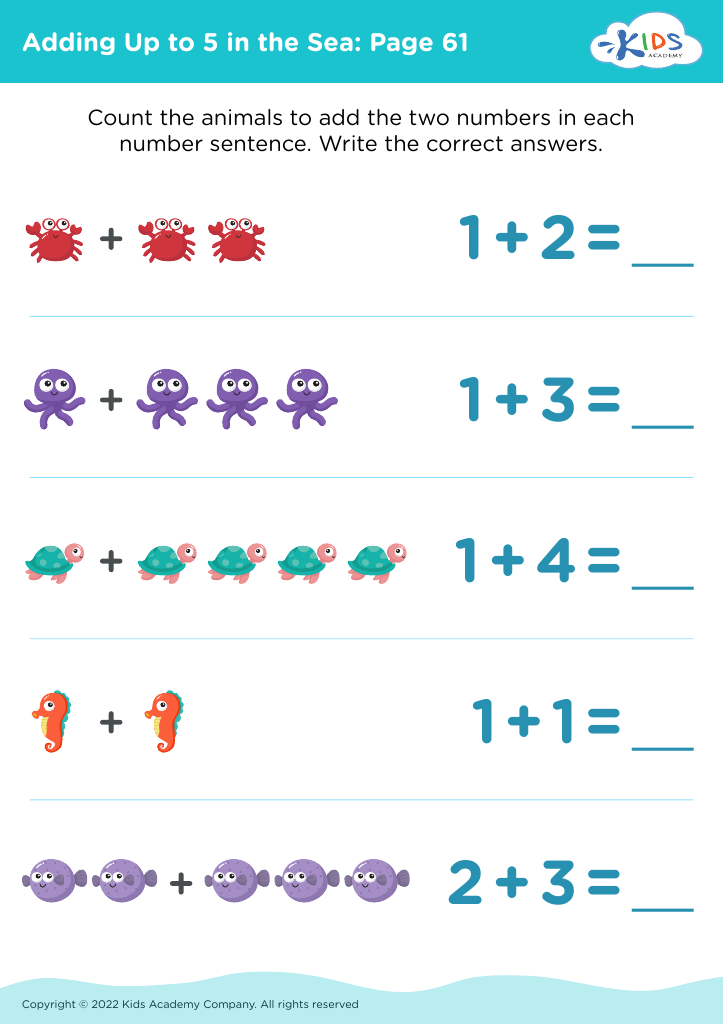
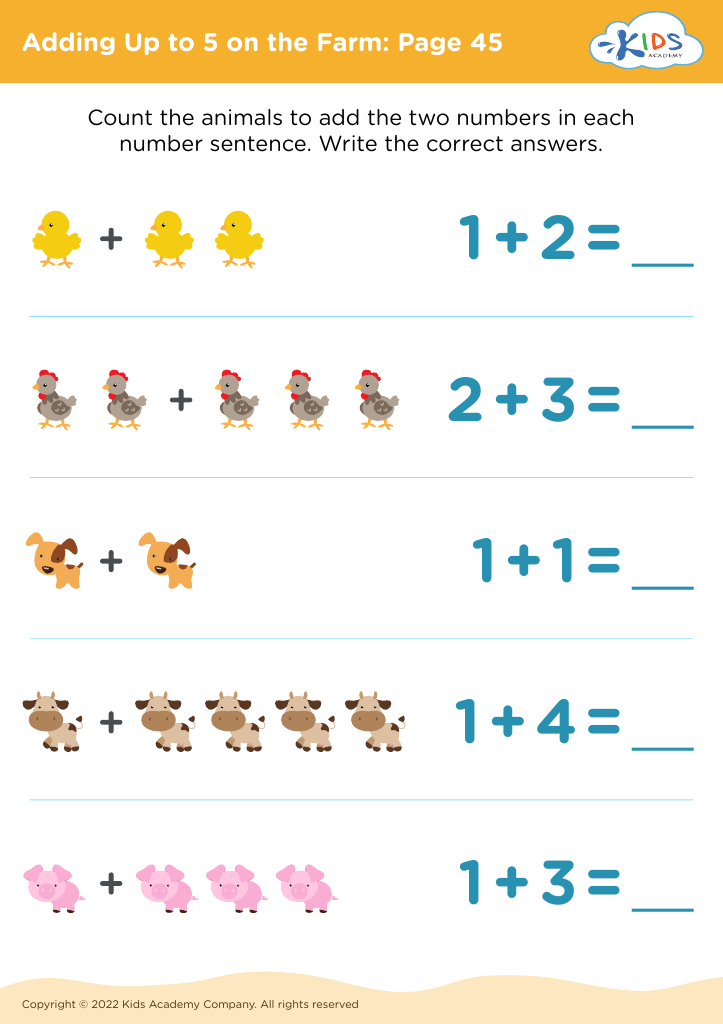
Enhance your child's learning experience with our "Visual-Motor Skills Adding Up to 5 Worksheets," designed specifically for ages 3 to 7. These engaging worksheets not only teach fundamental addition skills but also help young learners develop essential visual-motor coordination. By integrating fun activities and colorful visuals, children can practice counting, matching, and delightful problem-solving tasks. Ideal for home and classroom settings, our worksheets are perfect for reinforcing math concepts through enjoyable, hands-on learning. Empower your little ones with the foundational skills they need to succeed in mathematics while fostering creativity and fine motor development. Discover the joy of learning with us today!



.jpg)

%20(1).jpg)


Visual-motor skills are crucial developmental competencies in early childhood, significantly influencing a child's ability to learn and engage effectively in educational activities. For children aged 3-7, mastering the skill of adding numbers up to 5 requires not only comprehension of mathematical concepts but also the coordination of visual perception and motor output. This capability is essential for writing, drawing, and manipulating objects, all fundamental activities in early education.
Parents and teachers should care about these skills because they lay the groundwork for more advanced academic abilities. Proficient visual-motor skills help children in tasks such as counting small objects, completing puzzles, and collaborating in group activities, all essential for cognitive and social development. Furthermore, as children progress in their learning journeys, these skills support their ability to read and write, engage with math concepts, and develop problem-solving strategies.
By recognizing the significance of enhancing visual-motor skills, parents and teachers can create opportunities and provide resources that foster this development, ensuring that children build confidence and a strong foundation in learning. This investment not only improves proficiency in mathematics but enriches overall learning experiences for young children.








