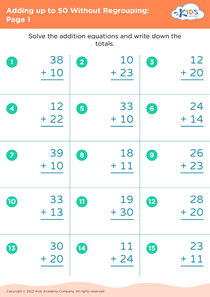
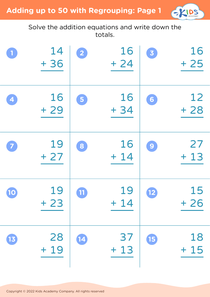
Counting practice Adding up to 50 Misc Worksheets for Ages 3-7
5 filtered results
-
From - To
Perfect for ages 3-7, our "Counting Practice Adding up to 50 Misc Worksheets" are designed to make learning math fun and engaging. These worksheets help young learners develop their counting skills gradually, ensuring they grasp the fundamentals of addition and number recognition. With vibrant illustrations and interactive activities, kids will enjoy adding numbers up to 50, building a solid foundation for future math success. Ideal for both classroom and home use, these worksheets offer varied exercises tailored to different learning styles, enhancing concentration and critical thinking. Watch your child's confidence and skills grow with each completed sheet!
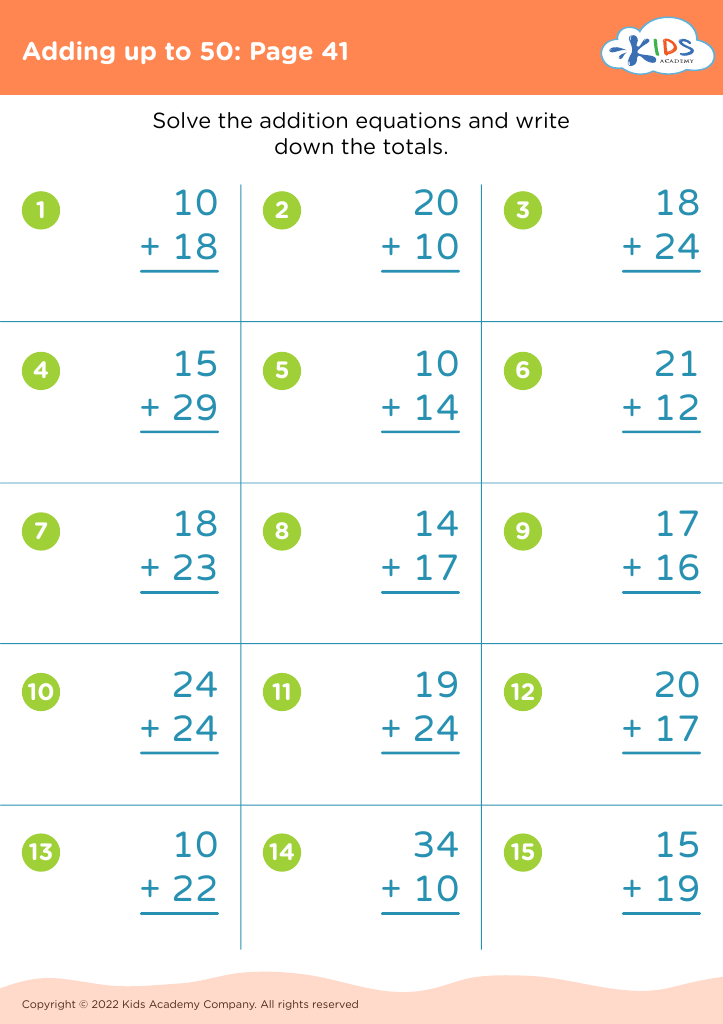
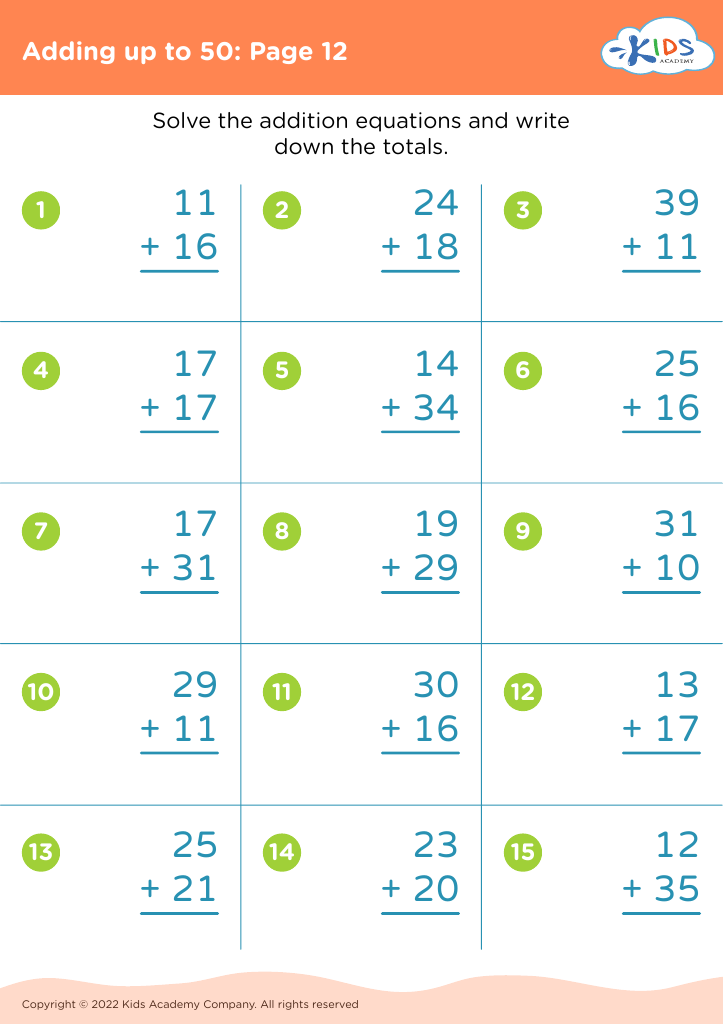
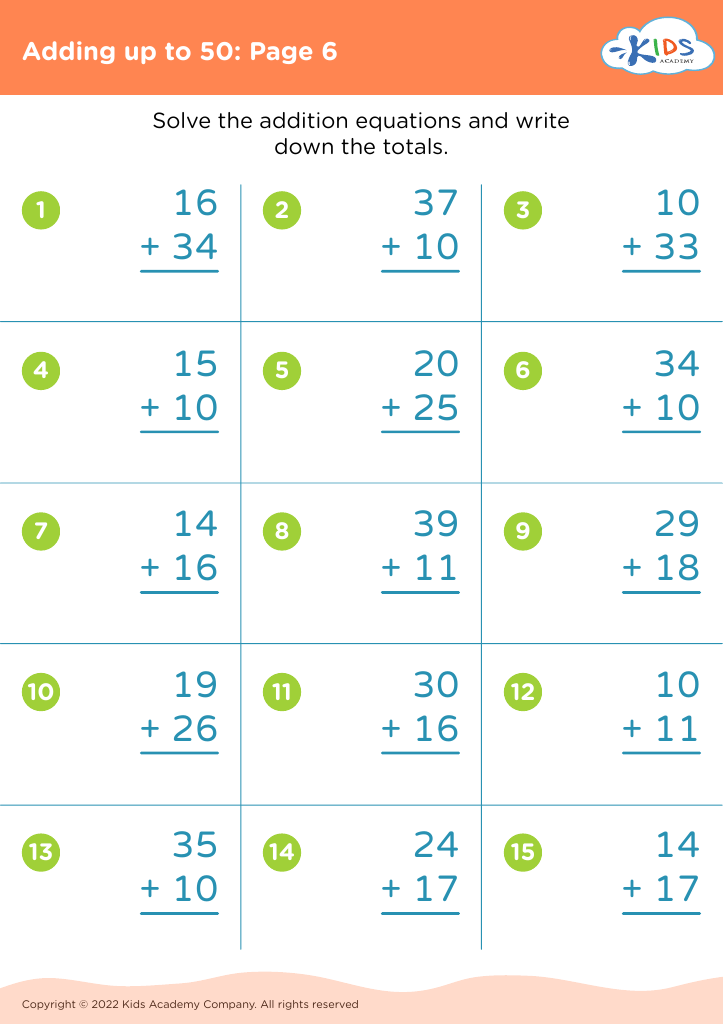
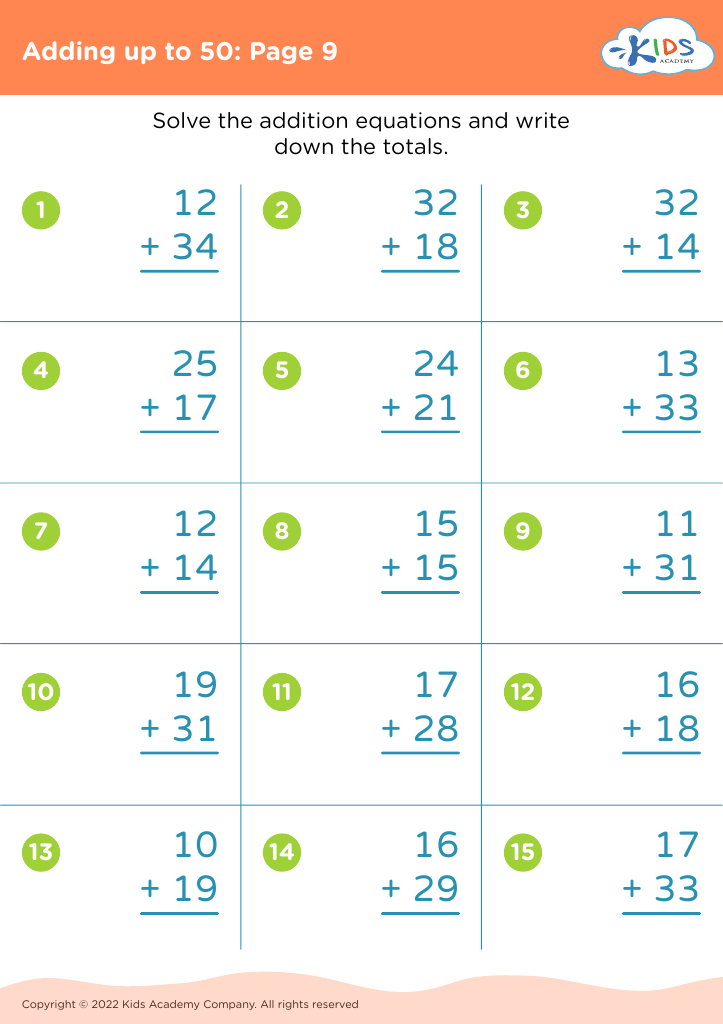
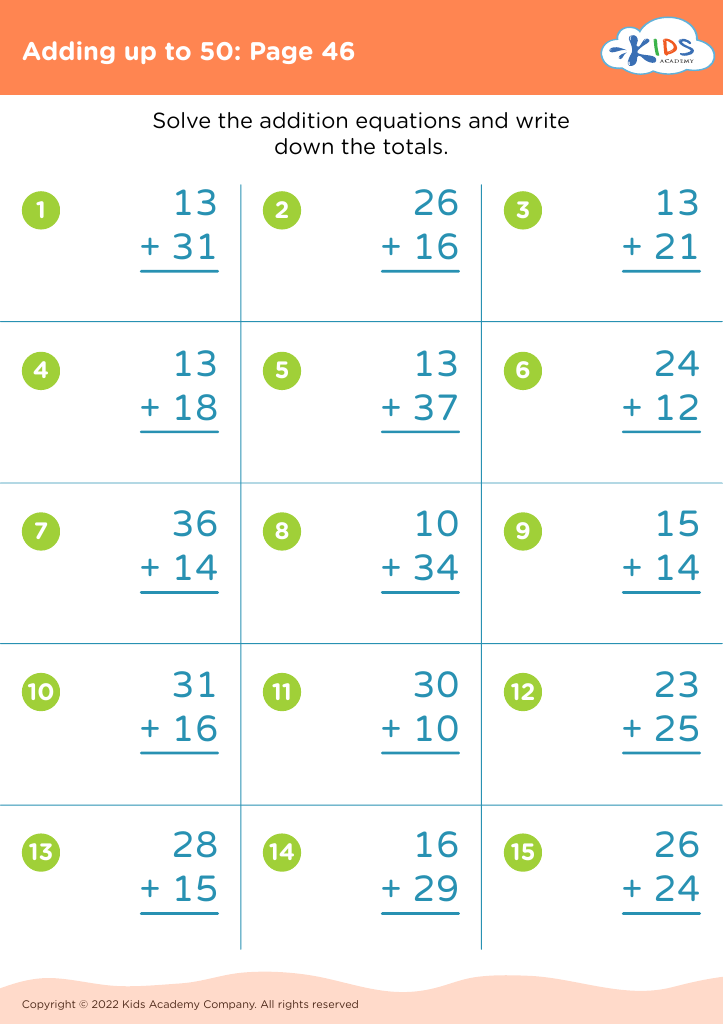


Counting practice and adding up to 50 in early childhood is crucial for multiple reasons. Firstly, it forms the foundational base for future mathematical learning. When children ages 3-7 develop counting skills, they enhance their number sense, which is the ability to understand, relate, and connect numbers. This early proficiency paves the way for more complex math concepts like addition, subtraction, multiplication, and division.
Furthermore, early counting practice helps children enhance their cognitive skills, such as memory, attention, and the ability to follow patterns and sequences. These cognitive benefits facilitate overall academic performance beyond just math. For instance, improved attention spans can aid in reading skills and other learning activities.
Additionally, engaging in counting activities can be a social experience, where kids learn to communicate, cooperate, and solve problems together, fostering interpersonal skills. Hands-on counting exercises can also make learning fun, thereby boosting a child's desire to learn and engage actively in classroom activities.
Lastly, early success in mathematics can increase a child’s confidence and positivity towards the subject, creating a lifelong interest in learning and discovery. For parents and teachers, prioritizing counting practice and basic addition up to 50 ensures children are well-prepared and enthusiastic about their educational journey ahead.