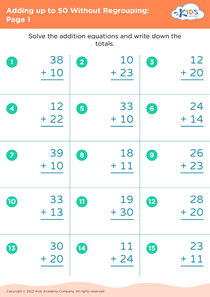
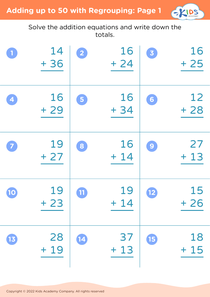
Understanding multiplication Adding up to 50 Misc Worksheets for Ages 3-7
3 filtered results
-
From - To
Discover engaging worksheets designed to help children aged 3-7 master the concept of multiplication through fun and interactive activities. Our "Understanding Multiplication: Adding Up to 50 Misc Worksheets" focuses on building essential math skills by introducing the fundamentals of multiplication in an enjoyable way. These worksheets feature colorful graphics and age-appropriate exercises that encourage young learners to explore the relationship between addition and multiplication, paving the way for a solid mathematical foundation. Perfect for both home and classroom use, these resources aim to make learning multiplication easy and enjoyable for early learners. Start your child’s math journey today!
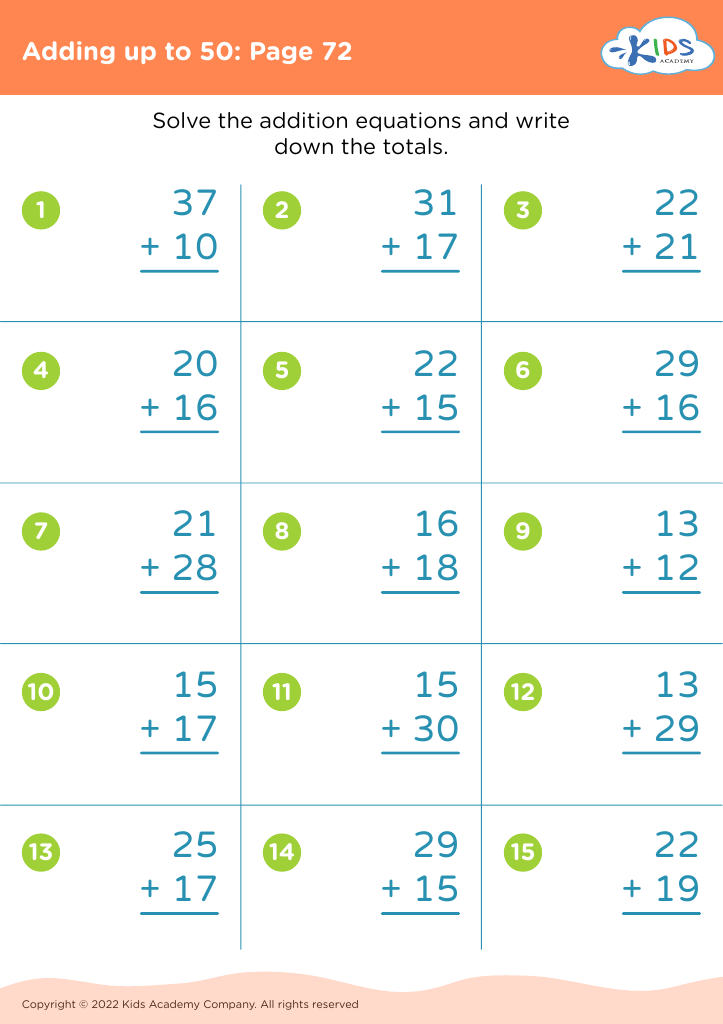
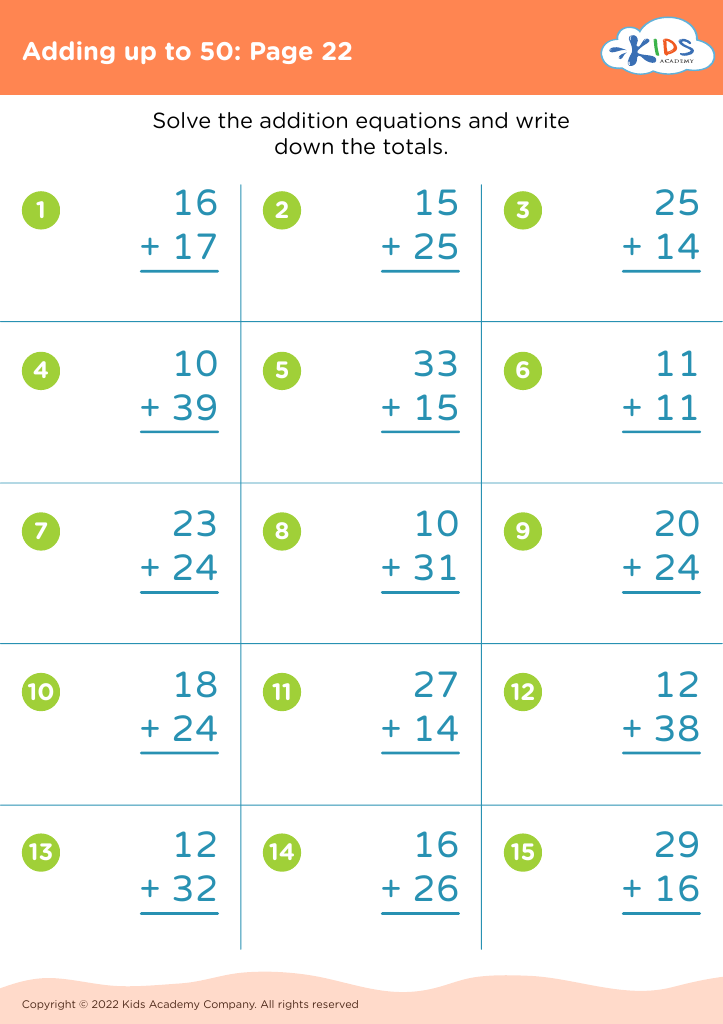
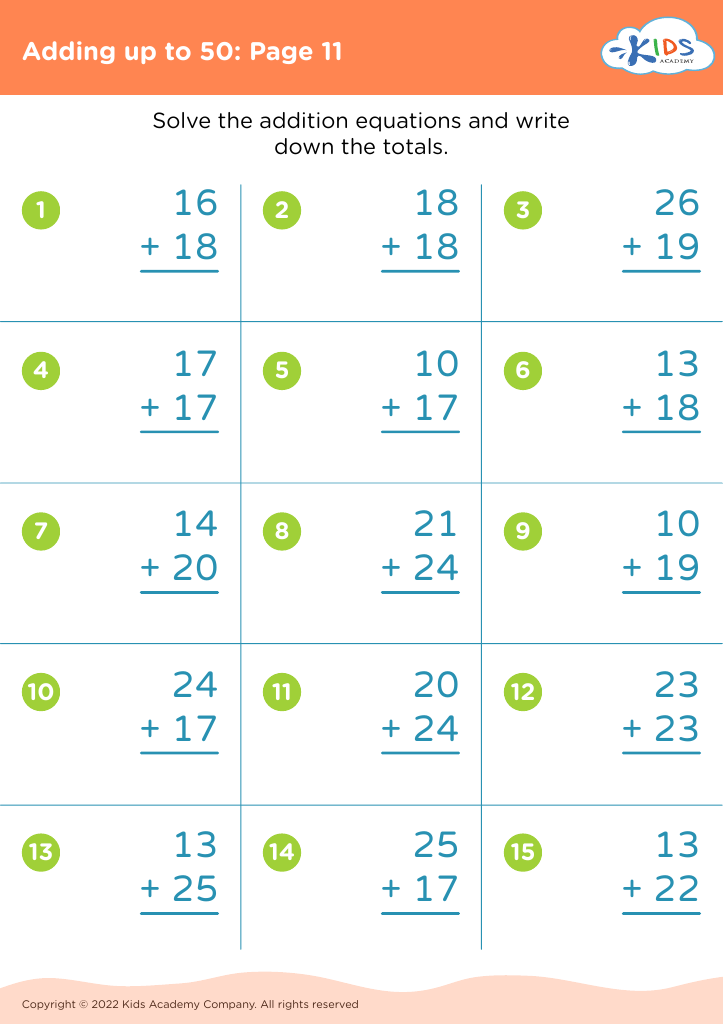


Understanding multiplication and addition from an early age is crucial for children aged 3-7 as it lays the foundation for their future mathematical skills and cognitive development. Mastery of these concepts helps children recognize patterns, which enhances their analytical thinking and problem-solving abilities. For instance, engaging in playful multiplication activities and addition exercises that total 50 can make learning enjoyable and relatable.
Parents and teachers play a vital role in this early learning stage. By incorporating interactive games, visual aids, and hands-on activities, they can create a stimulating environment that fosters a love for math. These understandings also support literacy and communication skills as children articulate their thought processes. Moreover, following a structured approach to grasping these concepts can cultivate students' confidence and resilience in tackling more complex math later on.
Encouraging children to explore numbers adds breadth to their learning experiences and allows for social interaction when done in group settings. Ultimately, investing in early math skills contributes significantly to academic success and helps students navigate various real-life situations effectively. By prioritizing this learning phase, parents and teachers can ignite children’s curiosity and prepare them for a lifetime of learning and exploration in math and beyond.