Understanding symmetry Adding up to 50 Misc Worksheets for Ages 3-7
3 filtered results
-
From - To
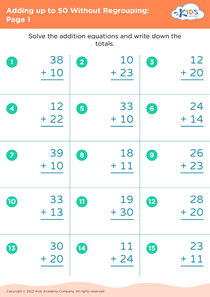
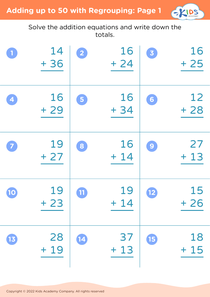
Explore our "Understanding Symmetry: Adding up to 50 Misc Worksheets" tailored for children ages 3-7! This engaging collection helps young learners grasp the concept of symmetry while developing their addition skills up to 50. Each worksheet features fun patterns, shapes, and exercises designed to make math enjoyable and intuitive. Children will enhance their critical thinking, artistic expression, and mathematical understanding as they explore symmetrical designs and solve addition problems. Perfect for home or classroom use, these worksheets encourage creativity and confidence in early math skills. Download and watch your little ones thrive in their understanding of symmetry and addition!
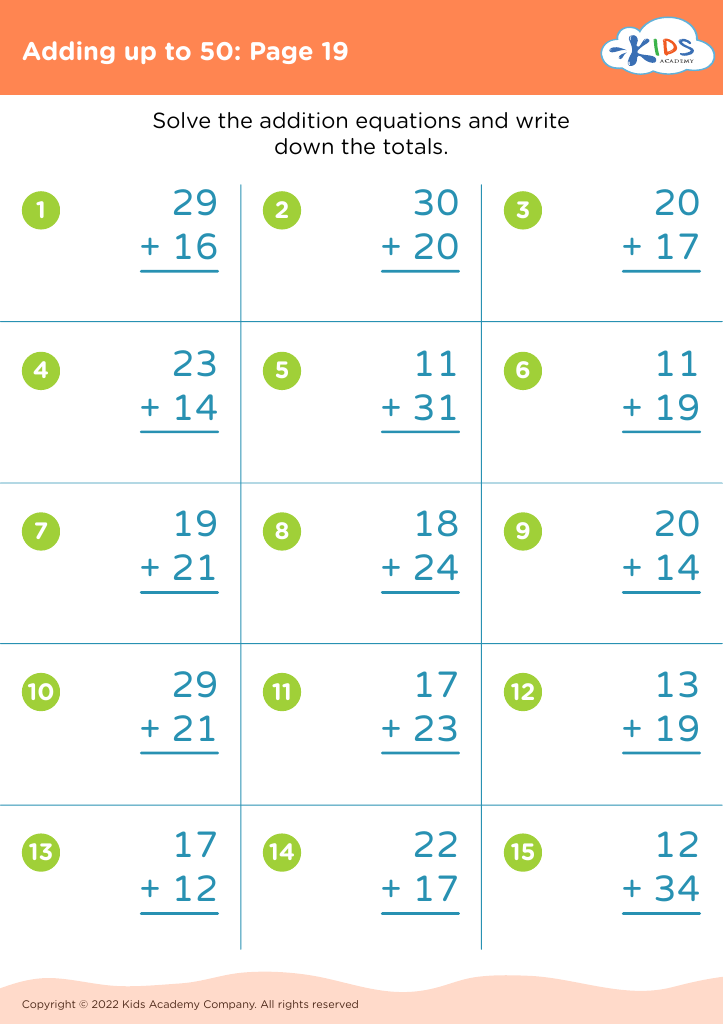
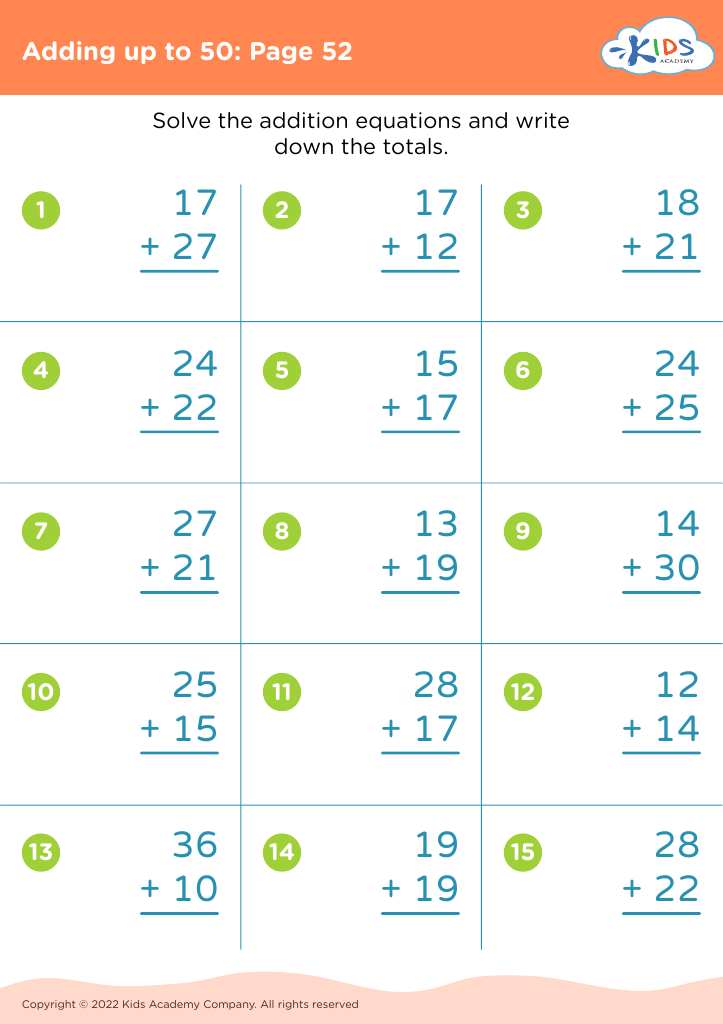
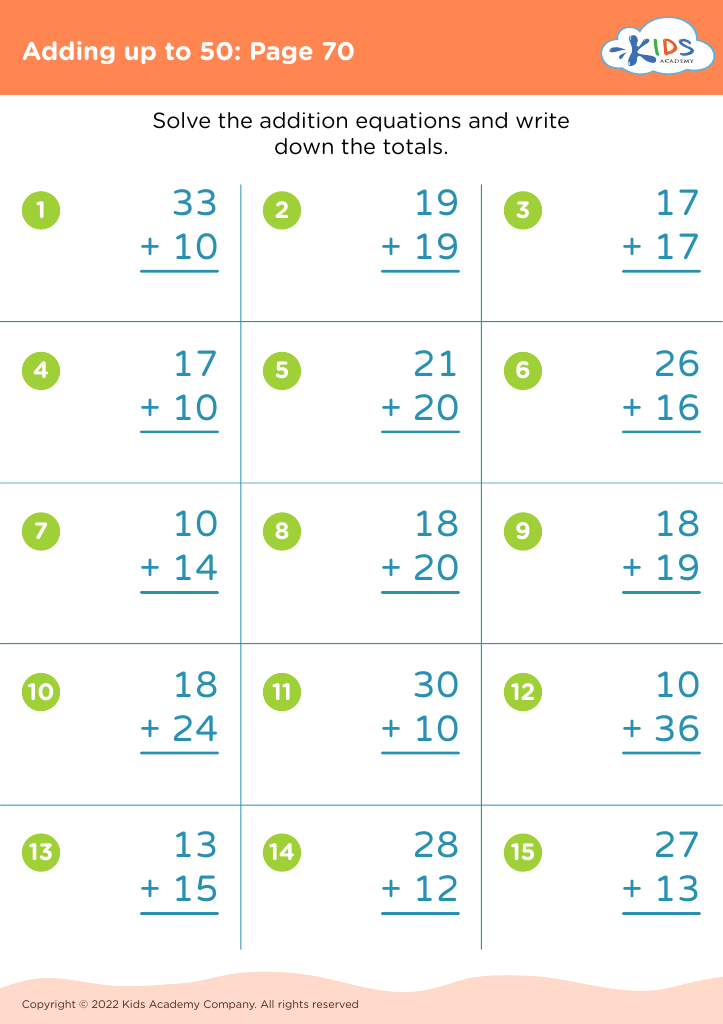


Understanding symmetry and the concept of adding up to 50 are critical foundational skills for children ages 3-7. For parents and teachers, these concepts not only enhance mathematical abilities but also support cognitive and developmental growth.
Symmetry helps children recognize patterns, shapes, and spatial relationships, which are essential in subjects like art and science. Engaging with symmetry fosters creativity and critical thinking skills as children learn to identify and replicate balanced designs. These skills drive problem-solving abilities, enabling young learners to approach challenges with confidence.
Meanwhile, learning to add up to 50 lays the groundwork for arithmetic fluency. Mastering addition at an early age helps children grasp the number line and develop a sense of quantity, making higher-level math more achievable later in life. Additionally, early number skills are linked to greater academic success in problem-solving and analytical reasoning.
Integrating symmetry and addition into everyday learning activities creates an environment rich in exploration and discovery. As children engage in practical, fun experiences with these concepts, they develop a love for learning, bolstering both their self-esteem and motivation to explore mathematics in greater depth. Thus, fostering these skills is essential for holistic child development.