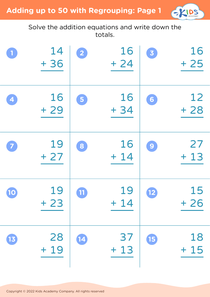
Counting practice Adding up to 50 Without Regrouping Worksheets for Ages 3-7
5 filtered results
-
From - To
Our "Counting Practice Adding up to 50 Without Regrouping Worksheets" are designed for children ages 3-7 to make learning basic addition simple and fun. These worksheets help young learners practice and improve their counting and addition skills up to 50 without the complexity of regrouping, ensuring a solid foundational understanding of math. Each page is filled with engaging problems that boost confidence and foster a love for math. Perfect for use at home or in the classroom, these printable worksheets are an excellent resource for developing arithmetic skills in a structured and enjoyable manner. Download now to start exploring the fun of math!
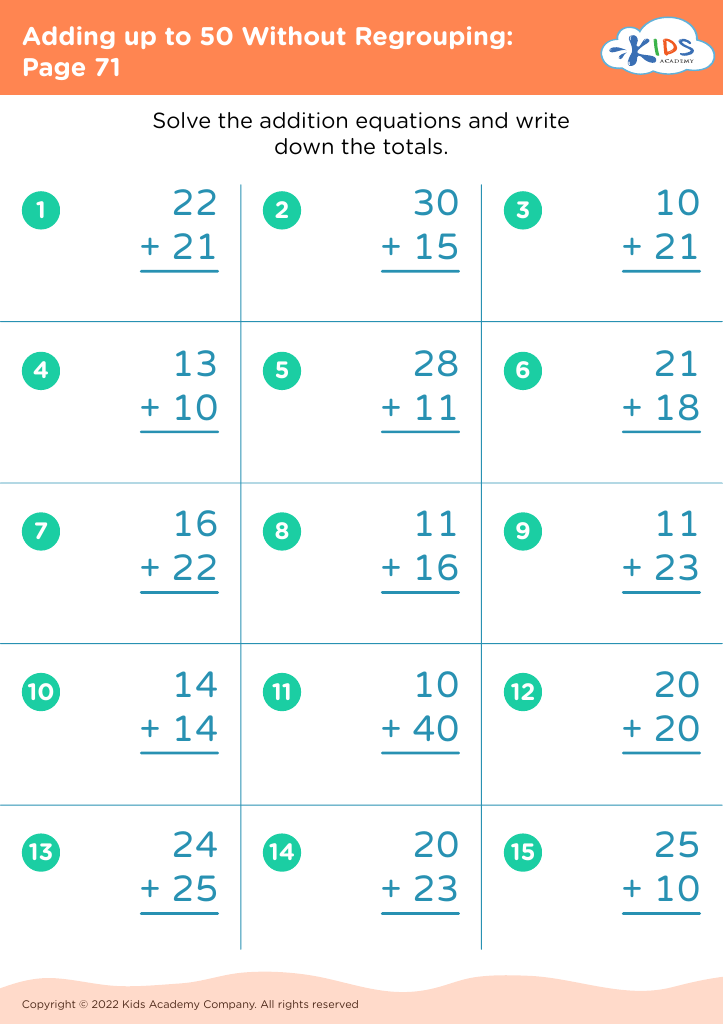
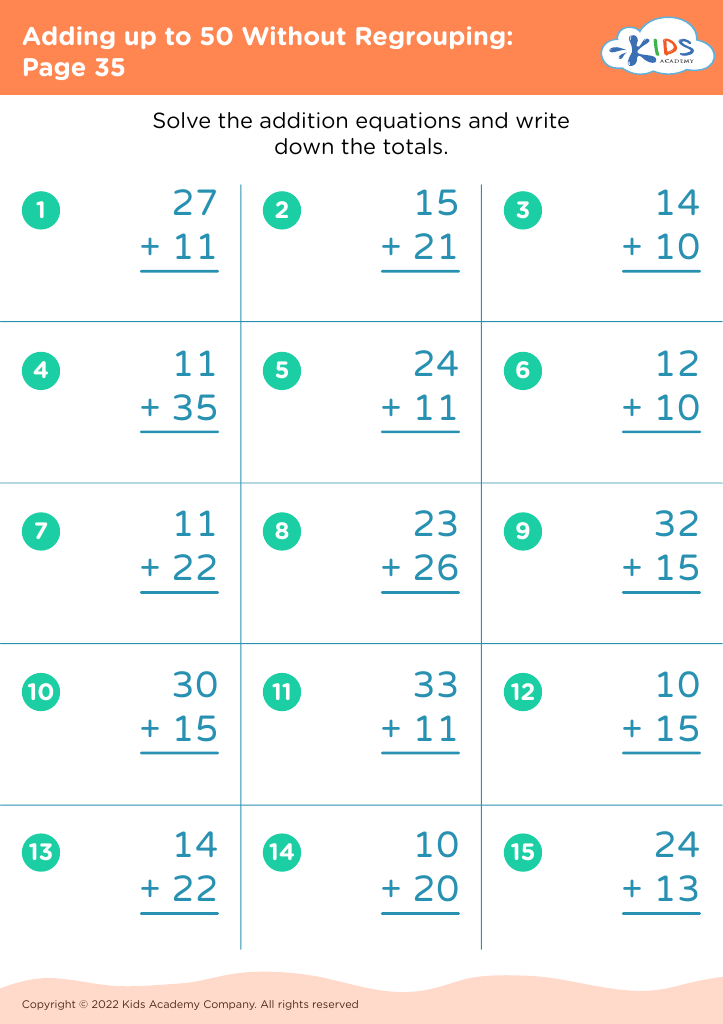
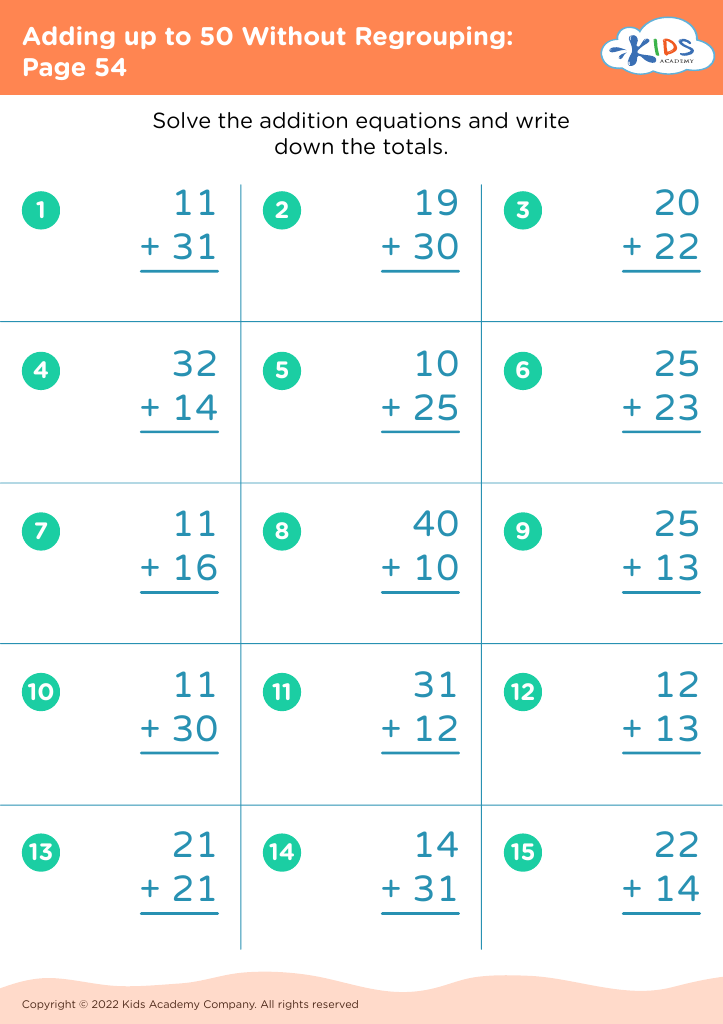
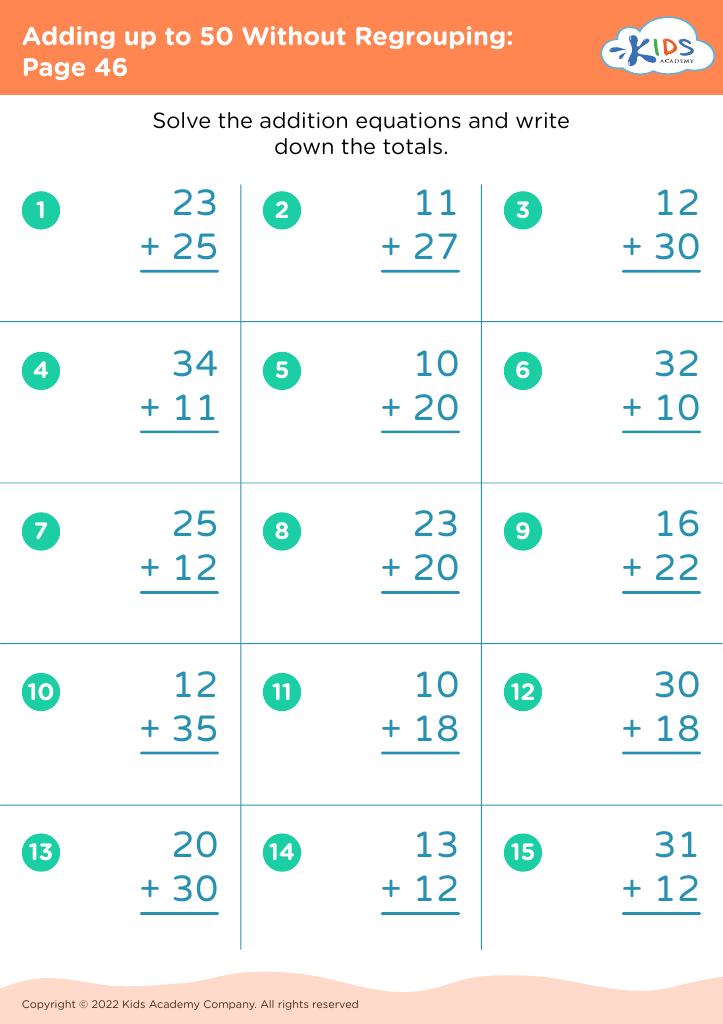
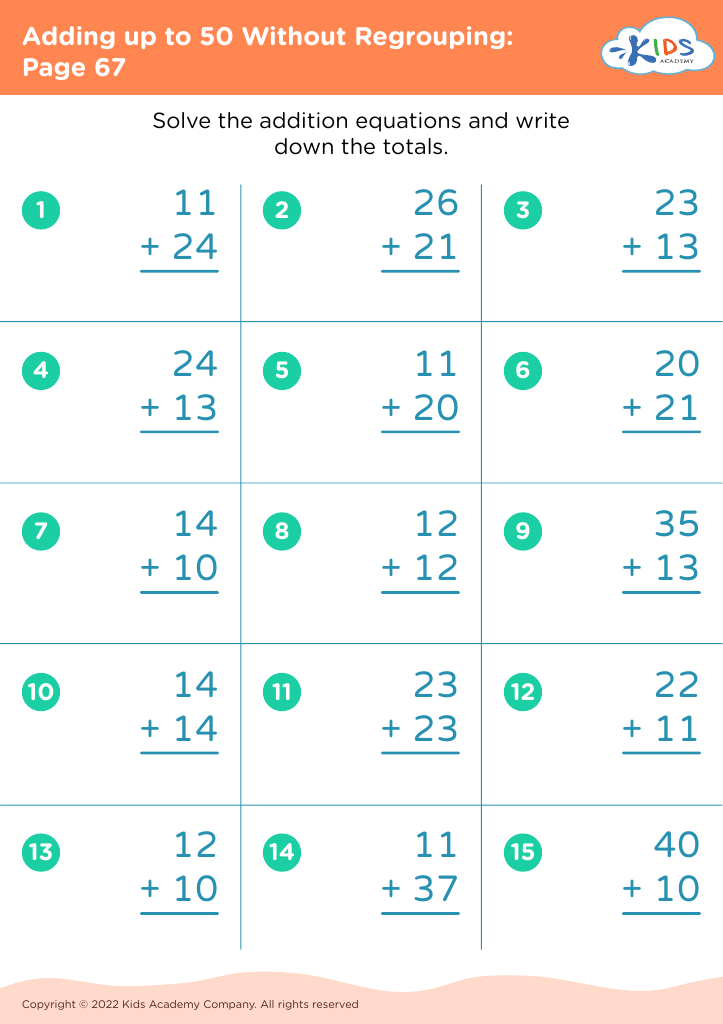


Counting practice and adding up to 50 without regrouping are foundational skills that set the stage for future mathematical learning for children aged 3-7. Early exposure and practice with these skills help young learners develop number sense, which is the ability to understand, relate, and connect numbers. Number sense is critical because it is the building block for all higher-level math concepts.
For parents, fostering these skills through everyday activities can create a positive attitude toward math. For instance, counting objects around the house, playing simple counting games, or using visual aids like number lines or counters can make learning fun and engaging. Teachers can incorporate structured activities, such as interactive counting books, manipulatives, and digital games to make practice enjoyable and effective.
Mastering addition up to 50 without regrouping simplifies future learning of more complex math concepts, such as regrouping, subtraction, multiplication, and eventually, problem-solving and algebra. Children who continuously practice these skills develop confidence in their mathematical abilities. This confidence can have a long-term impact on their academic success, as well as on their ability to handle real-life situations that require mathematical reasoning.
Caring about these early skills equips children with the necessary tools for a smoother transition to more advanced math, fostering both a deep understanding and a love for the subject.