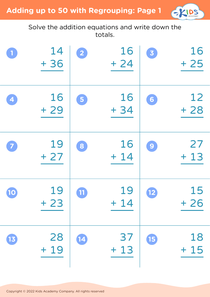
Fraction simplification Adding up to 50 Without Regrouping Worksheets for Ages 3-7
7 filtered results
-
From - To
Explore our engaging "Fraction Simplification Adding Up to 50 Without Regrouping Worksheets" designed for children ages 3-7. These worksheets provide a fun and interactive way to introduce young learners to the basics of fraction simplification while focusing on addition strategies that avoid regrouping. Each worksheet features vibrant visuals and kid-friendly activities that encourage critical thinking and reinforce foundational math concepts. Perfect for classroom settings or at-home learning, these worksheets aim to boost confidence and comprehension in early math skills. Help your child build a strong mathematical foundation today with our carefully crafted materials!
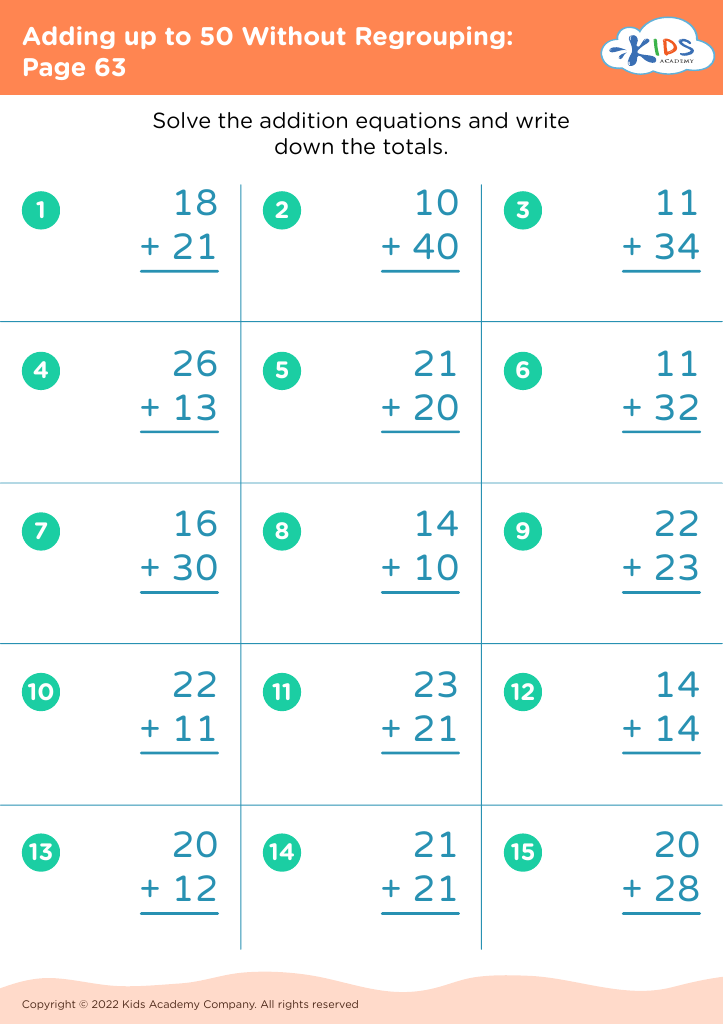
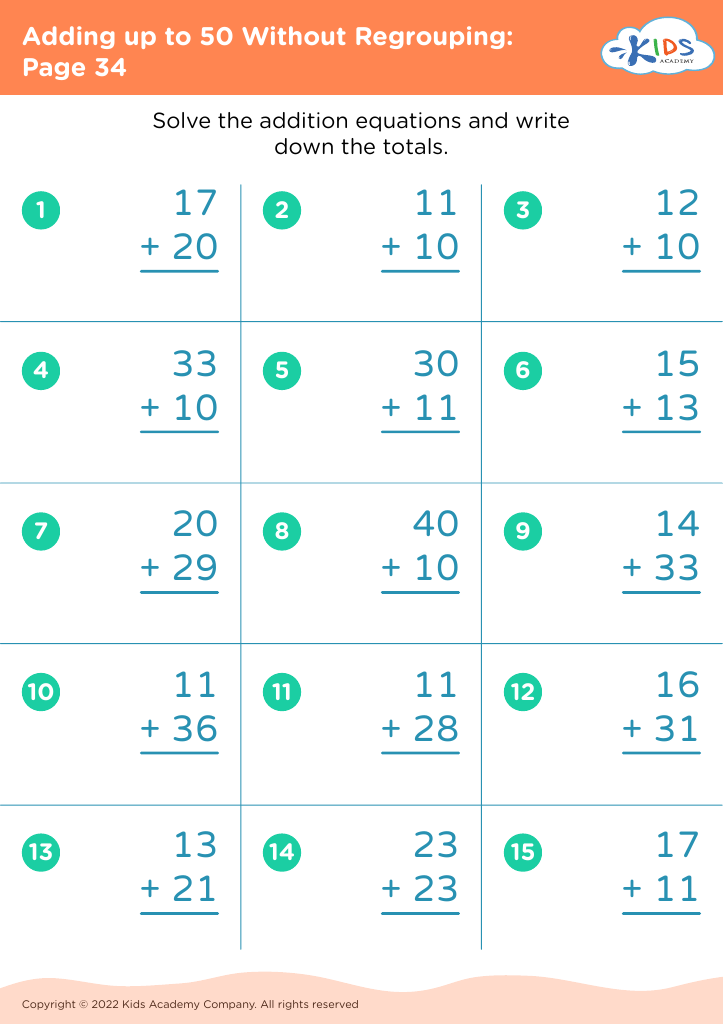
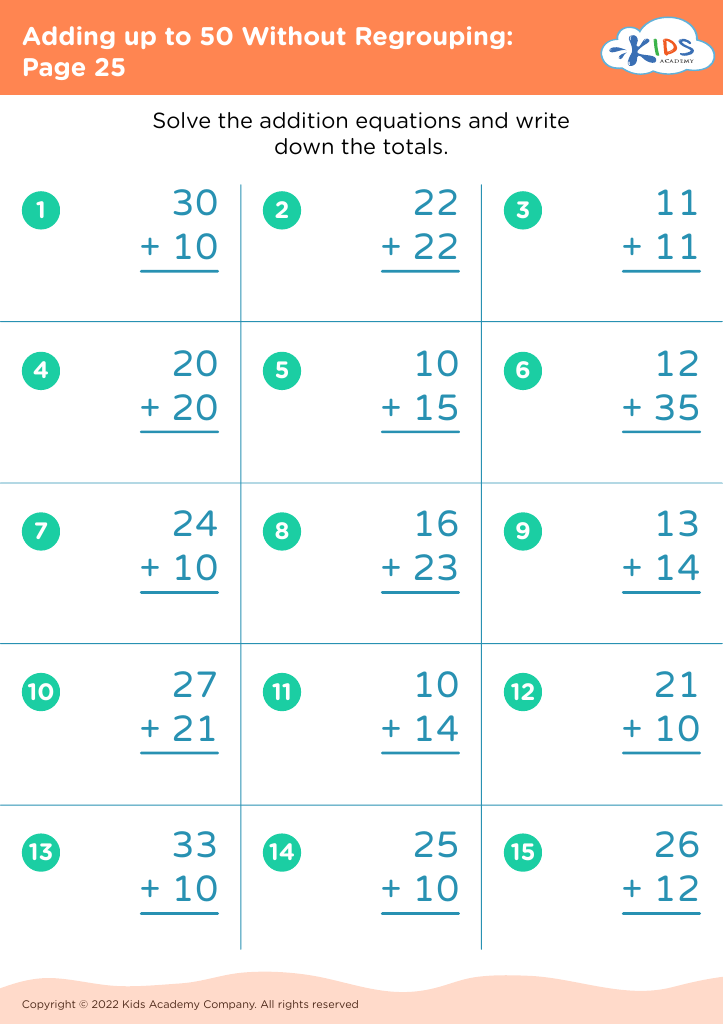
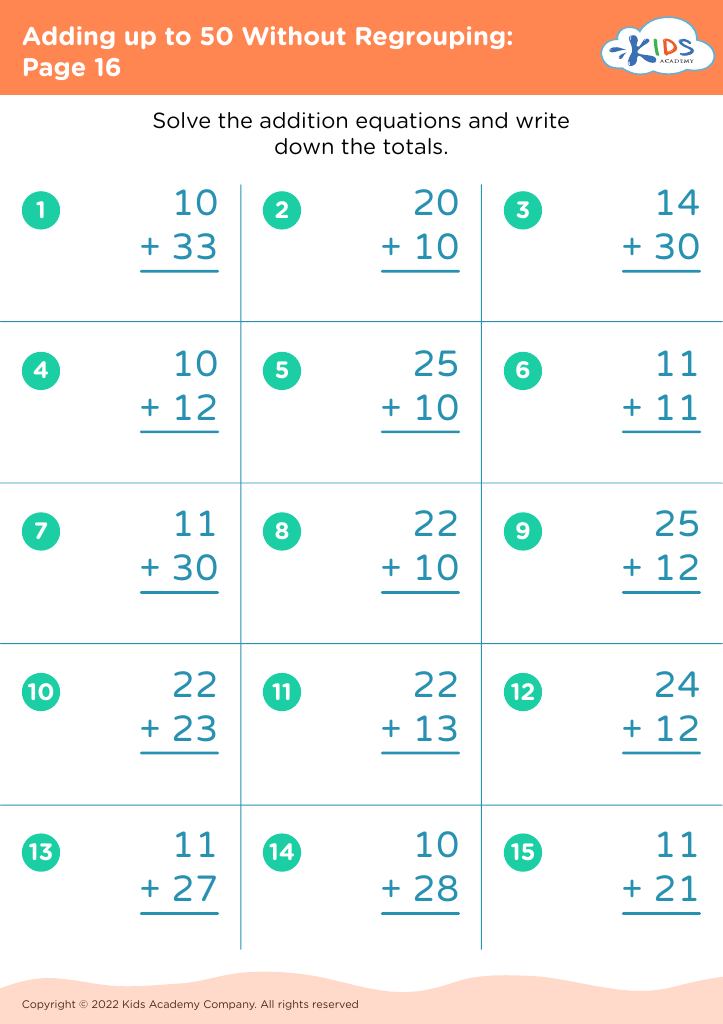
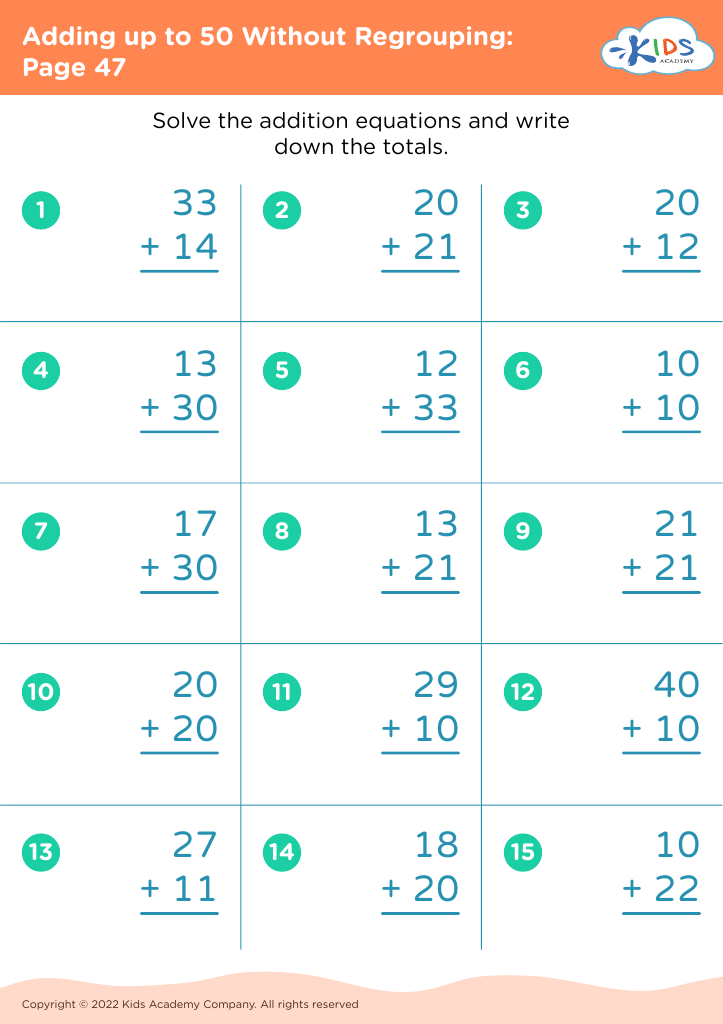
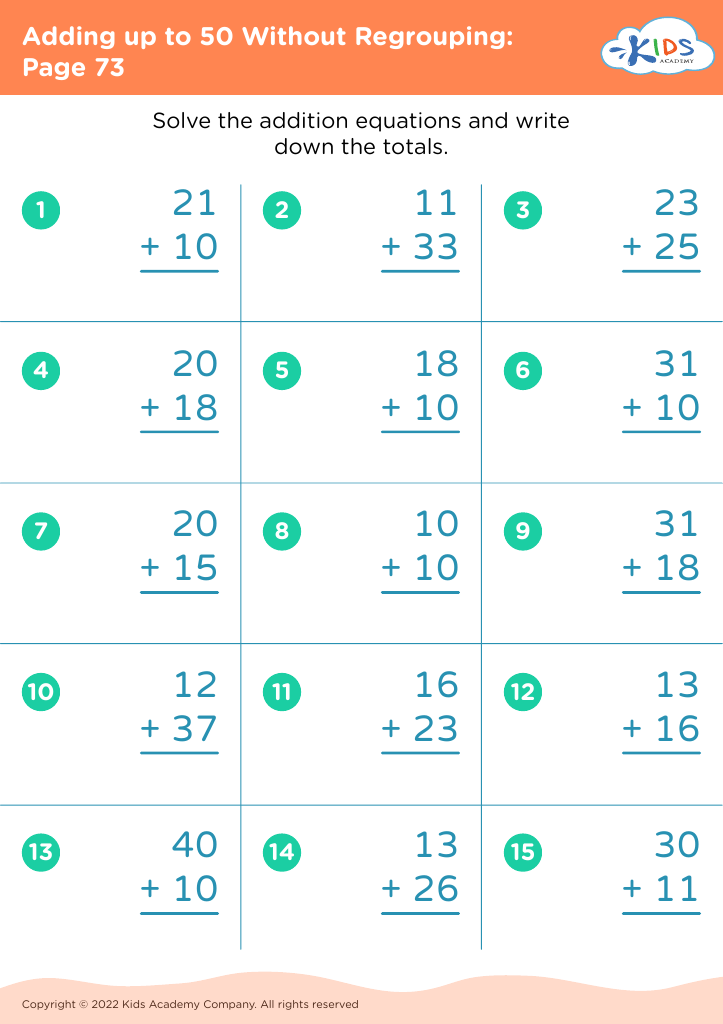
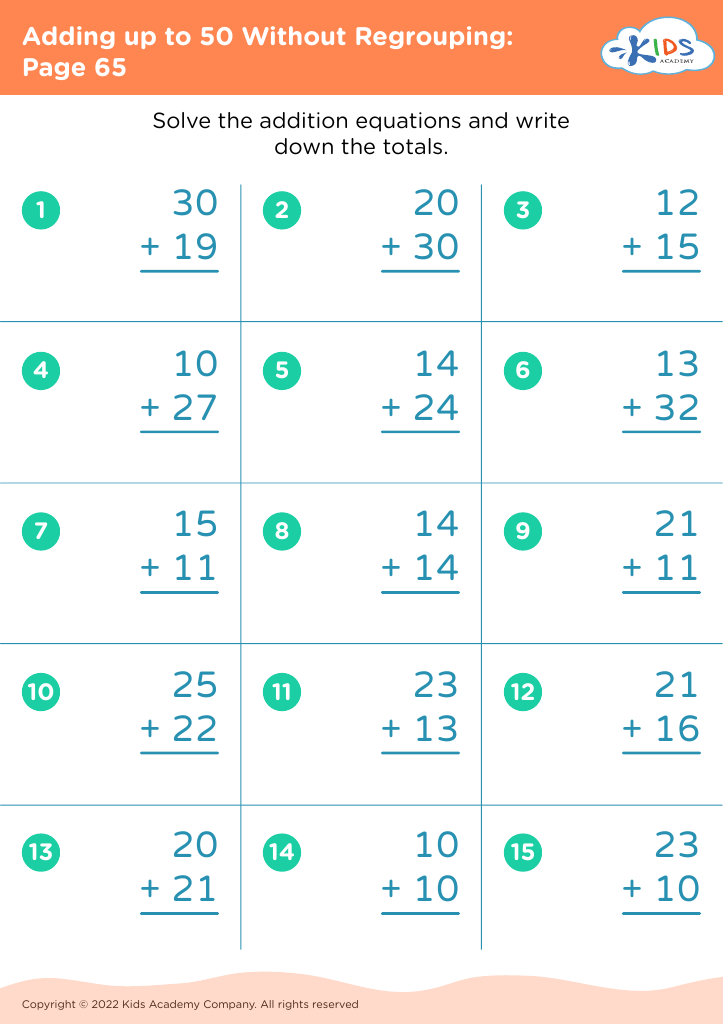


Understanding fraction simplification and addition, particularly adding up to 50 without regrouping, is essential for young learners, ages 3-7, as it lays a strong mathematical foundation. At this developmental stage, children are naturally curious and eager to explore numbers and relationships. Introducing these concepts fosters their individual mathematical ability and builds essential problem-solving skills.
Teaching fraction simplification encourages children to recognize relationships between numbers, enhancing their ability to work with non-whole numbers. This skill is vital as they move toward more complex math concepts. Moreover, mastering addition without regrouping helps children grasp the fundamentals of number sense and operational skills in a straightforward manner.
Parents and teachers play a crucial role in nurturing positive attitudes towards math early on. By incorporating engaging activities that include fraction simplification and sums up to 50, they can make math enjoyable and relatable, igniting a love for learning. Early mastery in these areas boosts children's confidence, prepares them for future challenges, and equips them with necessary life skills, paving the way for academic success. Ultimately, investing in early mathematical education enables children to build a solid, versatile intellect that will benefit them throughout their educational journey.