Filters

15 filtered results

Clear all filters
Favorites
With answer key
Interactive

15 filtered results

Difficulty Level

Grade


Welcome to our engaging "Number Recognition Adding Up to 50 Without Regrouping" worksheets, specially designed for children aged 3-7! These worksheets provide a fun and interactive way for young learners to master number recognition while practicing addition skills. Each activity focuses on adding numbers up to 50 without the need for regrouping, allowing children to build confidence in their mathematical abilities. Vibrant illustrations and age-appropriate tasks make learning enjoyable, fostering a positive attitude towards math. Perfect for homeschooling or classroom use, these worksheets are a valuable resource to support early childhood education and enhance foundational math skills. Start your child's math journey today!
Check out this FREE Trial Lesson on Adding up to 50 Without Regrouping for age 3-7!

H

Favorites
With answer key
Interactive
  • 3-7
  • Number Recognition
  • Adding up to 50 Without Regrouping
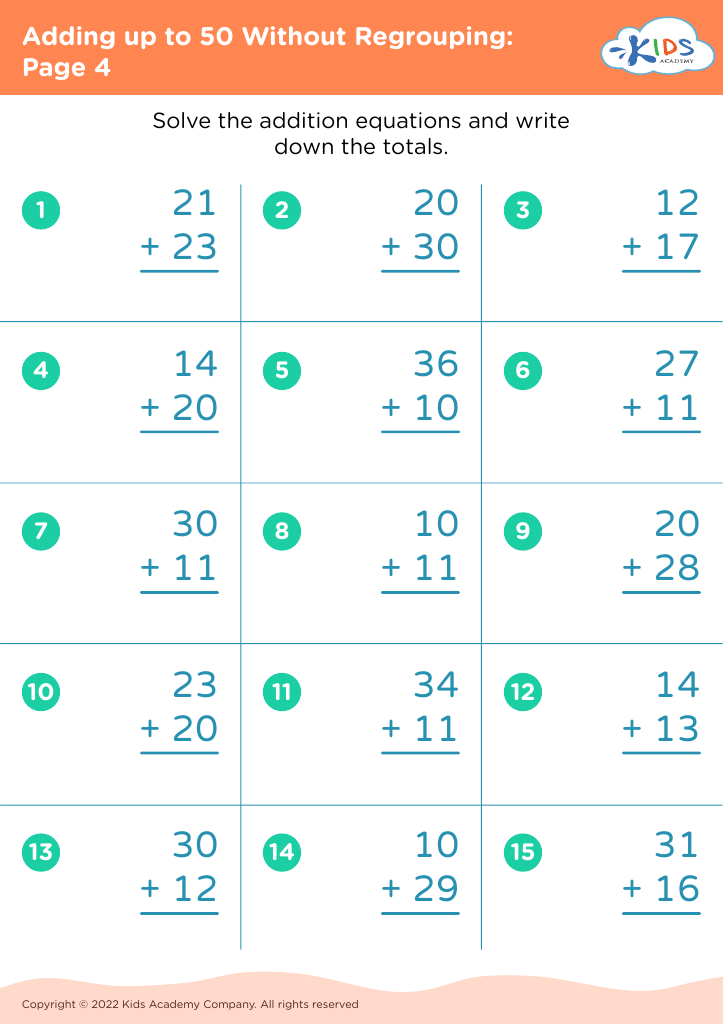
Adding up to 50 Without Regrouping: Page 4
Worksheet
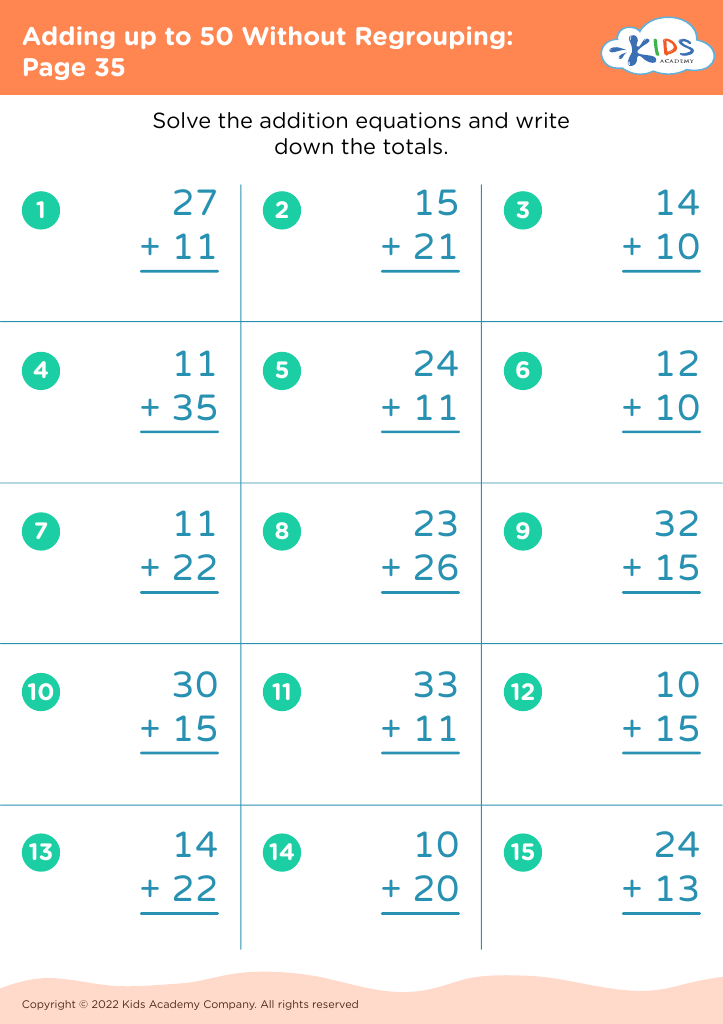
Adding up to 50 Without Regrouping: Page 35
Worksheet
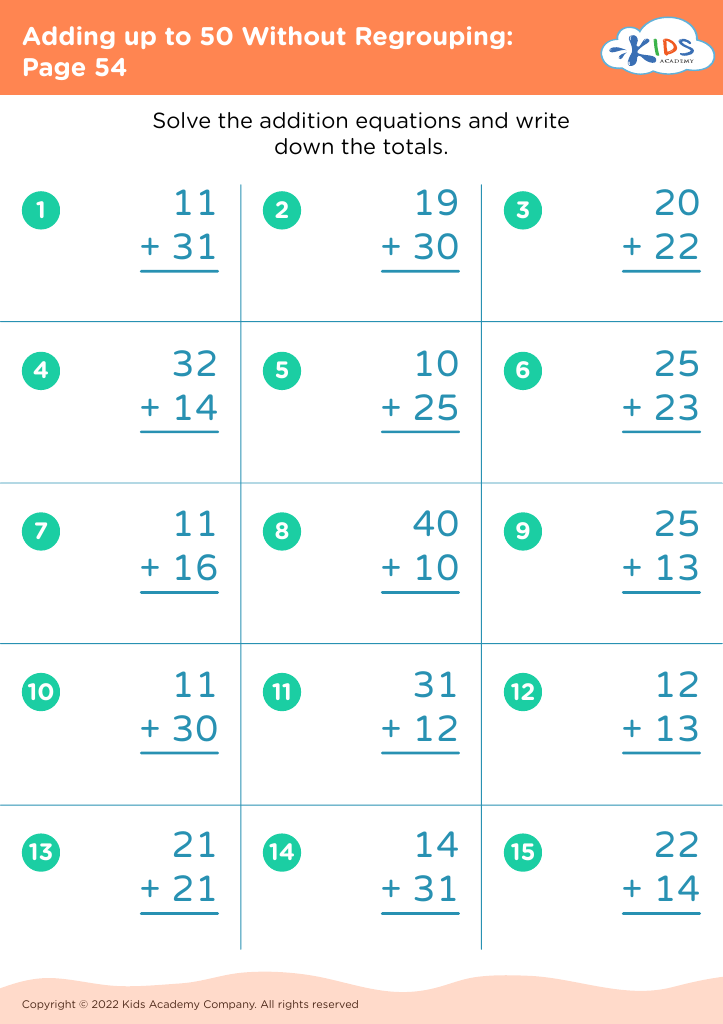
Adding up to 50 Without Regrouping: Page 54
Worksheet
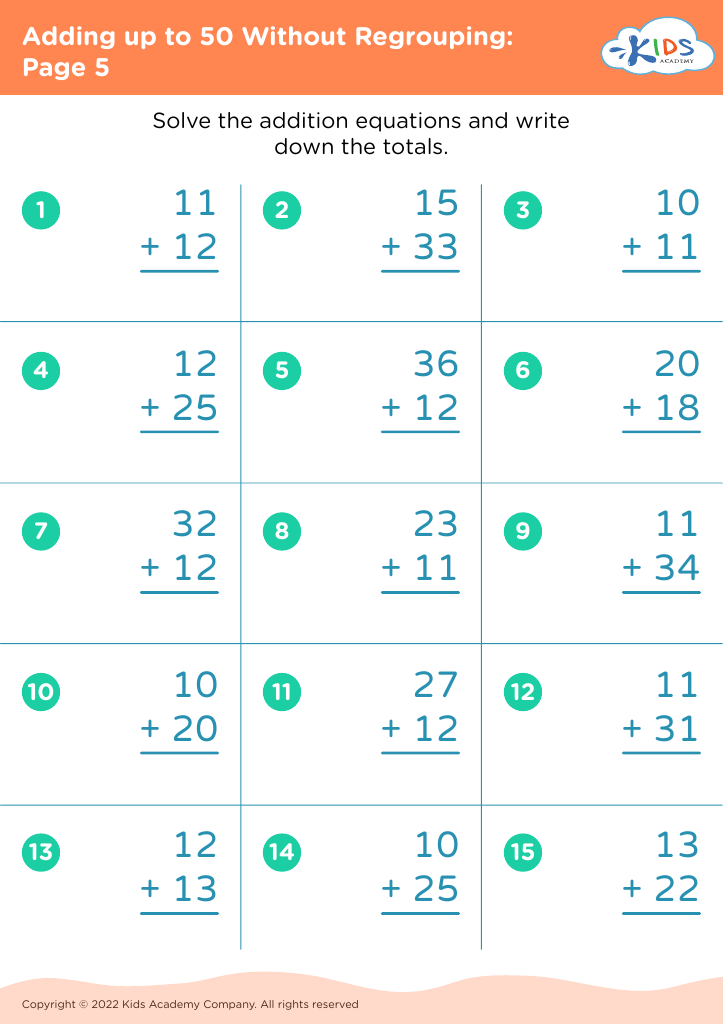
Adding up to 50 Without Regrouping: Page 5
Worksheet
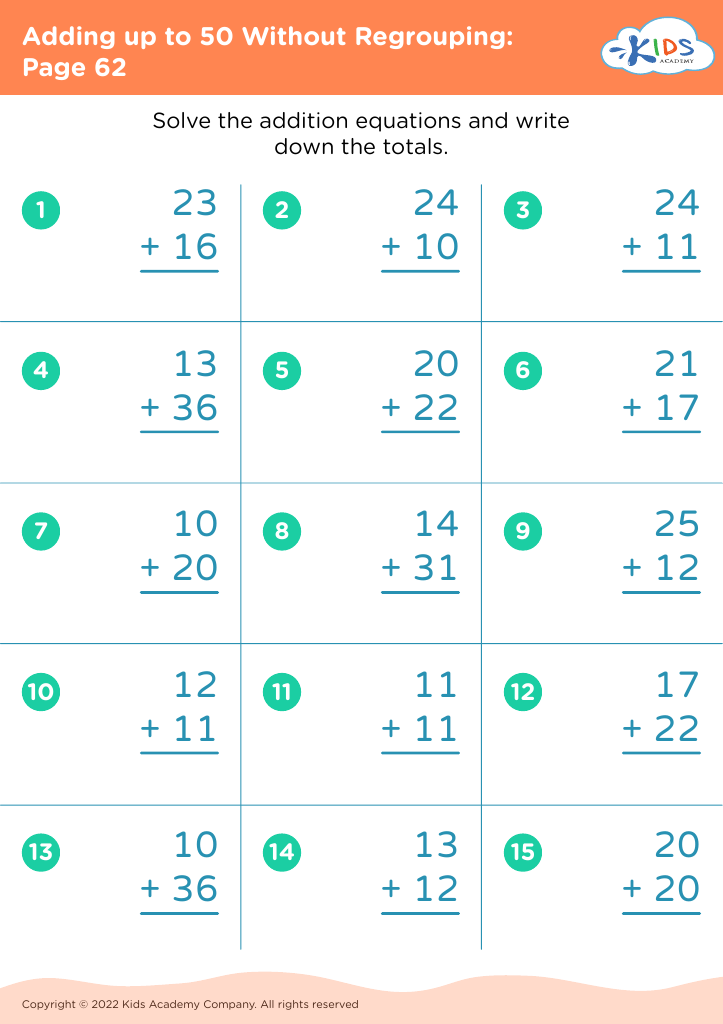
Adding up to 50 Without Regrouping: Page 62
Worksheet
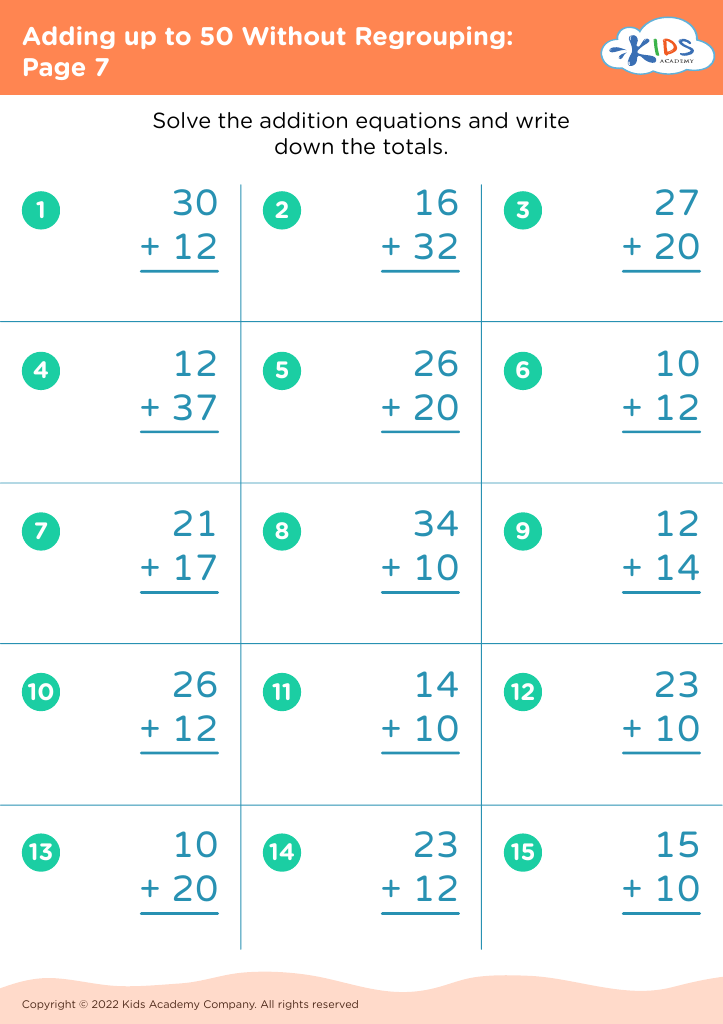
Adding up to 50 Without Regrouping: Page 7
Worksheet
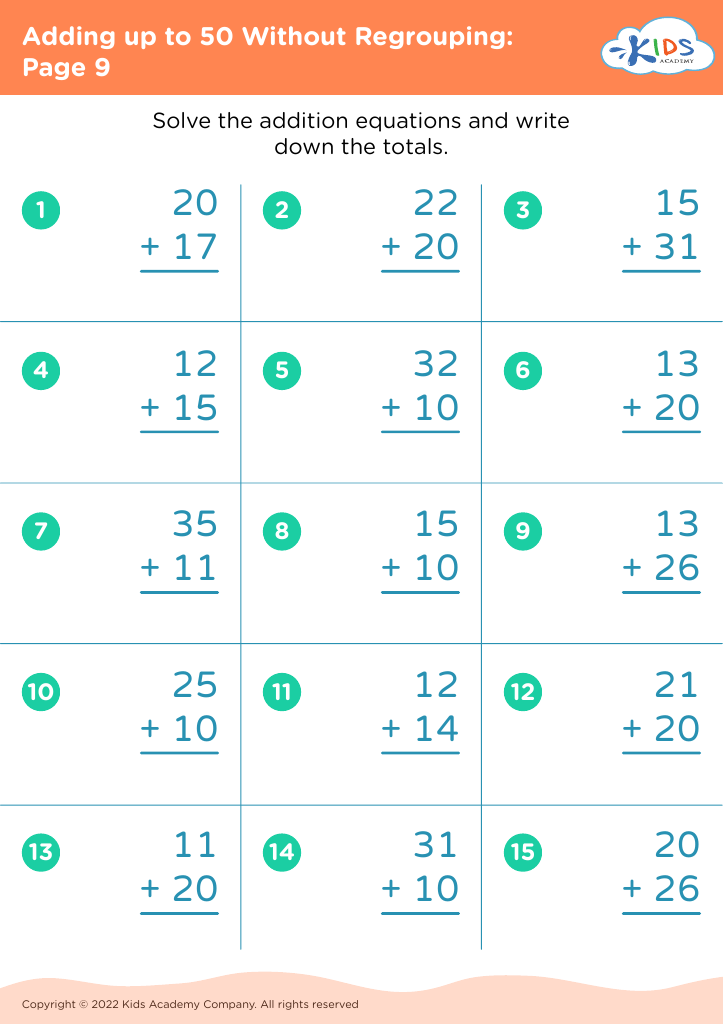
Adding up to 50 Without Regrouping: Page 9
Worksheet
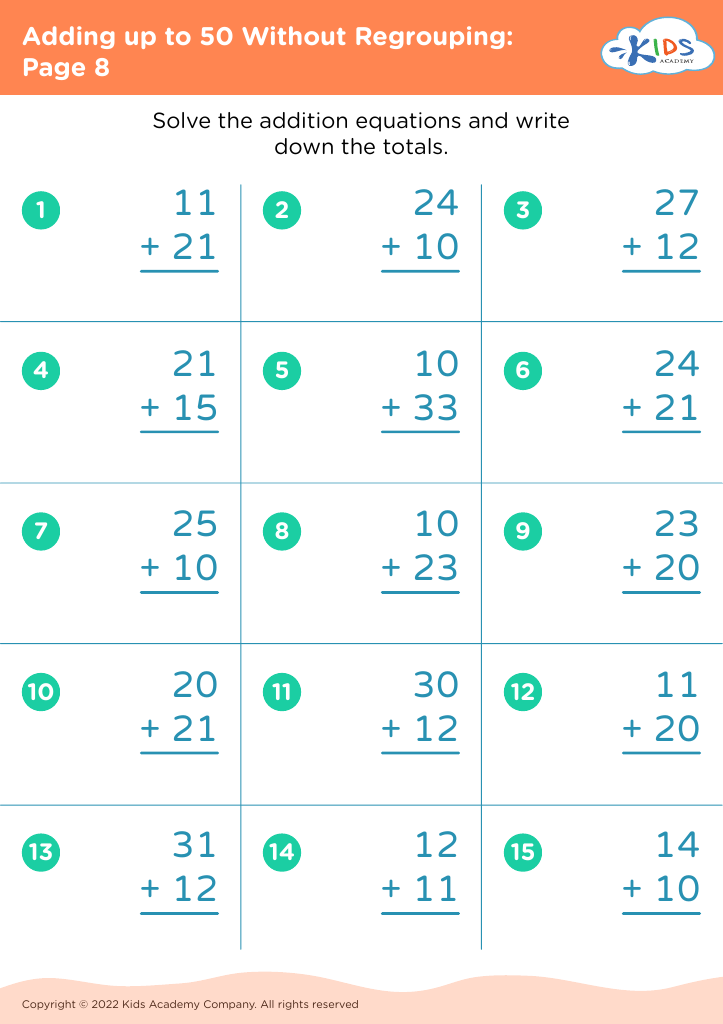
Adding up to 50 Without Regrouping: Page 8
Worksheet
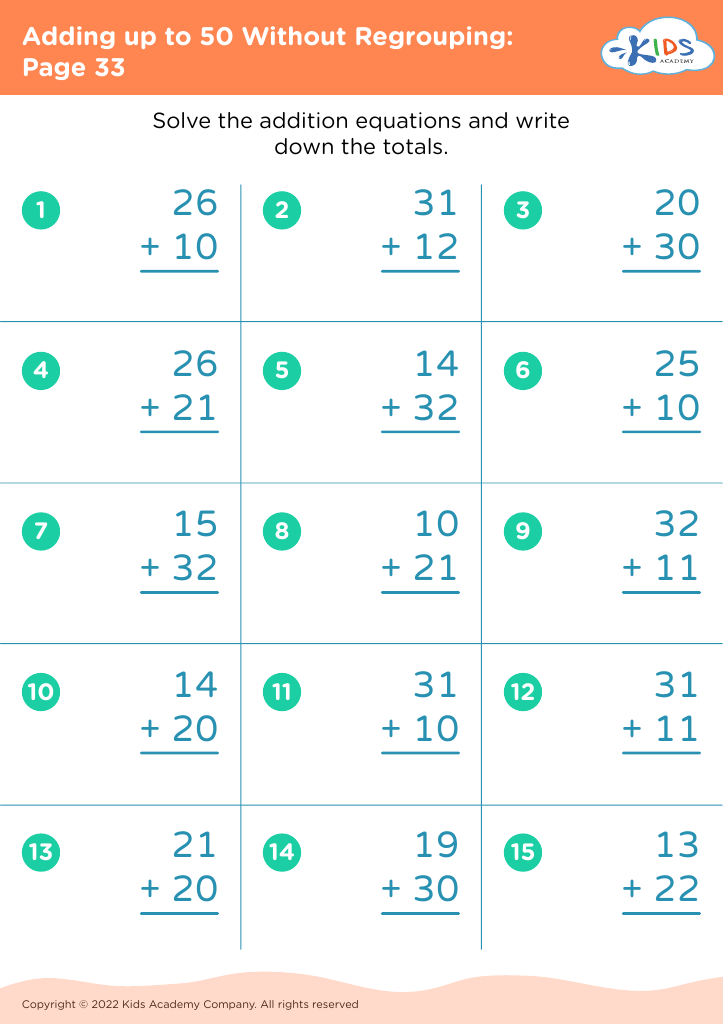
Adding up to 50 Without Regrouping: Page 33
Worksheet
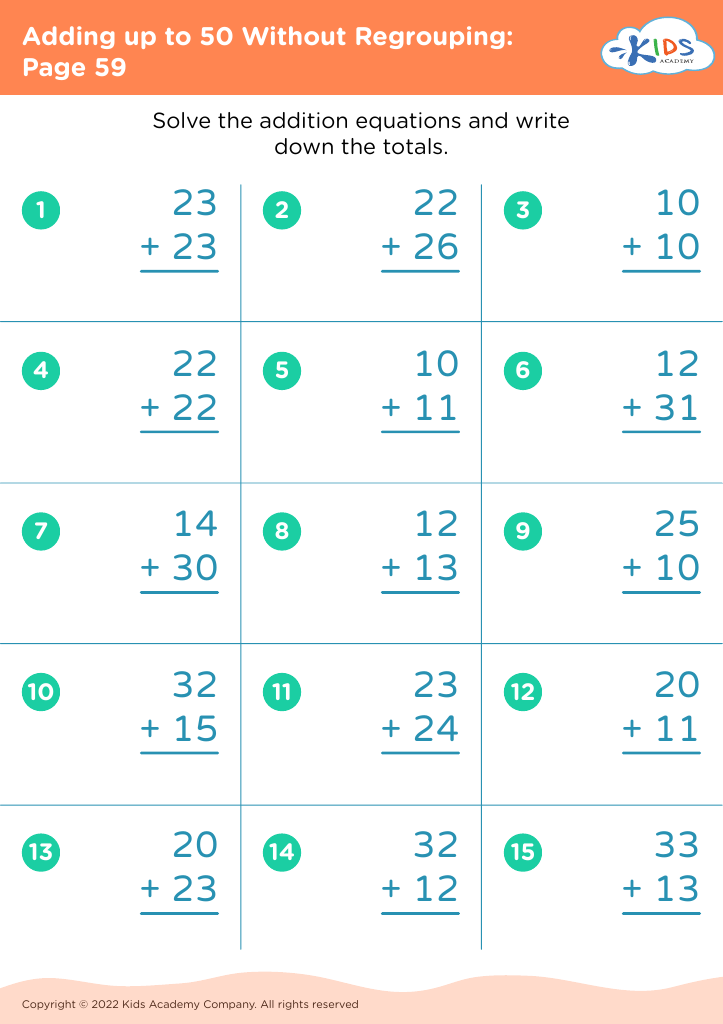
Adding up to 50 Without Regrouping: Page 59
Worksheet
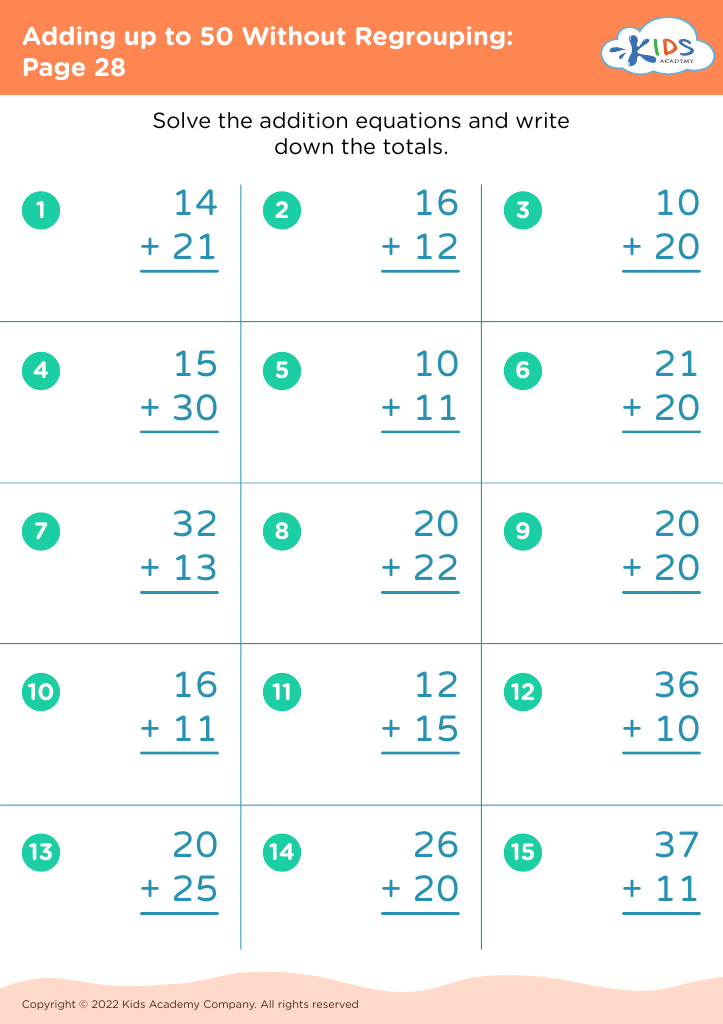
Adding up to 50 Without Regrouping: Page 28
Worksheet
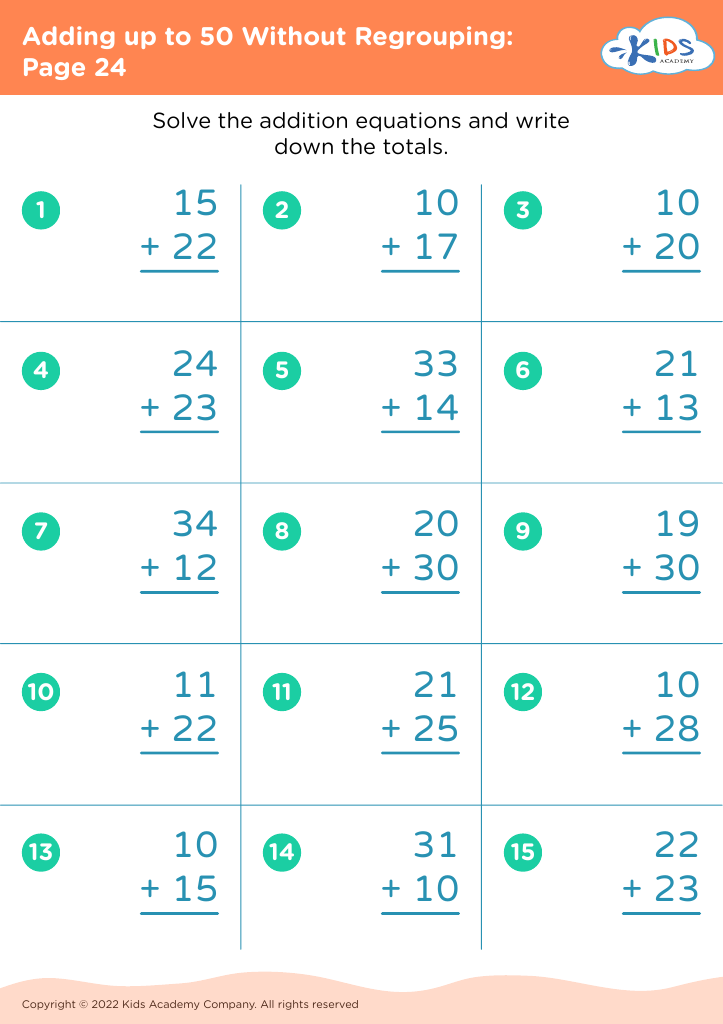
Adding up to 50 Without Regrouping: Page 24
Worksheet
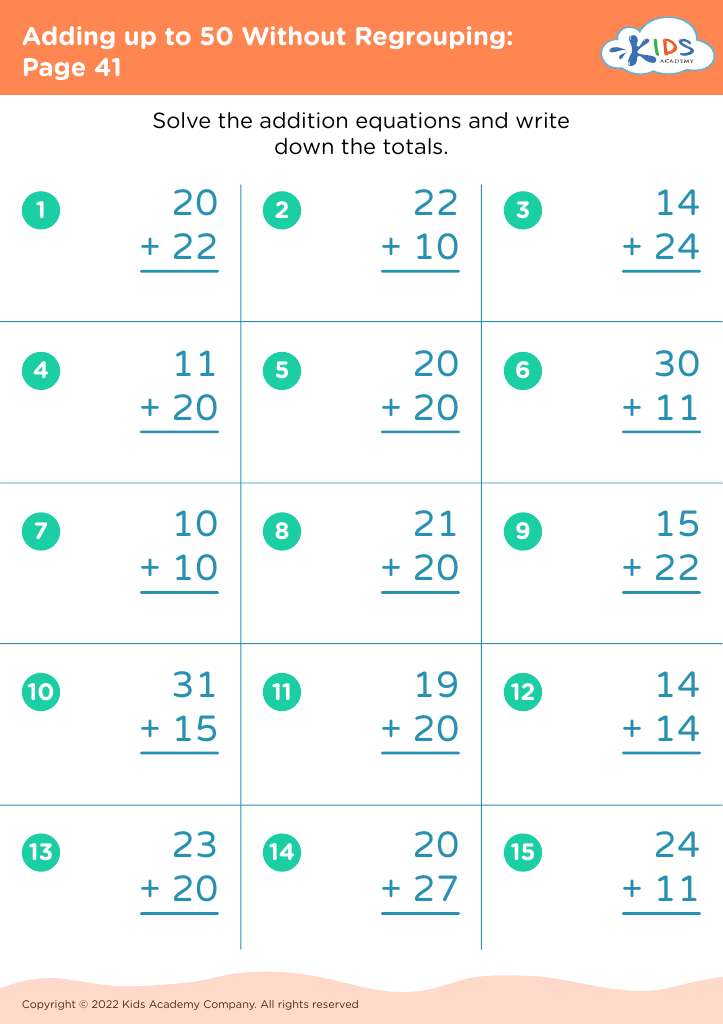
Adding up to 50 Without Regrouping: Page 41
Worksheet
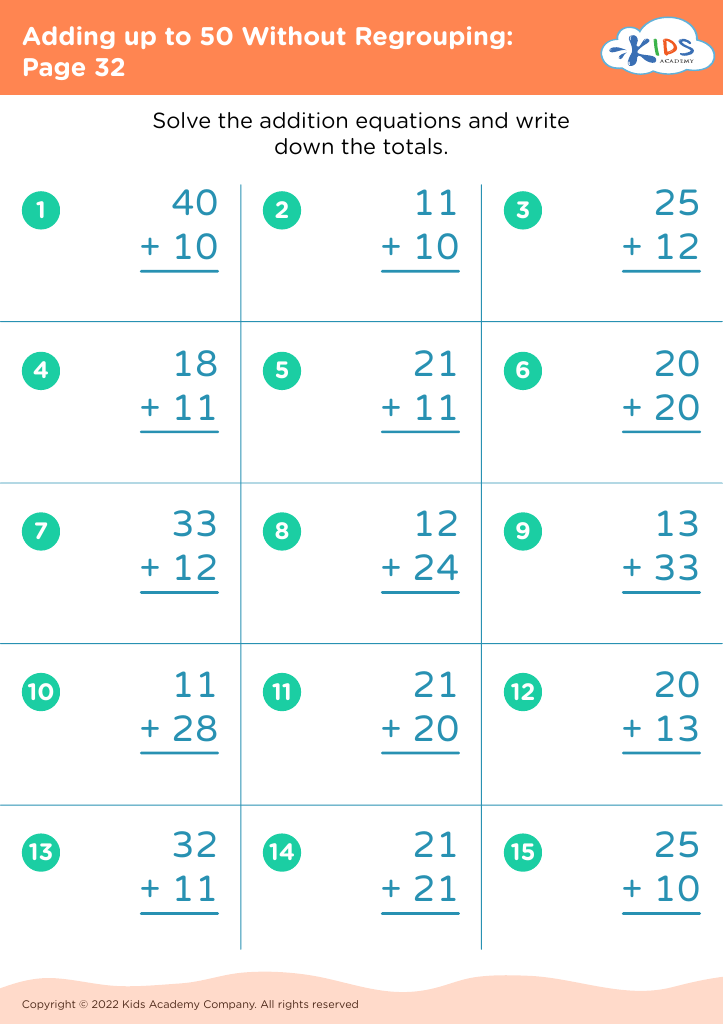
Adding up to 50 Without Regrouping: Page 32
Worksheet
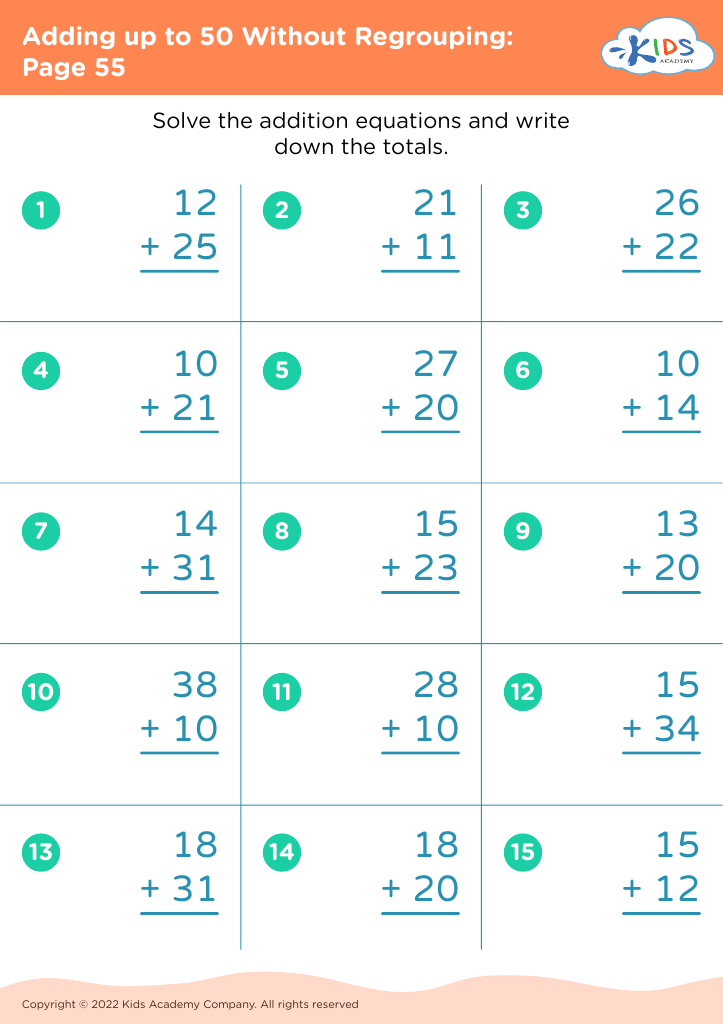
Adding up to 50 Without Regrouping: Page 55
Worksheet


Number recognition and the ability to add numbers up to 50 without regrouping are fundamental skills for children aged 3-7, laying a crucial foundation for their mathematical development. Parents and teachers should care about these skills for several reasons.

Firstly, number recognition is the gateway to math fluency. It allows children to identify and understand numbers, which is essential for problem-solving and mathematical reasoning. Early success in recognizing numbers helps build confidence and a positive attitude towards math.

Secondly, mastering addition without regrouping enhances children's computational skills and cognition. It teaches them strategies to combine quantities, fosters logical thinking, and improves their ability to engage with more complex mathematics in the future.

Moreover, these skills are vital for everyday life. Children will use addition concepts as they grow, from counting items to managing money and understanding time.

Lastly, focusing on these foundational skills can help identify and support children who may struggle with math early on, allowing timely intervention. When parents and educators prioritize number recognition and basic addition, they empower children with the skills needed for academic success and future problem-solving in real-world contexts.