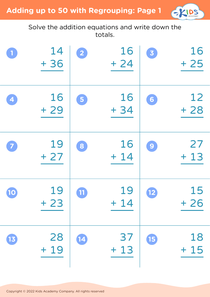
Understand fractions Adding up to 50 Without Regrouping Worksheets for Ages 3-7
4 filtered results
-
From - To
Discover the joy of learning with our "Understand Fractions Adding up to 50 Without Regrouping Worksheets" designed for young learners aged 3-7. These engaging, easy-to-follow worksheets help children grasp the concept of fractions while practicing addition skills up to 50. No regrouping required, making it a smooth learning experience for early mathematicians. Perfect for building foundational math skills, each worksheet is crafted to introduce fractions in a fun, colorful, and interactive way. Watch your child's confidence grow as they master essential math concepts through play and discovery. Explore today and turn fractions into fun learning adventures!
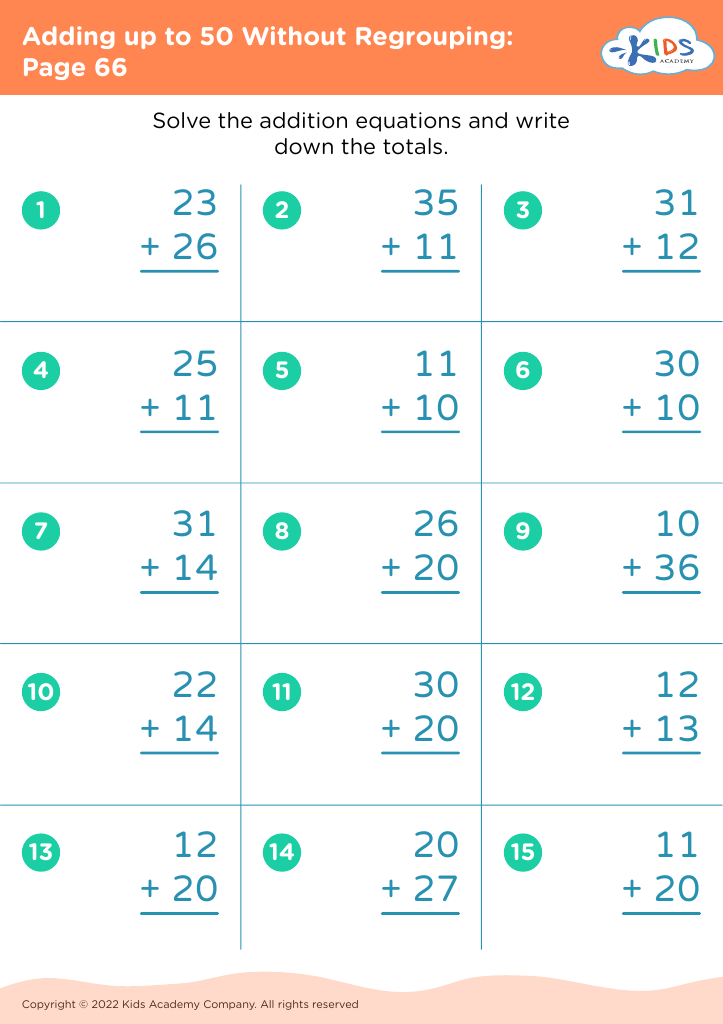
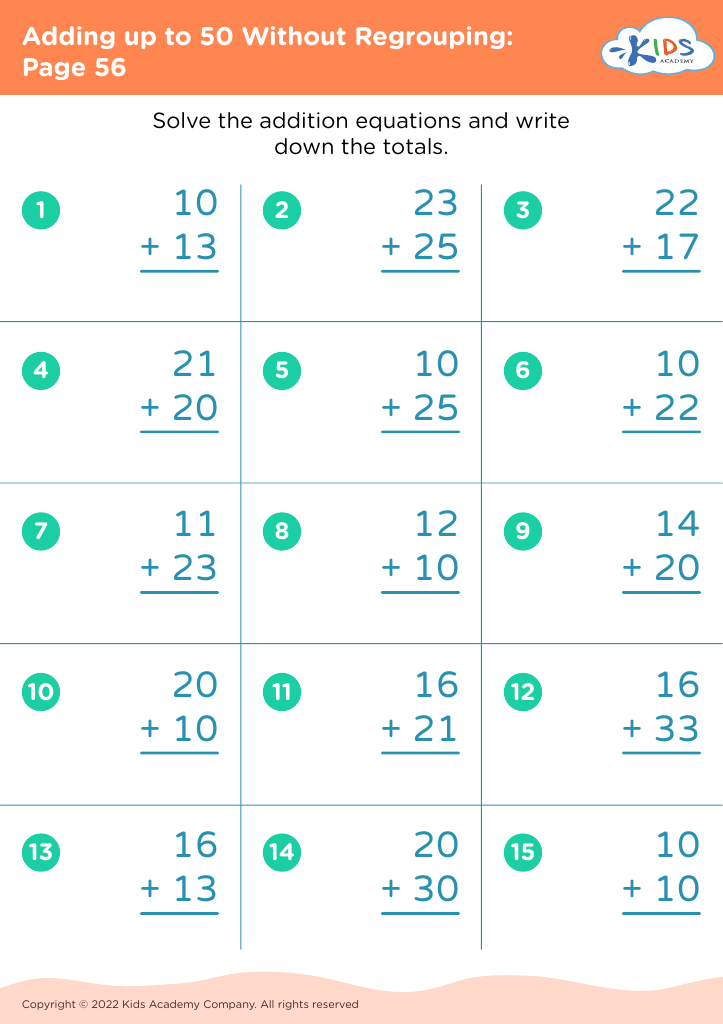
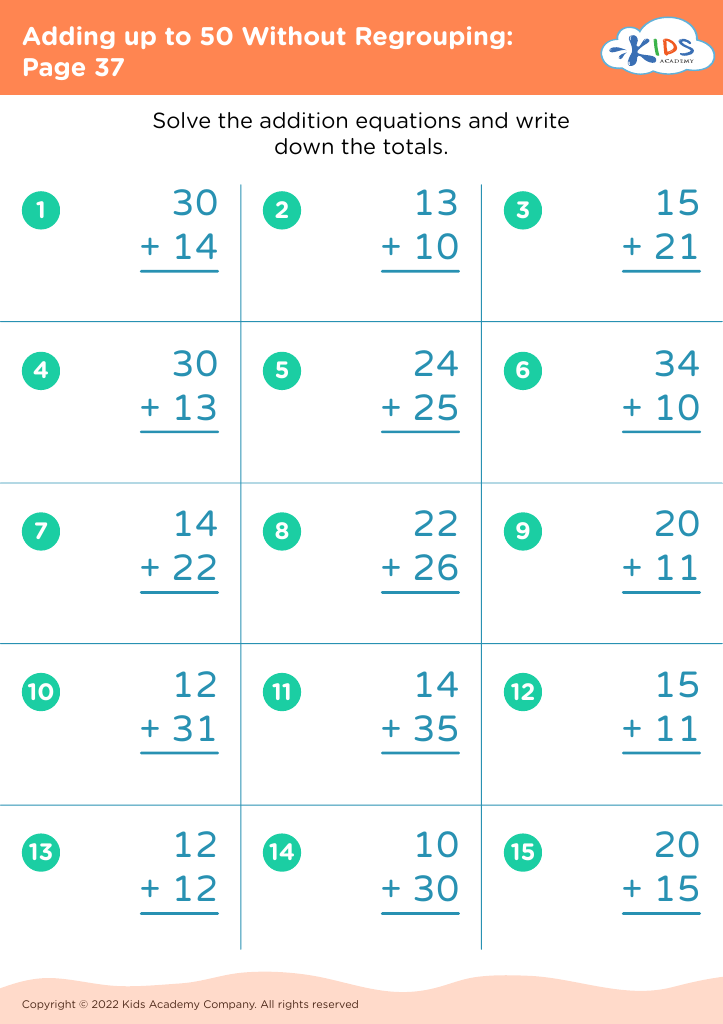
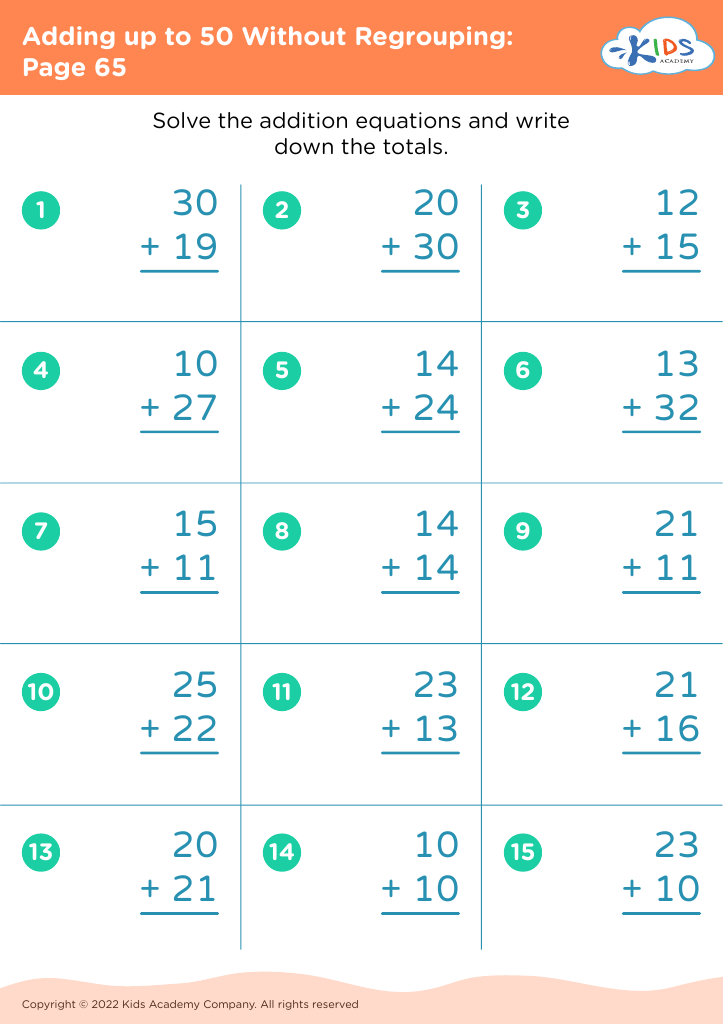


Understanding fractions and adding up to 50 without regrouping are foundational mathematical skills crucial for children aged 3-7. Early introduction to these concepts equips young learners with essential cognitive abilities they will use throughout their education and daily lives.
Firstly, fractions teach children how to deal with parts of a whole, laying the groundwork for more advanced topics in arithmetic, geometry, and algebra. Grasping fraction concepts early also improves their problem-solving and critical-thinking skills, making them better at analyzing everyday situations that involve sharing, dividing, and organizing.
Adding up to 50 without regrouping reinforces basic addition skills and fluency with numbers. This increases children's ability to perform mental calculations and builds confidence in handling more complex numerical tasks in the future. When children can effortlessly perform these addition operations, they create a strong numerical foundation that can support their mathematical development.
Moreover, mastering these skills early can boost a child’s self-esteem and interest in math, transforming a subject often feared into one enjoyed. Whether a parent or teacher, nurturing these abilities contributes significantly to a child's academic success and lifelong competence in essential life skills related to organizing and interpreting quantitative information. It lays down the cornerstone of a robust mathematical understanding, ensuring a smoother transition to higher-level math concepts while fostering a positive attitude towards learning.