Addition skills Adding up to 50 Worksheets for Ages 3-7
7 filtered results
-
From - To
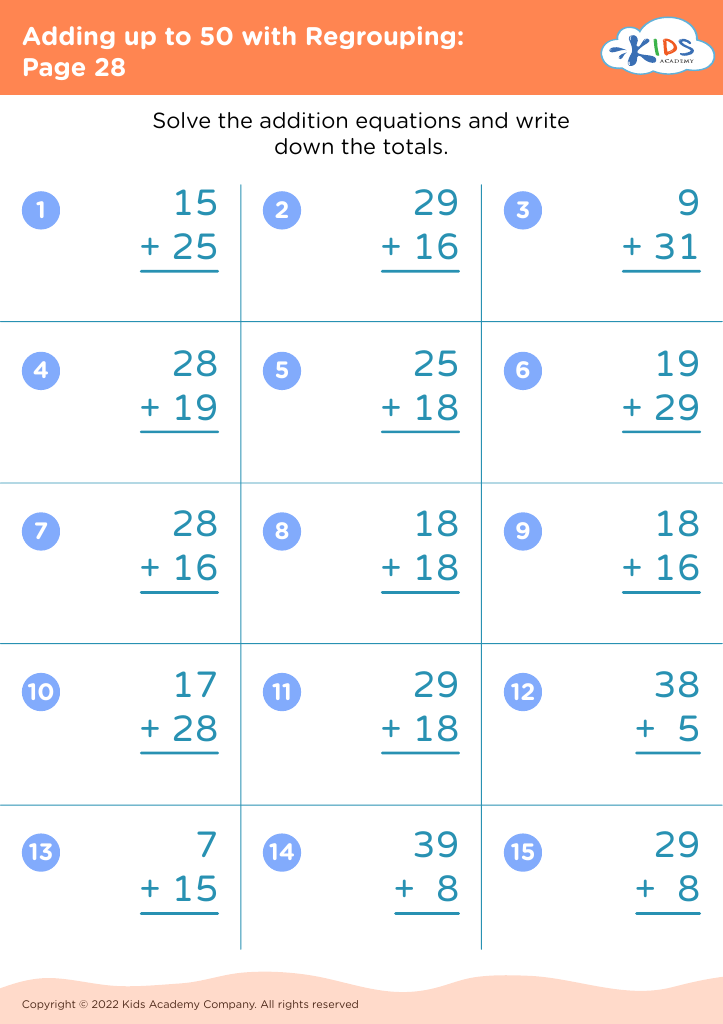
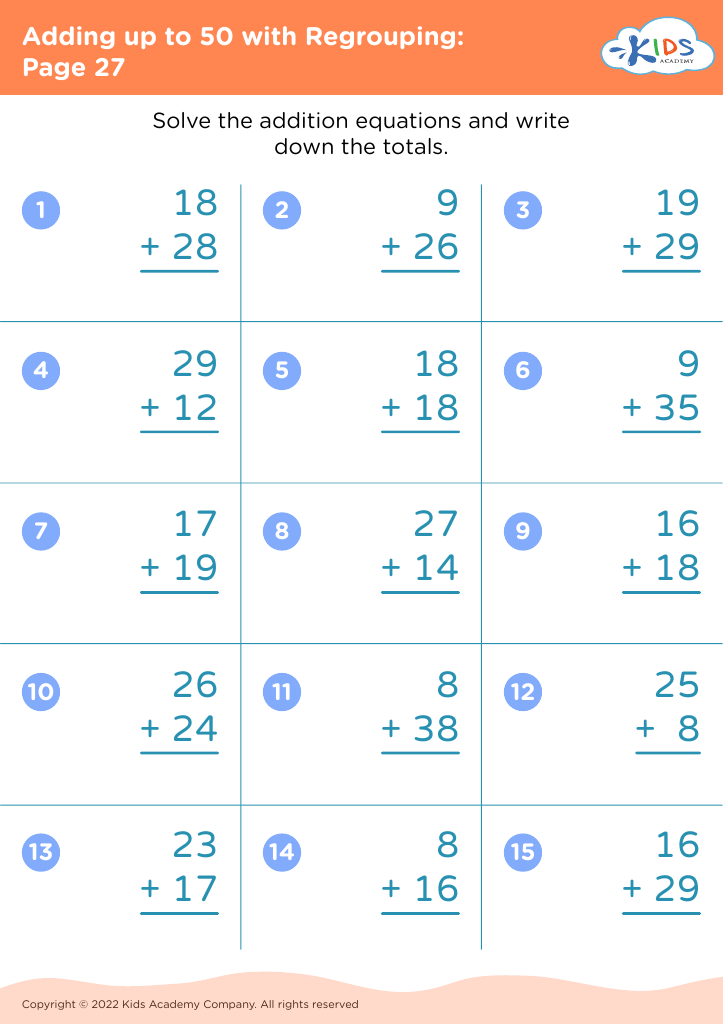
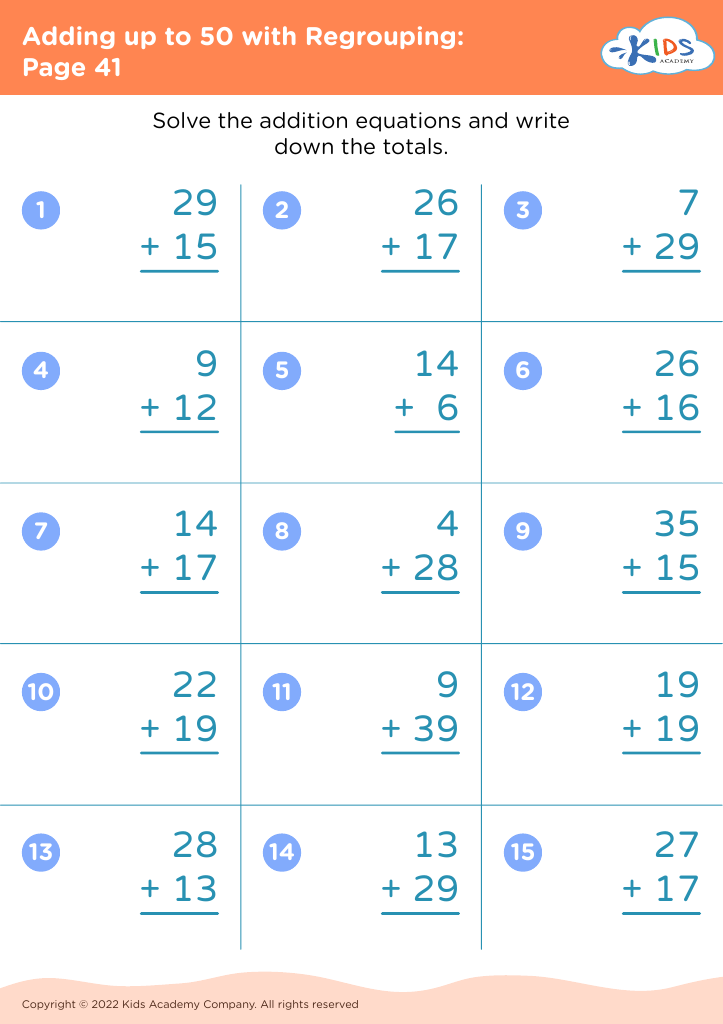
Enhance your child's math abilities with our "Addition Skills: Adding up to 50 Worksheets" designed for ages 3-7. These printable worksheets offer engaging and interactive activities to help young learners grasp addition concepts, improve number recognition, and develop problem-solving skills. Each worksheet is crafted to build confidence while making learning fun, ensuring children enjoy the process of mastering basic math skills. Ideal for both classroom use and extra practice at home, these resources are essential for early childhood math education. Start building a strong arithmetic foundation today with Kids Academy's expertly designed addition worksheets.
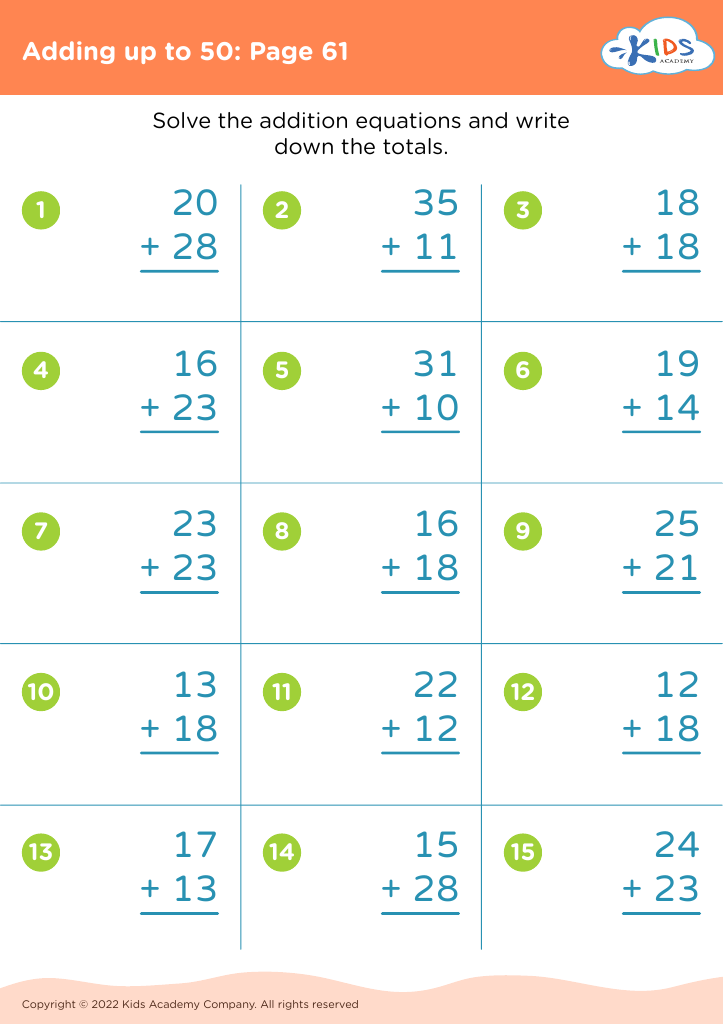
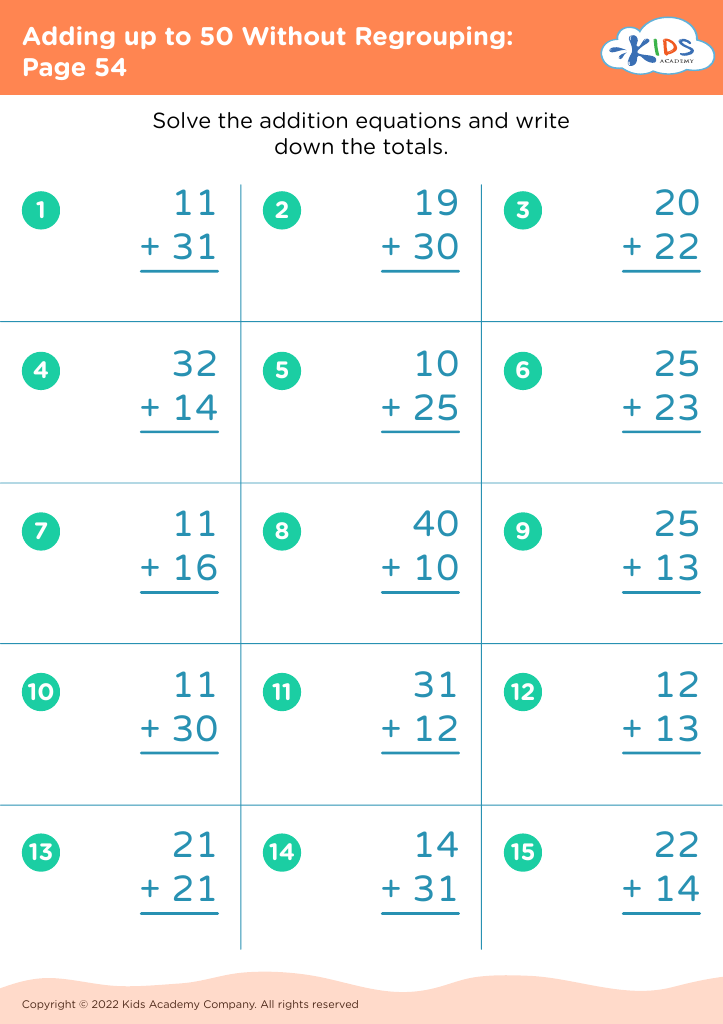
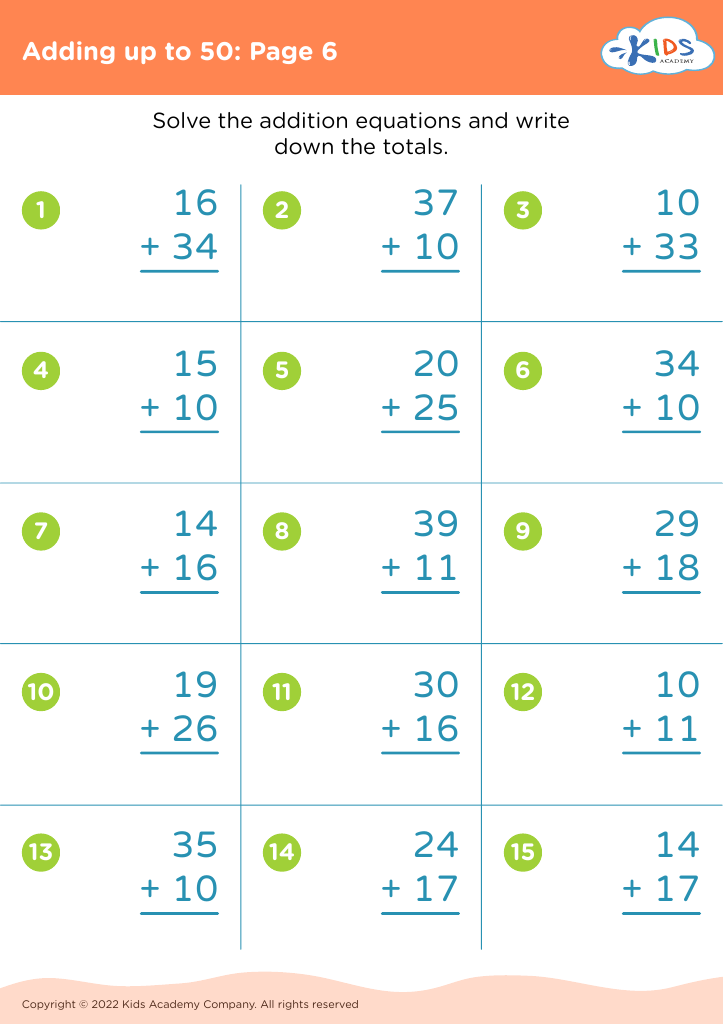
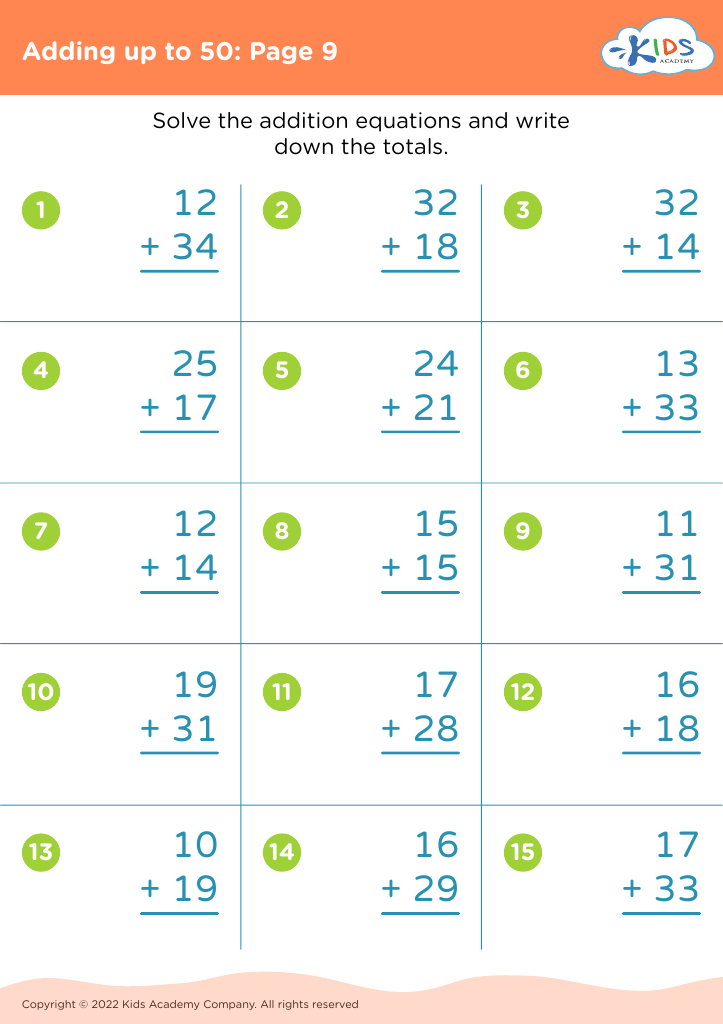




Developing addition skills, particularly when adding numbers up to 50, is essential for children aged 3-7 as it lays a critical foundation for their future mathematical understanding. At this early stage, mastering basic addition promotes cognitive development, enhancing their ability to understand and solve problems. It nurtures skills such as logical reasoning, pattern recognition, and numerical fluency, which are vital for tackling more complex mathematical concepts in later grades.
For parents and teachers, focusing on addition within the 0-50 range ensures that children gain confidence in handling numbers, fostering a positive attitude towards math. A strong grasp of these skills allows children to perform everyday tasks, like counting objects, money, or time, independently, which boosts their self-esteem and sense of competence.
Equipping children with solid addition skills early on also aids in the development of other essential academic areas. For instance, these skills support literacy through activities like counting syllables in words or measuring lengths and weights in science.
Overall, caring about a child's proficiency in addition is enabling them to form critical thinking pathways that are essential for their academic journey and daily life problem-solving skills. Engaging and supportive learning environments make this process enjoyable, laying a robust groundwork for lifelong learning.








