Basic addition practice Adding up to 50 Worksheets for Ages 3-7
5 filtered results
-
From - To
Welcome to our "Basic Addition Practice: Adding up to 50" worksheets, designed specifically for children aged 3 to 7! These engaging, printable resources help young learners master fundamental addition skills through interactive problems and colorful illustrations. Each worksheet focuses on building confidence and fluency in mathematics by using numbers up to 50. With diverse activities, including visual aids and practice exercises, children will develop essential addition techniques while having fun! Perfect for home or classroom use, our worksheets are ideal for reinforcing math learning and preparing your child for future success. Start your child's math journey today!
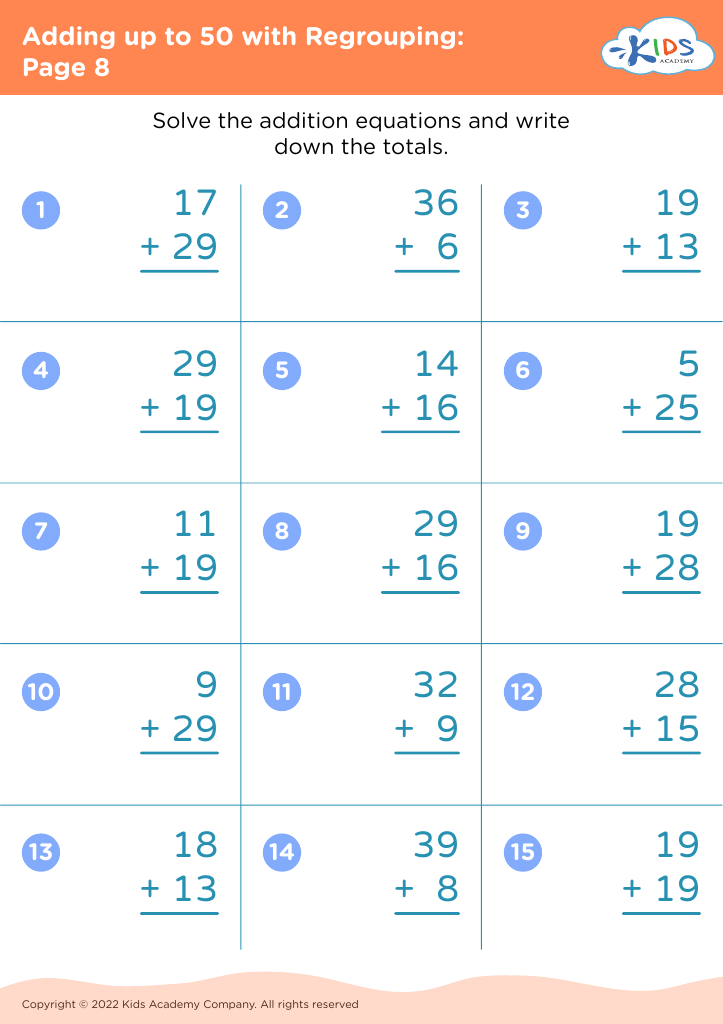
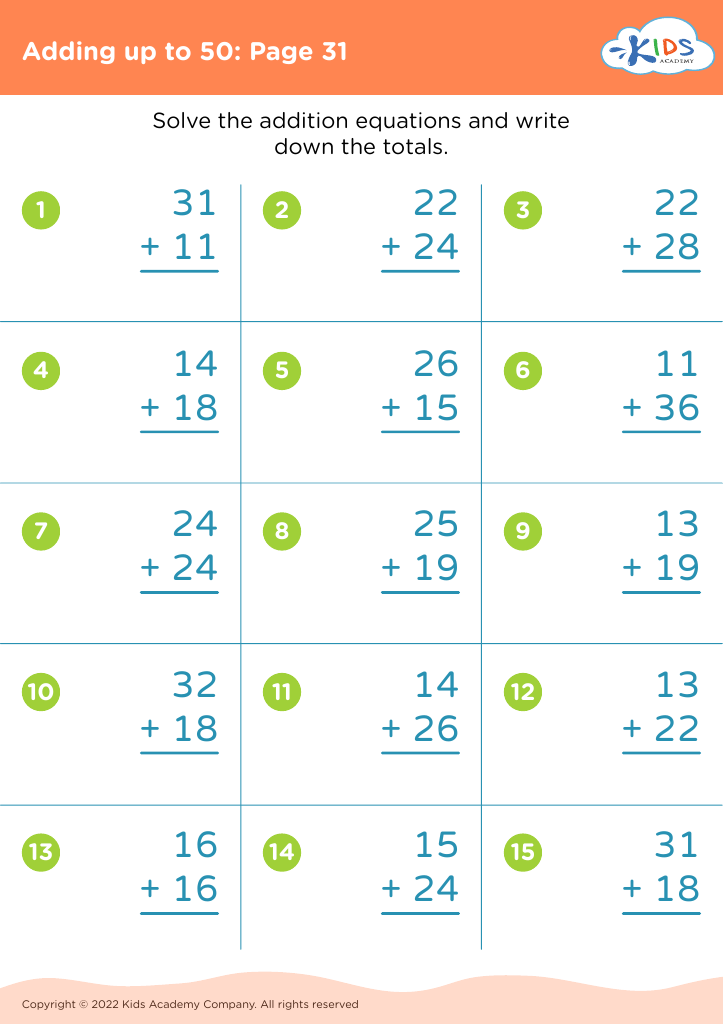
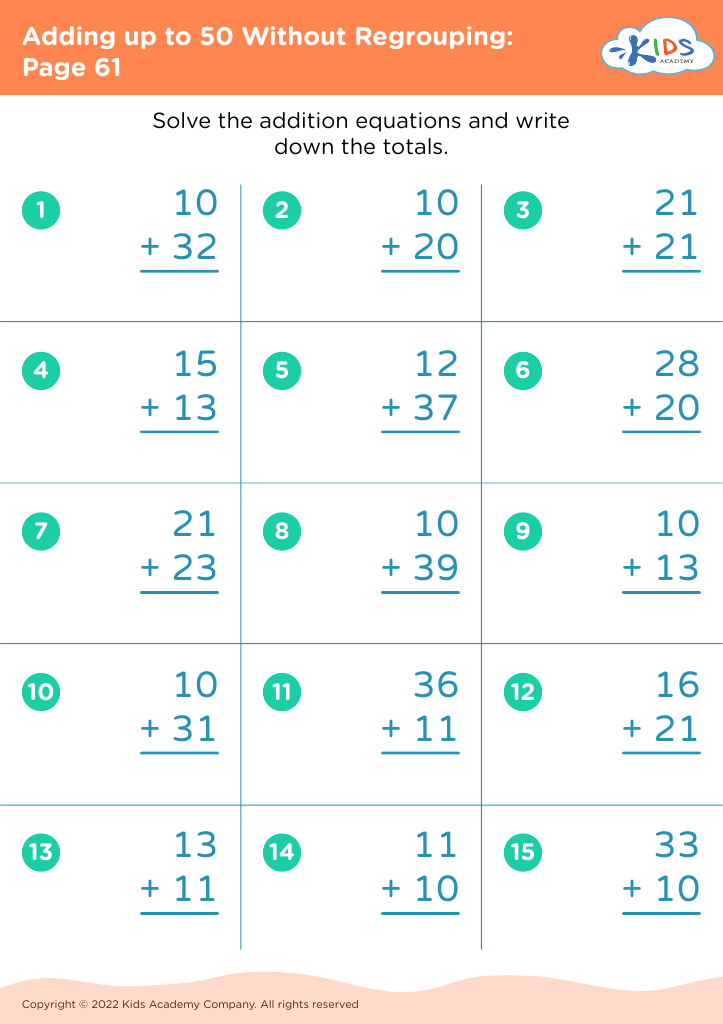
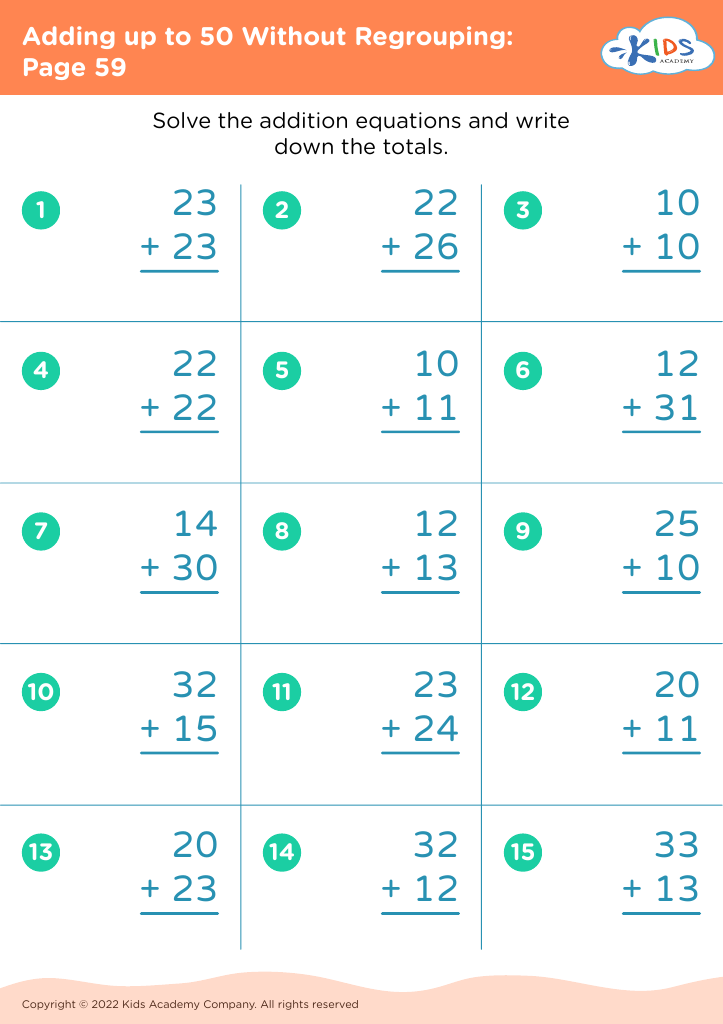
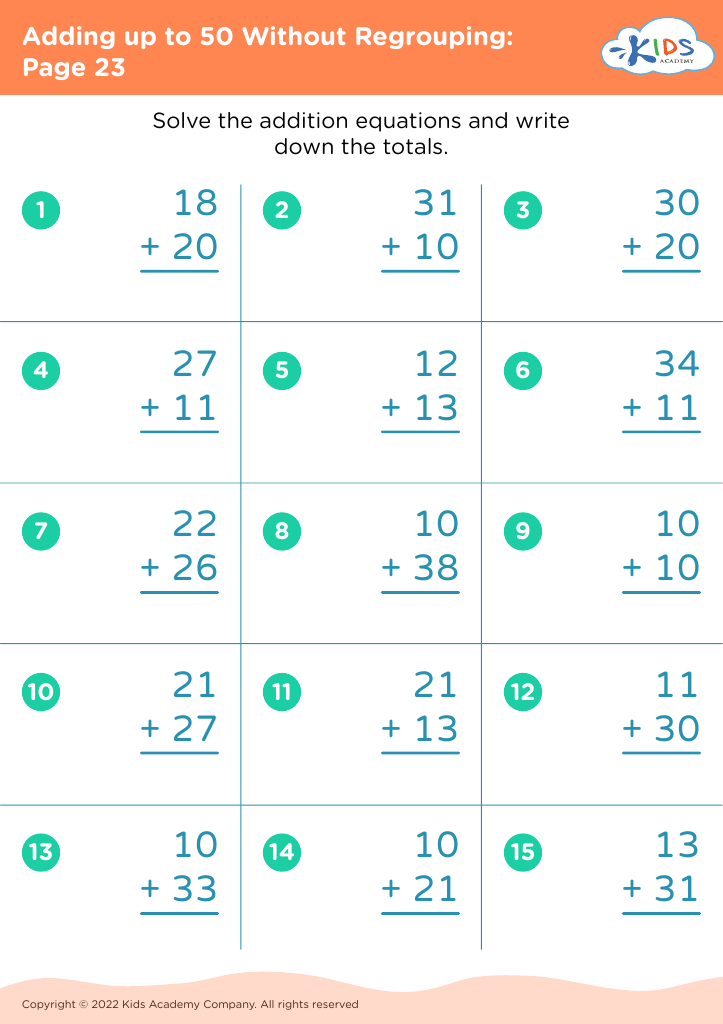




Basic addition practice, particularly for numbers up to 50, is crucial for children aged 3-7 as it lays the foundation for their mathematical understanding and cognitive development. At this formative age, children are naturally curious, and engaging them in addition helps cultivate their problem-solving skills and critical thinking abilities. Practicing addition not only enhances numerical fluency but also boosts confidence in their academic skills.
Additionally, mastery of basic addition is vital for daily life skills. It enables children to make sense of everyday situations, such as counting objects, understanding money, and recognizing patterns and relationships. By grasping addition, children also develop a positive attitude towards math, which is essential, as early negative experiences can deter future learning.
Moreover, consistent practice aids in reinforcing memory and concentration, essential skills that are beneficial beyond mathematics. Teachers and parents can incorporate fun, interactive activities that make learning enjoyable and relatable, such as games and visual aids. This collaborative approach fosters emotional connections and encourages a love for learning, setting children on a path for future success not only in math but also in their overall educational journey. As trusted guides, teachers and parents play a pivotal role in nurturing these foundational skills.








